

Kirjahaku
Etsi kirjoja tekijän nimen, kirjan nimen tai ISBN:n perusteella.
1000 tulosta hakusanalla Franz List

Franz Rosenzweig's near-conversion to Christianity in the summer of 1913 and his subsequent decision three months later to recommit himself to Judaism is one of the foundational narratives of modern Jewish thought. In this new account of events, Benjamin Pollock suggests that what lay at the heart of Rosenzweig's religious crisis was not a struggle between faith and reason, but skepticism about the world and hope for personal salvation. A close examination of this important time in Rosenzweig's life, the book also sheds light on the full trajectory of his philosophical development.


A highly original and engaging appraisal of Kafka’s life, work, legacy, and thought Franz Kafka was the poet of his own disorder. Throughout his life he struggled with a pervasive sense of shame and guilt that left traces in his daily existence—in his many letters, in his extensive diaries, and especially in his fiction. This stimulating book investigates some of the sources of Kafka’s personal anguish and its complex reflections in his imaginary world.In his query, Saul Friedländer probes major aspects of Kafka’s life (family, Judaism, love and sex, writing, illness, and despair) that until now have been skewed by posthumous censorship. Contrary to Kafka’s dying request that all his papers be burned, Max Brod, Kafka’s closest friend and literary executor, edited and published the author’s novels and other works soon after his death in 1924. Friedländer shows that, when reinserted in Kafka’s letters and diaries, deleted segments lift the mask of “sainthood” frequently attached to the writer and thus restore previously hidden aspects of his individuality.

An engrossing new biography of Franz Liszt, the musical revolutionary who became the world’s first international megastar"Makes a significant contribution to our knowledge of Liszt as a man and superstar. Hilmes shines a light into the shadows behind a life lived in the spotlight."—Andrew Taylor, Times Hungarian composer Franz Liszt (1811–1886) was an anomaly. A virtuoso pianist and electrifying showman, he toured extensively throughout the European continent, bringing sold-out audiences to states of ecstasy while courting scandal with his frequent womanizing. Drawing on new, highly revealing documentary sources, including a veritable treasure trove of previously unexamined material on Liszt’s Weimar years, best-selling author Oliver Hilmes shines a spotlight on the extraordinary life and career of this singularly dazzling musical phenomenon. Whereas previous biographies have focused primarily on the composer’s musical contributions, Hilmes showcases Liszt the man in all his many shades and personal reinventions: child prodigy, Romantic eccentric, fervent Catholic, actor, lothario, celebrity, businessman, genius, and extravagant show-off. The author immerses the reader in the intrigues of the nineteenth-century European glitterati (including Liszt’s powerful patrons, the monstrous Wagner clan) while exploring the true, complex face of the artist and the soul of his music. No other Liszt biography in English is as colorful, witty, and compulsively readable, or reveals as much about the true nature of this extraordinary, outrageous talent.

A thought-provoking account of the life and work of Franz Boas and his influential role in shaping modern anthropology Franz Boas (1858–1942) is widely acknowledged for his pioneering work in the field of cultural anthropology. His rigorous studies of variations across societies were aimed at demonstrating that cultures and peoples were not shaped by biological predispositions. This book traces Boas’s life and intellectual passions from his roots in Germany and his move to the United States in 1884, partly in response to growing antisemitism in Germany, to his work with First Nations communities and his influential role as a teacher, mentor, and engaged activist who inspired an entire generation. Drawing from Boas’s numerous but rarely read writings, Noga Arikha brings to life the man and the ideas he developed about the complex interplay of mind and culture, biology and history, language and myth. She provides a comprehensive picture of the cultural contexts in which he worked, of his personal and professional relationships, and of his revolutionary approach to fieldwork. He was celebrated in his lifetime for the cultural relativism he developed and the arguments he marshaled against entrenched racialism. But his was a constant battle, and Arikha shows how urgently relevant his voice and legacy have become again today.
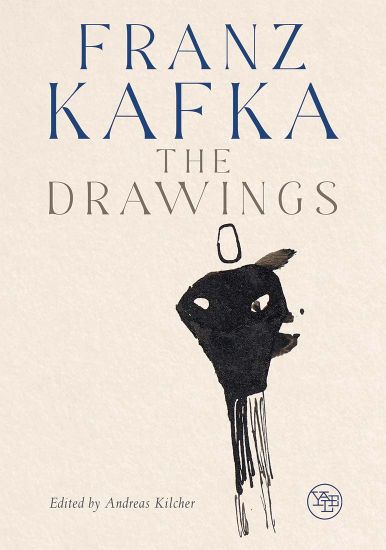
The first book to publish the entirety of Franz Kafka’s graphic output, including more than 100 newly discovered drawings “The figures he drew stand alone as stories in themselves.”—Lauren Christensen, New York Times Book Review “A sensational new book [that] reveals these hitherto hidden artworks for the first time. . . . This valuable volume allows us to see how, for Kafka, word and image walk arm in arm.”—Benjamin Balint, Jewish Review of Books The year 2019 brought a sensational discovery: hundreds of drawings by the writer Franz Kafka (1883–1924) were found in a private collection that for decades had been kept under lock and key. Until now, only a few of Kafka’s drawings were widely known. Although Kafka is renowned for his written work, his drawings are evidence of what his literary executor Max Brod termed his “double talent.” Irresistible and full of fascinating figures, shifting from the realistic to the fantastic, the grotesque, the uncanny, and the carnivalesque, they illuminate a previously unknown side of the quintessential modernist author. Kafka’s drawings span his full career, but he drew most intensively in his university years, between 1901 and 1907. An entire booklet of drawings from this period is among the many new discoveries, along with dozens of loose sheets. Published for the first time in English, these newly available materials are collected with his known works in a complete catalogue raisonné of more than 240 illustrations, reproduced in full color. Essays by Andreas Kilcher and Judith Butler provide essential background for this lavish volume, interpreting the drawings in their own right while also reconciling their place in Kafka’s larger oeuvre.

Max Brod, a successful novelist, was a boyhood companion of Kafka's and remained closely tied to him until Kafka's death in 1924. He was undoubtedly the one man whom Kafka trusted more than any other, and it is to Brod, as his literary executor and editor, that we are indebted for rescuing and bringing to light Kafka's work. Out of a lifelong devoted friendship, Brod drew this account of Kafka's youth, family and friends, his struggle to recognize himself as a writer, his sickness, and his last days. Franz Kafka gives us not only a more vivid and lifelike picture of Kafka than that painted by any of his contemporaries, but also a fascinating portrayal of the complicated interaction between two writers of different temperaments but similar backgrounds who together helped shape the future of twentieth-century literature.
Considered the father of modern American anthropology, Franz Boas introduced the relativistic, culture-centered methods and principles of inquiry that continue to dominate the field. This study analyzes the development of his thought and his contributions to racial and ethnic theory in the context of his own ethnicity and personal experience with persecution. The author focuses primarily on Boas's attempt to fuse science with political and social activism--an effort to insure that his ideological contributions to science had practical relevance to the difficult issues facing American society.Hyatt fills in the details of Boas's background, from his early years in Germany to his emigration to the United States in the late 1880s, and discusses his pivotal role in transforming anthropology from an amateur pursuit into a rigorous academic discipline. The author examines Boas's attacks on those who used science to promulgate theories of racial inferiority based on alleged differences in mental ability. He traces the origins of Boas's own theories and the use he made of them in working for equal rights for immigrants and African Americans. This is the first biographical study to focus on the historical meaning of Boas's contributions and the motivating forces that shaped his work. Essential for courses in race and ethnicity, sociology, the history of anthropology, 20th-century American history, American intellectual history, theories of culture, and related subjects.
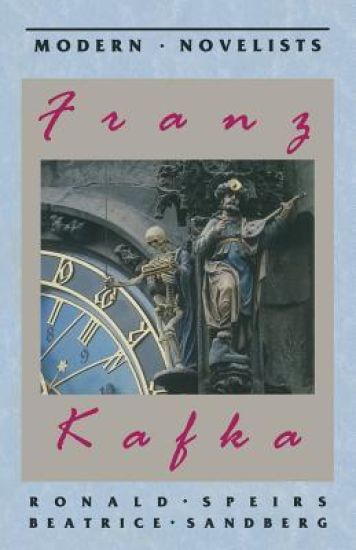
The Missing Person, The Trial and The Castle are known throughout the world as great works of modern fiction, admired for the originality of their technique, subtlety of language and multiple suggestiveness. The present study takes power in its social, psychological and moral complexity and follows this thematic thread through the labyrinth of imagery and motif in each novel. The detailed analyses of the novel are preceded by an account of Kafka's life and a survey of critical approaches to his work.
These stories cover the whole span of Kafka's writing career, from "Looking to See" written in his twenties, to his last work, "Josephine", and culminating in "The Metamorphosis"
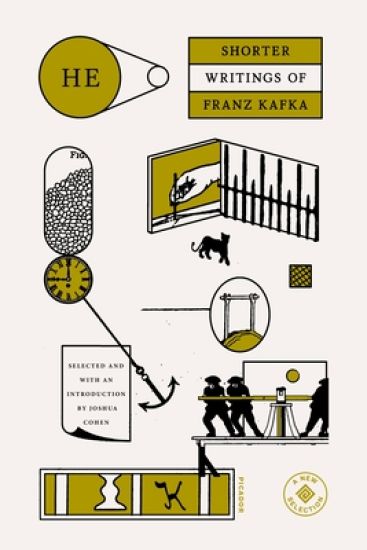
A new selection of Franz Kafka's shorter fiction and nonfiction work, selected and with a preface by Book of Numbers author Joshua Cohen. "Being asked to write about Kafka is like being asked to describe the Great Wall of China by someone who's standing just next to it. The only honest thing to do is point." --Joshua Cohen, from his foreword to He: Shorter Writings of Franz Kafka This is a Kafka emergency kit, a congregation of the brief, the minor works that are actually major. Joshua Cohen has produced a frame that refuses distinctions between what is a story, a letter, a workplace memo, and a diary entry, also including popular favorites like The Bucket Rider, The Penal Colony, and The Burrow. Here we see Kafka's preoccupations in writing about animals, messiah variations, food, and exercise, each in his signature style. Cohen's selection emphasizes the stately structure of utterly coherent logic within an utterly incoherent and illogical world, showing how Kafka harnessed the humblest grammar to metamorphic power, until the predominant effect ceases to be the presence of an unreliable narrator but the absence of the universe's only reliable narrator--God.
The haunting collection of poems that gathers the first four books of Pulitzer winner Franz Wright under one cover, where "fans old and new will find a feast amid famine" (Publishers Weekly), and discover how large this poet's gift was from the start.

Franz Liszt: A Research and Information Guide is an annotated bibliography concerning both the nature of primary sources related to the composer and the scope and significance of the secondary sources which deal with him, his compositions, and his influence as a composer and performer. The second edition includes research published since the publication of the first edition and provide electronic resources.

This is the first book about Kafka that uses the writer's medical records. Gillman explores the relation of the body to cultural myths, and brings a unique and fascinating perspective to Kafka's life and writings.

Franz Liszt: A Research and Information Guide is an annotated bibliography concerning both the nature of primary sources related to the composer and the scope and significance of the secondary sources which deal with him, his compositions, and his influence as a composer and performer. The second edition includes research published since the publication of the first edition and provide electronic resources. Franz Liszt was born on 22 October 1811 at Raiding, today located in Austria’s Burgenland. He received his first piano lessons from his father, Adam Liszt, an employee of the celebrated Eszterházy family. Young Franz was quickly acclaimed a prodigy, and in 1820 a group of Hungarian magnates offered to underwrite his musical education. Shortly thereafter the Liszts moved to Vienna, where Franz studied piano and composition with Carl Czerny and Anton Salieri. Performances there earned Liszt local fame; even Beethoven expressed interest in him.

Franz Kafka: Subversive Dreamer is an attempt to identify and properly contextualize the social critique in Kafka’s biography and work that links father-son antagonisms, heterodox Jewish religious thinking, and anti-authoritarian or anarchist protest against the rising power of bureaucratic modernity. The book proceeds chronologically, starting with biographical facts often neglected or denied relating to Kafka’s relations with the Anarchist circles in Prague, followed by an analysis of the three great unfinished novels—Amerika, The Trial, The Castle—as well as some of his most important short stories. Fragments, parables, correspondence, and his diaries are also used in order to better understand the major literary works. Löwy’s book grapples with the critical and subversive dimension of Kafka’s writings, which is often hidden or masked by the fabulistic character of the work. Löwy’s reading has already generated controversy because of its distance from the usual canon of literary criticism about the Prague writer, but the book has been well received in its original French edition and has been translated into Spanish, Italian, Portuguese, Greek, and Turkish.
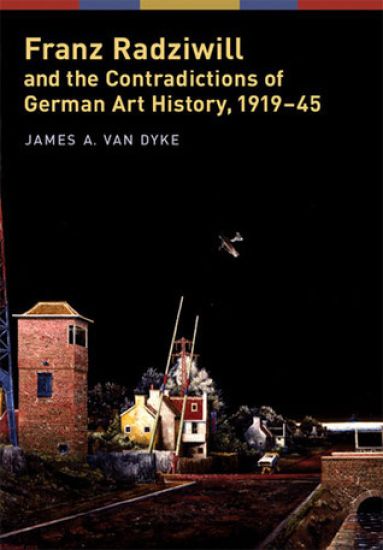
Franz Radziwill and the Contradictions of German Art History, 1919-45
James A. van Dyke
The University of Michigan Press
2010
sidottu
"Van Dyke has taken a risk and succeeded masterfully. His book means a major step to our understanding of the art world and the cultural politics during the Weimar Republic and the Third Reich. This case study, with its methodological approach, its close reading and contextualization, is a superb work and contributes to central debates about modernity and art history."---Olaf Peters, Department of Art History, Martin Luther University, Halle-Wittenberg"James van Dyke has made a critically important contribution not only to German art studies, but also to the broader investigation---in history, literary studies, and cultural studies---of early twentieth century 'modernities.'"---Barbara McCloskey, University of Pittsburgh"Far more than a monograph on an individual painter, this carefully researched work of critical art history captures the complexities and paradoxes of culture during the Third Reich. James van Dyke's examination of Franz Radziwill---arguably the preeminent 'reactionary modernist' artist of the time---shows that success during the Weimar Republic did not preclude an attempt to find accommodation with the Nazi regime. Many modernist cultural figures sought to find a place in the Third Reich, and while this proved difficult, their experiences undoubtedly challenge the notion of a monolithic 'Nazi art.'"---Jonathan Petropoulos, author of The Faustian Bargain: The Art World in Nazi GermanyWhat was Nazi art? For the most part, we think of traditionally painted scenes of peasants plowing; blonde German girls with or without clothes; and heroically posed, square-jawed soldiers. When we think of modern art in Nazi Germany, we typically think above all of the infamous exhibition "Degenerate Art," which opened in Munich in July 1937. While these associations are not entirely wrong, the relationship between modern German art and National Socialism is considerably more complex than has generally been understood. In Franz Radziwill and the Contradictions of German Art History, 1919–45, James A. van Dyke tells the story of a well-known modern artist who regarded modernity and civilization with deep ambivalence during the 1920s and then for a time became a strong supporter of National Socialism. Radziwill's art, politics, and career are embedded in the debates about the definition of German art and state art policy in and after Hitler's rise. Challenging the monolithic view of "the Nazis," this book details how a painter could be championed by certain powerful National Socialists and be seen as a "degenerate" artist by others, how he could criticize the state and yet fight for the Fatherland, and how the unevenness of Hitler's state could foster hope and resistance even in a man who ultimately was deeply distressed by events.James A. van Dyke is Assistant Professor of Modern European Art History in the Department of Art History and Archaeology at the University of Missouri in Columbia, Missouri, and has published extensively on German modern art.Jacket art: Franz Radziwill, The Death Dive of Karl Buchstätter, 1928, oil on canvas on masonite, 90 × 95 cm. Museum Folkwang Essen. (Photo: Jens Nober.) © 2010 Artists Rights Society (ARS), New York / VG Bild-Kunst, Bonn.

This 1973 text provides a critical introduction to the writings of Franz Kafka. Within it Ronald Gray surveys the novels and short stories, and glances also at the religious or confessional writings. He presents a persuasive and coherent account of Kafka's personal and artistic development and its meaning and value for us. Dr Gray argues that the early short stories are most finished and controlled; here Kafka recognised and managed to find a form exactly fitting his own condition, and the writing is less compulsive and obsessional than it became later. Dr Gray quotes extensively, translating specifically for the purpose. He writes for all whose who read Kafka, especially the many who read him in translation and would like a helpful and shrewd guide to understanding. Kafka's work hauntingly expresses one whole area of the modern mind - its anguish, dissociation and guilt - and this sane and sympathetic book puts him into a humane perspective.