
Kirjahaku
Etsi kirjoja tekijän nimen, kirjan nimen tai ISBN:n perusteella.
1000 tulosta hakusanalla Frederick J. Pohl

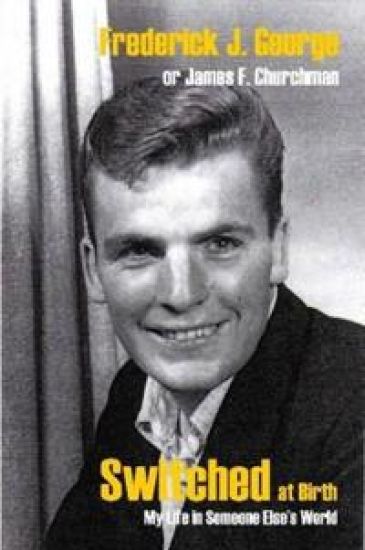
I was accidentaly placed in the wrong cot the night I was born and did not discover this until I was fifty seven. The result is that I have lived a life that should have been someone else's and he lived a life that should have been mine. This is a story of growing up with a father who suspected that I wasn't his son, of how I discovered I was switched at birth and how I have come to terms with the fact that I have been living in someone else's world.
Restoring History - Western Cultural and Political Conservatism
Frederick J. Hutchison
JFK Administrative Services
2012
nidottu

Right Thinking and Sacred Oratory in Counter-Reformation Rome
Frederick J. McGinness
Princeton University Press
2014
pokkari
At the end of the sixteenth century, when painters, writers, and scientists from all over Europe flocked to Rome for creative inspiration, the city was also becoming the center of a vibrant and assertive Roman Catholic culture. Closely identified with Rome, the Counter-Reformation church sought to strengthen itself by building on Rome's symbolic value and broadcasting its cultural message loudly and skillfully to the European world. In a book that captures the texture and flavor of this rhetorical strategy, Frederick McGinness explores the new emphasis placed on preaching by Roman church leaders. Looking at the development of a sacred oratory designed to move the heart, he traces the formation of a long-lasting Catholic worldview and reveals the ingenuity of the Counter-Reformation in the transformation of Renaissance humanism. McGinness not only describes the theory of sermon-writing, but also reconstructs the circumstances, social and physical, in which sermons were delivered. The author considers how sermons blended spirituality with pious legends--for example, stories of the early martyrs--and evocative metaphors to fashion a respublica christiana of loyal Catholics. Preachers projected a "right" view of history, social relationships, and ecclesiastical organization, while depicting a spiritual topography upon which Catholics could chart a path to salvation. At the center of this topography was Rome, a vast stage set for religious pageantry, which McGinness brings to life as he follows the homiletic representations of the city from a bastion of Christian militancy to a haven of harmony, light, and tranquility. Originally published in 1995. The Princeton Legacy Library uses the latest print-on-demand technology to again make available previously out-of-print books from the distinguished backlist of Princeton University Press. These editions preserve the original texts of these important books while presenting them in durable paperback and hardcover editions. The goal of the Princeton Legacy Library is to vastly increase access to the rich scholarly heritage found in the thousands of books published by Princeton University Press since its founding in 1905.

Order and Artifice in Hume's Political Philosophy
Frederick J. Whelan
Princeton University Press
2017
pokkari
Frederick G. Whelan relates Hume's political theory to the other parts of his philosophy, including his epistemology, his account of human nature, and his ethics, emphasizing the unity of the whole. Originally published in 1985. The Princeton Legacy Library uses the latest print-on-demand technology to again make available previously out-of-print books from the distinguished backlist of Princeton University Press. These editions preserve the original texts of these important books while presenting them in durable paperback and hardcover editions. The goal of the Princeton Legacy Library is to vastly increase access to the rich scholarly heritage found in the thousands of books published by Princeton University Press since its founding in 1905.
Right Thinking and Sacred Oratory in Counter-Reformation Rome
Frederick J. McGinness
Princeton University Press
2016
sidottu
At the end of the sixteenth century, when painters, writers, and scientists from all over Europe flocked to Rome for creative inspiration, the city was also becoming the center of a vibrant and assertive Roman Catholic culture. Closely identified with Rome, the Counter-Reformation church sought to strengthen itself by building on Rome's symbolic value and broadcasting its cultural message loudly and skillfully to the European world. In a book that captures the texture and flavor of this rhetorical strategy, Frederick McGinness explores the new emphasis placed on preaching by Roman church leaders. Looking at the development of a sacred oratory designed to move the heart, he traces the formation of a long-lasting Catholic worldview and reveals the ingenuity of the Counter-Reformation in the transformation of Renaissance humanism. McGinness not only describes the theory of sermon-writing, but also reconstructs the circumstances, social and physical, in which sermons were delivered. The author considers how sermons blended spirituality with pious legends--for example, stories of the early martyrs--and evocative metaphors to fashion a respublica christiana of loyal Catholics. Preachers projected a "right" view of history, social relationships, and ecclesiastical organization, while depicting a spiritual topography upon which Catholics could chart a path to salvation. At the center of this topography was Rome, a vast stage set for religious pageantry, which McGinness brings to life as he follows the homiletic representations of the city from a bastion of Christian militancy to a haven of harmony, light, and tranquility. Originally published in 1995. The Princeton Legacy Library uses the latest print-on-demand technology to again make available previously out-of-print books from the distinguished backlist of Princeton University Press. These editions preserve the original texts of these important books while presenting them in durable paperback and hardcover editions. The goal of the Princeton Legacy Library is to vastly increase access to the rich scholarly heritage found in the thousands of books published by Princeton University Press since its founding in 1905.

Order and Artifice in Hume's Political Philosophy
Frederick J. Whelan
PRINCETON UNIVERSITY PRESS
2017
sidottu
Frederick G. Whelan relates Hume's political theory to the other parts of his philosophy, including his epistemology, his account of human nature, and his ethics, emphasizing the unity of the whole. Originally published in 1985. The Princeton Legacy Library uses the latest print-on-demand technology to again make available previously out-of-print books from the distinguished backlist of Princeton University Press. These editions preserve the original texts of these important books while presenting them in durable paperback and hardcover editions. The goal of the Princeton Legacy Library is to vastly increase access to the rich scholarly heritage found in the thousands of books published by Princeton University Press since its founding in 1905.
The book defines seven stages of spiritual maturity for Christians. It explains how the process of sanctification works in each stage and involves the power of the cross and the resurrection to defeat the power of sin and bring new life. Each stage has special challenges, opportunities, and dangers.Author Biography: As a Christian laymen, Fred Hutchison has had a variety of opportunities to teach ranging from pulpit invitations to being a banquet speaker, small group leader, slide show presenter, and author and director of short dramas and comedies. In recent years most of Fred’s teaching has been through the written word. He has written 170 messages about prayer and knowing God for a list of 100 e-mail subscribers. He has written advent studies in the genre of historical fiction. He also writes poetry and essays on science, theology, philosophy, history, and psychology. He has written three unpublished books on philosophy, history, and modern Evangelicalism. Fred Hutchison has an MBA and a CPA and is retired. He was a technical specialist in governmental accounting and auditing. He wrote technical literature, did research, taught classes, prepared training seminars, and did quality review
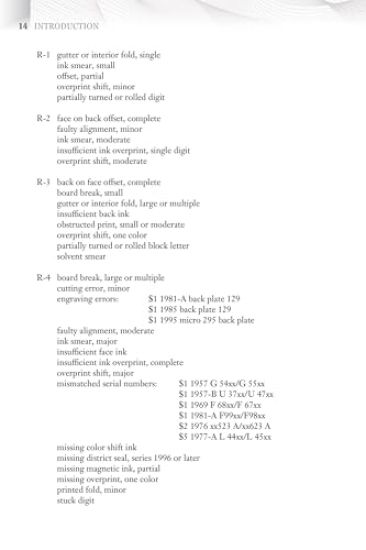
New to the Whitman lineup, United States Paper Money Errors by father-daughter duo Dr. Fred Bart and Bianca Bart returns in a fully revised and long awaited fifth edition. Few mistakes generate the fascination and buzz that paper money errors do, making this an essential resource for collectors.Now in full color, this must-have guide features more than 550 photos, values in up to four grades, and the universally recognized Friedberg Numbering System(TM), making identification easy. It also includes rarity guides for each note and invaluable appendices with exclusive data found nowhere else.Chapters are arranged according to the actual production sequence within the Bureau of Engraving and Printing (BEP), providing a logical flow for readers. Historic photographs from the BEP offer a fascinating glimpse into currency production during a bygone era, contrasting sharply with the advanced technology currently in use.Error notes continue to carve an ever larger niche in paper money. Explore important historical developments, industry insights, and exciting new discoveries in United States Paper Money Errors, the defintive reference on the topic.This is the first title rebranded and published under the new Professional Series(TM)--a must-have resource for dedicated collectors. Designed to deepen your knowledge, this advanced series delivers in-depth history, technical details, and pricing on specialized numismatic categories such as errors, varieties, patterns, foreign coins, and more. Authored by industry experts, each book in the series provides the knowledge and insight needed to take your collecting to the next level
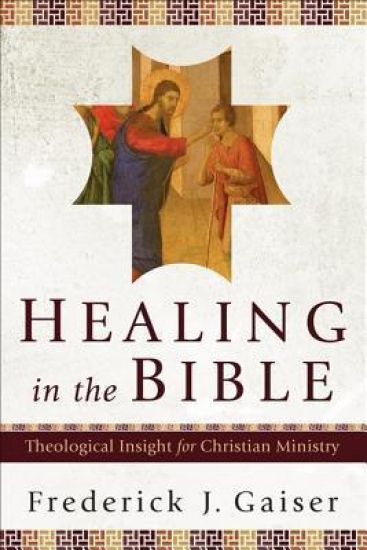
Healing in the Bible – Theological Insight for Christian Ministry
Frederick J. Gaiser
Baker Academic, Div of Baker Publishing Group
2010
nidottu
In the midst of an ongoing debate about health care, what does the Bible say about healing? Here a respected scholar reads biblical texts on health and healing with care and imagination, engaging the reader in lively conversations with the text and with questions of contemporary theological and pastoral concern. Gaiser offers close readings of fifteen key Old and New Testament passages, considering their significance for the church's understanding of healing and its ministry today. The book examines such significant matters as God's role in healing, the relation between sickness and sin, healing and prayer, God's healing and medical science, and healing under the sign of the cross, offering fresh insights for anyone interested in Christian views on healing.
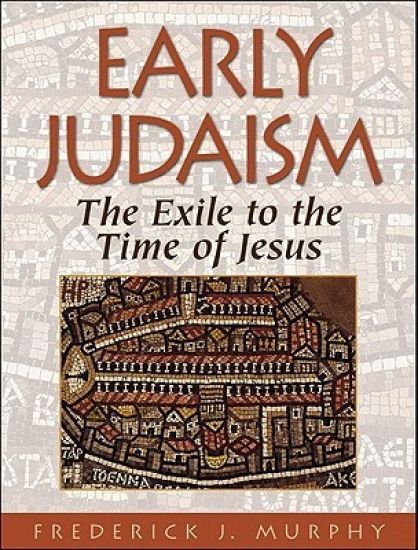
Early Judaism – The Exile to the Time of Christ
Frederick J. Murphy
Baker Academic, Div of Baker Publishing Group
2006
nidottu
This textbook provides an introduction to the Second Temple period (520 BCE-70 CE), the formative era of early Judaism and the milieu of Jesus and of the earliest Christians. By paying close attention to original sources--especially the Bible, the Pseudepigrapha, the Dead Sea Scrolls, and Josephus--Frederick J. Murphy introduces students to the world of ancient Jews and Christians. Early Judaism: The Exile to the Time of Christ, designed to serve students and teachers in the classroom, will also be of great interest to anyone looking for an entrée into this pivotal period. It contains suggestions for primary readings, bibliographies, maps, illustrations, glossaries, and indexes.

No Taint of Compromise highlights the motives and actions of those who played instrumental if not central roles in antislavery politics -- those who undertook the yeoman's work of organising parties, holding conventions, editing newspapers, and generally animating and agitating the discussion of issues related to slavery. They were a small but critical number of voices who, beginning in the late 1830s, battled the institution of slavery through political activism. Frederick J. Blue provides an in-depth account of the trials and accomplishments of eleven men and women who, in the face of great odds and powerful opposition, insisted that emancipation and racial equality could only be achieved through the political process: Alvan Stewart, a Liberty party organiser from New York; John Greenleaf Whittier, a Massachusetts poet, journalist, and Liberty activist; Charles Henry Langston, an Ohio African American educator; Owen Lovejoy, a congressman from Illinois; Sherman Booth, a journalist and Liberty organiser in Wisconsin; Jane Grey Swisshelm, a journalist in Pennsylvania and later Minnesota; George W. Julian, a congressman from Indiana; David Wilmot, a congressman from Pennsylvania; Benjamin and Edward Wade, a senator and a congressman, respectively, from Ohio; and Jessie Benton Frémont of Missouri and California, wife of the Republican presidential nominee. Their stories, brought together in this comparative biographical study, enrich our understanding of the political crisis over slavery that led to the Civil War.
Why do we travel? Ostensibly an act of leisure, travel finds us thrusting ourselves into jets flying miles above the earth, only to endure dislocations of time and space, foods and languages foreign to our body and mind, and encounters with strangers on whom we must suddenly depend. Travel is not merely a break from routine; it is its antithesis, a voluntary trading in of the security one feels at home for unpredictability and confusion. In ""Bewildered Travel"", Frederick Ruf argues that this confusion, which we might think of simply as a necessary evil, is in fact the very thing we are seeking when we leave home. Ruf relates this quest for confusion to our religious behavior. Citing William James, who defined the religious as what enables us to ""front life,"" Ruf contends that the search for bewilderment allows us to point our craft into the wind and sail headlong into the storm rather than flee from it. This view challenges the Eliadean tradition that stresses religious ritual as a shield against the world's chaos. Ruf sees our departures from the familiar as a crucial component in a spiritual life, reminding us of the central role of pilgrimage in religion. In addition to his own revealing experiences as a traveler, Ruf presents the reader with the journeys of a large and diverse assortment of notable Americans, including Henry Miller, Paul Bowles, Mark Twain, Mary Oliver, and Walt Whitman. These accounts take us from the Middle East to the Philippines, India to Nicaragua, Mexico to Morocco - and, in one threatening instance, simply to the edge of the author's own neighborhood. ""What gives value to travel is fear,"" wrote Camus. This book illustrates the truth of that statement.
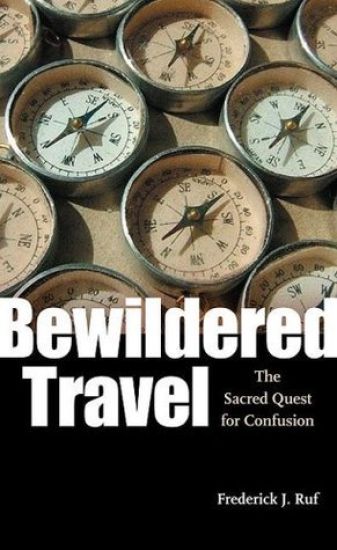
Why do we travel? Ostensibly an act of leisure, travel finds us thrusting ourselves into jets flying miles above the earth, only to endure dislocations of time and space, foods and languages foreign to our body and mind, and encounters with strangers on whom we must suddenly depend. Travel is not merely a break from routine; it is its antithesis, a voluntary trading in of the security one feels at home for unpredictability and confusion. In ""Bewildered Travel"", Frederick Ruf argues that this confusion, which we might think of simply as a necessary evil, is in fact the very thing we are seeking when we leave home. Ruf relates this quest for confusion to our religious behavior. Citing William James, who defined the religious as what enables us to ""front life,"" Ruf contends that the search for bewilderment allows us to point our craft into the wind and sail headlong into the storm rather than flee from it. This view challenges the Eliadean tradition that stresses religious ritual as a shield against the world's chaos. Ruf sees our departures from the familiar as a crucial component in a spiritual life, reminding us of the central role of pilgrimage in religion. In addition to his own revealing experiences as a traveler, Ruf presents the reader with the journeys of a large and diverse assortment of notable Americans, including Henry Miller, Paul Bowles, Mark Twain, Mary Oliver, and Walt Whitman. These accounts take us from the Middle East to the Philippines, India to Nicaragua, Mexico to Morocco - and, in one threatening instance, simply to the edge of the author's own neighborhood. ""What gives value to travel is fear,"" wrote Camus. This book illustrates the truth of that statement.

The Indirect Effect of Direct Legislation
Frederick J Boehmke
Ohio State University Press
2021
pokkari
Frederick J. Boehmke's book makes explicit the many consequences-intended and unintended-of having direct legislation possible in a state. Many studies of the initiative process argue that it is a flawed process that rewards wealthy interests. While evidence to support this conclusion is often drawn from a number of high-profile, high-expenditure initiative campaigns, ballot campaigns are merely one consequence of the initiative process. The ability to propose legislation directly to the people fundamentally changes the process through which citizens are represented by organized interest groups, benefiting typically underrepresented interests. To demonstrate this, the author models the incentives that the initiative process creates for interests to organize and for how they communicate their preferences to policy makers. Interests that represent a broader range of the public are found to gain the most from the option to propose initiatives, implying that the set of organized interests in initiative states should reflect this advantage. Ironically, an effect of direct legislation is to potentially increase the effectiveness of special interest lobbying in state legislatures-in a sense, the opposite of the direct control that gives direct legislation its theoretical appeal. Yet, the clear effect is one of empowering voices that traditionally had very little effect in the legislative process. If greater representation is the goal of direct legislation, it is a clear success, even though that success does not really come in the act of ballot initiatives itself.