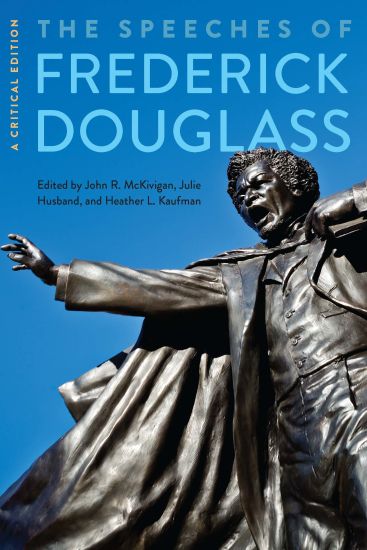
A collection of twenty of Frederick Douglass’s most important orations This volume brings together twenty of Frederick Douglass’s most historically significant speeches on a range of issues, including slavery, abolitionism, civil rights, sectionalism, temperance, women’s rights, economic development, and immigration. Douglass’s oratory is accompanied by speeches that influenced him, his reflections on successful rhetorical strategies, contemporary commentary on his performances, and modern-day assessments of his rhetorical legacy.
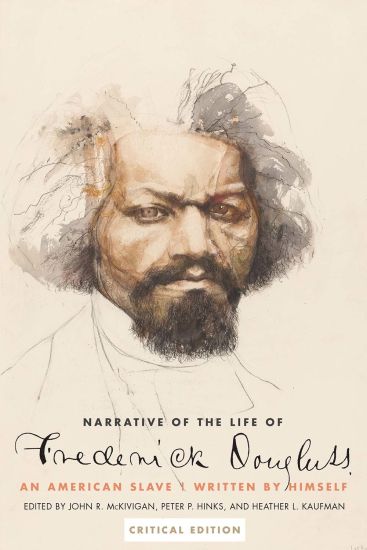
A critical edition of one of the most influential literary documents in American and African American history “This edition is the most valuable teaching tool on slavery and abolition available today. It is exceptional.”—Nancy Hewitt, Distinguished Professor Emerita, Rutgers University Ideal for independent reading or for coursework in American and African American history, this revised edition of the memoir written by Frederick Douglass (1818–1895) of his life as a slave in pre–Civil War Maryland incorporates a wide range of supplemental materials to enhance students’ understanding of slavery, abolitionism, and the role of race in American society. Offering readers a new appreciation of Douglass’s world, it includes documents relating to the slave narrative genre and to the later career of an essential figure in the nineteenth-century abolition movement.
The selected correspondence of the great American abolitionist and reformer dating from the immediate post–Civil War years This third volume of Frederick Douglass’s Correspondence Series exhibits Douglass at the peak of his political influence. It chronicles his struggle to persuade the nation to fulfill its promises to the former slaves and all African Americans in the tempestuous years of Reconstruction. Douglass’s career changed dramatically with the end of the Civil War and the long-sought after emancipation of American slaves; the subsequent transformation in his public activities is reflected in his surviving correspondence. In these letters, from 1866 to 1880, Douglass continued to correspond with leading names in antislavery and other reform movements on both sides of the Atlantic, and political figures began to make up an even larger share of his correspondents. The Douglass Papers staff located 817 letters for this time period and selected 242, or just under 30 percent, of them for publication. The remaining 575 letters are summarized in the volume’s calendar.
Douglass’s letters from the 1880s reveal both his unrelenting efforts to protect African American rights and little-known details about his personal life The fourth volume of the Correspondence Series presents Frederick Douglass as a still-influential public figure but also as a man aware that the gains African Americans made during the Civil War and Reconstruction were not as well secured as he had hoped. For this volume, the editors selected 247 of the 914 known letters sent to or from Douglass between 1881 and 1888. An active partisan, Douglass corresponded regularly with Republican party leaders from the local to national level about campaign tactics and strategies. Douglass also often received letters from African Americans who detailed the deteriorating state of race relations across the South in the 1880s. Douglass used his correspondence to advance the political stature of Republicans he regarded as most sympathetic to protecting African American rights. Douglass wrote about his taste in reading; his fondness for carriage riding; his feuds with family members and neighbors; his first wife, Anna Murray; and his remarriage, to Helen Pitts, and the controversy that the interracial marriage generated. Douglass’s correspondence details the seven-month honeymoon the couple took in Europe and Egypt, the reunion with old abolitionist friends in Great Britain, and candid appraisals of places he visited and people he met overseas.
In their long, continuing struggle for equality, American women have had to rely primarily on their own resources, which have been considerable. Yet many men have helped advance their cause. Perhaps foremost among them was the great abolitionist Frederick Douglass. According to the women of the time, Douglass was their preeminent male supporter. As Elizabeth Cady Stanton said, "He was the only man I ever saw who understood the degradation of the disfranchisement of women." This book collects the speeches and writings of Frederick Douglass on women's rights. Since suffrage was the major concern of the movement, the issue of voting was primary among Douglass's themes however, he also spoke and wrote resolutely on the need for women to reach their full potential by participating in every phase of American society and in every aspect of decision-making. No one was more insistent that the oppression of women violated the principles proclaimed at the birth of the American Republic. He was, in short, in favour of "absolute justice and perfect equality" for women. And because of his pride in his own race, he never failed to remind the white women who led the movement that black women endured an even greater oppression in white, male-dominated society than they did. Always eloquent and rarely less than inspiring, Frederick Douglass on Women's Rights presents the words of one of America's greatest spokesmen on one of the most important issues of the nineteenth century, words which still ring with truth and power today.
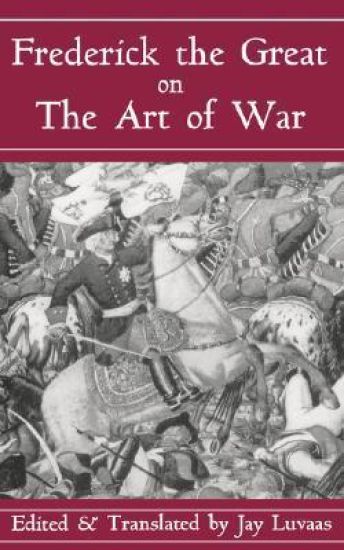
Frederick the Great (1712-1786), King of Prussia, initiated the Seven Years' War in 1756 outfought the formidable French, Russian, and Austrian armies aligned against him and established Prussia as a major power, thereby decisively influencing the next two centuries of European history. He was also a brilliant military thinker whose observations arose from extensive battlefield experience.This volume presents a balanced selection from Frederick's writings on strategy, tactics, and mobility the problems of logistics and a two-front war the combined use of infantry, cavalry, and artillery the history of the Prussian army the critical battles of the Seven Years' War generalship as an art and much more. A majority of this material is translated here for the first time in English and available nowhere else. The result is an invaluable glimpse into the inner thoughts of a military genius.
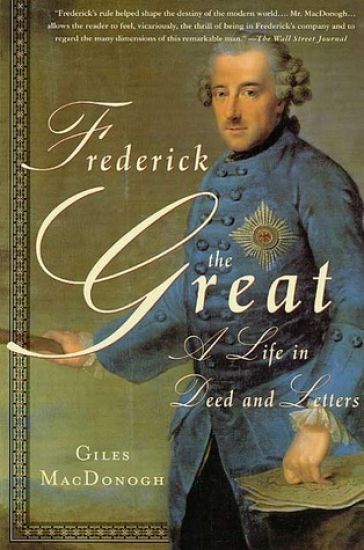
Piet and soldier, misanthrope and philospher, Frederick the Great was a contradictory, almost unfathomable man. His conquests made him one of the most formindable and feared leaders of his era. But as a patron of artists and intellectuals, Frederick re-created Berlin as one of the continent's great cities, matching his state's reputation for military ferocity with one for cultural achievement. Though history remembers Frederick as a "Potsdam Fuhrer," his father more rightly deserved the title. When, as a youth, Frederick attempted to flee the elder man's brutality, the punishment was to watch the execution of his friend and co-conspirator, Katte. Though a subsequent compromise allowed Frederick to take the throne in 1740, he would remain true unto himself. His tastes for music, poetry, and architecture would match the significance of his military triumphs in the Seven Years' War.Drawing on the most recent scholarship, Giles MacDonogh's fresh, authoritative biograhy gives us the most fully rounded portrait yet of an often misunderstood king.
Many German historians regard Emperor Frederick III (1831-1888) as a liberal sovereign who could have saved German history from its tragic course. Recent historians, however, have challenged the long-held view that liberalism's failure in 19th century Germany presaged Hitler's triumph, claiming that earlier scholars have overlooked liberalism's positive contributions to German history. This book reassesses Frederick III's contribution to the liberal movement. Using documents recently made available from the Hessische Hausstiftung, the author considers the question of whether Frederick abetted the liberal movement's successes or was part of its tragic history. As crown prince, Frederick maintained ties with prominent liberals and rejected Otto von Bismarck's conservative domestic and foreign policies. His liberal impulses were strengthened by his marriage to the Queen of England's daughter, Princess Victoria. But when Frederick came to the throne in 1888, he died after only 99 days. Many historians consider his untimely death the swan song of German liberalism. Kollander finds that the documents show Frederick to be a constitutional liberal who fought to preserve the constitution-the basis of liberal political power-from subversion by the conservatives. However, he only condoned liberal reform on the basis of the constitutional status quo, rejecting his wife's wish to see British political institutions adopted in Germany. Although Frederick contributed to the survival of liberalism as a political force, the author concludes, the extent of his liberal views have been exaggerated by many historians.
Frederick Douglass, once a slave, was one of the great 19th century American orators and the most important African American voice of his era. This book traces the development of his rhetorical skills, discusses the effect of his oratory on his contemporaries, and analyzes the specific oratorical techniques he employed.The first part is a biographical sketch of Douglass's life, dealing with his years of slavery (1818-1837), his prewar years of freedom (1837-1861), the Civil War (1861-1865), and postwar years (1865-1895). Chesebrough emphasizes the centrality of oratory to Douglass's life, even during the years in slavery. The second part looks at his oratorical techniques and concludes with three speeches from different periods. Students and scholars of communications, U.S. history, slavery, the Civil War and Reconstruction, and African American studies will be interested in this book.
Written for young adults, this biography of Frederick Douglass covers the life of the most famous black abolitionist and intellectual of the 19th century.Frederick Douglass: A Biography explores the life of the most famous black abolitionist and intellectual of the 19th century. The book covers the major developments of Douglass's life from his birth in 1818 through his time as a slave and his rise to prominence as the most famous black voice for freedom of his time. The biography discusses Douglass's relationships with such figures as John Brown, the feminist Elizabeth Cady Stanton, and five presidents of the United States, including Abraham Lincoln. It analyzes his role in national politics before, during, and after the Civil War, and examines the way his life is tied to significant local, regional, and national events. By focusing on the importance of spirituality in Douglass's life, this revealing work adds to our understanding of the man, the way he saw himself, and the many things he accomplished.
Two great works of African-American literature come together in an omnibus edition that includes the autobiography of the famous abolitionist and statesman who escaped to the North after twenty-one years of enslavement, as well as an account that reveals the exploitation of African American female slaves through first-person narrative. Reader's Guide included. Reprint.
Narrative of the Life of Frederick Douglass is an 1845 memoir and treatise on abolition written by famous orator and former slave Frederick Douglass during his time in Lynn, Massachusetts. It is generally held to be the most famous of a number of narratives written by former slaves during the same period. In factual detail, the text describes the events of his life and is considered to be one of the most influential pieces of literature to fuel the abolitionist movement of the early 19th century in the United States.Narrative of the Life of Frederick Douglass encompasses eleven chapters that recount Douglass's life as a slave and his ambition to become a free man.
The Sundarban stretches from the brackish waters of the broad Hooghly on the west, to the fresh waters of the still broader Meghna to the east; the turbid waters of the Bay of Bengal on its southern limits, to the zamindari or pargana lands on its northern extremity and includes in its southern fringes the dense natural mangrove forests, it is famous for. The revenue history of Sundarbans is linked up with its riverine and coastal networks to its strategic location at the head of the Bay of Bengal which made it a natural protective barrier for the densely populated city of Calcutta. The massive transformation combined with the changed physical structure of Sundarban influenced society and economy on the one hand and invited settlers to establish their control in that region on the other. The text of Pargiter focuses on the revenue history of a larger part of Sundarbans, viz., Jessore, Khulna, Bakarganj and some parts of 24-Parganas since the inception of the colonial rule in Bengal. It has also been shown how the colonial administrators took various types of measures for collecting revenue by the way of land reclamation.The introductory note by the editor analyses the revenue settlement policies which had been implemented on different occasions to ensure the revenue maximization policies of the British Raj on the one hand and to establish an human settlement in the deltaic region on the other.Please note: Taylor & Francis does not sell or distribute the Hardback in India, Pakistan, Nepal, Bhutan, Bangladesh and Sri Lanka
A riveting historical mystery that sweeps four continents and fills a void in the Victoria Cross story. Frederick Whirlpool's Victoria Cross is displayed near the entrance to the Hall of Valour at the Australian War Memorial, Canberra. It was the first VC pinned to an Australian uniform, yet almost nothing was known about its enigmatic ......
Four of Caldecott-winner Leo Lionni's most beloved tales, together in one book with an introduction from Eric Carle Here in one sumptuous collection are four timeless picture book classics by Leo Lionni: Frederick, Swimmy, Alexander and the Wind-Up Mouse, and Fish Is Fish. In this volume, meet Frederick, the poet field mouse whose happy memories help his family endure through the darkest days of winter; Swimmy, the imaginative minnow who uses his small size in a big way; Alexander, the mouse who learns the magic of friendship; and a fish who discovers that life in a small pond isn't so bad after all. Lionni's complete texts and illustrations are included along with an introduction from Eric Carle and a CD reading in this elegant, inviting gift edition.
Frederick Douglass’ 1845 Narrative is accompanied by a preface and explanatory footnotes. Included are contemporary perspectives, along with essays, a chronology and bibliography.
Former slave, orator, journalist, autobiographer; revolutionary on behalf of a just America, Frederick Douglass was a towering figure, at once consummately charismatic and flawed. His Narrative of the Life of Frederick Douglass (1845) galvanized the antislavery movement and is one of the truly seminal works of African-American literature. In this masterful and compelling biography, William S. McFeely captures the many sides of Douglass—his boyhood on the Chesapeake; his self-education; his rebellion and rising expectations; his marriage, affairs, and intense friendships; his bitter defeat and transcendent courage—and recreates the high drama of a turbulent era.
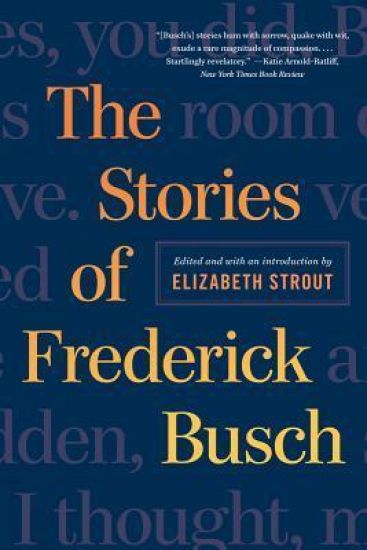
A contemporary of Ann Beattie and Tobias Wolff, Frederick Busch was a master craftsman of the form; his subjects were single-event moments in so-called ordinary life. The stories in this volume, selected by Pulitzer Prize winner Elizabeth Strout, are tales of families trying to heal their wounds, save their marriages, and rescue their children. In "Ralph the Duck," a security guard struggles to hang on to his marriage. In "Name the Name," a traveling teacher attends to students outside the school, including his own son, locked in a country jail. In Busch's work, we are reminded that we have no idea what goes on behind closed doors or in the mind of another. In the words of Raymond Carver, "With astonishing felicity of detail, Busch presents us with a world where real things are at stake and sometimes, as in the real world, everything is risked." From his first volume, Hardwater Country (1974), to his most recent, Rescue Missions (2006), this volume selects thirty stories from an "American master" (Dan Cryer, Newsday), showcasing a body of work that is sure to shape American fiction for generations to come."
Born into but escaped from slavery, Frederick Douglass—orator, journalist, autobiographer; revolutionary on behalf of a just America—was a towering figure, at once consummately charismatic and flawed. His Narrative of the Life of Frederick Douglass (1845) galvanised the antislavery movement and is one of the truly seminal works of African-American literature. In this Lincoln Prize– winning biography, William S. McFeely captures the many sides of Douglass— his boyhood on the Chesapeake; his self-education; his rebellion and rising expectations; his marriage, affairs, and intense friendships; his bitter defeat and transcendent courage—and re-creates the high drama of a turbulent era.
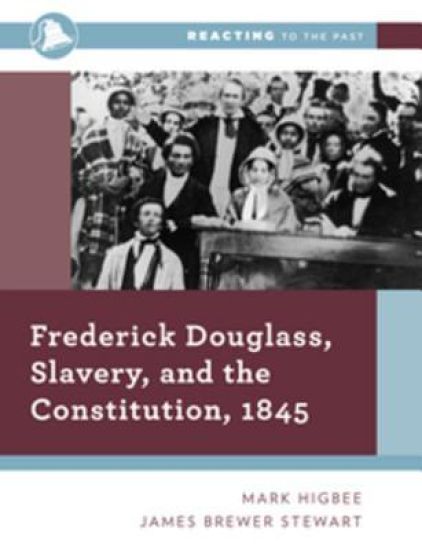
Frederick Douglass asks students to confront an explosive question: How, in a nation founded on ideas of equal rights and freedom, could the institution of slavery become so entrenched and long-lasting? How was slavery justified and how was it criticised? At a literary forum, students consider the newly-published Narrative of Frederick Douglass and hold a hearing on John C. Calhoun’s view of slavery as a “positive good”. Finally, players address the US Constitution, its original protections of the slaveholders’ power and the central question: Are Americans more beholden to the Constitution or to some “higher law”?