Kirjojen hintavertailu. Mukana 11 244 527 kirjaa ja 12 kauppaa.

Kirjahaku

Etsi kirjoja tekijän nimen, kirjan nimen tai ISBN:n perusteella.

1000 tulosta hakusanalla George M Stringam

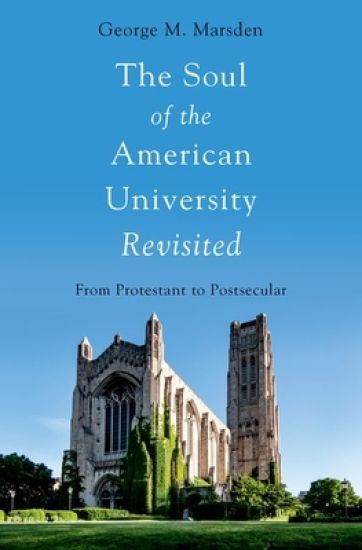
The Soul of the American University Revisited

The Soul of the American University Revisited

George M. Marsden

Oxford University Press Inc
2021
nidottu
The Soul of the American University is a classic and much discussed account of the changing roles of Christianity in shaping American higher education, presented here in a newly revised edition to offer insights for a modern era. As late as the World War II era, it was not unusual even for state schools to offer chapel services or for leading universities to refer to themselves as “Christian” institutions. From the 1630s through the 1950s, when Protestantism provided an informal religious establishment, colleges were expected to offer religious and moral guidance. Following reactions in the 1960s against the WASP establishment and concerns for diversity, this specifically religious heritage quickly disappeared and various secular viewpoints predominated. In this updated edition of a landmark volume, George Marsden explores the history of the changing roles of Protestantism in relation to other cultural and intellectual factors shaping American higher education. Far from a lament for a lost golden age, Marsden offers a penetrating analysis of the changing ways in which Protestantism intersected with collegiate life, intellectual inquiry, and broader cultural developments. He tells the stories of many of the nation's pace-setting universities at defining moments in their histories. By the late nineteenth-century when modern universities emerged, debates over Darwinism and higher criticism of the Bible were reshaping conceptions of Protestantism; in the twentieth century important concerns regarding diversity and inclusion were leading toward ever-broader conceptions of Christianity; then followed attacks on the traditional WASP establishment which brought dramatic disestablishment of earlier religious privilege. By the late twentieth century, exclusive secular viewpoints had become the gold standard in higher education, while our current era is arguably “post-secular”. The Soul of the American University Revisited deftly examines American higher education as it exists in the twenty-first century.
The Outrageous Idea of Christian Scholarship

The Outrageous Idea of Christian Scholarship

George M. Marsden

OXFORD UNIVERSITY PRESS INC
2024
sidottu
First published in 1997, The Outrageous Idea of Christian Scholarship is a landmark work that offered a bold call to re-establish Christian perspectives in academia. While other defining elements of a scholar's identity, such as race or gender, are routinely welcomed as providing valued points of view, the perspectives of believing Christians are sometimes dismissed as irrelevant--or, worse, antithetical--to the scholarly enterprise. George M. Marsden argues forcefully that academia is enriched by encouraging religious diversity. For this second edition, Marsden has added a new preface as well as an entirely new chapter reflecting on the changing landscape of academia in the quarter century since the book first appeared. In principle, the arguments for recognizing religious outlooks as legitimate expressions of diversity have been more widely accepted. In practice, the diverse academy is often a dangerously contentious place where constructive intellectual exchange is difficult. Marsden shows how Christians can contribute constructively to a variety of academic settings and exemplify the virtues that should be integral to a Christian's intellectual inquiry and exchange.
The Outrageous Idea of Christian Scholarship

The Outrageous Idea of Christian Scholarship

George M. Marsden

OXFORD UNIVERSITY PRESS INC
2024
nidottu
First published in 1997, The Outrageous Idea of Christian Scholarship is a landmark work that offered a bold call to re-establish Christian perspectives in academia. While other defining elements of a scholar's identity, such as race or gender, are routinely welcomed as providing valued points of view, the perspectives of believing Christians are sometimes dismissed as irrelevant--or, worse, antithetical--to the scholarly enterprise. George M. Marsden argues forcefully that academia is enriched by encouraging religious diversity. For this second edition, Marsden has added a new preface as well as an entirely new chapter reflecting on the changing landscape of academia in the quarter century since the book first appeared. In principle, the arguments for recognizing religious outlooks as legitimate expressions of diversity have been more widely accepted. In practice, the diverse academy is often a dangerously contentious place where constructive intellectual exchange is difficult. Marsden shows how Christians can contribute constructively to a variety of academic settings and exemplify the virtues that should be integral to a Christian's intellectual inquiry and exchange.
Hamiltonian Chaos and Fractional Dynamics

Hamiltonian Chaos and Fractional Dynamics

George M. Zaslavsky

Oxford University Press
2004
sidottu
The dynamics of realistic Hamiltonian systems has unusual microscopic features that are direct consequences of its fractional space-time structure and its phase space topology. The book deals with the fractality of the chaotic dynamics and kinetics, and also includes material on non-ergodic and non-well-mixing Hamiltonian dynamics. The book does not follow the traditional scheme of most of today's literature on chaos. The intention of the author has been to put together some of the most complex and yet open problems on the general theory of chaotic systems. The importance of the discussed issues and an understanding of their origin should inspire students and researchers to touch upon some of the deepest aspects of nonlinear dynamics. The book considers the basic principles of the Hamiltonian theory of chaos and some applications including for example, the cooling of particles and signals, control and erasing of chaos, polynomial complexity, Maxwell's Demon, and others. It presents a new and realistic image of the origin of dynamical chaos and randomness. An understanding of the origin of randomness in dynamical systems, which cannot be of the same origin as chaos, provides new insights in the diverse fields of physics, biology, chemistry, and engineering.
Hamiltonian Chaos and Fractional Dynamics

Hamiltonian Chaos and Fractional Dynamics

George M. Zaslavsky

Oxford University Press
2008
nidottu
The dynamics of realistic Hamiltonian systems has unusual microscopic features that are direct consequences of its fractional space-time structure and its phase space topology. The book deals with the fractality of the chaotic dynamics and kinetics, and also includes material on non-ergodic and non-well-mixing Hamiltonian dynamics. The book does not follow the traditional scheme of most of today's literature on chaos. The intention of the author has been to put together some of the most complex and yet open problems on the general theory of chaotic systems. The importance of the discussed issues and an understanding of their origin should inspire students and researchers to touch upon some of the deepest aspects of nonlinear dynamics. The book considers the basic principles of the Hamiltonian theory of chaos and some applications including for example, the cooling of particles and signals, control and erasing of chaos, polynomial complexity, Maxwell's Demon, and others. It presents a new and realistic image of the origin of dynamical chaos and randomness. An understanding of the origin of randomness in dynamical systems, which cannot be of the same origin as chaos, provides new insights in the diverse fields of physics, biology, chemistry, and engineering.
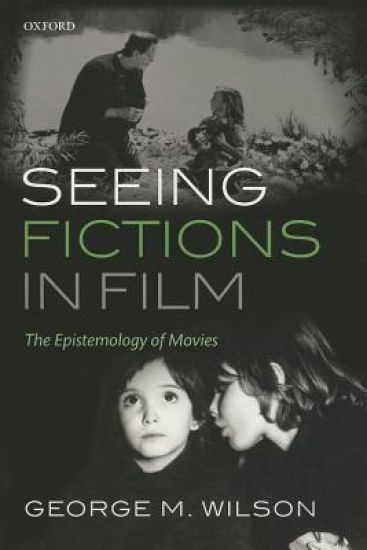
Seeing Fictions in Film

Seeing Fictions in Film

George M. Wilson

Oxford University Press
2011
sidottu
In works of literary fiction, it is a part of the fiction that the words of the text are being recounted by some work-internal 'voice': the literary narrator. One can ask similarly whether the story in movies is told in sights and sounds by a work-internal subjectivity that orchestrates them: a cinematic narrator. George M. Wilson argues that movies do involve a fictional recounting (an audio-visual narration) in terms of the movie's sound and image track. Viewers are usually prompted to imagine seeing the items and events in the movie's fictional world and to imagine hearing the associated fictional sounds. However, it is much less clear that the cinematic narration must be imagined as the product of some kind of 'narrator' - of a work-internal agent of the narration. Wilson goes on to examine the further question whether viewers imagine seeing the fictional world face-to-face or whether they imagine seeing it through some kind of work-internal mediation. It is a key contention of this book that only the second of these alternatives allows one to give a coherent account of what we do and do not imagine about what we are seeing on the screen. Having provided a partial account of the foundations of film narration, the final chapters explore the ways in which certain complex strategies of cinematic narration are executed in three exemplary films: David Fincher's Fight Club, von Sternberg's The Scarlet Empress, and the Coen brothers' The Man Who Wasn't There.
Seeing Fictions in Film

Seeing Fictions in Film

George M. Wilson

Oxford University Press
2013
nidottu
In works of literary fiction, it is a part of the fiction that the words of the text are being recounted by some work-internal 'voice': the literary narrator. One can ask similarly whether the story in movies is told in sights and sounds by a work-internal subjectivity that orchestrates them: a cinematic narrator. George M. Wilson argues that movies do involve a fictional recounting (an audio-visual narration) in terms of the movie's sound and image track. Viewers are usually prompted to imagine seeing the items and events in the movie's fictional world and to imagine hearing the associated fictional sounds. However, it is much less clear that the cinematic narration must be imagined as the product of some kind of 'narrator' - of a work-internal agent of the narration. Wilson goes on to examine the further question whether viewers imagine seeing the fictional world face-to-face or whether they imagine seeing it through some kind of work-internal mediation. It is a key contention of this book that only the second of these alternatives allows one to give a coherent account of what we do and do not imagine about what we are seeing on the screen. Having provided a partial account of the foundations of film narration, the final chapters explore the ways in which certain complex strategies of cinematic narration are executed in three exemplary films: David Fincher's Fight Club, von Sternberg's The Scarlet Empress, and the Coen brothers' The Man Who Wasn't There.
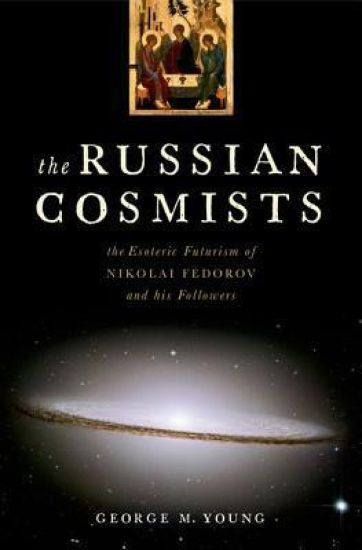
The Russian Cosmists

The Russian Cosmists

George M. Young

Oxford University Press Inc
2012
sidottu
In the nineteenth and early twentieth century, a controversial school of Russian thinkers emerged, convinced that humanity was entering an advanced stage of evolution and must assume a new, active, managerial role in the cosmos. In the first account in English of this fascinating school, George M. Young offers a dynamic and wide-ranging examination of the lives and ideas of the Russian Cosmists. Although they wrote as scientists, theologians, and philosophers, Young shows that the Cosmists addressed topics traditionally confined to occult and esoteric literature. Their writings explored the extension of the human life span to establish universal immortality; the restoration of life to the dead; the regulation of nature so that all manifestations of blind natural force were under rational human control; the effect of cosmic rays and other particles of energy on human history; and practical steps toward eventual human control over the flow of time. Suppressed during the Soviet period and little noticed in the West, the ideas of the Cosmists have in recent decades been rediscovered and embraced by many Russian intellectuals.
Revivalism and Cultural Change

Revivalism and Cultural Change

George M. Thomas

University of Chicago Press
1989
sidottu
The history of Christianity in America has been marked by recurring periods of religious revivals or awakenings. In this book, George M. Thomas addresses the economic and political context of evangelical revivalism and its historical linkages with economic expansion and Republicanism in the nineteenth century. Thomas argues that large-scale change results in social movements that articulate new organizations and definitions of individual, society, authority, and cosmos. Drawing on religious newspapers, party policies and agendas, and quantitative analyses of voting patterns and census data, he claims that revivalism in this period framed the rules and identities of the expanding market economy and the national policy. "Subtle and complex...Fascinating."--Randolph Roth, Pennsylvania History "[Revivalism and Cultural Change] should be read with interest by those interested in religious movements as well as the connections among religion, economics, and politics."--Charles L. Harper, Contemporary Sociology "Readers old and new stand to gain much from Thomas's sophisticated study of the macrosociology of religion in the United States during the nineteenth century...He has given the sociology of religion its best quantitative study of revivalism since the close of the 1970s. "--Journal for the Scientific Study of Religion
Revivalism and Cultural Change

Revivalism and Cultural Change

George M. Thomas

University of Chicago Press
1998
nidottu
The history of Christianity in America has been marked by recurring periods of religious revivals or awakenings. In this book, the author addresses the economic and political context of evangelical revivalism and its historical linkages with economic expansion and Republicanism in the 19th century. He argues that large-scale change results in social movements that articulate new organizations and definitions of individual, society, authority, and cosmos. Drawing on religious newspapers, party policies and agendas, and quantitative analyses of voting patterns and census data, Thomas claims that revivalism in this period framed the rules and identities of the expanding market economy and the national policy.
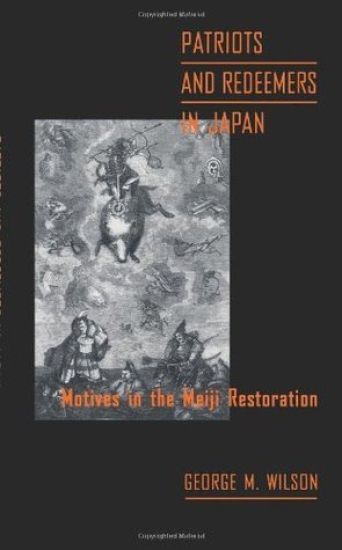
Patriots and Redeemers in Japan

Patriots and Redeemers in Japan

George M. Wilson

University of Chicago Press
1992
nidottu
In this concise but ambitious historiographical essay, Wilson argues for an approach to the Meiji Restoration that emphasizes multiple lines of motive and action. "By bringing some very interesting critical theory to his reading, Wilson has produced a book that will shift the terms of discussion on this event."--Harry D. Harootunian
All Boys Aren't Blue

All Boys Aren't Blue

George M. Johnson

Random House UK
2021
pokkari
This powerful YA memoir-manifesto follows journalist and LGBTQ+ activist George M. Johnson as they explore their childhood, adolescence, and college years, growing up under the duality of being black and queer. From memories of getting their teeth kicked out by bullies at age five to their loving relationship with their grandmother, to their first sexual experience, the stories wrestle with triumph and tragedy and cover topics such as gender identity, toxic masculinity, brotherhood, family, inequality, consent, and Black joy. PRAISE FOR ALL BOYS AREN'T BLUE An exuberant, unapologetic memoir infused with a deep but cleareyed love for its subjects. The New York Times An empowering read . . . All Boys Aren't Blue is an unflinching testimony that carves out space for Black queer kids to be seen. Huffington Post Powerful . . . All Boys Aren't Blue is a game changer. Bitch Magazine All Boys Aren't Blue is a balm and testimony to young readers as allies in the fight for equality. Publishers Weekly
The Inner Civil War

The Inner Civil War

George M. Fredrickson

University of Illinois Press
1993
nidottu
The Inner Civil War is a classic that has influenced historians' views of the Civil War and American intellectual change in the nineteenth century. This edition includes a new preface in which the author demonstrates the continuing relevance of the work and updates its interpretations.
Law and Market Society in Mexico

Law and Market Society in Mexico

George M. Armstrong

Praeger Publishers Inc
1989
sidottu
A new theory to explain the problems Mexico has had in developing a viable market economy is presented in this innovative book. The theory bases the difficulties not on the current popular view of dependency, domestic response to foreign influence, but on Mexican culture and traditions. Armstrong traces patterns of Mexican history and lawmaking from the time of the Spanish conquistadores through the present. He demonstrates that the country has never developed a materialistic culture of egoism and autonomy, necessary in a market economy, but instead reinforces communitarian paternalism. The ideologies imported by the intellegensia (such as nineteenth century liberalism and twentieth century socialism) are shown to have had little impact on Mexico because the implicit premises of these philosophies have been incompatible with social conditions and aspirations in that nation. Armstrong argues that the blend of Spanish and traditional Indian cultures which focus on communitarian and paternalistic attitudes have constricted entrepreneurship, innovation, and commerce.Law and Market Society in Mexico begins in New Spain. The author explores the patterns of land tenure by the conquistadores and collective ownership among the Indians. Both the land and labor in Mexico were generally not articles of commerce, with systems such as mortmain, entail, and debt peonage in place. Current government stewardship is seen as far more intense than the level of regulation the United States has been accustomed to. This perceptive work is ideal for courses on Latin American studies, politics, and history.
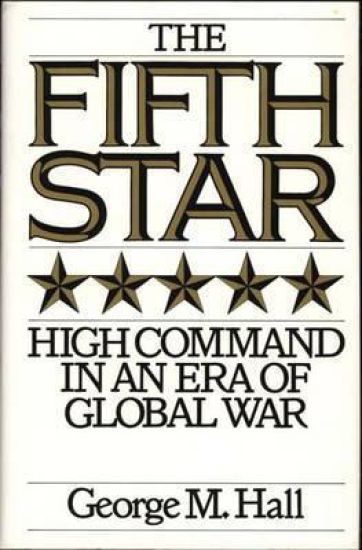
The Fifth Star

The Fifth Star

George M. Hall

Praeger Publishers Inc
1994
sidottu
In modern times, ten Americans rose to five-star rank: Pershing (who chose to wear only four stars), Leahy, Marshall, King, Arnold, MacArthur, Nimitz, Halsey, Eisenhower, and Bradley. In concert with the Roosevelts, Wilson, Truman, and Sir Winston Churchill, they were at the helm as the world transformed from the machinations of regional despots to an era of global war. With few exceptions, these men exercised their responsibilities with remarkable integrity and ability. The first part of this book reviews the biography and military highlights of each five-star; the second analyzes and compares the ten to identify common features of the elements of command and leadership. While studying the careers of these distinguished men, Hall also provides an insight into the analysis of war. He explains that war operates on five levels of perspective: heroism, tactics, operations, theaters, and national purpose. When these levels conflict, even the best leaders are fortunate to escape with their reputations intact. This volume details how these commanders achieved success by understanding and properly maintaining these different perspectives almost unfailingly. Consequently, they reached the pinnacle of power in the military profession.
The Age of Automation

The Age of Automation

George M. Hall

Praeger Publishers Inc
1995
sidottu
Automation now supplants economic activity more than it supports it. Furthermore, this process is fueled by enormous economic forces, which intensifies dependence on automation and spawns other sociological consequences. Of these consequences, fraud generates the highest immediate losses, amounting to $300 billion annually. In the long run, however, the greatest economic cost will occur through loss of jobs, and a lowering of net skills for most of the balance. Other consequences include pervasive invasion of privacy, and overdependence on technology at the expense of developing critical reasoning, judgement, and a personal sense of responsibility. Fortunately, many of these consequences could be ameliorated by automated countermeasures that offset the excesses. Unfortunately, it usually takes a crisis to institute fundamental reform, though the looming economic meltdown stemming from the mounting federal debt offers just such an opportunity.
Jonathan Edwards

Jonathan Edwards

George M. Marsden

Yale University Press
2004
pokkari
Winner of the Bancroft Prize • Finalist for the National Book Critics Circle Award for Biography • Finalist for the American Society of Church History’s Philip Schaff Prize “The finest biography of this towering figure. . . . Marsden guides readers through Edwards’s profoundly alien world with authority and fluidity.”—Benjamin Schwarz, Atlantic Monthly A controversial theologian and the author of the famous sermon Sinners in the Hands of an Angry God, Jonathan Edwards (1703–1758) ignited the momentous Great Awakening of the eighteenth century. In this definitive and long-awaited biography, Jonathan Edwards emerges as both a great American and a brilliant Christian. George Marsden evokes the world of colonial New England in which Edwards was reared—a frontier civilization at the center of a conflict between Native Americans, French Catholics, and English Protestants. Drawing on newly available sources, Marsden demonstrates how these cultural and religious battles shaped Edwards’s life and thought. Marsden reveals Edwards as a complex thinker and human being who struggled to reconcile his Puritan heritage with the secular, modern world emerging out of the Enlightenment. In this, Edwards’s life anticipated the deep contradictions of our American culture. Meticulously researched and beautifully composed, this biography offers a compelling portrait of an eminent American.
The Ingenious Mind of Nature

The Ingenious Mind of Nature

George M. Hall

Perseus Books
1997
nidottu
George Hall - teacher, historian, engineer, and computer analyst - uniquely draws upon the competing perspectives of traditional science, the exciting new science of chaos, and the burgeoning and important tenets of complexity theory, catastrophe theory, and fuzzy logic to look for a common theme. All of these perspectives, he finds, are fundamentally united by a common theme: the crucial patterns of elements and their dynamic change over time. Order - be it the growth of a fetus or the rumbling shift of continents - evolves because these patterns are themselves the blueprint and the "programs" by which nature shapes our awe-inspiring universe. Hall takes this elegant concept and carries it from the simplest phenomena to the most complex, including the evolution of the species. He then extends these concepts beyond the physical sciences, into the fascinating provinces of philosophy, computer programming, psychology, economics, political science, international relations, law, and ethics. In doing so, he tackles the challenging question of human behavior. Since we humans have initiative and can sometimes change the natural course of events, how can we find a system to understand our own actions and the workings of society at large? This captivating book explains the mechanics of change and provides a provocative concept that accounts for the growth and decline of all systems, be it the universe at large, the miracle of life on earth, or our own thought processes as we contemplate and unlock the mysteries around us. This evocative perspective on nature offers food for thought to general readers and scientists alike by illuminating the ingenious patterns that influence the course of humanity and the universe.