
Kirjahaku
Etsi kirjoja tekijän nimen, kirjan nimen tai ISBN:n perusteella.
1000 tulosta hakusanalla George W. Torrence
Autobiography of George W. Donaghey, Governor of Arkansas, 1909-1913
George W. Donaghey
Literary Licensing, LLC
2013
nidottu
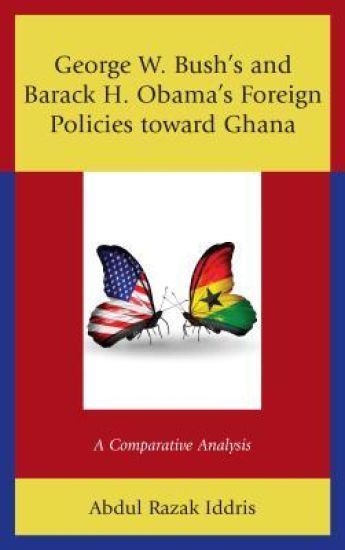
George W. Bush's and Barack H. Obama’s Foreign Policies toward Ghana
Abdul Razak Iddris
Lexington Books
2018
sidottu
This book is the first of its kind to systematically compare the policies of George W. Bush and Barack H. Obama towards Ghana, with a focus on economic aid, military aid, and immigration. It examines George W. Bush and Barack H. Obama’s economic aid policies, military aid policies, and immigration policies towards Ghana to identify not only the significant differences between the approaches of the two administrations, but also the factors that influenced and exacerbated the difference in their approaches. The book is also significant in terms of its epistemological contributions to diplomatic praxes, the literature on United States foreign policy, and development theories.
How Private George W. Peck Put Down The Rebellion
George W. Peck
Createspace Independent Publishing Platform
2015
nidottu
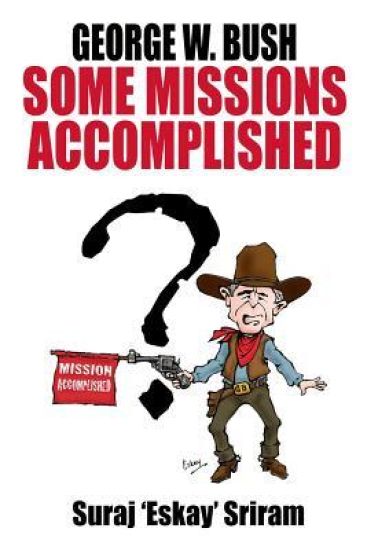
George W. Bush. Some Missions Accomplished
Suraj K. Sriram
Createspace Independent Publishing Platform
2015
nidottu
Woodcraft by George W. Sears (Original Version)
George W. Sears
Createspace Independent Publishing Platform
2015
nidottu
Woodcraft by George W. Sears
George W. Sears
Createspace Independent Publishing Platform
2016
nidottu
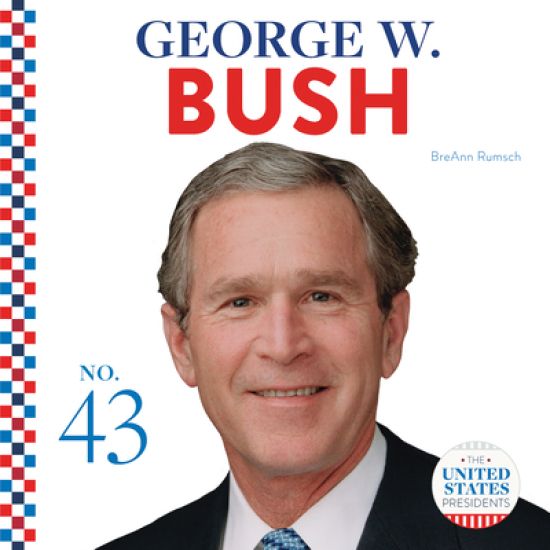
This biography introduces readers to George W. Bush including his early political career and key events from Bush's administration including the September 11 terrorist attacks, the Iraq War, and Hurricane Katrina. Information about his childhood, family, personal life, and retirement years is included. A timeline, fast facts, and sidebars provide additional information. Aligned to Common Core Standards and correlated to state standards. Checkerboard Library is an imprint of Abdo Publishing, a division of ABDO.
Wagner the Wehr-wolf. (1846) by: George W. M. Reynolds ( it is one of the greatest works of George W. M. Reynolds )
George W. M. Reynolds
Createspace Independent Publishing Platform
2016
nidottu
Lovers of Louisiana (to-day). By: George W. Cable
George W. Cable
Createspace Independent Publishing Platform
2017
nidottu
George Washington Cable (October 12, 1844 - January 31, 1925) was an American novelist notable for the realism of his portrayals of Creole life in his native New Orleans, Louisiana. He has been called "the most important southern artist working in the late 19th century, as well as the first modern southern writer." In his treatment of racism, mixed-race families and miscegenation, his fiction has been thought to anticipate that of William Faulkner. He also wrote articles critical of contemporary society. Due to hostility against him after two 1885 essays encouraging racial equality and opposing Jim Crow, Cable moved with his family to Northampton, Massachusetts. He lived there for the next thirty years, then moved to Florida.Cable was born in 1844 in New Orleans, Louisiana, the son of George W. Cable, Sr., and Rebecca Boardman Cable. They were wealthy slaveholders who were members of the Presbyterian Church and New Orleans society, whose families had moved there after the Louisiana Purchase. First educated in private schools, the younger Cable had to get work after his father died young. The elder Cable had lost investments, and the family struggled financially. Cable later learned French on his own. He served in the Confederate Army during the American Civil War, in which he took part in support of the Southern cause.
Bylow Hill. By: George W. Cable AND With iillus. by: F.C. Yohn
George W. Cable
Createspace Independent Publishing Platform
2017
nidottu
eorge Washington Cable (October 12, 1844 - January 31, 1925) was an American novelist notable for the realism of his portrayals of Creole life in his native New Orleans, Louisiana. He has been called "the most important southern artist working in the late 19th century, as well as the first modern southern writer." In his treatment of racism, mixed-race families and miscegenation, his fiction has been thought to anticipate that of William Faulkner. He also wrote articles critical of contemporary society. Due to hostility against him after two 1885 essays encouraging racial equality and opposing Jim Crow, Cable moved with his family to Northampton, Massachusetts. He lived there for the next thirty years, then moved to Florida.Cable was born in 1844 in New Orleans, Louisiana, the son of George W. Cable
Kincaid's battery.By: George W. Cable and illustrator Alonzo Kimball
George W. Cable
Createspace Independent Publishing Platform
2017
nidottu
George Washington Cable (October 12, 1844 - January 31, 1925) was an American novelist notable for the realism of his portrayals of Creole life in his native New Orleans, Louisiana. He has been called "the most important southern artist working in the late 19th century, as well as the first modern southern writer." In his treatment of racism, mixed-race families and miscegenation, his fiction has been thought to anticipate that of William Faulkner. He also wrote articles critical of contemporary society. Due to hostility against him after two 1885 essays encouraging racial equality and opposing Jim Crow, Cable moved with his family to Northampton, Massachusetts. He lived there for the next thirty years, then moved to Florida.Cable was born in 1844 in New Orleans, Louisiana, the son of George W. Cable, Sr., and Rebecca Boardman Cable. They were wealthy slaveholders who were members of the Presbyterian Church and New Orleans society, whose families had moved there after the Louisiana Purchase. First educated in private schools, the younger Cable had to get work after his father died young. The elder Cable had lost investments, and the family struggled financially. Cable later learned French on his own. He served in the Confederate Army during the American Civil War, in which he took part in support of the Southern cause. His experiences changed his ideas about Southern and Louisiana society, and he began writing during a two-year bout with malaria. In 1870 Cable went into journalism, writing for the New Orleans Picayune. He worked for them from 1865 to 1879, by which time he had become an established writer. In 1869, George Cable married Louisa Stewart Bartlett, with whom he had several children.
Stingaree By: E. W. Hornung, illustrated By: George W. (Washington) Lambert (13 September 1873 - 29 May 1930) was an Australian arti
George W. Lambert; E. W. Hornung
Createspace Independent Publishing Platform
2017
nidottu
Ernest William Hornung (7 June 1866 - 22 March 1921) was an English author and poet known for writing the A. J. Raffles series of stories about a gentleman thief in late 19th-century London. Hornung was educated at Uppingham School; as a result of poor health he left the school in December 1883 to travel to Sydney, where he stayed for two years. He drew on his Australian experiences as a background when he began writing, initially short stories and later novels. In 1898 he wrote "In the Chains of Crime", which introduced Raffles and his sidekick, Bunny Manders; the characters were based partly on his friends Oscar Wilde and his lover, Lord Alfred Douglas, and also on the characters of Sherlock Holmes and Dr. Watson, created by his brother-in-law, Arthur Conan Doyle. The series of Raffles short stories were collected for sale in book form in 1899, and two further books of Raffles short stories followed, as well as a poorly received novel. Aside from his Raffles stories, Hornung was a prodigious writer of fiction, publishing numerous books from 1890, with A Bride from the Bush to his 1914 novel The Crime Doctor. The First World War brought an end to Hornung's fictional output. His son, Oscar, was killed at the Second Battle of Ypres in July 1915. Hornung joined the YMCA, initially in England, then in France, where he helped run a canteen and library. He published two collections of poetry during the war, and then, afterwards, one further volume of verse and an account of his time spent in France, Notes of a Camp-Follower on the Western Front. Hornung's fragile constitution was further weakened by the stress of his war work. To aid his recuperation, he and his wife visited the south of France in 1921. He fell ill from influenza on the journey, and died on 22 March 1921, aged 54. Although much of Hornung's work has fallen into obscurity, his Raffles stories continued to be popular, and have formed numerous film and television adaptations. Hornung's stories dealt with a wider range of themes than crime: he examined scientific and medical developments, guilt, class and the unequal role played by women in society. Two threads that run through a sizeable proportion of his books are Australia and cricket; the latter was also a lifelong passion. George Washington Thomas Lambert ARA (13 September 1873 - 29 May 1930) was an Australian artist, known principally for portrait painting and as a war artist during the First World War.

Old Creole days. By: George W. Cable
George W. Cable
Createspace Independent Publishing Platform
2017
nidottu
George W Bush Presidency
Nova Science Publishers Inc
2016
sidottu
George W Bush Presidency
Nova Science Publishers Inc
2016
sidottu
George W Bush Presidency
Nova Science Publishers Inc
2016
sidottu
While candidate George W. Bush promised a humble foreign policy, after the September 11, 2001 terrorist attacks President Bush implemented a highly ambitious and controversial foreign policy agenda. Examining the contentious decision to invade Iraq, the expansion of presidential power in foreign affairs, the apparent unilateralism that challenged established international norms, and the ideological underpinnings of Bushs foreign policy, many articles in this collection demonstrate why the administration proved to be so divisive domestically and internationally. However, other pieces in the collection show the Bush administration pursued more conventional approaches to certain international issues, such as the rising power of China and a nuclear North Korea. This collection thus both challenges some conventional views of Bushs foreign policy and provides a deeper understanding of why George W. Bush is viewed as one of the most controversial foreign policy presidents of the modern era.

U.S. president, businessman, and former owner of the Texas Rangers baseball team? George W. Bush wore many hats in his life, but his most famous was his time as the 43rd president. In this title, leveled text and high-quality images introduce readers to George W. Bush and his life before, during, and after the presidency. Meanwhile, additional features highlight his birthplace, hobbies, and so much more
This book takes a devastating look at the actions and policies of the George W. Bush administration in terms of their impact on women in the United States and abroad. Surprisingly, this is a largely ignored aspect of Bush's presidency, even though his policies have in many ways reversed or inhibited women's progress over the past three decades. While the media have focused on his opposition to abortion, Bush's less-publicized anti-feminist agenda has in fact been much more extensive. He has opposed women's interests in multiple ways, from shutting down women's offices in the government to de-funding programs that assist women, from opposing global women's rights treaties to supporting anti-feminist organizations. Contrary to his public claims that 'W stands for Women,' his policies, appointments and actions reveal a strongly patriarchal bent. This book also includes a chapter on the negative effects on women of the wars in Afghanistan and Iraq.