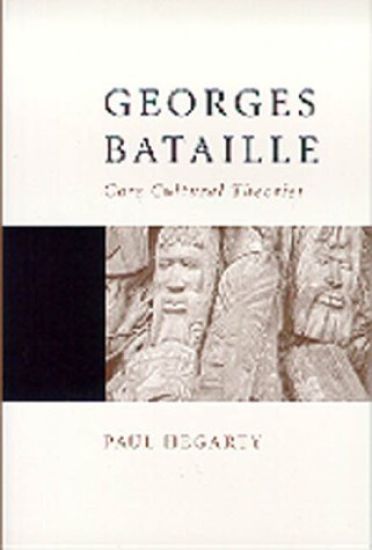
Long recognized in France as a central figure in French cultural thought, the range and significance of Batille's ideas are now being grasped in the English speaking world. His influence on Derrida, Foucault, Kristeva and Baudrillard is now more clearly understood and Bataille has emerged as a front-rank cultural theorist who posed questions and paradoxes that were extraordinarily prescient. This book offers a comprehensive and detailed presentation and analysis of the full range of his writings - political, philosophical, aesthetic, literary, anthropological and cultural. And tackles his thoughts on waste, sacrifice, death, eroticism, surplus, ecstasy and drunkenness, offering the best available guide to this challenging and utterly unique thinker.
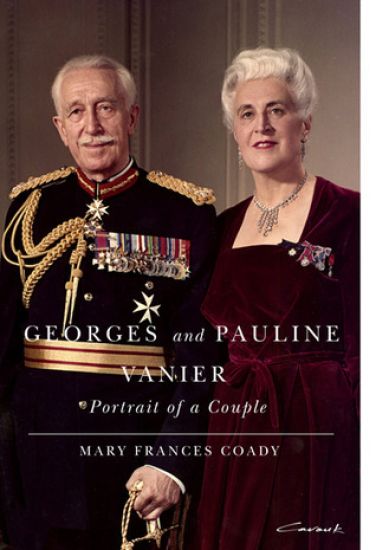
Georges and Pauline Vanier follows their lives and travels across the world - from Canadian military life to the League of Nations, from the inner circles of British government to their harrowing escape from Nazi-occupied France - detailing their disappointments and triumphs during social and political turbulence. With insight and sympathy, Mary Frances Coady tells their dramatic personal story. Revealing their remarkably vibrant personalities, she details the couple's support of the French resistance as well as Georges Vanier's pleas for the Canadian government to accept refugees fleeing Hitler's horrors and his effort to broaden immigration policy. She also recounts the importance of their religious convictions, their controversial standing among Quebecers, and their early advocacy of official bilingualism. An invigorating and well-told tale of their lasting legacies, Georges and Pauline Vanier is the definitive account of the enduring contributions the Vaniers made to the world and to their country.
When Sartre referred to Georges Bataille as a "new mystic," he meant the label as an insult. Sartre considered mysticism to be a less rigorous mode of inquiry than philosophy-especially dangerous where the writings of mystics adapt philosophical terminology for different purposes. In Georges Bataille and the Mysticism of Sin, Peter Connor argues that literary scholars, eager to represent Bataille as a philosopher or as an early deconstructionist, have tended to neglect or misunderstand Bataille's interest in mysticism. Connor's study corrects this distorted view of Bataille, giving us a more complete picture of the complex and influential writer. With careful attention to Bataille's historical and intellectual context, Connor raises many important questions: What drew Bataille to the mystics? How did he conceive of their thought in relation to his own? And what is the connection between mysticism and morality? This last question raises an especially interesting issue for Bataille, an atheist whom readers generally associate with images of transgression and sin. Through examination of Bataille's writings-including Inner Experience and his underappreciated final book, Tears of Eros-Connor shows the surprising connection between Bataille's mysticism and his sense of personal and political ethics. Mysticism, Connor argues, lies at the heart of Bataille's double identity as an intellectual and as a kind of anarchic prophet.
This book investigates what Bataille, in "The Pineal Eye," calls mythological representation: the mythological anthropology with which this unusual thinker wished to outflank and undo scientific (and philosophical) anthropology. Gasché probes that anthropology by situating Bataille's thought with respect to the quatrumvirate of Schelling, Hegel, Nietzsche, and Freud. He begins by showing what Bataille's understanding of the mythological owes to Schelling. Drawing on Hegel, Nietzsche, and Freud, he then explores the notion of image that constitutes the sort of representation that Bataille's innovative approach entails. Gasché concludes that Bataille's mythological anthropology takes on Hegel's phenomenology in a systematic fashion. By reading it backwards, he not only dismantles its architecture, he also ties each level to the preceding one, replacing the idealities of philosophy with the phantasmatic representations of what he dubs "low materialism." Phenomenology, Gasché argues, thus paves the way for a new "science" of phantasms.
This book investigates what Bataille, in "The Pineal Eye," calls mythological representation: the mythological anthropology with which this unusual thinker wished to outflank and undo scientific (and philosophical) anthropology. Gasché probes that anthropology by situating Bataille's thought with respect to the quatrumvirate of Schelling, Hegel, Nietzsche, and Freud. He begins by showing what Bataille's understanding of the mythological owes to Schelling. Drawing on Hegel, Nietzsche, and Freud, he then explores the notion of image that constitutes the sort of representation that Bataille's innovative approach entails. Gasché concludes that Bataille's mythological anthropology takes on Hegel's phenomenology in a systematic fashion. By reading it backwards, he not only dismantles its architecture, he also ties each level to the preceding one, replacing the idealities of philosophy with the phantasmatic representations of what he dubs "low materialism." Phenomenology, Gasché argues, thus paves the way for a new "science" of phantasms.
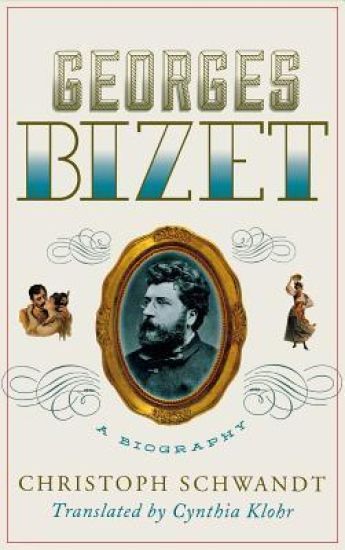
Georges Bizet spent almost his entire life in Paris, his hometown. He never visited Spain. And yet his Carmen is considered by many the epitome of Spanish opera. Bizet did not live to see Carmen’s enormous worldwide success. He died at the age of thirty-six, just three months after his masterpiece took the stage for the first time. Today his other remarkable works have been entirely eclipsed by Carmen, masking the trajectory that led to the creation of one of the world’s most beloved operas. In almost all available English-language biographies, serious errors abound, often informed by romantic misconceptions surrounding the life of this remarkable musician. First published in 1991, Christoph Schwandt’s Georges Bizet: A Biography is now widely recognized as the definitive work on this misunderstood composer’s life. Drawing on significant recent research gathered for the revised and augmented 2011 German edition—now translated into English by Cynthia Klohr—Schwandt rewrites and restores the historical record concerning Bizet’s achievements and contributions to the world of music. This work is ideal for students and scholars of opera history and aficionados of what many consider one of the world’s greatest operas ever written.
Combining history, autobiography, and ethnography, Georges Woke Up Laughing provides a portrait of the Haitian experience of migration to the United States that illuminates the phenomenon of long-distance nationalism, the voicelessness of certain citizens, and the impotency of government in an increasingly globalized world. By presenting lively ruminations on his life as a Haitian immigrant, Georges Eugene Fouron-along with Nina Glick Schiller, whose own family history stems from Poland and Russia-captures the daily struggles for survival that bind together those who emigrate and those who stay behind. According to a long-standing myth, once emigrants leave their homelands-particularly if they emigrate to the United States-they sever old nationalistic ties, assimilate, and happily live the American dream. In fact, many migrants remain intimately and integrally tied to their ancestral homeland, sometimes even after they become legal citizens of another country. In Georges Woke Up Laughing the authors reveal the realities and dilemmas that underlie the efforts of long-distance nationalists to redefine citizenship, race, nationality, and political loyalty. Through discussions of the history and economics that link the United States with countries around the world, Glick Schiller and Fouron highlight the forces that shape emigrants’ experiences of government and citizenship and create a transborder citizenry. Arguing that governments of many countries today have almost no power to implement policies that will assist their citizens, the authors provide insights into the ongoing sociological, anthropological, and political effects of globalization.Georges Woke up Laughing will entertain and inform those who are concerned about the rights of people and the power of their governments within the globalizing economy. “In my dream I was young and in Haiti with my friends, laughing, joking, and having a wonderful time. I was walking down the main street of my hometown of Aux Cayes. The sun was shining, the streets were clean, and the port was bustling with ships. At first I was laughing because of the feeling of happiness that stayed with me, even after I woke up. I tried to explain my wonderful dream to my wife, Rolande. Then I laughed again but this time not from joy. I had been dreaming of a Haiti that never was.”-from Georges Woke Up Laughing
Combining history, autobiography, and ethnography, Georges Woke Up Laughing provides a portrait of the Haitian experience of migration to the United States that illuminates the phenomenon of long-distance nationalism, the voicelessness of certain citizens, and the impotency of government in an increasingly globalized world. By presenting lively ruminations on his life as a Haitian immigrant, Georges Eugene Fouron-along with Nina Glick Schiller, whose own family history stems from Poland and Russia-captures the daily struggles for survival that bind together those who emigrate and those who stay behind. According to a long-standing myth, once emigrants leave their homelands-particularly if they emigrate to the United States-they sever old nationalistic ties, assimilate, and happily live the American dream. In fact, many migrants remain intimately and integrally tied to their ancestral homeland, sometimes even after they become legal citizens of another country. In Georges Woke Up Laughing the authors reveal the realities and dilemmas that underlie the efforts of long-distance nationalists to redefine citizenship, race, nationality, and political loyalty. Through discussions of the history and economics that link the United States with countries around the world, Glick Schiller and Fouron highlight the forces that shape emigrants’ experiences of government and citizenship and create a transborder citizenry. Arguing that governments of many countries today have almost no power to implement policies that will assist their citizens, the authors provide insights into the ongoing sociological, anthropological, and political effects of globalization.Georges Woke up Laughing will entertain and inform those who are concerned about the rights of people and the power of their governments within the globalizing economy. “In my dream I was young and in Haiti with my friends, laughing, joking, and having a wonderful time. I was walking down the main street of my hometown of Aux Cayes. The sun was shining, the streets were clean, and the port was bustling with ships. At first I was laughing because of the feeling of happiness that stayed with me, even after I woke up. I tried to explain my wonderful dream to my wife, Rolande. Then I laughed again but this time not from joy. I had been dreaming of a Haiti that never was.”-from Georges Woke Up Laughing
Not rediscovered until the twentieth century, the works of Georges de La Tour retain an aura of mystery. At first sight, his paintings suggest a veritable celebration of light and the visible world, but this is deceptive. The familiarity of visual experience blinds the beholder to a deeper understanding of the meanings associated with vision and the visible in the early modern period. By exploring the representations of light, vision, and the visible in La Tour's works, this interdisciplinary study examines the nature of painting and its artistic, religious, and philosophical implications. In the wake of iconoclastic outbreaks and consequent Catholic call for the revitalization of religious imagery, La Tour paints familiar objects of visible reality that also serve as emblems of an invisible, spiritual reality. Like the books in his paintings, asking to be read, La Tour's paintings ask not just to be seen as visual depictions but to be deciphered as instruments of insight. In figuring faith as spiritual passion and illumination, La Tour's paintings test the bounds of the pictorial image, attempting to depict what painting cannot ultimately show: words, hearing, time, movement, changes of heart. La Tour's emphasis on spiritual insight opens up broader artistic, philosophical, and conceptual reflections on the conditions of possibility of the pictorial medium. By scrutinizing what is seen and how, and by questioning the position of the beholder, his works revitalize critical discussion of the nature of painting and its engagements with the visible world.
Not rediscovered until the twentieth century, the works of Georges de La Tour retain an aura of mystery. At first sight, his paintings suggest a veritable celebration of light and the visible world, but this is deceptive. The familiarity of visual experience blinds the beholder to a deeper understanding of the meanings associated with vision and the visible in the early modern period. By exploring the representations of light, vision, and the visible in La Tour's works, this interdisciplinary study examines the nature of painting and its artistic, religious, and philosophical implications. In the wake of iconoclastic outbreaks and consequent Catholic call for the revitalization of religious imagery, La Tour paints familiar objects of visible reality that also serve as emblems of an invisible, spiritual reality. Like the books in his paintings, asking to be read, La Tour's paintings ask not just to be seen as visual depictions but to be deciphered as instruments of insight. In figuring faith as spiritual passion and illumination, La Tour's paintings test the bounds of the pictorial image, attempting to depict what painting cannot ultimately show: words, hearing, time, movement, changes of heart. La Tour's emphasis on spiritual insight opens up broader artistic, philosophical, and conceptual reflections on the conditions of possibility of the pictorial medium. By scrutinizing what is seen and how, and by questioning the position of the beholder, his works revitalize critical discussion of the nature of painting and its engagements with the visible world.
Georges Florovsky was a major Russian intellectual and Orthodox churchman, a pioneer leader in the modern ecumenical movement who is now recognized as the most profound Orthodox theologian of the 20th century. This book offers: an account of his life, by Andrew Blane; essays and analyses of Florovsky's thought, by Marc Raeff and George Williams; a bibliography of Florovsky's work; and descriptions of the deposits of Father Florovsky's papers in the library collections of Princton University and St Vladimir's Seminary. It is intended as a research tool and also provides a comprehensive assessment of Florovsky, accessible to the general reader.
The prophet of social decadence, the theorist of violence and advocate of the general strike, the critic who stood Marx on his head, Georges Sorel was one of the foremost writers of this century to write extensively on the great importance of the moral aspects of social movements. His reconstruction of socialist ethics established him as one of the most remarkable critics of Marxist thought, and his writings in many aspects anticipated contemporary interpretations.From Georges Sorel, the first of two volumes of Sorel's work, presents his major contributions to social thought—articles on Marxism, religion, syndicalism, social myths, the philosophy of history and science, as well as a large and newly translated segment of "Reflections on Violence." In his introduction, John Stanley disputes the frequently encountered view of Sorel as a reactionary or extreme rightist, and emphasizes Sorel's attempt to provide Western society with a morality based on labor, struggle, and family life.
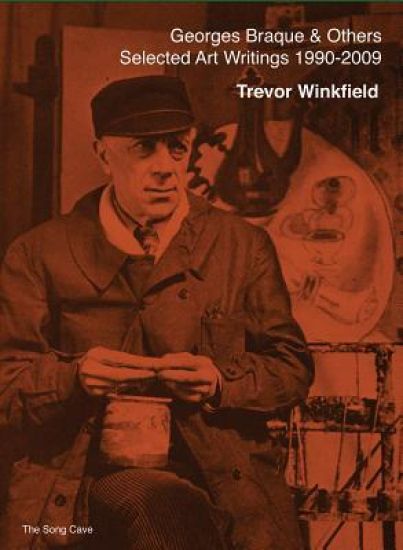
The painter Trevor Winkfield--born in Leeds in 1944 and residing in New York City since 1969--has been a sought-after contributor to publications such as "Arts Magazine," "Art in America" and "Modern Painters" for two decades. Editors have long trusted his unique sensibilities and relied on his capacity to usher in fresh understandings of art. Take, for instance, Winkfield's pure excitement and audacity at weaving the work of the proto-Surrealist author Raymond Roussel into an essay on Leonardo da Vinci's "Last Supper." Unapologetically the writings of an artist, not a critic, in "Georges Braque & Others, "Winkfield engages some of the greatest names in art (Vermeer, Chardin, Signac, Ryder, Dadd, Brancusi, Cornell, Duchamp, Johns and of course Braque, among others)--asking questions, seeing the details and sharing the obscure facts that only an artist like Winkfield could notice and convey with such great charm.
Georges is a goose from the town of Toulouse who was so awfully picky, he'd only eat couscous. Mama cooked everything from pastries to meat, but worried about Georges for couscous was all he would eat. He was a good little goose and had not always been picky but, his tastes changed and now he thought most foods were icky. After only eating couscous, Georges began to feel ill at school and so sluggish that he couldn't even keep up with a snail. Follow along in this adorable rhyming book to find out how Georges discovers a valuable lesson and sees the error of his ways.
A rhyming children's book about a goose named, Georges, from the town of Toulouse. Picky eater Georges has developed a new love of food. MaMa and PaPa now realize that Georges' manners are quite rude. During dinner, Georges gobbles, he smacks, and drinks his juice with a slurp, and then without warning, he lets out a great BURP Though Georges' parents do scold and are rather appalled, Georges continues his bad behavior oblivious to it all. His poor manners continue at school and one day without care, Georges leaves a banana peel on the floor causing his teacher, Madame, to slip onto her derriere. Madame exclaims, as she climbs to her feet, "I must teach you manners Georges because you are rude when you eat. " Turn the pages to find out about Georges' next adventure and discover if he will ever learn good manners.
This work has been selected by scholars as being culturally important and is part of the knowledge base of civilization as we know it.This work is in the public domain in the United States of America, and possibly other nations. Within the United States, you may freely copy and distribute this work, as no entity (individual or corporate) has a copyright on the body of the work.Scholars believe, and we concur, that this work is important enough to be preserved, reproduced, and made generally available to the public. To ensure a quality reading experience, this work has been proofread and republished using a format that seamlessly blends the original graphical elements with text in an easy-to-read typeface.We appreciate your support of the preservation process, and thank you for being an important part of keeping this knowledge alive and relevant.
This work has been selected by scholars as being culturally important and is part of the knowledge base of civilization as we know it.This work is in the public domain in the United States of America, and possibly other nations. Within the United States, you may freely copy and distribute this work, as no entity (individual or corporate) has a copyright on the body of the work.Scholars believe, and we concur, that this work is important enough to be preserved, reproduced, and made generally available to the public. To ensure a quality reading experience, this work has been proofread and republished using a format that seamlessly blends the original graphical elements with text in an easy-to-read typeface.We appreciate your support of the preservation process, and thank you for being an important part of keeping this knowledge alive and relevant.