Kirjojen hintavertailu. Mukana 12 390 323 kirjaa ja 12 kauppaa.

Kirjahaku

Etsi kirjoja tekijän nimen, kirjan nimen tai ISBN:n perusteella.

1000 tulosta hakusanalla Gerhard Joseph

Institutions Au Droit Public d'Allemagne

Institutions Au Droit Public d'Allemagne

Joseph Mathias Gérard de Rayneval

Hachette Livre - BNF
2014
pokkari
Institutions au droit public d'AllemagneDate de l'edition originale: 1771Sujet de l'ouvrage: Droit public -- Allemagne -- Ouvrages avant 1800Ce livre est la reproduction fidele d'une oeuvre publiee avant 1920 et fait partie d'une collection de livres reimprimes a la demande editee par Hachette Livre, dans le cadre d'un partenariat avec la Bibliotheque nationale de France, offrant l'opportunite d'acceder a des ouvrages anciens et souvent rares issus des fonds patrimoniaux de la BnF.Les oeuvres faisant partie de cette collection ont ete numerisees par la BnF et sont presentes sur Gallica, sa bibliotheque numerique.En entreprenant de redonner vie a ces ouvrages au travers d'une collection de livres reimprimes a la demande, nous leur donnons la possibilite de rencontrer un public elargi et participons a la transmission de connaissances et de savoirs parfois difficilement accessibles.Nous avons cherche a concilier la reproduction fidele d'un livre ancien a partir de sa version numerisee avec le souci d'un confort de lecture optimal. Nous esperons que les ouvrages de cette nouvelle collection vous apporteront entiere satisfaction.Pour plus d'informations, rendez-vous sur www.hachettebnf.fr
Institutions Au Droit Public d'Allemagne

Institutions Au Droit Public d'Allemagne

Joseph Mathias Gérard de Rayneval

Hachette Livre - BNF
2016
pokkari
Institutions au droit public d'AllemagneDate de l'edition originale: 1771Sujet de l'ouvrage: Droit public -- Allemagne -- Ouvrages avant 1800Ce livre est la reproduction fidele d'une oeuvre publiee avant 1920 et fait partie d'une collection de livres reimprimes a la demande editee par Hachette Livre, dans le cadre d'un partenariat avec la Bibliotheque nationale de France, offrant l'opportunite d'acceder a des ouvrages anciens et souvent rares issus des fonds patrimoniaux de la BnF.Les oeuvres faisant partie de cette collection ont ete numerisees par la BnF et sont presentes sur Gallica, sa bibliotheque numerique.En entreprenant de redonner vie a ces ouvrages au travers d'une collection de livres reimprimes a la demande, nous leur donnons la possibilite de rencontrer un public elargi et participons a la transmission de connaissances et de savoirs parfois difficilement accessibles.Nous avons cherche a concilier la reproduction fidele d'un livre ancien a partir de sa version numerisee avec le souci d'un confort de lecture optimal. Nous esperons que les ouvrages de cette nouvelle collection vous apporteront entiere satisfaction.Pour plus d'informations, rendez-vous sur www.hachettebnf.fr
Gerard Verdijk

Gerard Verdijk

Josephine Sloet

BAI NV
2019
sidottu
Even though Gerard Verdijk (1934-2005) passed away at the beginning of this century, many still remember him as a striking and versatile artist. From the middle of the 20th century until the beginning of the 21st century he was active within a wide area of the visual arts. He was a poetic and philosophical man who manifested his creativity through a wide range of materials and techniques. He was a curious man, eager to learn, who travelled through Europe, Turkey, The Middle-East, North-America, Africa and Japan to get acquainted with other cultures. He cannot be placed within one art-historical movement. The ever-changing world around him influenced his style and the use of his materials. When generalised his works can be placed in a few style periods: Abstract/Informal, Zero/Pop-Art, Fluor/ Perspex and Zen/Haiku. In all these periods spaciousness, movement and repetition are recognisable elements. In the 13 years after his passing in 2005, the life and works of Gerard Verdijk were meticulously documented by his wife Josephine Sloet. This monograph, a true "life's work" of 396 pages with 200 large images of his works came into being at Gerard's own request. He was also clear about the book's motto: The Mountain of Einstein. According to Albert Einstein, the creation of some something new can be compared to climbing a mountain, where one would obtain changing and growing perspectives along the way and would discover unsuspected connections between our customs and the rich variety of our environment.
The Playfulness of Gerard Manley Hopkins

The Playfulness of Gerard Manley Hopkins

Joseph J. Feeney

Ashgate Publishing Limited
2008
sidottu
Renowned Hopkins expert Joseph J. Feeney, SJ, offers a fresh take on Gerard Manley Hopkins which shakes our understanding of his poetry and his life and points towards the next phase in Hopkins studies. While affirming the received view of Hopkins as a major poet of nature, religion, and psychology, Feeney finds a pervasive, rarely noticed playfulness by employing both the theory of play and close reading of his texts. This new Hopkins lived a playful life from childhood till death as a student who loved puns and jokes and wrote parodies, comic verse, and satires; as a Jesuit who played and organized games and had "a gift for mimicry;" and most significantly, as a poet and prose stylist who rewards readers with unexpected displays of whimsy and incongruity, even, strikingly, in "The Wreck of the Deutschland," "The Windhover," and the "Terrible Sonnets." Feeney convincingly argues that Hopkins's distinctive playfulness is inextricably bound to his sense of fun, his creativity, his style, and his competitiveness with other poets. In unexpected images, quirky metaphors, strange perspectives, puns, coinages, twisted syntax, wordmusic, and sprung rhythm, we see his playful streak burst forth to adorn those works critics consider his most brilliant. No one who absorbs this book's radical readings will ever see and hear Hopkins's poetry and prose quite the way they used to.
Nuclear and Radiochemistry

Nuclear and Radiochemistry

Gerhart Friedlander; Joseph W. Kennedy; Edward S. Macias; Julian M. Miller

John Wiley Sons Inc
1981
nidottu
Introduction to Radiation Chemistry Third Edition J. W. T. Spinks and R. J. Woods The only single source guide to radiation chemistry has now been expanded to include new material on applied radiation chemistry and experimental methods, as well as gaseous and solid systems. Other enhancements include broadened coverage of chemical reactions initiated by high-energy and their commercial applications, as well as new topics related to kinetics and experimental procedures. The Third Edition features numerical data in Sl units, simplifying most radiation-chemical calculations, an expanded problem section, and key references updated to reflect recent research. 1990 (0 471-61403-3) 574 pp. The Elements Beyond Uranium Glenn T. Seaborg and Walter D. Loveland Written by the team of Nobel Laureate Glenn Seaborg--an active participant in the discovery of transuranium elements--and leading chemist, Walter Loveland, here is a unique inside account of the discovery of these elements as well as the first definitive look at their chemical, physical, and nuclear properties. The book contains detailed discussions of nuclear synthesis reactions, experimental techniques, natural occurrence, superheavy elements, practical applications, and predictions for the future, as well as such special features as excerpts from original notebooks, pictures of element discovery teams, and up-to-date tables of nuclear properties. 1990 (0 471-89062-6) 359 pp.
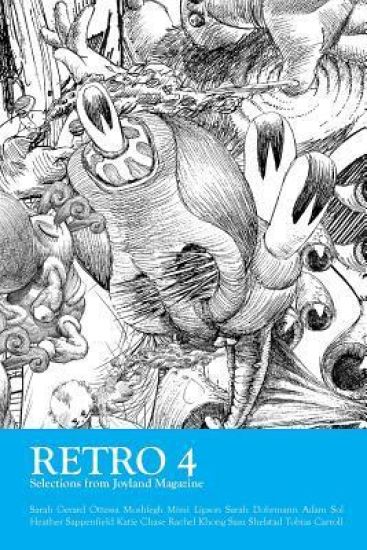
Retro 4: Selections from Joyland Magazine

Retro 4: Selections from Joyland Magazine

Brian Joseph Davis; Sarah Gerard; Ottessa Moshfegh; Mimi Lipson; Sarah Dohrmann; Adam Sol; Heather Sappenfield; Katie Chase; Rachel Khong; Sam Shelstad; Tobias Carroll

Lulu.com
2014
nidottu
Retro 4 is the latest collection of the best, the funniest, the strangest, and the most affecting stories from the award winning literary magazine, Joyland.
Children of the Green Jungle

Children of the Green Jungle

Joseph Quitugua; Gerard Aflague

Createspace Independent Publishing Platform
2015
pokkari
Children of the Green Jungle is an eco-fable for elder children and their heirs. The Green life is a good life The ever-children of the Green jungle live a carefree and joyful life on their tiny, remote tropical island. They laugh and play, they tell stories around the evening fire, and are blessed with the abundance of fish and fruits that the island provides. Life is good Life is Green But changes are ahead As the skies darken and the sea grows dark green, strangers begin to arrive and the children are forced into accepting new ways, new thoughts and new lives. The spirit of the Green children is challenged to survive. Join the children on this journey and "Remember the Green " Throughout history, cultures have risen, been established, conquered, assimilated, and have evolved. This has occurred worldwide as transportation improves, technology advances, and as nations continue to expand and dominate. Children of the Green Jungle explores what happens to native cultures that are subjected to progress in an ever-changing world. The struggle remains in those cultures that survive to preserve a sense of self-identity. This short story, written as an eco-fable for children, young adults, and future generations explores the struggles of a native island population through five-hundred years of occupation by three conquering nations, as they strive to hold on to their original heritage. It is a story of a people dominated by others, who submitted to change that may not have been sought after, and of survival. It is a story that could be applied to many other populations, some that have disappeared completely, and others that continue to struggle for their identity. It is a story of all time, and a story of our time.
We Celebrate Our Mother and Father

We Celebrate Our Mother and Father

Joseph Patrick Meissner; Brian Gerard Meissner; Rose Elizabeth Meissner Vernon

Authorhouse
2018
pokkari
Honor thy father and thy mother. This is the fourth commandment from the ten God gave us through Moses in the Bible. This fourth follows the initial three signifying our duties to the Supreme Being. After God, our next obligation is to our parents. This shows the importance of parents. Notice the word is honor. It does not say obey; but honor certainly includes obedience. Furthermore, this commandment does not end when we each reach maturity. The commandment of honor signifies we must respect our parents all their lives. Our mother was Norah Attracta Cusack. Our father was Joseph Charles Meissner. By the usual social standards, they were very ordinary people on this planet. However, they possessed their own wonderful beauty and intelligence. They were most extraordinary parents who welcomed us to life, took care of our needs, ensured we received great educations, and devoted their lives unselfishly to us for decades. But they gave us much more than our mere bodies. They gave us faith, hope, and love during their long lives. They showed us how to live as God urges us to live. They continuously nourished us spiritually from our mothers nightly demands to kneel in the living room praying the rosary to our Blessed Virgin to our father who drove us even in the blinding snow, freezing cold, and storms to church every week, ensuring we arrived on time. Here are words from my brother Robert for our parents: As for our son, Scott, who suffering from severe PTSD, ended his life], I agree he is somewhere around and still present in the universe. So are our mom and dad. I think after we die, we will learn how all this is doneyou know Mom and Dad are the greatest proof of God, religion, and an afterlife. They were so good and worked tirelessly for our family. If you asked them about religion, the church, and faith, they might say it really doesnt matter, except you treat your fellow human beings with dignity and acknowledge God as Father. The rest of the argument really doesnt mean that much. So to Mom and Dad, we celebrate your lives and say an enormous thank-you.
We Celebrate Our Mother and Father

We Celebrate Our Mother and Father

Joseph Patrick Meissner; Brian Gerard Meissner; Rose Elizabeth Meissner Vernon

Authorhouse
2018
sidottu
Honor thy father and thy mother. This is the fourth commandment from the ten God gave us through Moses in the Bible. This fourth follows the initial three signifying our duties to the Supreme Being. After God, our next obligation is to our parents. This shows the importance of parents. Notice the word is honor. It does not say obey; but honor certainly includes obedience. Furthermore, this commandment does not end when we each reach maturity. The commandment of honor signifies we must respect our parents all their lives. Our mother was Norah Attracta Cusack. Our father was Joseph Charles Meissner. By the usual social standards, they were very ordinary people on this planet. However, they possessed their own wonderful beauty and intelligence. They were most extraordinary parents who welcomed us to life, took care of our needs, ensured we received great educations, and devoted their lives unselfishly to us for decades. But they gave us much more than our mere bodies. They gave us faith, hope, and love during their long lives. They showed us how to live as God urges us to live. They continuously nourished us spiritually from our mothers nightly demands to kneel in the living room praying the rosary to our Blessed Virgin to our father who drove us even in the blinding snow, freezing cold, and storms to church every week, ensuring we arrived on time. Here are words from my brother Robert for our parents: As for our son, Scott, who suffering from severe PTSD, ended his life], I agree he is somewhere around and still present in the universe. So are our mom and dad. I think after we die, we will learn how all this is doneyou know Mom and Dad are the greatest proof of God, religion, and an afterlife. They were so good and worked tirelessly for our family. If you asked them about religion, the church, and faith, they might say it really doesnt matter, except you treat your fellow human beings with dignity and acknowledge God as Father. The rest of the argument really doesnt mean that much. So to Mom and Dad, we celebrate your lives and say an enormous thank-you.
Gentelligence

Gentelligence

Megan Gerhardt; Josephine Nachemson-Ekwall; Brandon Fogel; Paul Allen

Rowman Littlefield
2021
sidottu
Leading a generationally diverse workforce is challenging; this book provides a reader's guide of best-in-class strategies for harnessing and unleashing its potential.Gentelligence: The Revolutionary Approach to Leading an Intergenerational Workforce presents a transformative way to end the generational wars once and for all. This book first introduces Gentelligence as a powerful business strategy and shows why it is critical for the future of work. It then presents a practical guide and a call to action for leaders of all ages to unlock the potential strengths of each generation. Readers will learn how an intergenerational workforce can be reframed as a profound business opportunity and discover how Gentelligence can help them win the talent war, create strong, diverse teams, and build adaptable cultures that will flourish in an era of rapid change.Gentelligence shares groundbreaking evidence that will have readers thinking about their generationally diverse workforce in an entirely different way. Readers will discover:Where generational conflict originates, and how it results in both dangerous ageism and reverse ageism in today’s workplaces.Why the generation gap stems from a misunderstanding of shared core values across all generations. How to find essential common ground with colleagues, both older and younger, and recognize the unique needs that come with different generational identities. How generational shaming leads us to view those from other generations as competitors rather than collaborators, further damaging employee engagement, team dynamics, innovation, and organizational culture. How leveraging the unique strengths of each generation at work can lead to a win-win outcome for all. How traditional views on leadership have been turned upside down as a result of new generational dynamics, with many employees currently being led by managers that are younger than themselves, and older leaders struggling to make sense of changing norms around authority and power. Gentelligence reveals the opportunities within an intergenerational workforce and provides actionable tools to help leaders build Gentelligent organizations. Unlike other books on generational leadership, this book rejects common stereotypes assigned to different generations, replacing them with a deep understanding of why those who grew up in different times may behave in unique and valuable, ways. We challenge leaders to go beyond simply accepting generational differences to leverage them proactively to increase engagement, innovation, and organizational success.