

Kirjahaku
Etsi kirjoja tekijän nimen, kirjan nimen tai ISBN:n perusteella.
1000 tulosta hakusanalla Graeme Bourke

A high NRG, whip-smart look at the state of modern Britain through the eyes of a disparate band of rave rebels, from the author of acclaimed, best-selling debut The Young Team and one of Granta's Best of Young British Novelists. William Patterson - better known as DJ Turbo - is living a soulless existence after his glory days as resident spinner at a local Coatbridge ice rink, The Time Capsule, have been snatched from him. As a far-right UK regime sweeps to power, 'The New Greatest Britishest Party' cracks down on youth, culture, drugs and - the final straw - electronica. Incensed by a blanket ban of their beloved tunes, Turbo and his comrades launch a rave revolt - resurrecting the illegal warehouse parties of the past in this new darker, monolithic Greatest Britain, as a powerful act of resistance. But, as the political situation escalates and secret police surveil every corner of society, Turbo and his troops fly ever closer to the sun in the dangerous world of the anti-rave abolitionist paramilitary. Mixing classic hardcore anthems, nu-gen euphoria enthusiasts and psychotropic chemical courtships, they will fight the war for the rave. Deciding who to trust... and who may betray the cause is everything. The future of the whole nation is on the line... can Turbo be the hero not just of rave, but of Scotland? Hilarious, tragic and incredibly clever all at once, this unique, narcotic trip of a novel is a modern, meta, mayhem-filled cultural coup d'etat and cult-classic in the making, written in an inimitable and energetic voice, from one of the most electrifying young writers in Britain today.

From the New York Times bestselling author of The Rosie Project comes a story of taking chances and learning to love again as two people, one mourning her husband and the other recovering from divorce, cross paths on the centuries-old Camino pilgrimage from France to Spain. "The Chemin will change you. It changes everyone..."The Chemin, also known as the Camino de Santiago, is a centuries-old pilgrim route that ends in Santiago de Compostela in northwest Spain. Every year, thousands of walkers--some devout, many not--follow the route that wends through quaint small villages and along busy highways alike, a journey unlike any other.Zoe, an artist from California who's still reeling from her husband's sudden death, has impulsively decided to walk the Camino, hoping to find solace and direction. Martin, an engineer from England, is road-testing a cart of his own design...and recovering from a messy divorce. They begin in the same French town, each uncertain of what the future holds. Zoe has anticipated the physical difficulties of her trek, but she is less prepared for other challenges, as strangers and circumstances force her to confront not just recent loss, but long-held beliefs. For Martin, the pilgrimage is a test of his skills and endurance but also, as he and Zoe grow closer, of his willingness to trust others--and himself--again. Smart and funny, insightful and romantic, Two Steps Forward reveals that the most important journeys we make aren't measured in miles, but in the strength, wisdom, and love found along the way. Fans of The Rosie Project will recognize Graeme Simsion's uniquely quirky and charming writing style.
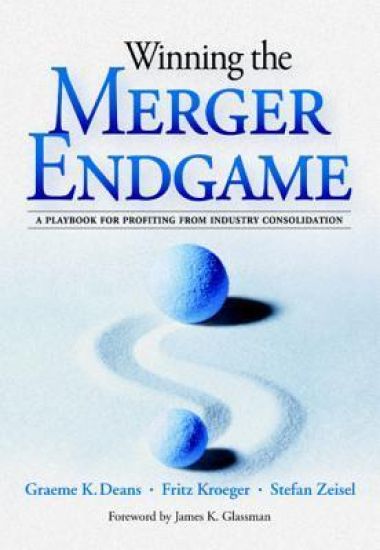
Winning the Merger Endgame: A Playbook for Profiting From Industry Consolidation
Graeme Deans; Fritz Kroeger; Stefan Zeisel
McGraw-Hill Professional
2002
sidottu
This is an indispensable guide to strategic best practices for business mergers. Thirteen years ago, the experts at A. T. Kearney embarked on a landmark, worldwide study of business mergers. Encompassing 25,000 companies across 24 industries in 53 countries, the study revealed much crucial information that was previously unknown about business consolidation. This book shares those revelations and insights with senior executives, consultants, and industry analysts involved in the merger process. More important, it builds on those findings to present readers with a solid game plan for winning the consolidation game. Readers learn about the consolidation cycles through which industries pass, how to identify where in the cycle their industry currently lies, how to leverage that knowledge in determining which organizational changes they need to make and when they need to make them, and how to develop and deploy the most successful merger strategies.

In the ten years since the first edition appeared the renaissance in Free Radical Polymerization has continued and gained momentum. In this second revised edition, the authors critically evaluate the findings of the last decade, where necessary reinterpreting earlier work in the light of these ideas, and point to the areas where current and future research is being directed. The overall aim is to provide a framework for further extending our understanding of free radical polymerization and create a definable link between synthesis conditions and polymer structure and properties. The authors have updated all chapters, and added many new references and two new chapters to reflect the significant advances made in radical polymerization. One new chapter has been devoted to the area of living radical polymerization which is now responsible for a very substantial fraction of the papers in the field. In addition to offering polymers with unique compositions and properties not achievable with other methodologies, living radical polymerization has also been combined with other processes and mechanisms to give structures and architectures that were not previously thought possible. The developments are seen to have great application particularly in the emerging areas of electronics, biotechnology and nanotechnology.
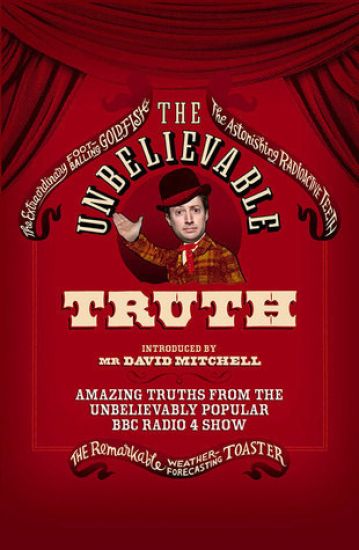
If you love QI you will love The Unbelievable Truth the most successful BBC Radio 4 panel show fronted by David Mitchell is all about identifying the unbeilevable truths from the lies.Enter Mr David Mitchell’s amazing Cabinet of Curiosities and prepare to marvel at this hand-picked and lavishly illustrated compendium of incredible facts, each one painstakingly culled from the hugely acclaimed BBC Radio and Australian TV show The Unbelievable Truth.PLUS – try your own truth-detection skills over a series of ingenious comic essays on a diverse range of subjects from Armadillos to Sir Walter Raleigh by the show’s co-inventor Dr Graeme Garden – each essay contains FIVE incredible truths, tantalisingly concealed amongst a host of barely credible lies.The Unbelievable Truth is hosted by the award-winning actor, comedian and writer David Mitchell, and was first broadcast on Radio 4 in 2006, since then it has become one of BBC Radio’s most popular and successful shows.

Data Modeling Essentials, Third Edition, covers the basics of data modeling while focusing on developing a facility in techniques, rather than a simple familiarization with "the rules". In order to enable students to apply the basics of data modeling to real models, the book addresses the realities of developing systems in real-world situations by assessing the merits of a variety of possible solutions as well as using language and diagramming methods that represent industry practice. This revised edition has been given significantly expanded coverage and reorganized for greater reader comprehension even as it retains its distinctive hallmarks of readability and usefulness. Beginning with the basics, the book provides a thorough grounding in theory before guiding the reader through the various stages of applied data modeling and database design. Later chapters address advanced subjects, including business rules, data warehousing, enterprise-wide modeling and data management. It includes an entirely new section discussing the development of logical and physical modeling, along with new material describing a powerful technique for model verification. It also provides an excellent resource for additional lectures and exercises. This text is the ideal reference for data modelers, data architects, database designers, DBAs, and systems analysts, as well as undergraduate and graduate-level students looking for a real-world perspective.

"A delightful visual feast . . . The meticulous artistry is far-reaching in its innovation, detail, and humor."--Publishers Weekly Within the page of this book You may discover, if you look Beyond the spell of written words A hidden land of beasts and birds . . . Animalia is a book like no other. Abounding with fanciful, gorgeously detailed art, it is an alphabet book, a guessing game, and a virtual feast for the eyes. Each page features one letter and images related to that letter--as well as a hidden picture of Graeme Base as a child Animalia will entrance any child or adult who enters its fantastical world. "A tongue-twisting menagerie . . . in] a perfectly delightful alphabet book."--Charles Gibson, Good Morning America

As costumed guests gather for Horace the elephant's eleventh birthday party, the birthday feast curiously disappears and it is up to the reader to solve the mystery, in a puzzle that features a rhyming text and colorful picture clues. Reprint. PW.

Romance, mystery and intrigue revolve around the Seahorse Cafe, where the beautiful Pearl Trout falls in love with Corporal Bert the Soldiercrab. But Reeftown is in danger, and soon Pearl, Bert, and Pearl's brother Finneus must journey through the ocean depths to find the source of the deadly poison that is destroying the coral reef. Graeme Base's witty rhymes [and] dynamic, radiantly colored illustrationsshould keep both reader and audience immensely entertained (Publishers Weekly). Base will surely delight his many fans with this latest high-color, high-action, high-density composition[with] a high-minded ecological message. -- School Library Journal Graeme Base is the author and illustrator of the international bestsellers Animalia and The Eleventh Hour. He lives in Melbourne, Australia.
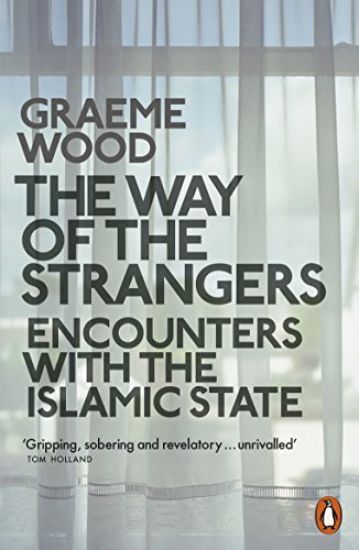
'Gripping ... revelatory ... unrivalled' Tom Holland, New Statesman'From Mosul to Melbourne, from Cairo to Tokyo, from London to Oslo, from Connecticut to California: Graeme Wood's quest to understand the Islamic State is a round-the-world journey to the end of the night' Niall Ferguson 'A hugely important book ... Indispensable' David Aaronovitch, The TimesA radical rethinking of what ISIS is and what it really wantsFrom Graeme Wood, author of the explosive Atlantic cover story "What ISIS Really Wants," comes the definitive book on the history, psychology, character, and aims of the Islamic State. Based on Wood's unprecedented access to supporters, recruiters, and high-ranking members of the most infamous jihadist group in the world, The Way of the Strangers is a riveting, fast-paced deep dive into the apocalyptic dogma that informs the group's worldview, from the ideas that motivate it, to the "fatwa factory" that produces its laws, to its very specific plans for the future. By accepting that ISIS truly believes the end is nigh, we can understand its strategy-and predict what it will do next.

As one rhino gives way to two tigers on up to ten kangaroos, die-cut pages reveal the water hole in ten different worldwide habitats, from African plains to Himalayan mountains to the Australian outback, in a beautifully illustrated counting book. Reprint.

A battle is being fought within corporations. Shareholders want managers to make their shares as valuable as possible, managers want shareholders to leave them alone, and the board of directors is caught in the middle. The Firm Divided shows how strong boards persuade managers to do what's best for shareholders-and why weak boards don't. Graeme Guthrie blends the stories of particular firms and individuals with the insights of scholarly research, enhancing understanding of how seemingly separate events are consequences of the separation of ownership and control, the ultimate cause of manager-shareholder conflict. Boards of directors can affect the outcome of this conflict by monitoring managers, providing incentives for managers to work in shareholders' best interests, delegating monitoring to outside parties, and influencing the effectiveness of the market for corporate control. How directors do this depends on how they weigh their fiduciary duty to shareholders against the close ties that bind them to senior executives. The Firm Divided provides conceptual insight, underpinned by research into corporate governance, into board-manager interactions. It shows how tools that can benefit shareholders when used by strong boards can actually harm shareholders when used by weak boards. Guthrie provides a 360 degree view of firms, exploring the ways in which each player pursues their own goals, with examples from a range of firms in diverse industries.

Galtieri, Lukashenka, and Putin are some of the dictators whose untrammelled personal power has been seen as typical of the dog-eat-dog nature of leadership in authoritarian political systems. This book provides an innovative argument that, rather than being characterised by permanent insecurity, fear, and arbitrariness, the leadership of dictatorships is actually governed by a series of rules. The rules are identified, and their operation is shown in a range of different types of authoritarian regime. The operation of the rules is explained in ten different countries across five different regime types: the Soviet Union and China as communist single party regimes; Argentina, Brazil, and Chile as military regimes; electoral authoritarian Malaysia and Mexico; personalist dictatorships in Belarus and Russia; and the Gulf monarchies. Through close analysis of the way leadership functions in these different countries, the book shows how the rules have worked in different institutional settings. It also shows how the power distribution in authoritarian oligarchies is related to the rules. The book transforms our understanding of how authoritarian systems work.

A Neofederalist Vision of TRIPS
Graeme B. Dinwoodie; Rochelle C. Dreyfuss
Oxford University Press Inc
2012
sidottu
The TRIPS Agreement (Agreement on Trade-Related Aspects of Intellectual Property Rights), signed on April 15, 1994, introduced intellectual property protection into the World Trade Organization's multilateral trading system for the first time, and it remains the most comprehensive international agreement on intellectual property to date. A Neofederalist Vision of TRIPS by Graeme B. Dinwoodie and Rochelle C. Dreyfuss examines its interpretation, its impact on the creative environment, and its effect on national and international lawmaking. It propounds a vision of TRIPS as creating a neofederalist regime, one that will ensure the resilience of the international intellectual property system in time of rapid change. In this vision, WTO members retain considerable flexibility to tailor intellectual property law to their national priorities and to experiment with changes necessary to meet new technological and social challenges, but agree to operate within an international framework. This framework, while less powerful than the central administration of a federal government, comprises a series of substantive and procedural commitments that promote the coordination of both the present intellectual property system as well as future international intellectual property lawmaking. Part I demonstrates the centrality of state autonomy throughout the history of international negotiations over intellectual property. Part II, which looks at the present, analyzes the decisions of the WTO in intellectual property cases. It concludes that the WTO has been inattentive to the benefits of promoting cultural diversity, the values inherent in intellectual property, the rich fabric of its law and lore, the necessary balance between producers and users of knowledge goods, and the relationship between the law and the technological environment in which it must operate. Looking to the future, Part III develops a framework for integrating the increasingly fragmented international system and proposes the recognition of an international intellectual property acquis, a set of longstanding principles that have informed, and should continue to inform intellectual property lawmaking. The acquis would include both express and latent components of the international regime, put access-regarding guarantees such as user rights on a par with proprietary interests and enshrine the fundamental importance of national autonomy in the international system.

Decision makers in business and economics face a staggering array of problems. Managers of growing firms have to decide which growth options will expand their business. Governments have to decide which infrastructure investments to undertake. Managers of oil firms must decide how rapidly to deplete their reserves. Owners of land must decide when and how to develop. Operators of power plants must decide when to start them up and when to shut them down. While these problems seem quite diverse, they share many important features. In each case, the decision maker must choose when to take a particular action that will be difficult, if not impossible, to reverse. In each case, the consequences of taking (or not taking) that action are uncertain. The timing and nature of these actions directly affect revenue. Real options that often vary radically from one problem to another. The book focuses on building a general approach to solving problems from the ground up to show readers how real options can be assembled in a way appropriate to the individual problem being analyzed. The book will inform both practitioners who want to develop their analytical techniques and also graduate students who will eventually become practitioners. The real-options approach to capital budgeting (and business decision-making more generally) was introduced 30 years ago and is now widely accepted. While there are now many books that introduce the concept of real options to a general business audience, students and practitioners have been given little guidance as to how to actually implement these concepts in practice.

History, Scripture, and Authority in the Carolingian Empire
Graeme Ward
Oxford University Press
2022
sidottu
History, Scripture and Authority in the Carolingian Empire offers a detailed analysis of the work of the ninth-century historian Frechulf of Lisieux. It uses the creation of Frechulf's monumental Histories to explore how the past was read and interpreted in the Carolingian world. In c. 830, Frechulf, bishop of the northwestern Frankish see of Lisieux, completed his Histories, a vast account of the world from its creation through to the seventh century. Despite the richness of the source, it has long been overlooked by modern scholars. Two factors account for this neglect: Frechulf's narrative stops over two centuries short of his time of writing, and was largely a compilation of earlier, late antique histories and chronicles. In examining Frechulf's historiographical compendium, this book challenges a dominant paradigm within medieval studies of understanding history-writing primarily as an extension of politics and power. By focusing instead on the transmission and reception of patristic knowledge, the compilation of authoritative texts, and the relationship between the study of history and scriptural exegesis, it reveals Frechulf's work to be an unexpectedly rich artefact of Carolingian intellectual culture.

This is the first book to examine one of Europe's largest Protestant communities in Hungary and Transylvania. It highlights the place of the Hungarian Reformed church in the international Calvinist world, and reveals the impact of Calvinism on Hungarian politics and society. Calvinism attracted strong support in Hungary and Transylvania, where one of the largest Reformed churches was established by the early seventeenth century. Understanding of this Hungarian Reformed church remains the most significant missing element in the analysis of European Calvinism. The Hungarian Reformed church survived on narrow ground between the Habsburgs and Turks, thanks to support from Transylvanias princes and local nobles. They worked with Reformed clergy to maintain contact with western co-religionists, to combat confessional rivals, to improve standards of education and to impose moral discipline. However, there were also tensions within the church over further reforms of public worship and church government, and over the impact of puritanism. This book examines the development of the Hungarian church within the international Calvinist community, and the impact of Calvinism on Hungarian politics and society.

"Light is a Messenger" is the first biography of William Lawrence Bragg, who was only 25 when he won the 1915 Nobel Prize in Physics - the youngest person ever to win a Nobel Prize. It describes how Bragg discovered the use of X-rays to determine the arrangement of atoms in crystals and his pivotal role in developing this technique to the point that structures of the most complex molecules known to Man - the proteins and nucleic acids - could be solved. Although Bragg's Nobel Prize was for physics, his research profoundly affected chemistry and the new field of molecular biology, of which he became a founding figure. This book explains how these revolutionary scientific events occurred while Bragg struggled to emerge from the shadow of his father, Sir William Bragg, and amidst a career-long rivalry with the brilliant American chemist, Linus Pauling.
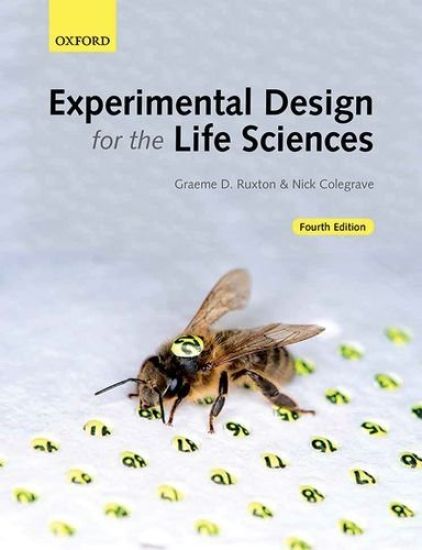
Experimental Design for the Life Sciences
Graeme D. Ruxton; Nick Colegrave
Oxford University Press
2016
nidottu
The careful design of experiments lies at the core of good research. Experimental Design for the Life Sciences equips you with the skills you need to effectively design experiments, making this essential aspect of the research process readily understandable. It demonstrates how good experimental design relies on clear thinking and biological understanding, not mathematical or statistical complexity. With a refreshingly approachable and articulate style, the book walks you through the considerations that go into designing an experiment in clear, practical terms. Using examples drawn from across the life sciences - from ecology, biochemistry, molecular biology, genetics, and health sciences - the authors illustrate how these concepts are applied within the broad context of real biological research. Online Resources The online resources to accompany Experimental Design for the Life Sciences feature: For students: · Self-test questions and answers · Additional examples · Supplementary sections discuss complex concepts and statistical issues in more depth · Links to useful websites and free software For lecturers: · Suggested course structures, complete with practical exercises · Figures from the book, available to download