Kirjojen hintavertailu. Mukana 11 699 587 kirjaa ja 12 kauppaa.

Kirjahaku

Etsi kirjoja tekijän nimen, kirjan nimen tai ISBN:n perusteella.

1000 tulosta hakusanalla Graham Smith

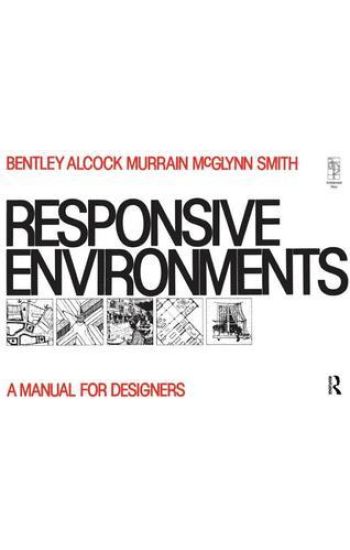
Responsive Environments

Responsive Environments

Sue McGlynn; Graham Smith; Alan Alcock; Paul Murrain

Architectural Press
1985
nidottu
Clearly demonstrates the specific characteristics that make for comprehensible, friendly and controllable places; 'Responsive Environments' - as opposed to the alienating environments often imposed today. By means of sketches and diagrams, it shows how they may be designed in to places or buildings. This is a practical book about architecture and urban design. It is most concerned with the areas of design which most frequently go wrong and impresses the idea that ideals alone are not enough. Ideals must be linked through appropriate design ideas to the fabric of the built environemnt itself. This book is a practical attempt to show how this can be done.
Connecting Landlocked Developing Countries to Markets

Connecting Landlocked Developing Countries to Markets

Jean-Francois Arvis; Graham Smith; Robin Carruthers

World Bank Publications
2011
nidottu
This book aims to help the policymaker and development community in general to understand the nature of the problems and policy dilemmas that landlocked countries face to trade with the rest of the World. This volume presents an important breakthrough in the literature, by focusing on a new conceptual framework that challenges the previous paradigm based on physical infrastructure and state-led access solutions, embodied in many treaties. By recognizing that the main access problems for landlocked countries occur in the territory of the transit country, this volume provides a new approach to understand the set of incentives that drive the political economy and shape the institutions governing goods' transit along corridors. Overall, the policy levers available to overcome these barriers are based on universally applied principles, recognizing the need for re-engineering current transit regimes which have been implemented with little success outside Europe. A risk-approach to border control and technology use, along with trust building between private operators and public agencies, all point toward the need to encourage and formally recognize higher-quality trucking companies. Meanwhile, other modes of transportation represent an alternative to road transit, but they also entail disadvantages, suggesting that their role is likely to remain limited to niche segments, specific commodities and exceptional market circumstances.
An Introduction to Radio Astronomy

An Introduction to Radio Astronomy

Burke Bernard F.; Francis Graham-Smith

Cambridge University Press
2014
pokkari
Written by two prominent figures in radio astronomy, this well-established, graduate-level textbook is a thorough introduction to radio telescopes and techniques. It is an invaluable overview for students and researchers turning to radio astronomy for the first time. The first half of the book describes how radio telescopes work - from basic antennas and single aperture dishes through to full aperture-synthesis arrays. It includes reference material on the fundamentals of astrophysics and observing techniques. The second half of the book reviews radio observations of our galaxy, stars, pulsars, radio galaxies, quasars, and the cosmic microwave background. This third edition describes the applications of fundamental techniques to newly developing radio telescopes, including ATA, LOFAR, MWA, SKA, and ALMA, which all require an understanding of aspects specific to radio astronomy. Two entirely new chapters now cover cosmology, from the fundamental concepts to the most recent results of WMAP.
Pulsar Astronomy

Pulsar Astronomy

Andrew Lyne; Francis Graham-Smith; Benjamin Stappers

Cambridge University Press
2022
sidottu
After more than half a century since their unexpected discovery and identification as neutron stars, the observation and understanding of pulsars touches upon many areas of astronomy and astrophysics. The literature on pulsars is vast and the observational techniques used now cover the whole of the electromagnetic spectrum from radio to gamma-rays. Now in its fifth edition, this volume has been reorganised and features new material throughout. It provides an introduction in historical and physical terms to the many aspects of neutron stars, including condensed matter, physics of the magnetosphere, supernovae and the development of the pulsar population, propagation in the interstellar medium, binary stars, gravitation and general relativity. The current development of a new generation of powerful radio telescopes, designed with pulsar research in mind, makes this survey and guide essential reading for a growing body of students and astronomers.
Responsive Environments

Responsive Environments

Sue McGlynn; Graham Smith; Alan Alcock; Paul Murrain

Routledge
2015
sidottu
Clearly demonstrates the specific characteristics that make for comprehensible, friendly and controllable places; 'Responsive Environments' - as opposed to the alienating environments often imposed today. By means of sketches and diagrams, it shows how they may be designed in to places or buildings. This is a practical book about architecture and urban design. It is most concerned with the areas of design which most frequently go wrong and impresses the idea that ideals alone are not enough. Ideals must be linked through appropriate design ideas to the fabric of the built environemnt itself. This book is a practical attempt to show how this can be done.
Degree Theory of Immersed Hypersurfaces

Degree Theory of Immersed Hypersurfaces

Harold Rosenberg; Graham Smith

American Mathematical Society
2021
nidottu
The authors develop a degree theory for compact immersed hypersurfaces of prescribed $K$-curvature immersed in a compact, orientable Riemannian manifold, where $K$ is any elliptic curvature function. They apply this theory to count the (algebraic) number of immersed hyperspheres in various cases: where $K$ is mean curvature, extrinsic curvature and special Lagrangian curvature and show that in all these cases, this number is equal to $-\chi(M)$, where $\chi(M)$ is the Euler characteristic of the ambient manifold $M$.
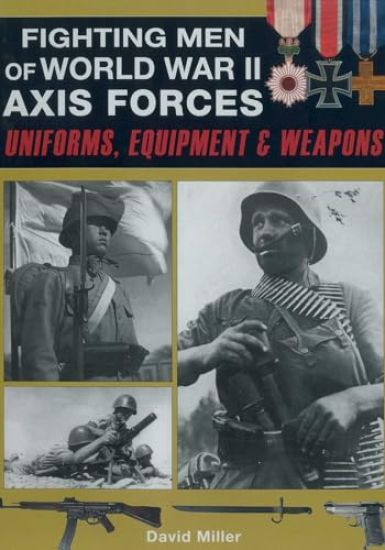
Fighting Men of World War II - Allied Forces

Fighting Men of World War II - Allied Forces

David Miller; Graham Smith

Skyhorse Publishing
2025
pokkari
Fighting Men of World War II: Allied Forces is the second part of a two-volume set (Axis Forces is also available) which sets out to examine in detail the weapons and equipment of the average soldier of the United States, Great Britain and its Dominions and Commonwealth, the Soviet Union, and the other nations like France and Poland who fought on despite being overrun in the early stages of the conflict. In these pages we examine a broad range of general equipment that was used every day, including mess tins, water bottles, medical kits, radios, binoculars, goggles, entrenching tools and wire cutters. We give detailed specifications of weapons such as: pistols and revolvers, rifles, bayonets, fighting knives, hand grenades, flamethrowers, mortars and anti-tank weapons. The clothing sections include headgear, from the M1 helmet system to the Tam o’ Shanter and the Russian pilotka. We examine footwear as diverse as polished officers’ shoes, cavalry boots, paratroopers’ jump boots and felt overboots. Uniform tunics, shirts, trousers, and greatcoats all receive attention, as do all-weather gear, gloves, ponchos, camouflage smocks and load-carrying vests. Numerous variations are shown, as are rank badges and other insignia. Personal items too are included. We show cigarettes and lighters, letters and postcards home, magazines, gramophones, identity tags, mending kits and eating utensils. Almost all of the items shown have not been featured in book form before and have been specially chosen from museums and private collections to form a unique reference source for the general reader, budding collector, military enthusiast, re-enactor, and modeller. The fighting man is placed within the context of his unit organization, while carefully researched archive photos show him with his weapons and equipment in action. The text, by seasoned military expert David Miller, is the result of painstaking research, backed up by his own military experience in the British Army, which has given him the necessary credentials to understand what the average fighting man’s needs and day-to-day preoccupations actually were. David has been assisted by editor Graham Smith, and the two of them have pulled together all these diverse elements to form one of the most definitive works of its kind.
Fighting Men of World War II - Axis Forces

Fighting Men of World War II - Axis Forces

David Miller; Graham Smith

Skyhorse Publishing
2025
pokkari
Fighting Men of World War II: Axis Forces is the first part of a two-volume set (Allied Forces is also available) which sets out to examine in detail the weapons and equipment of the average soldier of Germany, Japan, Italy, and the other nations like Finland, Bulgaria, Hungary and Romania, comprised the Axis forces. In these pages we examine a broad range of general equipment that was used every day, including binoculars, goggles, radios, water bottles, fuel cans, medical kits, skis, wire cutters and detonators. We give detailed specifications of weapons such as pistols and revolvers, rifles, bayonets, fighting knives, hand grenades, landmines, flamethrowers, mortars and light artillery. The clothing sections include headgear, from the feathered hats of the Italian Bersaglieri sharpshooters to the redoubtable Stahlheim of the German troops. We examine footwear as diverse as polished officers’ shoes, cavalry boots, paratroopers’ jump boots and Japanese Tabi canvas shoes. Uniform tunics, shirts, trousers and greatcoats all receive attention, as do all-weather gear, gloves, ponchos and shelter sections, such as the German Zeltbahn. Camouflage variations are shown, as are rank badges together with unit badges and medals. Personal items too are included. We show cigarettes and lighters, letters and postcards home, campstools, fans, identity tags, mending kits and eating utensils. Almost all the items shown have not been featured in book form before and have been specially chosen from museums and private collections to form a unique reference source for the general reader, budding collector, military enthusiast, re-enactor, and modeller. The fighting man is placed within the context of his unit organization, while carefully researched archive photos show him with his weapons and equipment in action. The text, by seasoned military expert David Miller, is the result of painstaking research, backed up by his own military experience in the British Army, which has given him the necessary credentials to understand what the average fighting man’s needs and day-to-day preoccupations actually were. David has been assisted by editor Graham Smith, and the two of them have pulled together all these diverse elements to form one of the most definitive works of its kind.
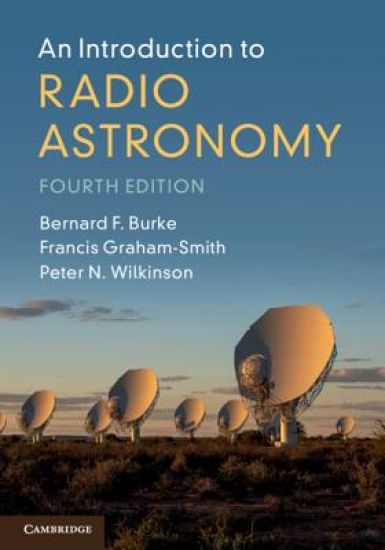
An Introduction to Radio Astronomy

An Introduction to Radio Astronomy

Bernard F. Burke; Francis Graham-Smith; Peter N. Wilkinson

Cambridge University Press
2019
sidottu
Radio astronomy is an active and rapidly expanding field due to advances in computing techniques, with several important new instruments on the horizon. This text provides a thorough introduction to radio astronomy and its contribution to our understanding of the universe, bridging the gap between basic introductions and research-level treatments. It begins by covering the fundamentals physics of radio techniques, before moving on to single-dish telescopes and aperture synthesis arrays. Fully updated and extensively rewritten, the Fourth Edition places greater emphasis on techniques, with detailed discussion of interferometry in particular, and comprehensive coverage of digital techniques in the appendices. The science sections are fully revised, with new author Peter N. Wilkinson bringing added expertise to the sections on pulsars, quasars and active galaxies. Spanning the entirety of radio astronomy, this is an engaging introduction for students and researchers approaching radio astronomy for the first time.
Flies in Relation to Disease

Flies in Relation to Disease

G. S. Graham-Smith

Cambridge University Press
2015
pokkari
First published in 1914 as part of the Cambridge Public Health series and as a second edition of a 1913 original, this book examines how flies that do not suck blood can still transmit diseases from host to host. Graham-Smith examines the life histories and habits of various species of fly that are common in the United Kingdom as well as further afield, and suggests methods to prevent and control the fly population. The text is richly annotated with photographs, illustrations and charts, and will be of value to anyone with an interest in disease prevention and the history of public health.
Prospects for Citizenship

Prospects for Citizenship

Gerry Stoker; Andrew Mason; Anthony McGrew; Chris Armstrong; David Owen; Graham Smith; Momoh Banya; Derek McGhee; Clare Saunders

Bloomsbury Academic
2015
nidottu
This book is available as open access through the Bloomsbury Open Access programme and is available on www.bloomsburycollections.com.Is citizenship in decline due to globalisation and an erosion of civic participation and democratic representation? Or is it merely transformed and extended to new levels and larger scales? Should we assess these challenges and changes primarily from a perspective of global justice, or consider also membership in a democratic polity as itself a basic good? Prospects for Citizenship addresses these broad questions in a unique collaborative effort. The result is an impressive book that looks at the future of citizenship from multiple research perspectives while remaining coherent in its overall purpose.Rainer Bauböck, European University Institute, FlorenceThis book offers a perspicuous overview of the prospects for citizenship in our contemporary political context. The authorial team draw on a wide range of empirical and normative research in order to offer an incisive analysis of the problems and pressures of citizenship in the twenty-first century. The authors focus in particular on the apparent decline of traditional forms of civic engagement, the emergence of new forms of participation and the relationship between citizenship and globalization.
Nudge, Nudge, Think, Think

Nudge, Nudge, Think, Think

Peter John; Sarah Cotterill; Alice Moseley; Liz Richardson; Graham Smith; Gerry Stoker; Corinne Wales

Manchester University Press
2019
nidottu
How can governments persuade their citizens to act in socially beneficial ways? This ground-breaking book builds on the idea of 'light touch interventions' or 'nudges' proposed in Richard Thaler and Cass Sunstein's highly influential Nudge (2008). While recognising the power of this approach, it argues that an alternative also needs to be considered: a 'think' strategy that calls on citizens to decide their own priorities as part of a process of civic and democratic renewal. As well as setting out these divergent approaches in theory, the book provides evidence from a number of experiments to show how using 'nudge' or 'think' techniques works in practice.Updated and rewritten, this second edition features a new epilogue that reflects on recent developments in nudge theory and practice, introducing a radical version of nudge, ‘nudge plus’. There is also a substantial prologue by Cass Sunstein.
The Church Militant

The Church Militant

Graham R Smith; Mark J Cartledge

Pickwick Publications
2016
sidottu
A worldview of ""spiritual warfare"" is widely held among charismatics and Pentecostals, but it has been criticized for producing paranoia and denying personal responsibility. It is less well known that the term was first used in print around 1970 by Anglican charismatics. What did it mean to them then, and what are the practical effects of their worldview? Should we now be adopting a more sophisticated ontology of evil, such as Nigel Wright's ""non-ontological realist"" view or Amos Yong's ""apophatic theology"" of the demonic, rather than the traditional one that Satan and demons are real ontological entities? This practical theological study begins with a study of Anglican charismatic pioneers, and an in-depth case study of a charismatic Anglican congregation, before grappling with the ontological question in dialogue with Wright (together with Barth and Walter Wink), Yong, and Gregory Boyd. A fresh engagement with the biblical texts then argues for a positive, realist ontology for rebellious demonic powers and presents a Trinitarian model of spiritual warfare praxis that emphasizes personal responsibility and promotes freedom from fear. ""Smith has produced a study on spiritual warfare unusual in its depth, rigor, and theological insight. By engaging with lived experience, biblical material, and contemporary authors of different perspectives, he has opened a new way of understanding spiritual warfare. This book deserves to be taken seriously "" --Gavin Wakefield, Director of Training for Missional Ministry, York Diocese; Author of Alexander Boddy: Pentecostal Anglican Pioneer ""This book is a gold mine. Where else will I find a scholarly but readable tour de force about the experiential, philosophical, biblical, and theological aspects of the battle withevil as understood in thecharismatic churches of the UK since the 1970s? The writer recordsinterviews with well-known practitioners. He considers with an open mind the critical views of established scholars. Ultimately, he emerges with carefully nuancedsupport for the traditional and orthodox understanding of Satan and the demonic realm. Excellent "" --Graham Dow, formerly Bishop of Carlisle, England; Author of Explaining Deliverance REV'D DR GRAHAM SMITH is Team Vicar in Bushbury parish, Wolverhampton, UK.