The French Revolution remains one of the crucial events of modern European and world history. The changes wrought in French society, politics, and the church have been commemorated and debated for more than 200 years. This book introduces students to the French Revolution through an historical and cultural overview, as well as the contextual framing of primary documents of ordinary people's experiences in the dramatic conflicts of 1789-1799. Most of the documents are first translations into English for a North American audience. While a majority of sources on the French Revolution provide excerpts from formal documents, this volume reveals the deeper human level, offering immediate insight into everyday life. This is the perfect introduction to the Revolution, with many added-value features, including period illustrations, timeline, glossary, study questions directed toward the Advanced Placement European History exam, and a practical resource guide.
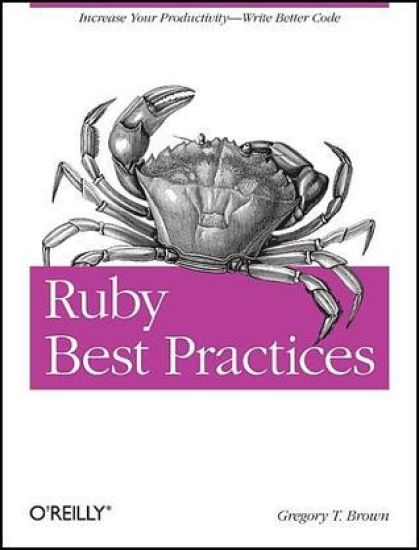
Now you know the Ruby language: how do you get the most out of it? This book covers everything (almost) you need to be a complete Rubyist. How to design beautiful APIs and domain-specific languages; the ins and outs of testing and debugging; functional programming ideas and techniques that can simplify your code and make you more productive; writing code that's readable and expressive; and much more. There's a lot more to Ruby than just knowing the language. Learn how to take this rich, beautiful language and make the most of it.
The Tubalcane race consisted of 427 inhabited planets scattered throughout their galaxy. The planet Tubalcane with its three moons was their home world. Tubalcane was the planet where life began for the Federation and they colonized all other inhabitant planets. For thousands of years they thought that they were the only sentient beings in the universe until, by accident, another race was discovered. This discovery led to a long and protracted war with their very survival at stake. The main character (Captain Yonai) in the novel was told from time to time that there would come a moment in his life when he would have to make a decision that on the surface would appear to be cowardly. Well the time came and Captain Yonai made the decision and the Tubalcane's were thrust onto the galactic stage where they were only a "player in the band" not the "conductor". The novel uniquely blends science fiction, religion and mysticism that captures and holds the reader's attention.
The first full-length, scholarly study of the Société des auteurs dramatiques (SAD), this book describes the form, the meaning, the achievements, and the failures of the first professional association for creative writers in European history. Founded by the well-known playwright Pierre-Augustin Caron de Beaumarchais in 1777 under the protection of prominent aristocrats at the court of King Louis XVI, the SAD comprised the playwrights most closely associated with the royal theater of the kingdom, the Comédie Française. Its two dozen members discussed and worked to advance both their collective interests under the royal theater regulations (which governed such issues of literary property, creative control, and remuneration) and to promote their public image as playwrights and men of letters more broadly - while at the same time competing with each other, sometimes intensely, for control over that image. Gregory Brown traces the story of the SAD from its conception in the mid-1770s through to the French Revolution, exploring first the Society's founding in 1777, then its trajectory until its dissolution at the end of 1780, and finally discusses a revival of the group during the Revolution. In each chapter, Brown analyzes the strategic efforts of Beaumarchais and his associates, to shape regulations and legislation concerning droits d'auteur (authorial remuneration and literary property) and their efforts to reshape the public status and identity of playwrights through correspondence, print and face-to-face encounters with the troupe of the Comédie Française, the theater's aristocratic supervisors at court, its lawyers and government administrators, its commercial publics, and other, authors. Brown argues against previous treatments of the SAD, which have presented it as a spontaneous, dissident challenge to constituted social and political authority under the Old Regime. He demonstrates instead how the SAD emerged from within existing lines of authority in e
The first full-length, scholarly study of the Société des auteurs dramatiques (SAD), this book describes the form, the meaning, the achievements, and the failures of the first professional association for creative writers in European history. Founded by the well-known playwright Pierre-Augustin Caron de Beaumarchais in 1777 under the protection of prominent aristocrats at the court of King Louis XVI, the SAD comprised the playwrights most closely associated with the royal theater of the kingdom, the Comédie Française. Its two dozen members discussed and worked to advance both their collective interests under the royal theater regulations (which governed such issues of literary property, creative control, and remuneration) and to promote their public image as playwrights and men of letters more broadly - while at the same time competing with each other, sometimes intensely, for control over that image. Gregory Brown traces the story of the SAD from its conception in the mid-1770s through to the French Revolution, exploring first the Society's founding in 1777, then its trajectory until its dissolution at the end of 1780, and finally discusses a revival of the group during the Revolution. In each chapter, Brown analyzes the strategic efforts of Beaumarchais and his associates, to shape regulations and legislation concerning droits d'auteur (authorial remuneration and literary property) and their efforts to reshape the public status and identity of playwrights through correspondence, print and face-to-face encounters with the troupe of the Comédie Française, the theater's aristocratic supervisors at court, its lawyers and government administrators, its commercial publics, and other, authors. Brown argues against previous treatments of the SAD, which have presented it as a spontaneous, dissident challenge to constituted social and political authority under the Old Regime. He demonstrates instead how the SAD emerged from within existing lines of authority in e
Everything a pilot is expected to know when transitioning to turbine-powered aircraft. Whether you're preparing for a turbine aircraft ground school, studying for your Airline Transport Pilot (ATP) certificate, priming for a corporate or airline interview, or upgrading into a personal jet or turboprop--The Turbine Pilot's Flight Manual is for you. With precision and humor, authors Greg Brown and Mark Holt cover all the basics for turbine pilot operations, clearly explaining the differences between turbine aircraft and their piston engine counterparts.This manual clarifies the complex topics of turbine aircraft engines and all major jet and turboprop power and airframe systems. It also addresses high-speed aerodynamics, automation, wake turbulence, high-altitude and adverse weather, air carrier operations, transport airplane performance, and flight deck professionalism and leadership. You'll be introduced to state-of-the-art flight deck instrumentation including flight management systems, global navigation (GPS/RNAV/RNP), and head-up guidance systems. Learn the operating principles of hazard avoidance systems, including weather radar, enhanced ground proximity warning systems, predictive wind shear systems, advanced communication procedures and equipment (datalink and ADS-B), and the latest engine performance management techniques. This fifth edition incorporates new material addressing the many recent electronic flight bag (EFB) developments applicable to professional piloting, includes all topics required for completing an ATP Certification Training Program (ATP-CTP), and adds technology and terminology updates. Includes a glossary of airline and corporate aviation terminology, handy turbine pilot rules-of-thumb, and a comprehensive turbine aircraft "Spotter's Guide."The Turbine Pilot's Flight Manual introduces all the principles and lingo required to "talk turbine." Many airlines and corporate flight departments recommend reading it before interviewing and prior to attending ground school.
#1 bestseller in FIVE categories on Amazon, including Counseling & Psychology, Occupational & Organizational, Medicine & Psychology, Clinical Psychology, Social Science Methodology, and Physiological Aspects in Psychology. You have absolutely NO LIMITS to your genius By reading this book and implementing the detailed instructions given within the pages, you can expect a complete transformation of your experience of the world. This may sound impossible, so let's tell you why I can make this claim.You will learn how your mind actually creates reality for you on a psychological level. It creates patterns in your life you may not want because you are totally unaware of the patterns on a conscious level.This book will help you understand the science involved in the transformation. From Socrates to Carl Jung, men have explored how the conscious and unconscious mind dictates our experience of life. You will learn about Neuro-Linguistic Programming (NLP) and the new application of the NLP concepts called Time Line Therapy(R)You will be given tools for figuring out how to find patterns in your life where you feel totally stuck. It seems you can't get through these stuck places alone. Instead, you repeat your problems over and over in certain areas of your life. This book will walk you through the process of looking at those areas and removing the negative emotions getting in your way and the negative limiting beliefs. With those barriers out of the way, you will learn how to develop SMART goals in your future to help you get where you need to be in your life.In short, we're going to transform your inner personal insanity into genius.
As a new hit TV sensation, the duo travels from place to place disproving supernatural legends of Myth and Lore. But when Hank and Gina investigate the urban legend of the infamous witches den where a witch of terrifying power dined on the flesh of those unfortunate enough to venture to her doorstep only to find herself murdered by the townspeople the duo are in for a terrifying surprise when they both learn that the so called legend...may very well be true. Collects Myths and Legends issues 18-21 and Grimm Fairy Tales issue 3.
The Carlisle Northern Development Route (CNDR) is a major road around the western side of Carlisle. Prior to its construction, there was an extensive programme of archaeological excavation, carried out along its route by Oxford Archaeology, between May 2008 and April 2011. The excavations recorded archaeological and palaeoenvironmental remains at several sites (termed ‘parcels’) along this route, including highly significant remains dating to the Mesolithic and Neolithic periods at Stainton West (Parcel 27 North), a site situated on the floodplain north of the River Eden. These related to a Mesolithic seasonal, aggregation encampment, dating between c. 6000 cal BC and c. 4300 cal BC. This was on an island between two palaeochannels and was associated with domestic features and an in-situ flaked-lithic assemblage of over 300,000 pieces, dominated by a narrow-blade lithic technology. Waterlogged deposits of organic sediment and the remains of a beaver lodge and dam in the main palaeochannel defining the western edge of the island, also contained a wealth of palaeoenvironmental evidence relevant to the earlier part of the period in which the encampment was occupied. Neolithic activity began in c. 3800-3700 cal BC comprising the construction of a wooden platform in the main palaeochannel, which was associated with the intentional deposition of tree-felling debris, coarse-stone tools, flaked lithics, pottery, and wooden artefacts, including a paddle and two ‘tridents’. Palaeoenvironmental remains relating to this activity were also recovered, providing evidence for an elm decline, and herding and small-scale arable farming. Later Neolithic activity was also evident in the form of two burnt mounds, established during the first half of the third millennium cal BC. The investigations also revealed evidence for Chalcolithic and Bronze Age activity, which included a sequence of burnt mounds at Stainton West, used until approximately 1600 cal BC. Several other sites along the scheme provided evidence for settlement and agriculture, dating between the twenty-third and the ninth centuries cal BC, which included structures, roundhouses, boundary ditches, ceramics, and plant remains. During the construction works, a transect across the Hadrian’s Wall Roman frontier was also examined at Knockupworth. This identified the initial, Hadrianic, phase of Turf Wall, the subsequent slighting of both this and the Vallum earthworks to the south, and the Stone Wall constructed, around AD 158-60, when the Hadrianic frontier was reoccupied following abandonment of the Antonine Wall. Important evidence for early medieval activity was also revealed. Five apparently near-contemporary rectangular posthole buildings dated to the early eighth to mid-tenth centuries AD, and probably formed a small agricultural settlement. Other remains along the route related to the agricultural landscape that existed in the later medieval and post-medieval periods.
Spanish remains a large and constant fixture in the foreign language learning landscape in the United States. As Spanish language study has grown, so too has the diversity of students and contexts of use, placing the field in the midst of a curricular identity crisis. Spanish has become a second, rather than a foreign, language in the US, which leads to unique opportunities and challenges for curriculum and syllabus design, materials development, individual and program assessment, and classroom pedagogy. In their book, Brown and Thompson address these challenges and provide a vision of Spanish language education for the twenty-first century. Using data from the College Board, ETS, and the authors’ own institutions, as well as responses to their national survey of almost seven hundred Spanish language educators, the authors argue that the field needs to evolve to reflect changes in the sociocultural, socioeducational, and sociopolitical landscape of the US. The authors provide coherent and compelling discussion of the most pressing issues facing Spanish post-secondary education and strategies for converting these challenges into opportunities. Topics that are addressed in the book include: Heritage learners, service learning in Spanish-speaking communities, Spanish for specific purposes, assessment, unique needs for Spanish teacher training, online and hybrid teaching, and the relevance of ACTFL’s national standards for Spanish post-secondary education. An essential read for Spanish language scholars, especially those interested in curriculum design and pedagogy, that includes supporting reflection questions and pedagogical activities for use in upper-level undergraduate and graduate-level courses.
Spanish remains a large and constant fixture in the foreign language learning landscape in the United States. As Spanish language study has grown, so too has the diversity of students and contexts of use, placing the field in the midst of a curricular identity crisis. Spanish has become a second, rather than a foreign, language in the US, which leads to unique opportunities and challenges for curriculum and syllabus design, materials development, individual and program assessment, and classroom pedagogy. In their book, Brown and Thompson address these challenges and provide a vision of Spanish language education for the twenty-first century. Using data from the College Board, ETS, and the authors’ own institutions, as well as responses to their national survey of almost seven hundred Spanish language educators, the authors argue that the field needs to evolve to reflect changes in the sociocultural, socioeducational, and sociopolitical landscape of the US. The authors provide coherent and compelling discussion of the most pressing issues facing Spanish post-secondary education and strategies for converting these challenges into opportunities. Topics that are addressed in the book include: Heritage learners, service learning in Spanish-speaking communities, Spanish for specific purposes, assessment, unique needs for Spanish teacher training, online and hybrid teaching, and the relevance of ACTFL’s national standards for Spanish post-secondary education. An essential read for Spanish language scholars, especially those interested in curriculum design and pedagogy, that includes supporting reflection questions and pedagogical activities for use in upper-level undergraduate and graduate-level courses.
This is an open access title available under the terms of a CC BY-NC-ND 4.0 International licence. It is free to read on the Oxford Academic platform and offered as a free PDF download from OUP and selected open access locations. Across eighteenth- and early nineteenth-century northern England, religious faith continued to affect the lives of men, women, and children in profound ways. Rather than abandoning their faith in the face of increasing urbanisation and industrialisation - as is often assumed was the case - town dwellers across the social and denominational spectrum commonly understood their relationships with their families, households, and the world within a framework of religious duty and virtue. For urban middling and labouring individuals, religious practice and the influence of faith was not limited to time spent in church or chapel but extended into all areas of activity and experience: the workplace, the streets and other public spaces, and the home. The importance of faith in the lived experience of town dwellers was not something that existed in spite of change; faith was promoted by the new conditions of urban life. Faith in the Town explores key decades of this transformational period, encompassing almost a century of urban development between 1740 and 1830. By placing lay religious belief centre-stage, this book demonstrates that many of the developments associated with 'modernity', specifically industrialisation, urbanisation, population growth, and Enlightenment thinking, were not inimical to faith. Instead, religious belief and lay piety was a crucial element in the formation of urban economy, society, and culture during the 'long' eighteenth century, meaning that northern towns were not only places where faith could both be nourished and flourish, but that these urban centres were themselves shaped by faith.
How to identify optimal phase II trial designs Providing a practical guide containing the information needed to make crucial decisions regarding phase II trial designs, A Practical Guide to Designing Phase II Trials in Oncology sets forth specific points for consideration between the statistician and clinician when designing a phase II trial, including issues such as how the treatment works, choice of outcome measure and randomization, and considering both academic and industry perspectives. A comprehensive and systematic library of available phase II trial designs is included, saving time otherwise spent considering multiple manuscripts, and real-life practical examples of using this approach to design phase II trials in cancer are given. A Practical Guide to Designing Phase II Trials in Oncology: Offers a structured and practical approach to phase II trial designConsiders trial design from both an academic and industry perspectiveIncludes a structured library of available phase II trial designsIs relevant to both clinical and statistical researchers at all levelsIncludes real life examples of applying this approach For those new to trial design, A Practical Guide to Designing Phase II Trials in Oncology will be a unique and practical learning tool, providing an introduction to the concepts behind informed decision making in phase II trials. For more experienced practitioners, the book will offer an overview of new, less familiar approaches to phase II trial design, providing alternative options to those which they may have previously used.
Building on its successful "read-see-do" approach, this second edition of Learning Cognitive-Behavioral Therapy: An Illustrated Guide seamlessly combines 23 all-new videos with informative text and figures, charts, worksheets, checklists, and tables to help readers not only learn the essential skills of CBT but achieve competence in this important evidence-based treatment method. Opening with an overview of core cognitive-behavior therapy (CBT) theories and techniques, leading CBT practitioners then describe and demonstrate how to build effective therapeutic relationships with CBT, conceptualize a case with the CBT model, structure sessions, and resolve common problems encountered in CBT. This updated, second edition of the best-selling and highly popular Learning Cognitive-Behavioral Therapy also features: • Ways to employ CBT to reduce suicide risk• Guidance on integrating therapies related to CBT—including dialectical behavior therapy, mindfulness-based cognitive therapy, and well-being therapy—in the context of personality disorders and chronic or recurrent depression• An appendix of curated resources by the expert authors—recommended readings, computer programs, Web sites, videos, and organizations—to give readers access to the best resources in building competence in CBT practice The all-new videos feature clinicians demonstrating methods in real-world settings and include new topics such as safety planning and uncovering and changing maladaptive schemas. Proven as one of the best teaching tools for building competence in CBT, this new edition will enrich readers' understanding and practice of CBT.
Cara McCarty; Matilda McQuaid; Susan Brown; Kimberly Randall; Lucy Commoner; Sarah D. Coffin; Cynthia Trope; Gail S. Davidson; Caitlin Condell; Gregory Herringshaw; Stephen Van Dyk; Elizabeth Broman; Jennifer Colman Bracci
Cooper Hewitt possesses one of the most diverse and comprehensive collections of design works in existence and is the only museum in the United States devoted exclusively to historic and contemporary design. Reopening in late 2014, the museum has undergone a transformative renovation. Its landmark home in the Andrew Carnegie Mansion offers an entirely new and interactive visitor experience resulting in 60 percent more gallery space. To mark the occasion, Cooper Hewitt is publishing an expansive book on its unparalleled collection, which consists of more than 210,000 objects from all over the world, spanning 30 centuries. Designed by Irma Boom, and a wonderful design object in itself at over 900 pages, the book expresses the museum's primary goal--to inspire people to see how design impacts their lives. Available in three different colors and printing with glow in the dark ink, the book embodies design process. This user-centered approach is reinforced throughout the pages with 54 narratives and an extensive process glossary that discusses individual objects through a design lens. Featuring more than 1,100 collection objects selected by the curatorial staff, Smithsonian Design Library, and renowned designer Irma Boom, Making Design is organized entirely by Boom's visual sequencing of images; her design and the curators' essays weave parallel narratives throughout the book. This wildly playful and unexpected jaunt through the collection ends with Boom's exploration of her process, "Making Making Design," which embraces the essence design and the new experiences in Cooper Hewitt's galleries.
"He is one of the best writers we have-to the point and always original."--"The New York Times Book Review"The best-selling author of the Fletch series, Gregory Mcdonald presents both first-hand accounts of major events during the sixties and interviews with Joan Baez, Abbie Hoffman, Krishnamurti, Phil Ochs, Andy Warhol, and others. The year was 1966 and fresh off the heels of his controversial debut novel "Running Scared," Mcdonald was hired to write for "The Boston Globe" with the instruction to "Go and have fun and write about it, and if you end up cut and bleeding on the sidewalk, call the office." "Souvenirs of a Blown World" is an exuberant account of the people, encounters, and emotions that raced through the nation during those indelible years.You will follow a war-battered young soldier through the steamy quagmire of Vietnam, attend a barbeque bash in Dallas for the opening of John Wayne's two hundred first picture, watch Jack Kerouac booze himself into hallucinatory eloquence, and run through the streets of Chicago during the 1968 Democratic National Convention. Captured in kaleidoscopic prose, this is the vanished world of America's revolt, the explosive second adolescence that shook old institutions to their foundations . . . the time we must relive and understand if we are to understand and live through our own.Twice the winner of the Edgar Allan Poe Award and described by critics as the inventor of the sunlight mystery and "The Master of the Pointed Story," Gregory Mcdonald has published twenty-six books, including the Fletch series. From 1966 to 1973, he worked for "The Boston Globe," where he was the first member of the major media to write against the Vietnam War.
Regis St Louis; Isabel Albiston; Robert Balkovich; Celeste Brash; Jade Bremner; Cathy Brown; Gregor Clark; Alex Egerton; Michael Grosberg; Anthony Ham; Mark Johanson; Anna Kaminski; Brian Kluepfel; Tom Masters; Carolyn McCarthy; MaSovaida Morgan; Anja Mutic; Kevin Raub; Brendan Sainsbury; Adam Skolnick; Paul Smith; Andy Symington; Phillip Tang; Luke Waterson; Wendy Yanagihara
Lonely Planet’s South America is your passport to the most relevant, up-to-date advice on what to see and skip, and what hidden discoveries await you. Walk Patagonian glaciers, dance the night away in Rio de Janeiro and explore Incan ruins; all with your trusted travel companion. Get to the heart of South America and begin your journey now! Inside Lonely Planet’s South America Travel Guide: Up-to-date information - all businesses were rechecked before publication to ensure they are still open after 2020’s COVID-19 outbreak NEW top experiences feature - a visually inspiring collection of [destination’s] best experiences and where to have them What's NEW feature taps into cultural trends and helps you find fresh ideas and cool new areas Improved planning tools for family travelers - where to go, how to save money, plus fun stuff just for kids Color maps and images throughout Highlights and itineraries help you tailor your trip to your personal needs and interests Insider tips to save time and money and get around like a local, avoiding crowds and trouble spots Essential info at your fingertips - hours of operation, websites, transit tips, prices Honest reviews for all budgets - eating, sleeping, sightseeing, going out, shopping, hidden gems that most guidebooks miss Cultural insights give you a richer, more rewarding travel experience - history, people, music, landscapes, wildlife, cuisine, politics Over 168 maps Covers Argentina, Bolivia, Brazil, Chile, Colombia, Ecuador, French Guiana, Guyana, Paraguay, Peru, Suriname, Uruguay, Venezuela and moreThe Perfect Choice: Lonely Planet’s South America, our most comprehensive guide to South America, is perfect for both exploring top sights and taking roads less traveled. About Lonely Planet: Lonely Planet is a leading travel media company, providing both inspiring and trustworthy information for every kind of traveler since 1973. Over the past four decades, we've printed over 145 million guidebooks and phrasebooks for 120 languages, and grown a dedicated, passionate global community of travelers. You'll also find our content online, and in mobile apps, videos, 14 languages, armchair and lifestyle books, ebooks, and more, enabling you to explore every day. 'Lonely Planet guides are, quite simply, like no other.' – New York Times'Lonely Planet. It's on everyone's bookshelves; it's in every traveler's hands. It's on mobile phones. It's on the Internet. It's everywhere, and it's telling entire generations of people how to travel the world.' – Fairfax Media (Australia)
This is a translated edition of the Encyclical Letter of Pope Gregory XVI, originally issued on August 15, 1832. Addressed to all patriarchs, primates, archbishops, and bishops of the Catholic Church, the encyclical, titled "On the Authority of the Church," reflects the Pope's views on various contemporary issues and challenges facing the Church. This historical document provides insight into the religious and political climate of the 19th century and showcases the Pope's stance on matters of faith, governance, and social order. It remains a valuable resource for scholars and anyone interested in the history of the Catholic Church and papal pronouncements. This work has been selected by scholars as being culturally important, and is part of the knowledge base of civilization as we know it. This work was reproduced from the original artifact, and remains as true to the original work as possible. Therefore, you will see the original copyright references, library stamps (as most of these works have been housed in our most important libraries around the world), and other notations in the work. This work is in the public domain in the United States of America, and possibly other nations. Within the United States, you may freely copy and distribute this work, as no entity (individual or corporate) has a copyright on the body of the work. As a reproduction of a historical artifact, this work may contain missing or blurred pages, poor pictures, errant marks, etc. Scholars believe, and we concur, that this work is important enough to be preserved, reproduced, and made generally available to the public. We appreciate your support of the preservation process, and thank you for being an important part of keeping this knowledge alive and relevant.
This is a translated edition of the Encyclical Letter of Pope Gregory XVI, originally issued on August 15, 1832. Addressed to all patriarchs, primates, archbishops, and bishops of the Catholic Church, the encyclical, titled "On the Authority of the Church," reflects the Pope's views on various contemporary issues and challenges facing the Church. This historical document provides insight into the religious and political climate of the 19th century and showcases the Pope's stance on matters of faith, governance, and social order. It remains a valuable resource for scholars and anyone interested in the history of the Catholic Church and papal pronouncements. This work has been selected by scholars as being culturally important, and is part of the knowledge base of civilization as we know it. This work was reproduced from the original artifact, and remains as true to the original work as possible. Therefore, you will see the original copyright references, library stamps (as most of these works have been housed in our most important libraries around the world), and other notations in the work. This work is in the public domain in the United States of America, and possibly other nations. Within the United States, you may freely copy and distribute this work, as no entity (individual or corporate) has a copyright on the body of the work. As a reproduction of a historical artifact, this work may contain missing or blurred pages, poor pictures, errant marks, etc. Scholars believe, and we concur, that this work is important enough to be preserved, reproduced, and made generally available to the public. We appreciate your support of the preservation process, and thank you for being an important part of keeping this knowledge alive and relevant.
















![The Encyclical Letter [On the Authority of the Church] of Pope Gregory Xvi. Bearing Date August 16Th [Really 15Th] 1832, Tr., With Notes](/covers/9781023983976.jpg)
![The Encyclical Letter [On the Authority of the Church] of Pope Gregory Xvi. Bearing Date August 16Th [Really 15Th] 1832, Tr., With Notes](/covers/9781023989367.jpg)