Kirjojen hintavertailu. Mukana 11 627 630 kirjaa ja 12 kauppaa.

Kirjahaku

Etsi kirjoja tekijän nimen, kirjan nimen tai ISBN:n perusteella.

1000 tulosta hakusanalla Gregory L. Matloff

Resurrecting Excellence

Resurrecting Excellence

Gregory L. Jones

William B Eerdmans Publishing Co
2006
nidottu
Christians are of two minds about excellence. We commend excellent teaching, seek out excellent health care, and celebrate excellence in the arts. When a Christian life or congregation is called excellent, however, we suspect that ambition or success may be getting the best of us. "Resurrecting Excellence" aims to rekindle and encourage among Christian leaders an unselfish ambition for the gospel that shuns both competition and mediocrity and rightly focuses on the beauty, power, and excellence of living as faithful disciples of the crucified and risen Christ. Drawing on ancient traditions and on contemporary voices, the authors - a divinity school dean and a parish pastor - offer both a theology of excellence and compelling portraits of pastors, lay leaders, and congregations that embody "a more excellent way." Excellence in Christian ministry requires the capacity for measuring life by the complexities of judgment and grace as well as budgets and buildings. "Resurrecting Excellence" commends this beautiful and challenging task to all with a heart and mind for the excellence of God.
Crosspaths in Literary Theory and Criticism

Crosspaths in Literary Theory and Criticism

Gregory L. Lucente

Stanford University Press
1997
sidottu
Crosspaths in Literary Theory and Criticism traces several of the most recent trends in both the Italian and the American critical traditions, exploring the points at which the two traditions intersect or for specific reasons fail to intersect. Though the primary focus is on literary questions, attention is also given to the broader concerns of the creative force of culture and, when relevant, to economic, social, and political phenomena. Throughout, it aims to illuminate not only the forms of literary and critical discourse but also their underlying generative principles—their ideologies. The book is in three parts. Part I studies recent theoretical trends, including deconstruction, Marxism, and feminism; critical pluralism; the history of Marxist critique; and the use of the thought of Antonio Gramsci in recent cultural studies. Part II discusses the views of Italian writers (principally Giambattista Vico and Gramsci) who have engaged the problems of the historical imagination; history and myth in Luigi Pirandello's last plays; and the depiction of social life in the "historical" novels of Elsa Morante, William Faulkner, and Mario Vargas Llosa. Part III considers the reaction in the United States to the discovery of the wartime writings of Paul de Man and to the "against theory" debate. The book concludes by setting forth a model of cultural analysis that avoids the mystifications of Gianni Vattimo's "weak thought" and the reductive drawbacks of Marxist views of literary production and expression (both Italian and American) as well as suggesting the advantages of recent materialist perspectives, in the process delineating the differences between modernism and postmodernism.
Ed Bacon

Ed Bacon

Gregory L. Heller; Alexander Garvin

University of Pennsylvania Press
2016
pokkari
In the mid-twentieth century, as Americans abandoned city centers in droves to pursue picket-fenced visions of suburbia, architect and urban planner Edmund Bacon turned his sights on shaping urban America. As director of the Philadelphia City Planning Commission, Bacon forged new approaches to neighborhood development and elevated Philadelphia's image to the level of great world cities. Urban development came with costs, however, and projects that displaced residents and replaced homes with highways did not go uncriticized, nor was every development that Bacon envisioned brought to fruition. Despite these challenges, Bacon oversaw the planning and implementation of dozens of redesigned urban spaces: the restored colonial neighborhood of Society Hill, the new office development of Penn Center, and the transit-oriented shopping center of Market East. Ed Bacon is the first biography of this charismatic but controversial figure. Gregory L. Heller traces the trajectory of Bacon's two-decade tenure as city planning director, which coincided with a transformational period in American planning history. Edmund Bacon is remembered as a larger-than-life personality, but in Heller's detailed account, his successes owed as much to his savvy negotiation of city politics and the pragmatic particulars of his vision. In the present day, as American cities continue to struggle with shrinkage and economic restructuring, Heller's insightful biography reveals an inspiring portrait of determination and a career-long effort to transform planning ideas into reality.
Cadres for Conservatism

Cadres for Conservatism

Gregory L. Schneider

New York University Press
1998
sidottu
In this history of the "other Sixties," Gregory L. Schneider traces the influence of Young Americans for Freedom, a conservative political group that locked horns with the New Left and spawned many of the major players in the contemporary conservative movement, from the Goldwater campaign in 1964 to Reagan's revolution in the 1980s. Cadres for Conservatism reveals how young political conservatives, unlike their leftist counterparts, avoided fracture in the wake of the Sixties. Rather, YAF continued to serve as a seedbed for future conservative leaders, many of whom drew on the contacts and (counter-)activism of their youth to consolidate conservative power. Schneider's talent for trenchant archival research is supplemented by a plethora of detailed interviews with virtually every past national chairman and executive director of the YAF, as well as important sponsors such as William F. Buckley, William Rusher, and M. Stanton Evans.
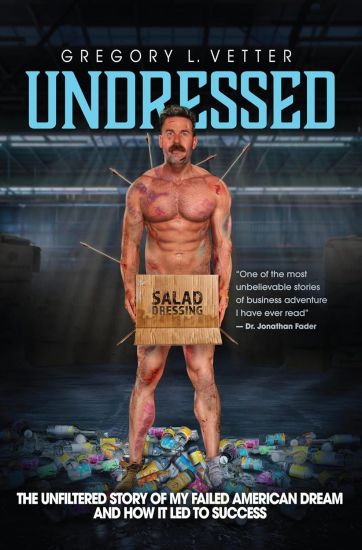
Undressed: The Unfiltered Story of My Failed American Dream and How It Led to Success
WHAT IS START-UP LIFE REALLY LIKE? THIS IS THE INSIDE STORY--THE GOOD, THE BAD AND THE UGLY.What's it like to start a company, build it to national success, and then see it sold out of bankruptcy? This is the true story of Greg Vetter. He and his brothers started their salad dressing company based on their mother's secret recipe. Tessemae's All Natural went from the Vetter kitchen, to local sensation, to national distribution. But the brothers quickly found out that starting a company is easy. Keeping it going is hard. In his own bold and unfiltered way, Greg Vetter shares how he scrambled to find investors, struggled to pay the bills, juggled the unpredictable needs of vendors, employees and customers, all while trying to keep his own sanity intact. This is an inside look at what it really takes to launch a top-selling brand. And what you can learn both on the way up and on the way down.--Gregory L. Vetter
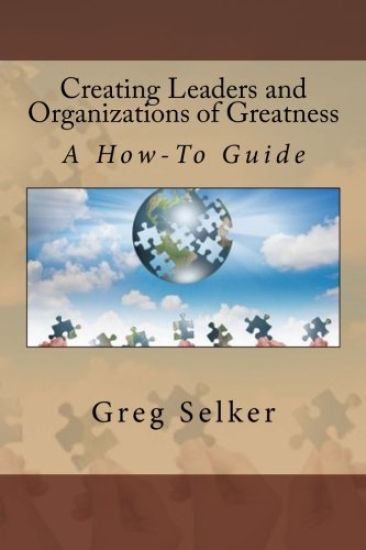
Creating Leaders and Organizations of Greatness: A How-To Guide
Creating Leaders and Organizations of Greatness presents a clear explanation of the conditions that keep so many individuals and organizations from attaining anything other than average performance, while outlining the steps anyone can take to achieve vastly superior results. Leveraging the thousands of hours spent interviewing and assessing executives over his 26 years as an Executive Search and Leadership Consultant, Greg Selker methodically takes us through a journey of discovery guided by the following questions. - Is there a definition of "greatness" that is consistent across individuals, industries, geographies, cultures and organizations? - Can the experience of greatness be analyzed and deconstructed so that it can be reliably implemented in both individuals and organizations? -Are there simple practices that anyone can do that develop both an individual's and organization's capacities to rise above the conditions that keep a state of average in place and deliver greatness? - How does someone start down this pathway? These questions and more are explored in a no-nonsense and plain-speaking manner. The result is a how-to guide outlining simple and repeatable steps on developing yourself into an exceptional leader and building an organization that sustains leadership and greatness.
Aristotle's Favorite Tragedy

Aristotle's Favorite Tragedy

Gregory L Scott

Existenceps
2018
sidottu
The Poetics is considered to be the foundation of Western dramatic and literary theory, and readers generally interpret Aristotle on the basis of Chapter 13 to claim that Oedipus, with its pity, fear and horrible ending, is the finest type of tragedy. Some specialists, however, discuss Aristotle also stating in Chapter 14 that the happily-ending plays like Cresphontes and Iphigenia (in Tauris) are the finest, with the type of plays that involve an agent killing or committing great suffering to a family member, and only recognizing the family connection afterwards, being second-best. This passage obviously creates a dilemma, because the second-best type must include Oedipus. No commentator has ever been able to resolve the dilemma to the satisfaction of the profession, and as a result Oedipus maintains its stature. Indeed, the specialist Elizabeth Belfiore recently published ("The Elements of Tragedy," in A Companion to Aristotle, ed. Georgios Anagnostopoulos, 2009) a defense of the view that Oedipus is the best play for Aristotle in spite of the explicit ranking of Chapter 14.Gregory Scott here demonstrates instead that Aristotle actually means what he says in Chapter 14: Tragoidos, originally "goat-song" or the like, and typically translated misleadingly as "tragedy," really involves for him serious drama primarily about good people, and Aristotle says three times in the book that it can end in misfortune or in fortune. Scott, building on his ground-breaking work from 2003, "Purging the Poetics" (Oxford Studies in Ancient Philosophy) that is reprinted in his Aristotle on Dramatic Musical Composition: The Real Role of Literature, Catharsis, Music and Dance in the POETICS (2016), also resolves the dilemma between Chapters 13 and 14 once and for all, showing that the latter half of Chapter 14 is about tragoidos in general while the earlier text is only about one or two (or a mixture) of the subclasses of tragoidos as given in Chapter 18 and rarely discussed by commentators: "tragedy" of suffering, complex "tragedy," "tragedy" of character, and simple/spectacular "tragedy." The chapters are arbitrary divisions from the Renaissance and the texts must have both come from different original treatises of Aristotle and been assembled badly after his death, or the texts were part of a much larger work, now lost, in which the rest of the theory and the transitions from one topic to another were delineated.In addition to resolving the perennial dilemma and shining a better light on Aristotle's notion of "tragedy," Scott also explains why the best type of play like Cresphontes is better than the second-best one, when they both have recognition and reversal, the conditions for the best kind of plot for Aristotle. With all of this in place, we can easily detect another dilemma that rarely gets discussed in the ranking of the four types of "tragedy" in Chapter 14: The third best type, which is not problematic in this context, involves an agent who knows someone is a family member and who kills the member anyway; we can easily deduce Medea is an example. However, all known commentators seem to accept that Aristotle speaks of Sophocles' horribly-ending Antigone when he exemplifies the worst of the four types. Yet the reason Aristotle gives for the last-place finish is that Antigone is both apathes, "without suffering," and miaron, "shocking" or "revolting." Scott explains in detail not only that Aristotle must be speaking of Euripides' version of Antigone, which ends happily, but why its last-place ranking results.
Aristotle's Favorite Tragedy

Aristotle's Favorite Tragedy

Gregory L Scott

Existenceps
2018
pokkari
The Poetics is considered to be the foundation of Western dramatic and literary theory, and readers generally interpret Aristotle on the basis of Chapter 13 to claim that Oedipus, with its pity, fear and horrible ending, is the finest type of tragedy. Some specialists, however, discuss Aristotle also stating in Chapter 14 that the happily-ending plays like Cresphontes and Iphigenia (in Tauris) are the finest. The type of plays that involve an agent killing or committing great suffering to a family member, and only recognizing the family connection afterwards, are second-best. This passage obviously creates a dilemma, because the second-best type must include Oedipus. No commentator has ever been able to resolve the dilemma to the satisfaction of the profession, and as a result Oedipus maintains its stature. Indeed, the specialist Elizabeth Belfiore recently published ("The Elements of Tragedy," in A Companion to Aristotle, ed. Georgios Anagnostopoulos, 2009) a defense of the view that Oedipus is the best play for Aristotle in spite of the explicit ranking of Chapter 14.Gregory Scott here demonstrates instead that Aristotle actually means what he says in Chapter 14: Tragoidos, originally "goat-song" or the like, and typically translated misleadingly as "tragedy," really involves for him serious drama primarily about good people, and Aristotle says three times in the book that it can end in misfortune or in fortune. Scott, building on his ground-breaking work from 2003, "Purging the Poetics" (Oxford Studies in Ancient Philosophy), also resolves the dilemma between Chapters 13 and 14 arguably once and for all, showing that the latter half of Chapter 14 is about tragoidos in general while the earlier text is only about one or two (or a mixture) of the subclasses of tragoidos as given in Chapter 18 and rarely discussed by commentators: "tragedy" of suffering, complex "tragedy," "tragedy" of character, and simple/spectacular "tragedy." Our chapters are arbitrary divisions from the Renaissance and the texts must have come from different original treatises of Aristotle and have been assembled badly after his death, or the texts were part of a much larger work, now lost, in which the rest of the theory and the transitions from one topic to another were delineated.In addition to resolving the perennial dilemma and shining a better light on Aristotle's notion of "tragedy," Scott also explains why the best type of play like Cresphontes is better than the second-best one, when they both have recognition and reversal, the conditions for the best kind of plot for Aristotle. With all of this in place, we can easily detect another dilemma that rarely gets acknowledged, much less discussed, in the ranking of the four types of "tragedy" in Chapter 14: The third best type, which is not problematic in this context, involves an agent who knows someone is a family member and who kills the member anyway; we can easily deduce Medea is an example. However, all known commentators seem to accept that Aristotle speaks of Sophocles' horribly-ending Antigone when he exemplifies the worst of the four types. Yet the reason Aristotle gives for the last-place finish is that Antigone is both apathes, "without suffering," and miaron, "shocking" or "revolting." Scott explains in detail not only that Aristotle must be speaking of Euripides' version of Antigone, which ends happily, but why it is miaron and why it deserves its last-place ranking.
Aristotle's "Not to Fear" Proof for the Necessary Eternality of the Universe
Aristotle's Unmoved Mover of Metaphysics Lambda, often called God, still convinces some non-believers to become theists, despite its paradoxical nature. One recent case is the British philosopher, Antony Flew, co-author of There is a God: How the World's Most Notorious Atheist Changed His Mind (2007). As Pure Actuality, the Mover has no potentiality, matter or physicality of any sort whatsoever and exists forever, with no potential therefore of not existing. It somehow guarantees the eternal existence of the contingent universe that could disappear but, because of the Mover, does not. Moreover, It thinks of itself thinking, always, like a hyper-intellectual Narcissus.With derision, Cicero rejected the doctrine; Franz Brentano (1838-1917), a teacher of Sigmund Freud and Edmund Husserl, called it "prattle without all sense and reason"; and Werner Jaeger (1888-1961), a renowned specialist of Aristotle, asserted that the Greek from Stagira in Northern Greece renounced the doctrine as he matured, became more empirical, and gained distance from his Athenian mentor Plato. However, none of these thinkers provided the reasons for the Stagirite for how the universe necessarily lasts forever. Scott does.All classicists know that Aristotle accepted the infinite past. Revising and extending the ground-breaking scholarship of Jaakko Hintikka and Sarah Broadie, this book demonstrates that Aristotle also held indubitably the Principle of Plenitude--"for infinite things, what may be, will be"--and that he even held it in modified form for finite things: "In infinite time, any (sort of genuine) possibility is actualized." Since every (sort of) real possibility has already been fulfilled in infinite (past) time and since the universe still exists, Aristotle concludes in Metaphysics Theta 8 that there is no fear that the heavens will ever stop moving. For additional reasons based on a profound understanding of necessity and possibility that no scholar until now has seen in this precise context, and with no recourse to the Unmoved Mover, he asserts that this eternal motion is necessary.Because the universe is not contingent, Aristotle can, and does, drop the doctrine of Pure Actuality, all of which solves another perennial problem in ancient Greek philosophy: The Peripatetics in Aristotle's Lyceum and the other, later schools of philosophy like the Stoics never argued against the Unmoved Mover, even though they contested any important doctrine they found implausible. Scott's interpretation finally explains this. These Greek thinkers knew that the mature Aristotle accepted the inherent necessity of the eternal universe, and they all embraced that doctrine, too, in spite of variations in details.