Kirjojen hintavertailu. Mukana 12 377 006 kirjaa ja 12 kauppaa.

Kirjahaku

Etsi kirjoja tekijän nimen, kirjan nimen tai ISBN:n perusteella.

1000 tulosta hakusanalla Gustave Brunet

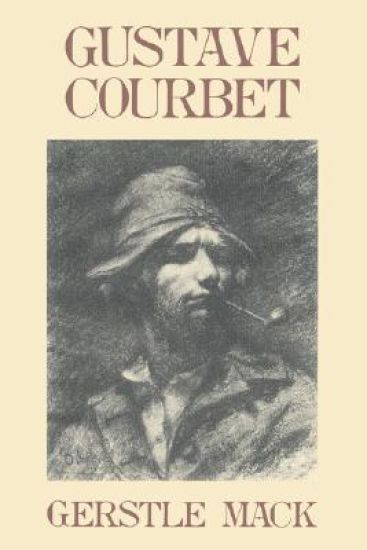
Gustave Courbet

Gustave Courbet

Gerstle Mack

Da Capo Press Inc
1989
pokkari
No biographer could ask for a more colourful or difficult subject than the painter and revolutionary Gustave Courbet. One of the fathers of Realism, a style he created with his huge canvases of his birthplace in Ornans ( After Dinner at Ornans, 1949 Funeral at Ornans, 1850, and The Stonebreakers, 1850), Courbet chose his subjects from ordinary life and portrayed them with the same monumental dignity as the great men of history. A man with big appetites for life, women, and politics, he frequently found himself at odds with French authorities, especially during the period of the Commune when he and his friends pulled down the Vendome Column. Impressionism and Modernism would be unthinkable without his fierce opposition to the academies of art. This biography by one of the most reliable students of French art paints a large and fascinating canvas, which Courbet dominates but never overwhelms.
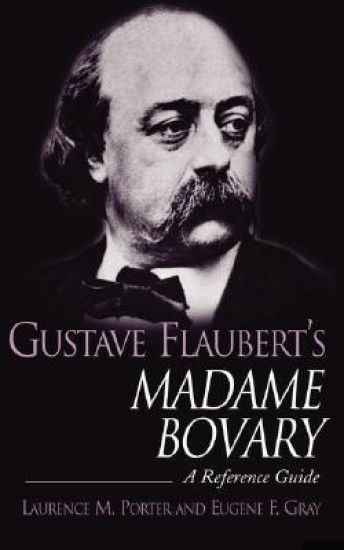
The Letters of Gustave Flaubert: 1830-1857: 1830-1857
Gustave Flaubert wrote to his mistress, Louise Colet: "An author in his book must be like God in the universe, present everywhere and visible nowhere." In his books, Flaubert sought to observe that principle; but in his many impassioned letters he allowed his feelings to overflow, revealing himself in all of his human complexity. Sensuous, witty, exalted, ironic, grave, analytical, the letters illustrate the artist's life--and they trumpet his artistic opinions--in an outpouring of uninhibited eloquence. An acknowledged master of translation, Francis Steegmuller has given us by far the most generous and varied selection of Flaubert's letters in English. He presents these with an engrossing narrative that places them in the context of the writer's life and times. We follow Flaubert through his unhappy years at law school, through his tumultuous affair with Louise Colet; we share his days and nights amid the temples and brothels of Egypt, then on to Palestine, Turkey, Greece, and Rome. And the letters chronicle one of the central events in literary history--the conception and composition of what has been called the first modern novel, Madame Bovary. Steegmuller's selection concludes with Flaubert's standing trial for immoral writing, Madame Bovary's immediate popular success, and Baudelaire's celebration of its psychological and literary power. Throughout this exposition in Flaubert's own words of his views on life, literature, and the passions, readers of his novels will be powerfully reminded of the fertility of his genius, and delighted by his poetic enthusiasm. "Let us sing to Apollo as in ancient days," he wrote to Louise Colet, "and breathe deeply of the fresh cold air of Parnassus; let us strum our guitars and clash our cymbals and whirl like dervishes in the eternal hubbub of forms and ideas " Flaubert's letters are documents of life and art; lovers of literature and of the literary adventure can rejoice in this edition.
The Letters of Gustave Flaubert: 1857-1880

The Letters of Gustave Flaubert: 1857-1880

Gustave Flaubert

Belknap Press
1982
sidottu
Having been acquitted of the charge of "outrage of public morals and religion" brought against him upon the publication Madame Bovary, Gustave Flaubert found himself, in 1857, a celebrity and one of the most admired literary men of his day. Francis Steegmuller's volume of Flaubert's letters from the years culminating in that triumph was hailed by the New York Times as "brilliantly edited and annotated...a splendid, intimate account of the development of a writer who changed the nature of the novel." It went on to garner widespread critical acclaim and to win an American Book Award for Translation. Now, in the second volume, we see Flaubert in the years of his fame--the years in which he wrote Salammb , L' ducation sentimentale, The Temptation of Saint Anthony, Three Tales, and the unfinished Bouvard and Pecuchet. In writing the novels, Flaubert followed his precept, "An author in his book must be like God in the universe, present everywhere and visible nowhere," but in these letters of his maturity he gives full scope to his feelings and expresses forceful opinions on matters public and private. We see Flaubert traveling to Tunisia to document the exotic Salammb , then calling on his own memories and those of his friends to bring to life the Revolution of 1848 and the loves of his hero Frederic Moreau in the pages of L' ducation sentimentale, which many today consider his greatest novel. Flaubert is taken up by the Second Empire Court of Napoleon III and Eugenie, and becomes a lifelong friend of Princess Mathilde Bonaparte. But the most powerful feminine presence in this volume is the warm, sympathetic George Sand, with whom he maintains a fascinating correspondence for more than ten years. This dialogue on life, letters, and politics between the "two troubadours," as they called themselves, reveals both of them at their idiosyncratic best. The deaths of Flaubert's mother, of his closest friend and mentor, Louis Bouilhet, and of Th ophile Gautier, Sainte-Beuve, and other intimates, and Flaubert's financial ruin at the hands of his beloved niece Caroline and her rapacious husband, make a somber story of the post war years. Despite these and other losses, Flaubert's last years are brightened by the affection of Guy de Maupassant, Zola, and other younger writers. Together with Francis Steegmuller's masterly connecting narrative and essential annotation, these letters, most of which appear here in English for the first time, constitute an intimate and engrossing new biography of the great master of the modern novel.
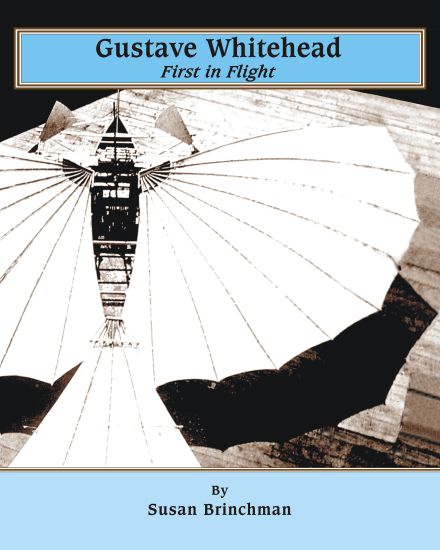
Gustave Whitehead: First in Flight

Gustave Whitehead: First in Flight

Susan Brinchman

Apex Educational Media
2015
nidottu
"Gustave Whitehead: First in Flight" presents new, compelling evidence to credit Gustave Whitehead, aka Gustav Wei kopf, as "first in powered flight" and inventor of the airplane. This book reveals the fascinating truth about Whitehead's successful powered flights in Connecticut, more than two years before the Wrights flew at Kitty Hawk. Learn the startling reasons why the Wright brothers aren't "first in flight", as you enter the hidden history of early aviation. Available both in print and Kindle version.
Gustave Dore Tarot

Gustave Dore Tarot

Pietro Alligo; Gustav Dore

Llewellyn Publications
2022
muu
This magnificent deck unites biblical imagery by famous French illustrator Gustave Dor with traditional tarot symbolism. These stunningly detailed black and white cards showcase Dor 's Romantic style, creating a deck that is as spiritually inspiring as it is useful for readings. These exuberant, even dreamlike illustrations will elevate your divination practice in remarkable ways.
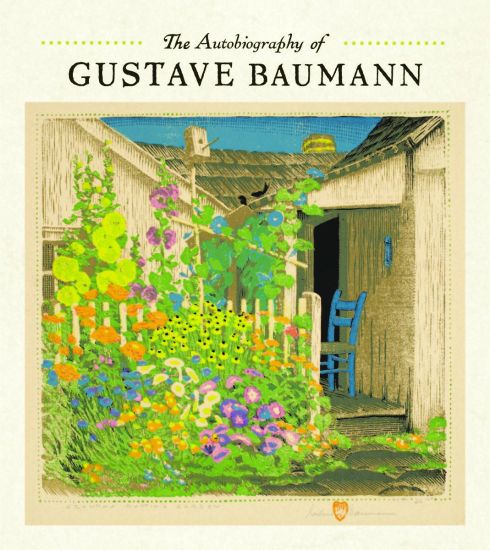
The Autobiography of Gustave Baumann

The Autobiography of Gustave Baumann

Gustave Baumann; Martin F Krause

Pomegranate Communications Inc,US
2015
sidottu
Gustave Baumann (1881 1971) began his career as a commercial artist in Chicago. A craftsman by nature, in 1905 he turned his hand to traditional woodcut printmaking. Five years later he joined other artists in the hill country of Brown County, Indiana, where he pursued his goal of creating "good pictures at low cost." He left Indiana in 1917 but never lost touch with his modest beginnings or his desire for a simple life. Written when he was nearing seventy, The Autobiography of Gustave Baumann illuminates the personality of the artist through anecdotes of town and family life, observations of society, and musings about the role of artists and their art. Edited by Martin Krause, Curator of Prints, Drawings, and Photographs at the Indianapolis Museum of Art, the book is thoroughly annotated with details of personal, cultural, and historical significance. Eighty-plus color reproductions of Baumann's works and three dozen photographs accompany the text.
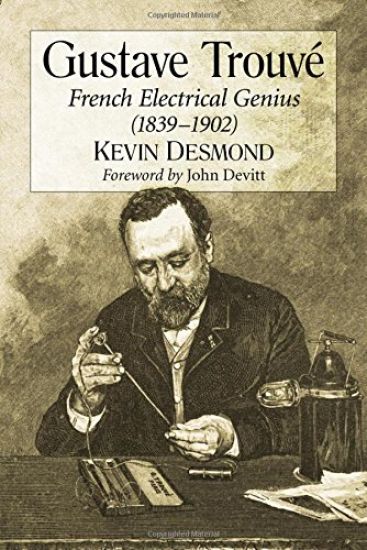
Gustave Trouve

Gustave Trouve

Kevin Desmond

McFarland Co Inc
2015
pokkari
In the latter half of the 19th century, Gustave Pierre Trouve, a modest but brilliant Parisian electrical engineer, conceived and patented some 75 inventions, including the endoscope, the electric car and the frontal headlamp. He also designed an electric boat--complete with outboard motor, headlight and horn--an electric rifle, an electric piano and luminous fountains, and developed wearable technology and ultraviolet light therapy. Unlike his famous contemporary Nikola Tesla, who worked for Thomas Edison and was patronized by George Westinghouse, Trouve never came to America. A confirmed bachelor disinterested in industrialization, he was gradually forgotten following his accidental death in 1902. This expanded edition of the 2012 French first-ever biography of Trouve details the fascinating life of the Chevalier of the Legion of Honor once dubbed "the French Edison."
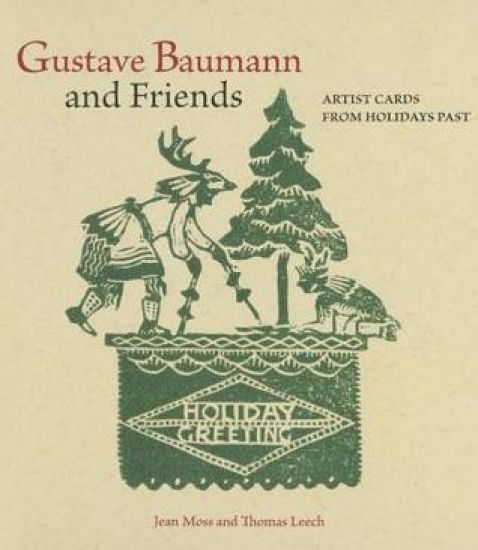
Gustave Baumann & Friends

Gustave Baumann & Friends

Jean Moss; Thomas Leech

Museum of New Mexico Press
2014
sidottu
Off all the artists who have called Santa Fe Home, Gustave baumann is among the most beloved. For nearly five decades beginning in 1918, the renowned printmaker cultivated friendships and other art colonists that were full of the colourful, artistic, humorous, small town flavor brought to life in this delightful collection of holiday cards the artists made for each other and their families. B.j.O. Nordfeldt, Ernest Blumenschein, Will Shuster, Doel Reed, Willard Nash and John Sloan and many more join Baumann in the Christmas and New Year greeting cards assembled here that range from satirical and whimiscal to humorous and hopeful, with commentary about the current state of the world or the artist's place in the world. Woodcuts, phot-engraving, lithography, etching-the hand-drawn, hand-painted and hand-coloured cards show off the personalities of the artists and how the events of the world around them touched their lives in personal, often bemused ways. Drawn from the Ann Baumann Trust as well as museum and private collections, the cards will be part of an exhibition at the New Mexico Museum of History curated by Jean Moss and Palace of the Governors Press director and printmaker Thomas Leech.
Gustave Le Gray – 1820–1884

Gustave Le Gray – 1820–1884

. Aubenas

Getty Publishing
2002
nidottu
Gustave Le Gray's life was as romantic as any novel. A young painter in Rome, then a fashionable portrait photographer in Paris, Le Gray received commissions from Napoleon Ill, and astonished viewers with his painterly landscapes and ravishing seascapes. Facing bankruptcy, he feld Paris with Alexandre Dumas to Palermo, travelled to the Middle East, and finally settled in Egypt, where he became drawing master to the ruler's children and continued to make photographs until his death in 1884 Le Gray's work had remained largely unknown by the general public until he was rediscovered in the 1960s and was deemed by connoisseurs to be the Monet of photography. The fruit of years of research, this complete retrospective offers, as no volume before it, an assessment of Le Gray's important place in the history of photography. This catalogue was originally published in French to accompany the exhibition Gustave Le Gray, Photographer (7820-7884) at the Bibliotheque nationale de France in spring 2002. This English-language edition, edited by Gordon Bladwin, associate curator of photographs at the Getty Museum, coincides with an abridged version of the same exhibition at the Getty Museum from July 9 to September 29, 2002
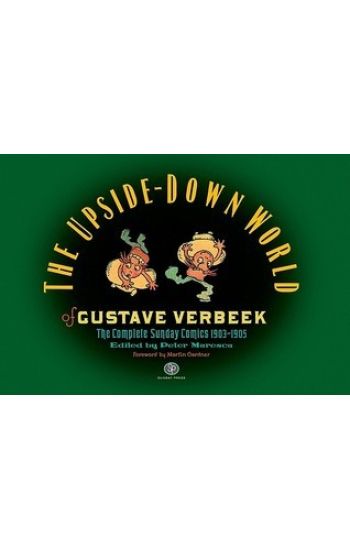
The Upside-Down World of Gustave Verbeek

The Upside-Down World of Gustave Verbeek

Gustave Verbeek

Sunday Press (CA)
2009
sidottu
Get lost in the work of one of the most innovative and unique comic strip artists of the early 20th century. One of the eight wonders of the comics world: The Upside Downs of Little Lady Lovekins and Old Man Muffaroo. The one Sunday page came in two parts: the first is read like a regular comic, then you turn the page upside down and the images transform to illustrate the story that continues with the panels in their new position and order. This volume features a complete run of the Upside Downs (1903-1905), digitally restored and presented in their original size and colors. Also featured are a complete run of Verbeek's Loony Lyrics of Lulu (1910) and a sampling of his long-running favorite, Terrors of the Tiny Tads (1906-1914). As a bonus, a collection of 25 painting and drawings from books illustrated by Verbeek (1910-1915) fill out this high-quality hardbound volume. Verbeek's work has influenced, directly or indirectly, Maurice Sendak, Dr. Suess, and many other illustrators and cartoonists. Contains a foreword by recreational mathematics scholar Martin Gardner, and contributions by comics historians Jeet Heer, Marco Graziosi and Richard Marschall. This book will have great appeal to collectors, archivists, and fans of illustrated children's fantasy stories. Each book includes a set of 12 Tiny Tads postcards, replicated from the Verbeek originals of 1907 - 1910. From 1907 to 1913, Gustave Verbeek's Tiny Tads Postcards were created as an advertising tool for small businesses. Looking like personal postcards, individual stores printed promotional messages in cursive text. Now, for the first time, these cards have been restored without advertising, ready to enjoy and send to your Tad friends all year 'round
The Acadian Breaux-s of Louisiana and the English Lockes of New Hampshire / Gustave A. Breaux.
This work has been selected by scholars as being culturally important and is part of the knowledge base of civilization as we know it.This work is in the public domain in the United States of America, and possibly other nations. Within the United States, you may freely copy and distribute this work, as no entity (individual or corporate) has a copyright on the body of the work.Scholars believe, and we concur, that this work is important enough to be preserved, reproduced, and made generally available to the public. To ensure a quality reading experience, this work has been proofread and republished using a format that seamlessly blends the original graphical elements with text in an easy-to-read typeface.We appreciate your support of the preservation process, and thank you for being an important part of keeping this knowledge alive and relevant.
The Acadian Breaux-s of Louisiana and the English Lockes of New Hampshire / Gustave A. Breaux.
This book tells the story of two families, the Breauxs of Louisiana and the Lockes of New Hampshire, and the role they played in the history of these two regions. The author focuses on the experiences of individual family members and provides a vivid account of their lives in the 18th and 19th centuries.This work has been selected by scholars as being culturally important, and is part of the knowledge base of civilization as we know it.This work is in the "public domain in the United States of America, and possibly other nations. Within the United States, you may freely copy and distribute this work, as no entity (individual or corporate) has a copyright on the body of the work.Scholars believe, and we concur, that this work is important enough to be preserved, reproduced, and made generally available to the public. We appreciate your support of the preservation process, and thank you for being an important part of keeping this knowledge alive and relevant.