Kirjojen hintavertailu. Mukana 11 342 296 kirjaa ja 12 kauppaa.

Kirjahaku

Etsi kirjoja tekijän nimen, kirjan nimen tai ISBN:n perusteella.

1000 tulosta hakusanalla H.G Solari

H G Wells

H G Wells

Adam Roberts

Springer Nature Switzerland AG
2019
nidottu
This is the first new complete literary biography of H G Wells for thirty years, and the first to encompass his entire career as a writer, from the science fiction of the 1890s through his fiction and non-fiction writing all the way up to his last publication in 1946. Adam Roberts provides a comprehensive reassessment of Wells’ importance as a novelist, short-story writer, a theorist of social prophecy and utopia, journalist and commentator, offering a nuanced portrait of the man who coined the phrases ‘atom bomb’, ‘League of Nations’ ‘the war to end war’ and ‘time machine’, who wrote the world’s first comprehensive global history and invented the idea of the tank. In these twenty-six chapters, Roberts covers the entirety of Wells’ life and discusses every book and short story he produced, delivering a complete vision of this enduring figure.
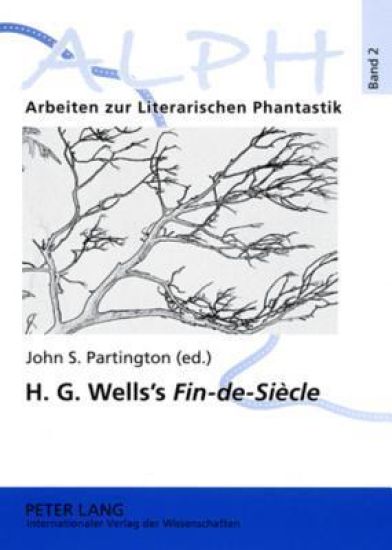
H.G. Wells's "Fin-de-Siecle"
The essays contained in this collection focus on the early H. G. Wells, the scientific romancer, the comic novelist and the young author discovering the literary lite. Written at the crossroads of a new century, the authors of these essays use their own fin-de-si cle experiences to look back one hundred years and critically assess the writings of an earlier fin-de-si cle. With seven chapters dealing with The Time Machine, The Wheels of Chance, The Island of Doctor Moreau, The War of the Worlds, Tono-Bungay and The History of Mr Polly, readers receive a detailed overview of Wells's literary output between 1895 and 1910. Two further chapters treat Wells's literary friendships, assessing his personal and professional relationships with the Victorian realist, George Gissing, and the pioneering modernist, Joseph Conrad, while the final chapter reveals Wells as a 'time traveller', employing poststructuralist techniques fifty years before that expression was coined.
H.G. Wells "Die Zeitmaschine" als Spiegel der Zeit
Studienarbeit aus dem Jahr 2006 im Fachbereich Germanistik - Neuere Deutsche Literatur, Note: 1,3, Technische Universit t Darmstadt, Sprache: Deutsch, Abstract: Zeitreisen hat es immer schon gegeben, in M rchen, Mythen und Legenden.1 Der Roman Die Zeitmaschine von H.G. Wells erschien 1895 bei Heinemann in London und brachte ein ganzes Heer von T ftlern, Physikern, Exzentrikern und Autoren auf den Plan, die nun eigene Maschine in die Welt zu setzen.2 Das Paradox der Zeitreise steht am Beginn einer ganz neuen literarischen Untergattung, die unter dem Motto "Was w re, wenn?" angetreten ist. Im 20. Jahrhundert wird nicht nur die Science Fiction, sondern auch die Geschichtsschreibung selbst von diesem Spieltrieb erfasst.3 Diese neue Gattung fasst auch Wells in seiner Zeitmaschine auf, welche auf einer von ihm verfassten und 1888 ver ffentlichten Geschichte aufbaut: The Chronic Argonauts. Er hat sie wenig sp ter verworfen "und alle Exemplare vernichtet, deren er habhaft werden konnte."4 Diese Reaktion l sst sich aufgrund der Tatsache erkl ren, dass The Chronic Argonauts viel konkreter und realit tsn her gestaltet wurde als Die Zeitmaschine.5 "Nach The Chronic Argonauts schrieb Wells mindestens sechs Versionen der Zeitreisegeschichte, bevor er die heute bekannte Fassung von der Zeitmaschine von 1895 abschloss."6 Die Erz hlung der Zeitmaschine beginnt weder im Weltall, noch in einer Zukunftswelt, sondern im England unter der Herrschaft Queen Victorias. Auf den ersten Seiten spielt sich die Handlung in der Bibliothek des Zeitreisenden ab, dessen Namen dem Leser nie bekannt wird. Der Zeitreisende hat Besuch von einer Herrengesellschaft, zu welcher der Ich-Erz hler, also der Zeitreisende, selbst z hlt, und noch vielen weiteren, wie zum Beispiel einem Arzt und dem B rgermeister. Die Diskussion der Anwesenden dreht sich um die M glichkeit einer Reise durch die Zeit, die durch die Demonstration und Vorf hrung eines kleinen Modells der Zeitmaschine ausgel st wird. Dieses Modell ha
H.G. Ollendorffs neue Methode, in sechs Monaten eine Sprache lesen,
H.G. Ollendorffs neue Methode, in sechs Monaten eine Sprache lesen, - schreiben und sprechen zu lernen. Antleitung zur erlernung der holl ndischen Sprache ist ein unver nderter, hochwertiger Nachdruck der Originalausgabe aus dem Jahr 1864. Hansebooks ist Herausgeber von Literatur zu unterschiedlichen Themengebieten wie Forschung und Wissenschaft, Reisen und Expeditionen, Kochen und Ern hrung, Medizin und weiteren Genres. Der Schwerpunkt des Verlages liegt auf dem Erhalt historischer Literatur. Viele Werke historischer Schriftsteller und Wissenschaftler sind heute nur noch als Antiquit ten erh ltlich. Hansebooks verlegt diese B cher neu und tr gt damit zum Erhalt selten gewordener Literatur und historischem Wissen auch f r die Zukunft bei.
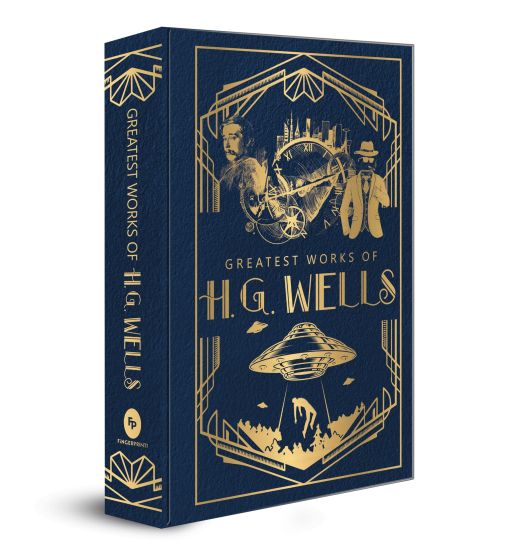
Greatest Works of H.G. Wells

Greatest Works of H.G. Wells

H.G. Wells

Prakash Books
2022
sidottu
Greatest Works of H.G. Wells (Deluxe Hardbound Edition) showcases the remarkable literary genius of H.G. Wells, a pioneer of science fiction and visionary storytelling. Immerse yourself in a collection of his greatest works, beautifully presented in a luxurious hardbound edition. Experience Wells' groundbreaking imagination and thought-provoking narratives. Engage with classic tales such as The War of the Worlds and The Time Machine. Explore themes of scientific discovery, social commentary, and the human condition. Delve into Wells' compelling storytelling and vivid depiction of future worlds. This deluxe hardbound edition is a collector's item, making it a must-have for fans of science fiction, literature enthusiasts, and lovers of visionary storytelling.
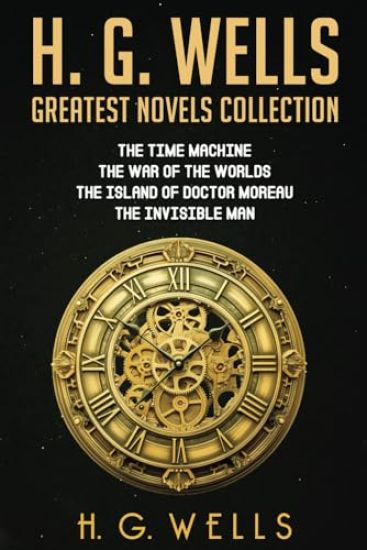
H. G. Wells Greatest Novels Collection

H. G. Wells Greatest Novels Collection

H G Wells

Classy Publishing
2024
nidottu
FOUR OF THE BEST SCIENCE FICTION NOVELS BY THE GRANDFATHER OF SCIENCE FICTION H. G. Wells Greatest Novels Collection showcases the remarkable literary genius of H.G. Wells, a pioneer of science fiction and visionary storytelling The Time Machine: When the Time Traveller courageously stepped out of his machine for the first time, he found himself in the A.D. 802,701, and everything had changed. In this unfamiliar, utopian age creatures seemed to dwell together in perfect harmony. The Time Traveller thought he could study these marvelous beings-unearth their secret and then return to his own time-until he discovered that his invention, his only avenue of escape, had been stolen. The War of the Worlds: When an army of invading Martians lands in England, panic and terror seize the population. As the aliens traverse the country in huge three-legged machines, incinerating all in their path with a heat ray and spreading noxious toxic gases, the people of the Earth must come to terms with the prospect of the end of human civilization and the beginning of Martian rule. The Island of Doctor Moreau: Adrift in a dinghy, Edward Prendick, the single survivor from the good ship Lady Vain, is rescued by a vessel carrying a profoundly unusual cargo - a menagerie of savage animals. Tended to recovery by their keeper Montgomery, who gives him dark medicine that tastes of blood, Prendick soon finds himself stranded upon an uncharted island in the Pacific with his rescuer and the beasts. Here, he meets Montgomery's master, the sinister Dr. Moreau - a brilliant scientist whose notorious experiments in vivisection have caused him to abandon the civilised world. It soon becomes clear he has been developing these experiments - with truly horrific results. The Invisible Man: This masterpiece of science fiction is the fascinating story of Griffin, a scientist who creates a serum to render himself invisible, and his descent into madness that follows.
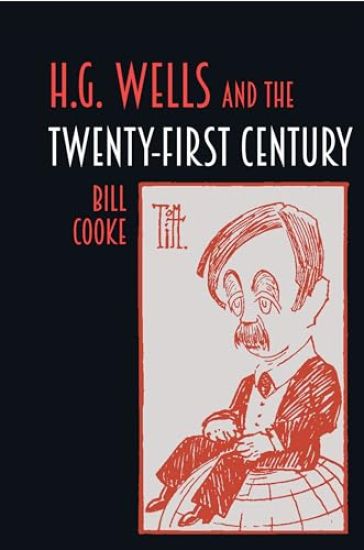
H.G. Wells and the Twenty-First Century

H.G. Wells and the Twenty-First Century

Bill Cooke

LIVERPOOL UNIVERSITY PRESS
2026
nidottu
H.G. Wells has been branded as a novelist who betrayed his vocation. But Wells saw himself as what we would today call a public intellectual. How credible is this claim? And what happens when we look at him in this way? So typecast has Wells’s reputation become that neither of these questions has been previously asked, but when we look at Wells as a thinker we find a whole new quality to his later works, which have invariably been dismissed by literary scholars as of low quality or even not worth reading. In particular, Wells’s prescience as a prophet of our current environmental problems stands out - for example, he foresaw anthropogenic climate change as early as 1931. Popular conceptions of Wells as racist, imperialist and eugenicist are also challenged. What emerges is a new perspective on a significant public intellectual and- pioneering prophet of the twenty-first century.