

Kirjahaku
Etsi kirjoja tekijän nimen, kirjan nimen tai ISBN:n perusteella.
1000 tulosta hakusanalla Hannah Campling


Four stunning tales of friendship, adventure and the magic of the natural world from multi-award-winning author Hannah Gold, illustrated by Levi Pinfold. Perfect for readers aged 8+.
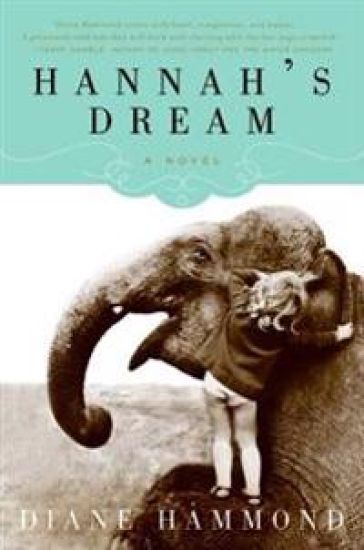
An elephant never forgets . . . but can she dream?For forty-one years, Samson Brown has been caring for Hannah, the lone elephant at the down-at-the-heels Max L. Biedelman Zoo. Having vowed not to retire until an equally loving and devoted caretaker is found to replace him, Sam rejoices when smart, compassionate Neva Wilson is hired as the new elephant keeper. But Neva quickly discovers what Sam already knows: that despite their loving care, Hannah is isolated from other elephants and her feet are nearly ruined from standing on hard concrete all day. Using her contacts in the zookeeping world, Neva and Sam hatch a plan to send Hannah to an elephant sanctuary--just as the zoo's angry, unhappy director launches an aggressive revitalization campaign that spotlights Hannah as the star attraction, inextricably tying Hannah's future to the fate of the Max L. Biedelman Zoo.A charming, poignant, and captivating novel certain to enthrall readers of Water for Elephants, Diane Hammond's Hannah's Dream is a beautifully told tale rich in heart, humor, and intelligence.

"Great for one-on-one sharing or read-alouds. Sure to be popular with the Fancy Nancy crowd and has a nice bit of friendship wisdom to boot." --School Library JournalHannah Sparkles is sure to bring sparkly smiles to countless readers. Hannah was born happy She's thrilled when she learns she has a new neighbor: Sunny Everbright. With a name like that, how could Sunny not be the perfect friend for Hannah? But Sunny isn't into glitter or rainbows. She prefers rain, mud, and lizards. Hannah isn't sure that she and Sunny can be friends at all...until Hannah learns that everyone has their own kind of sparkle, and that friendship can be found in surprising ways.Perfect for fans of the Fancy Nancy and Pinkalicious books
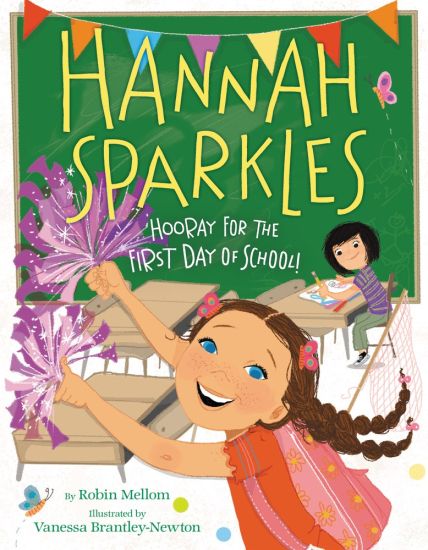
Cheer along with Hannah Sparkles on her first day of school Hannah Sparkles and her best friend, Sunny Everbright, are ready for first grade. Their day starts as perfect as pom-poms...until Hannah and Sunny are seated far apart in the classroom. Even worse, Hannah is having trouble making new friends.It's going to take some extra thinking for Hannah to learn that sometimes being a good listener is the best way to be a good friend.Perfect for fans of Fancy Nancy and Pinkalicious, Hannah Sparkles's second story is sure to bring sparkly smiles to new readers who are just starting school too."Brantley-Newton creates a welcoming school environment filled with cozy nooks, while the heroine exudes personality. Mellom sensitively conveys how school brings with it important, unexpected social lessons." --Publishers Weekly"The illustrations are brightly colored and dynamic to match and] the theme of friendship and first-day jitters will surely resonate with new students... suitable for reading aloud to young children or independent reading for early elementary students." --School Library Journal

Although Hannah Arendt is considered one of the major contributors to social and political thought in the twentieth century, this is the first general anthology of her writings. This volume includes selections from her major works, including The Origins of Totalitarianism, Between Past and Future, Men in Dark Times, The Jew as Pariah, and The Human Condition, as well as many shorter writings and letters. Sections include extracts from her work on fascism, Marxism, and totalitarianism; her treatment of work and labour; her writings on politics and ethics; and a section on truth and the role of the intellectual.

America Hannah's small European village buzzes with tales of life in a faraway land free from persecution. Cousin Esther has passage for two aboard a ship bound for New York, and Hannah convinces Mama and Papashka to let her use the extra ticket. Will America really be everything they've dreamed of?

Hannah Mary Tabbs and the Disembodied Torso
Kali Nicole Gross
Oxford University Press Inc
2016
sidottu
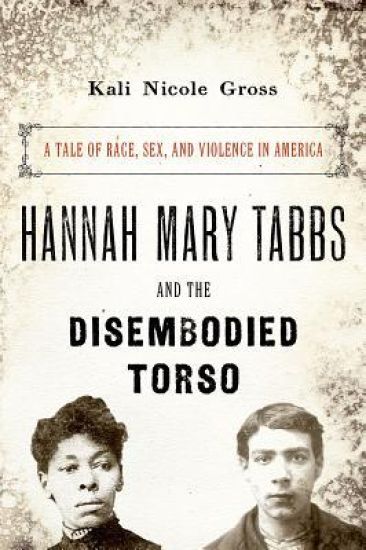
Shortly after a dismembered torso was discovered by a pond outside Philadelphia in 1887, investigators homed in on two suspects: Hannah Mary Tabbs, a married, working class, black woman, and George Wilson, a former neighbor that Tabbs implicated after her arrest. As details surrounding the shocking case emerged, both the crime and ensuing trial -- which spanned several months -- were featured in the national press. The trial brought otherwise taboo subjects such as illicit sex, adultery, and domestic violence in the black community to public attention. At the same time, the mixed race of the victim and one of his assailants exacerbated anxieties over the purity of whiteness in the post-Reconstruction era. In Hannah Mary Tabbs and the Disembodied Torso, historian Kali Nicole Gross uses detectives' notes, trial and prison records, local newspapers, and other archival documents to reconstruct this ghastly who-done-it true crime in all its scandalous detail. In doing so, she gives the crime context by analyzing it against broader evidence of police treatment of black suspects and violence within the black community. A fascinating work of historical recreation, Hannah Mary Tabbs and the Disembodied Torso is sure to captivate anyone interested in true crime, adulterous love-triangles gone wrong, and the racially volatile world of post-Reconstruction Philadelphia.
Hannah Mary Tabbs and the Disembodied Torso
Kali Nicole Gross
Oxford University Press Inc
2018
nidottu
Shortly after a dismembered torso was discovered by a pond outside Philadelphia in 1887, investigators homed in on two suspects: Hannah Mary Tabbs, a married, working-class, black woman, and George Wilson, a former neighbor whom Tabbs implicated after her arrest. As details surrounding the shocking case emerged, both the crime and ensuing trial-which spanned several months-were featured in the national press. The trial brought otherwise taboo subjects such as illicit sex, adultery, and domestic violence in the black community to public attention. At the same time, the mixed race of the victim and one of his assailants exacerbated anxieties over the purity of whiteness in the post-Reconstruction era. In Hannah Mary Tabbs and the Disembodied Torso, historian Kali Nicole Gross uses detectives' notes, trial and prison records, local newspapers, and other archival documents to reconstruct this ghastly whodunit crime in all its scandalous detail. In doing so, she gives the crime context by analyzing it against broader evidence of police treatment of black suspects and violence within the black community. A fascinating work of historical recreation, Hannah Mary Tabbs and the Disembodied Torso is sure to captivate anyone interested in true crime, adulterous love triangles gone wrong, and the racially volatile world of post-Reconstruction Philadelphia.
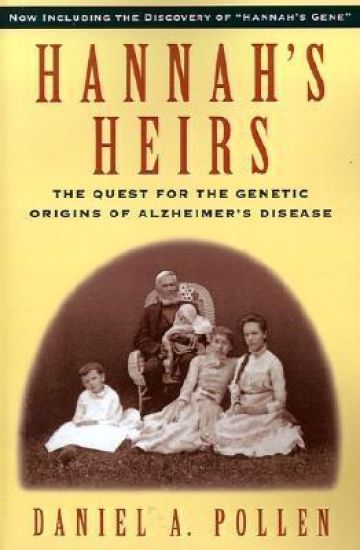
In the late 1800s, in the Ukrainian town of Ekaterinoslav, Hannah, a woman only in her forties, began suffering from progressive memory loss and eventually became unable to care for herself. What seemed an isolated incident remained unexplained at her death in the 1890s. Years later, Hannah's grandson Charles, a physician, spurred by his painful observations that many members of his family were all suffering from the same disease, began charting the family's medical history over five generations. In 1985, when this pedigree--one of the most extensive of its kind--fortuitously fell into the caring hands of neurologist Dr. Dan Pollen, Hannah's family would find themselves immersed in one of the most enduring scientific searches of the century--the quest for the Alzheimer's disease genes. In Hannah's Heirs, Dr. Pollen himself tells the compelling story of Hannah's family and their monumental contributions to the fight against Alzheimer's. We are there in 1985 when Charles presents Pollen with three decades' worth of family medical records as well as data from studies that even Pollen and his associates did not then know existed. We see the selfless acts of Hannah's descendants in their struggle against Alzheimer's: great-grandson Jeff's conviction that after his death his brain be used for all possible research; great-granddaughter Lucy's decision to overcome her dread of flying in order to reach the research centre for testing; and Charles's continued research in the face of a disease that might strike him at any moment. Pollen sets this gripping story within the larger context of the efforts to solve the mysteries of Alzheimer's. He presents the foundations of modern genetic research, from Gregor Mendel's classic discovery of genes, to Alois Alzheimer's work on the brains of presenile dementia victims, to Watson and Crick's double helix model for the structure of DNA. He narrates the latter-twentieth century efforts of scientists to systematically narrow down the causes of Alzheimer's: Carlton Gajdusek's research excluding slow viruses as a cause of Alzheimer's; and the stunning success of Peter St. George- Hyslop's group in Toronto in September 1992 in decisively linking Alzheimer's in Hannah's family to chromosome 14. At the same time, Pollen offers a penetrating look at the ongoing conflicts involved in scientific research, revealing how intense competition for prestige and funding has driven some scientists to hoard precious cell lines. These practices have impeded efforts to discover both the causes and the treatment of Alzheimer's in the shortest possible time. As Hannah's great-grandson Ben has written, "This is a story that had to be told. Aspirations were transcendent, but because it involved people it could not be told without tears." Written by a physician-scientist who has been a central figure in the study of familial Alzheimer's, Hannah's Heirs is an inspiring portrait of the efforts of a courageous family to confront and overcome a "personal biological Holocaust," and an encouraging look at the advances in science that have created the basis for the eventual understanding and treatment of Alzheimer's disease. And for those who have seen the horrors of Alzheimer's, for all who fear the aging process that will take its toll on everyone, here is an inside look at one of the great medical detective stories of our time.

Very Short Introductions: Brilliant, Sharp, Inspiring Hannah Arendt (1906-1975) was one of the major intellectual figures of the twentieth century. Born in Konigsberg to secular Jewish parents, she was a student of the two major exponents of Existenz philosophy in Germany, Karl Jaspers and Martin Heidegger. Arendt escaped Nazi Germany in 1933, traveling first to Paris and then in 1940 to the United States, where she gained citizenship in 1951. As director of the Jewish Cultural Reconstruction she oversaw the collection and presentation of over 1.5 million articles of Judaica and Hebraica that had been hidden from or looted by the Nazis. This Very Short Introduction explores the philosophical ideas and political theories belonging to one of the most important thinkers of the twentieth century. As a survivor of the Holocaust, Arendt's life informed her work exploring the meaning and construction of power, evil, totalitarianism, and direct democracy. Through insightful readings of Arendt's best-known works, from The Origins of Totalitarianism (1951) to The Life of the Mind (1978), Dana Villa traces the importance of Arendt's ideas for today's reader. In so doing, Villa explains how Arendt gained world-wide fame with the publication of Origins, and went on to have a distinguished career as a political theorist and public intellectual. A sometimes controversial figure, Arendt is now recognised as one of the most important political thinkers of the twentieth century and her works have become an acknowledged part of the Western canon of political theory and philosophy. ABOUT THE SERIES: The Very Short Introductions series from Oxford University Press contains hundreds of titles in almost every subject area. These pocket-sized books are the perfect way to get ahead in a new subject quickly. Our expert authors combine facts, analysis, perspective, new ideas, and enthusiasm to make interesting and challenging topics highly readable.

Hannah More (1745-1833), the daughter of an obscure schoolmaster, began her working life as a teacher at her sisters' school in Bristol. In her thirtieth year she came to London to persuade the actor-manager David Garrick to put on one of her plays. Her subsequent career as playwright, bluestocking, Evangelical reformer, political writer, and novelist turned her into one of the most influential women of her day. Few of either sex could rival the range of her achievements. This book is the first full-length biography of More for fifty years and the first to make extensive use of her unpublished correspondence. The new material shows her to have been a more lively and attractive character than previous stereotypes have suggested. It also reinforces the growing perception that she was a complex and contradictory figure: a conservative who was accused of political and religious subversion, an ostensible antifeminist who opened up new opportunities for female activism. Recent work on the Georgian period indicates that, in spite of their exclusion from formal power, women played a vital role in the ordering of politics and society. The remarkable career of Hannah More adds weight to the argument that women (notwithstanding the repressive rhetoric of the conduct books) were increasingly active outside the allegedly private sphere of the home. More's long life began just before the last Jacobite rising, and ended at the dawn of the railway age. This book argues that she should be viewed as essentially forward-looking. When one of her early biographers dedicated his book to the young Queen Victoria, it was a fitting tribute to More's significance. In her energetic campaigning, her moral fervour, her belief in Britain's providential destiny, Hannah More anticipated many of the characteristics of Victorianism. She was one of the creators of the new age.

Hannah Ryggen (1894-1970) was a Swedish-Norwegian modern artist who began her career as a painter before switching to creating political art in the form of monumental tapestries. Combining the decorative and the political, Ryggen was ahead of her time with her turn to "political weaving." She was also a feminist with strong communist sympathies involved in the international workers' movement. Her dramatic, beautiful tapestries were shown at both the Paris and Brussels World's Fairs, but she was largely forgotten by the international art world in the decades after her death. In recent years, however, as interest in both fiber arts and pioneering women artists has grown, Ryggen's work has returned to the public eye, with major international exhibitions and fresh attention from curators, collectors, and critics. A widely recognized authority on Ryggen, Marit Paasche brings this important Scandinavian artist to the foreground in this biography, the first published on Ryggen in English. Paasche looks at Ryggen within the social, political, and cultural contexts of her time and explores how these issues informed her work, from her anti-fascist tapestry that depicted a spear piercing Mussolini's head to one protesting the war in Vietnam. Published to correspond with a major retrospective in Frankfurt, of which Paasche is one of the curators, Hannah Ryggen is a foundational book that will provide a crucial introduction of this artist to a broader audience.
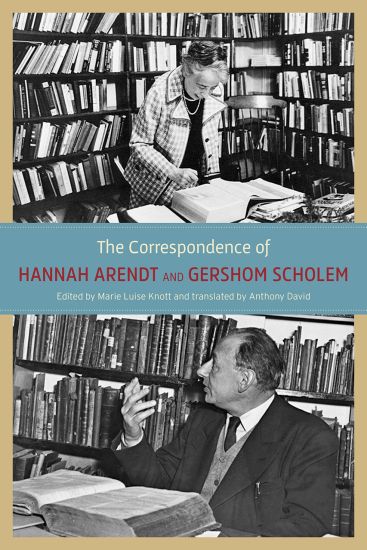
The Correspondence of Hannah Arendt and Gershom Scholem
Hannah Arendt; Gershom Scholem
University of Chicago Press
2017
sidottu
Few people thought as deeply or incisively about Germany, Jewish identity, and the Holocaust as Hannah Arendt and Gershom Scholem. And, as this landmark volume reveals, much of that thinking was developed in dialogue, through more than two decades of correspondence. Arendt and Scholem met in 1932 in Berlin and quickly bonded over their mutual admiration for and friendship with Walter Benjamin. They began exchanging letters in 1939, and their lively correspondence continued until 1963, when Scholem's vehement disagreement with Arendt's Eichmann in Jerusalem led to a rupture that would last until Arendt's death a dozen years later. The years of their friendship, however, yielded a remarkably rich bounty of letters: together, they try to come to terms with being both German and Jewish, the place and legacy of Germany before and after the Holocaust, the question of what it means to be Jewish in a post-Holocaust world, and more. Walter Benjamin is a constant presence, as his life and tragic death are emblematic of the very questions that preoccupied the pair. Like any collection of letters, however, the book also has its share of lighter moments: accounts of travels, gossipy dinner parties, and the quotidian details that make up life even in the shadow of war and loss. In a world that continues to struggle with questions of nationalism, identity, and difference, Arendt and Scholem remain crucial thinkers. This volume offers us a way to see them, and the development of their thought, anew.

Hannah Arendt's approach to politics focuses on action and conduct, rather than institutions, constitutions, and states. In light of Arendtian conceptions of politics, essays in this book challenge conventional IR theories.
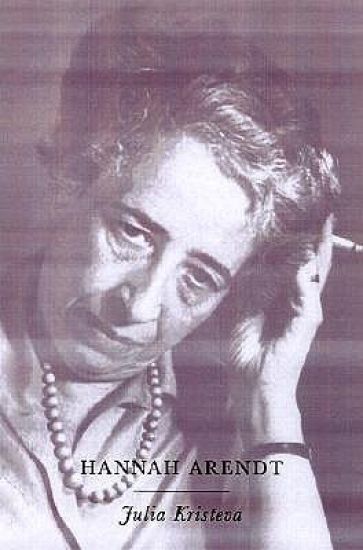
Twenty-five years after her death, we are still coming to terms with the controversial figure of Hannah Arendt. Interlacing the life and work of this seminal twentieth-century philosopher, Julia Kristeva provides us with an elegant, sophisticated biography brimming with historical and philosophical insight. Centering on the theme of female genius, Hannah Arendt emphasizes three features of the philosopher's work. First, by exploring Arendt's critique of Saint Augustine and her biographical essay on Rahel Varnhagen, Kristeva accentuates Arendt's commitment to recounting lives and narration. Second, Kristeva reflects on Arendt's perspective on Judaism, anti-Semitism, and the "banality of evil." Finally, the biography assesses Arendt's intellectual journey, placing her enthusiasm for observing both social phenomena and political events in the context of her personal life. Drawing on fragments of Arendt's most intimate correspondence with her longtime lover Martin Heidegger and her husband Heinrich Blucher, excerpts from her mother's "Unser Kind" (a diary tracking Hannah's formative years), and passages from Arendt's philosophical writings, Kristeva presents a luminous story. With a thorough thematic index and bibliographical references, Hannah Arendt is a major breakthrough in the understanding of an essential thinker.

Twenty-five years after her death, we are still coming to terms with the controversial figure of Hannah Arendt. Interlacing the life and work of this seminal twentieth-century philosopher, Julia Kristeva provides us with an elegant, sophisticated biography brimming with historical and philosophical insight. Centering on the theme of female genius, Hannah Arendt emphasizes three features of the philosopher's work. First, by exploring Arendt's critique of Saint Augustine and her biographical essay on Rahel Varnhagen, Kristeva accentuates Arendt's commitment to recounting lives and narration. Second, Kristeva reflects on Arendt's perspective on Judaism, anti-Semitism, and the "banality of evil." Finally, the biography assesses Arendt's intellectual journey, placing her enthusiasm for observing both social phenomena and political events in the context of her personal life. Drawing on fragments of Arendt's most intimate correspondence with her longtime lover Martin Heidegger and her husband Heinrich Blucher, excerpts from her mother's "Unser Kind" (a diary tracking Hannah's formative years), and passages from Arendt's philosophical writings, Kristeva presents a luminous story. With a thorough thematic index and bibliographical references, Hannah Arendt is a major breakthrough in the understanding of an essential thinker.
While acknowledging Hannah Arendt's keen philosophical and political insights, Kathryn T. Gines claims that there are some problematic assertions and oversights regarding Arendt's treatment of the "Negro question." Gines focuses on Arendt's reaction to the desegregation of Little Rock schools, to laws making mixed marriages illegal, and to the growing civil rights movement in the south. Reading them alongside Arendt's writings on revolution, the human condition, violence, and responses to the Eichmann war crimes trial, Gines provides a systematic analysis of anti-black racism in Arendt's work.

While acknowledging Hannah Arendt's keen philosophical and political insights, Kathryn T. Gines claims that there are some problematic assertions and oversights regarding Arendt's treatment of the "Negro question." Gines focuses on Arendt's reaction to the desegregation of Little Rock schools, to laws making mixed marriages illegal, and to the growing civil rights movement in the south. Reading them alongside Arendt's writings on revolution, the human condition, violence, and responses to the Eichmann war crimes trial, Gines provides a systematic analysis of anti-black racism in Arendt's work.