Kirjojen hintavertailu. Mukana 12 458 222 kirjaa ja 12 kauppaa.

Kirjahaku

Etsi kirjoja tekijän nimen, kirjan nimen tai ISBN:n perusteella.

1000 tulosta hakusanalla Harry T. Moore

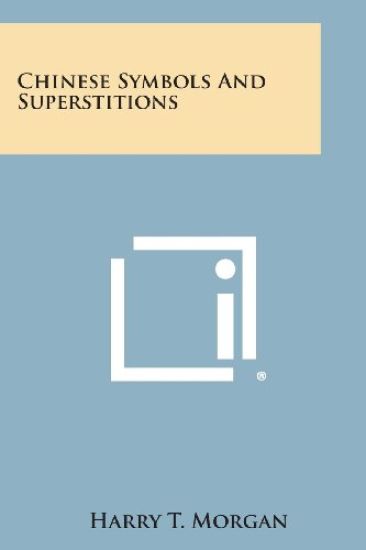
Chinese Symbols and Superstitions

Chinese Symbols and Superstitions

Harry T. Morgan

Literary Licensing, LLC
2013
sidottu
Chinese Symbols and Superstitions is a comprehensive guide to the rich and fascinating world of Chinese culture and beliefs. Written by Harry T. Morgan, an expert in Chinese studies, the book explores the symbolism and superstitions that have shaped Chinese history and continue to influence Chinese society today.The book is divided into two parts. The first part provides an overview of the major Chinese symbols and their meanings, including the yin and yang, the five elements, the twelve animals of the zodiac, and the eight trigrams of the I Ching. Each symbol is explained in detail, with examples of how it is used in Chinese art, literature, and everyday life.The second part of the book delves into the world of Chinese superstitions, exploring beliefs about luck, fortune, and fate. From the importance of lucky numbers and colors to the use of feng shui to create harmonious living spaces, Morgan provides a fascinating insight into the superstitions that underpin Chinese culture.Throughout the book, Morgan draws on his extensive knowledge of Chinese history and culture to provide a rich and engaging exploration of Chinese symbols and superstitions. Whether you are a student of Chinese culture or simply interested in learning more about this fascinating subject, Chinese Symbols and Superstitions is an essential guide.This is a new release of the original 1942 edition.This scarce antiquarian book is a facsimile reprint of the old original and may contain some imperfections such as library marks and notations. Because we believe this work is culturally important, we have made it available as part of our commitment for protecting, preserving, and promoting the world's literature in affordable, high quality, modern editions, that are true to their original work.
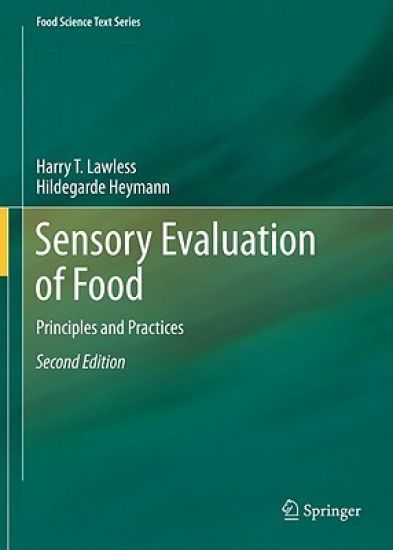
Sensory Evaluation of Food

Sensory Evaluation of Food

Harry T. Lawless; Hildegarde Heymann

Springer-Verlag New York Inc.
2010
sidottu
The ?eld of sensory science has grown exponentially since the publication of the p- vious version of this work. Fifteen years ago the journal Food Quality and Preference was fairly new. Now it holds an eminent position as a venue for research on sensory test methods (among many other topics). Hundreds of articles relevant to sensory testing have appeared in that and in other journals such as the Journal of Sensory Studies. Knowledge of the intricate cellular processes in chemoreception, as well as their genetic basis, has undergone nothing less than a revolution, culminating in the award of the Nobel Prize to Buck and Axel in 2004 for their discovery of the olfactory receptor gene super family. Advances in statistical methodology have accelerated as well. Sensometrics meetings are now vigorous and well-attended annual events. Ideas like Thurstonian modeling were not widely embraced 15 years ago, but now seem to be part of the everyday thought process of many sensory scientists. And yet, some things stay the same. Sensory testing will always involve human participants. Humans are tough measuring instruments to work with. They come with varying degrees of acumen, training, experiences, differing genetic equipment, sensory capabilities, and of course, different preferences. Human foibles and their associated error variance will continue to place a limitation on sensory tests and actionable results. Reducing, controlling, partitioning, and explaining error variance are all at the heart of good test methods and practices.
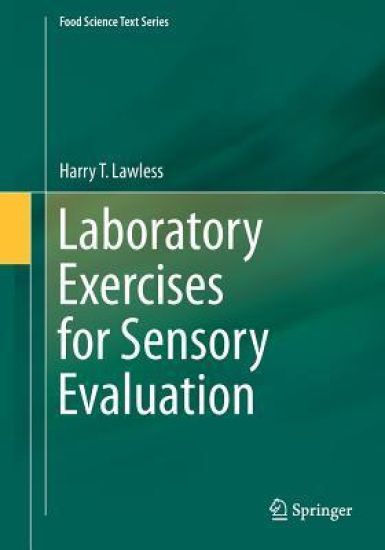
Laboratory Exercises for Sensory Evaluation

Laboratory Exercises for Sensory Evaluation

Harry T. Lawless

Springer-Verlag New York Inc.
2012
nidottu
Laboratory exercises are a necessary part of science education. They enable students to better understand the principles discussed in lectures, and provide them with hands-on experience of the practical aspects of scientific research. The purpose of this book is to provide students and instructors with a time-tested set of lab exercises that illustrate the common sensory tests and/or sensory principles used in evaluation of foods, beverages and consumer products. The appendices will also include a set of simple problem sets that can be used to teach and reinforce basic statistical tests. Approximately twenty years ago the Sensory Evaluation Division of the Institute of Food Technologists sponsored the preparation of a set of exercises titled “Guidelines for Laboratory Exercises for a Course in Sensory Evaluation of Foods,” edited by one of the co-authors (Heymann). This book will provide additional materials from the second author (Lawless), as well as other instructors, in a uniform format that can be easily adopted for course use. Most importantly, the lab exercises will complement the flagship textbook in the field, Sensory Evaluation of Foods: Principles and Practices, 2E, also by Lawless and Heymann and published by Springer. Possible course adoption of the main text along with the lab manual should enhance the sales of these materials.
Sensory Evaluation of Food

Sensory Evaluation of Food

Harry T. Lawless; Hildegarde Heymann

Springer-Verlag New York Inc.
2016
nidottu
The ?eld of sensory science has grown exponentially since the publication of the p- vious version of this work. Fifteen years ago the journal Food Quality and Preference was fairly new. Now it holds an eminent position as a venue for research on sensory test methods (among many other topics). Hundreds of articles relevant to sensory testing have appeared in that and in other journals such as the Journal of Sensory Studies. Knowledge of the intricate cellular processes in chemoreception, as well as their genetic basis, has undergone nothing less than a revolution, culminating in the award of the Nobel Prize to Buck and Axel in 2004 for their discovery of the olfactory receptor gene super family. Advances in statistical methodology have accelerated as well. Sensometrics meetings are now vigorous and well-attended annual events. Ideas like Thurstonian modeling were not widely embraced 15 years ago, but now seem to be part of the everyday thought process of many sensory scientists. And yet, some things stay the same. Sensory testing will always involve human participants. Humans are tough measuring instruments to work with. They come with varying degrees of acumen, training, experiences, differing genetic equipment, sensory capabilities, and of course, different preferences. Human foibles and their associated error variance will continue to place a limitation on sensory tests and actionable results. Reducing, controlling, partitioning, and explaining error variance are all at the heart of good test methods and practices.
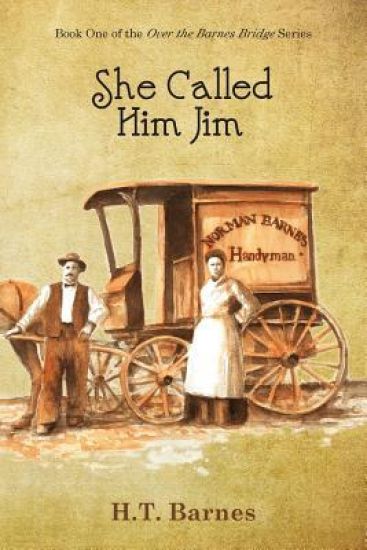
She Called Him Jim

She Called Him Jim

Harry T. Barnes

Createspace Independent Publishing Platform
2016
nidottu
Ida was a coal miner's daughter from the Appalachian Mountains. Norman was the son of a Baltimore City carpenter. At the age of seven, in separate incidents, both of their fathers died violently. In their teens, Ida was sent to a girl's reform school by her brutal stepfather, and Norman lost his mother to mental illness and was left to fend for himself. Both had to grow up fast, and there was little time for tears. "She Called Him Jim" tells the story of how these children rose above adversity and came to know and love one another. It is a true story of courage and perseverance, describing their adventures, hardships, and romance in the early 1900s of Baltimore City, Maryland.The next book in the series, "The Barnes Bridge," is a collection of stories about Ida and Jim, their children, and their lives in Friendsville, Maryland-their joys and sorrows, harrowing near-death experiences, hardships, humor, and courage.
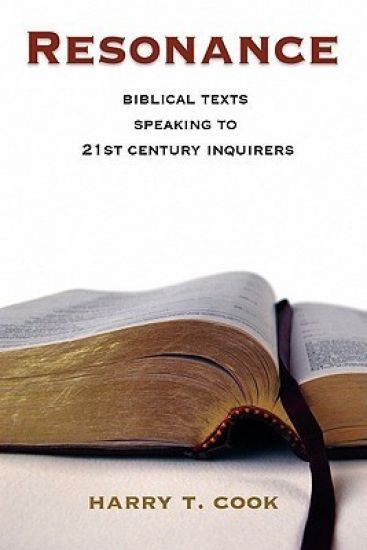
Resonance

Resonance

Harry T. Cook

Polebridge Press
2011
nidottu
Using fresh translations and paraphrases to wrest some measure of relevance and contemporaneity from twenty-four important biblical passages, Harry Cook addresses two important questions: How did ordinary people of first-century CE Palestine read or, better yet, hear these important passages, and how can twenty-first-century English speakers in the western world best appropriate them for instruction, inspiration and understanding?
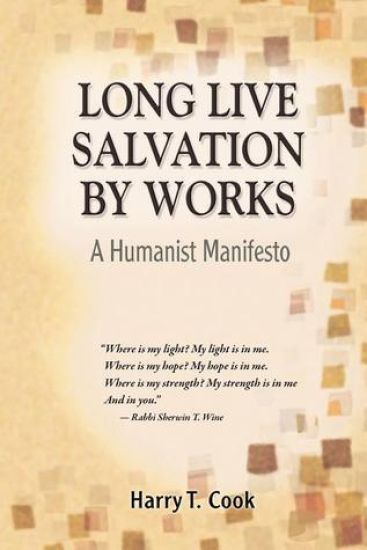
Long Live Salvation by Works

Long Live Salvation by Works

Harry T. Cook

Polebridge Press
2012
nidottu
The idea of salvation by faith is a dangerous proposition directly traceable to St. Paul and the legacy he left for a later writer to expound: For by grace are you saved through faith . . . not by works, lest anyone should boast (Ephesians 2:8-9). That proposition has convinced generations of Christians that, if they only had a little faith, things would get better and wrongs would be righted by and by. This book proposes that salvation is a here-and-now initiative by which human beings may act to save their planet from the killing scourge of degradation and their societies from violence-producing economic and social injustice. The state of salvation is what the New Testament calls the rule or domain of God. The Gospel of Luke quotes Jesus as saying that God s rule is right there in your presence, suggesting that human beings have at hand the wherewithal to save themselves and their environment. Salvation is then a do-it-yourself project.
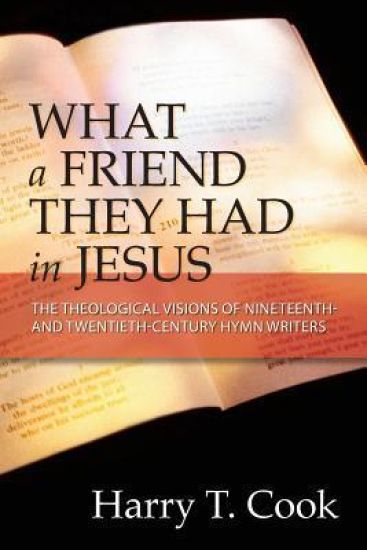
What a Friend They Had in Jesus

What a Friend They Had in Jesus

Harry T. Cook

Polebridge Press
2013
nidottu
Have you ever found yourself humming a favourite childhood hymn, only to realise you could no longer embrace its message? In What a Friend They Had in Jesus, Harry Cook explores how hymns reflect the religious beliefs of their times. He revisits the texts of popular hymns, posing such questions as: How true are they to the biblical texts that seem to have inspired them? What aspects of nineteenth- and twentieth-century piety have persisted into the twenty-first century through the singing of those hymns? And, how does one manage the conflict between the emotional appeal and the theological content of such hymns?