Kirjojen hintavertailu. Mukana 12 083 983 kirjaa ja 12 kauppaa.

Kirjahaku

Etsi kirjoja tekijän nimen, kirjan nimen tai ISBN:n perusteella.

1000 tulosta hakusanalla Helene Cixous

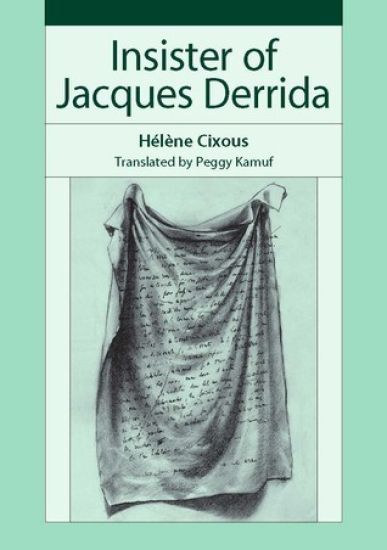
Insister of Jacques Derrida

Insister of Jacques Derrida

Hélène Cixous

Stanford University Press
2008
sidottu
Helene Cixous is arguably the most insightful and unbridled reader of Jacques Derrida today. In Insister, she brings a unique mixture of scholarly erudition, theoretical speculation, and breathtaking textual explication to an extremely close reading of Derrida's work. At the same time, Insister is an extraordinarily poetic meditation, a work of literature and of mourning for Jacques Derrida the person, who was a close friend and accomplice of Cixous's from the beginning of their careers. In a melodic stream-of-consciousness Cixous speaks to Derrida, to his memory and to the words he left behind. She delves into the philosophical spaces that separated them, filling them out to create new understandings, bringing Derrida's words back to life while insisting on our inability to ever truly communicate through words. "More than once we say the same words," Cixous writes, "but we do not live them in the same tone." Insister of Jacques Derrida joins Veils, the two loosely autobiographical texts of Derrida and Cixous published together by Stanford in 2001.
Insister of Jacques Derrida

Insister of Jacques Derrida

Hélène Cixous

Stanford University Press
2008
pokkari
Helene Cixous is arguably the most insightful and unbridled reader of Jacques Derrida today. In Insister, she brings a unique mixture of scholarly erudition, theoretical speculation, and breathtaking textual explication to an extremely close reading of Derrida's work. At the same time, Insister is an extraordinarily poetic meditation, a work of literature and of mourning for Jacques Derrida the person, who was a close friend and accomplice of Cixous's from the beginning of their careers. In a melodic stream-of-consciousness Cixous speaks to Derrida, to his memory and to the words he left behind. She delves into the philosophical spaces that separated them, filling them out to create new understandings, bringing Derrida's words back to life while insisting on our inability to ever truly communicate through words. "More than once we say the same words," Cixous writes, "but we do not live them in the same tone." Insister of Jacques Derrida joins Veils, the two loosely autobiographical texts of Derrida and Cixous published together by Stanford in 2001.
The Third Body

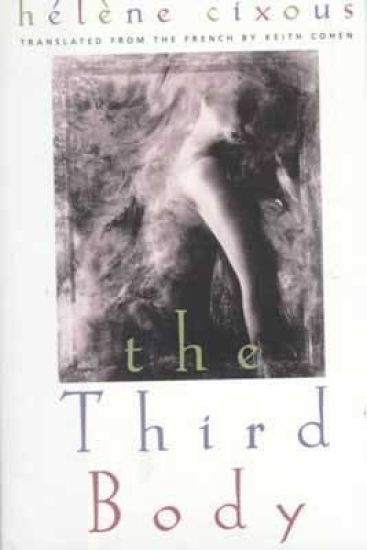
The Third Body

Helene Cixous

Northwestern University Press
1999
sidottu
In The Third Body, the poet, novelist, feminist critic, and theorist Helene Cixous interweaves a loose narrative line with anecdotes, autobiography, lyricism, myth, dream, fantasy, philosophical insights, and intertextual citations of and conversations with other authors and thinkers. Cixous evokes the relationship of the female narrator and her over, a relationship of alternating presences and absences, separations and rejoinings. This relationship assumes protean forms within a complex web of writing, creating a third body out of the entwined bodies of the narrator and her lover.
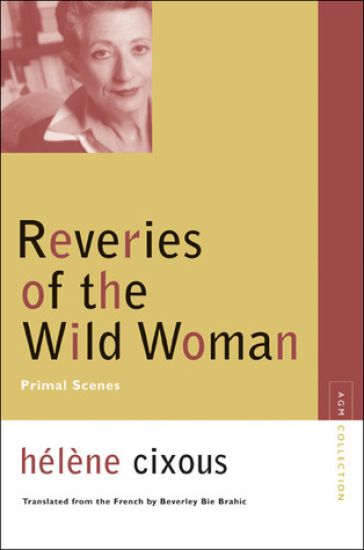
Reveries of the Wild Woman

Reveries of the Wild Woman

Helene Cixous

Northwestern University Press
2006
nidottu
All the time when I lived in Algeria, my native country, I dreamt of one day arriving in Algeria. Born in Oran, Algeria, Helene Cixous spent her childhood in France's former colony. ""Reveries of the Wild Woman"" is her visceral memoir of a preadolescence that shaped her with intense feelings of alienation, yet also contributed, in a paradoxically essential way, to her development as a writer and philosopher. Born to a French father and an Austro-German mother, both Jews, Cixous experienced a childhood fraught with racial and gender crisis. In her moving story she recounts how small events - a new dog, the gift of a bicycle - reverberate decades later as symbols filled with social and psychological meaning. She and her family endure a double alienation, by Algerians for being French and by the French for being Jewish, and Cixous builds her story on the themes of isolation and exclusion she felt in particular under the Vichy government and during the Algerian Civil War. Yet she also concedes that memories of Algeria awaken in her a longing for her home country, and ponders how that stormy relationship has influenced her life and thought. A meditation on postcolonial identity and gender, ""Reveries of the Wild Woman"" is also a poignant recollection of how a girl's childhood is, indeed, author to the woman.
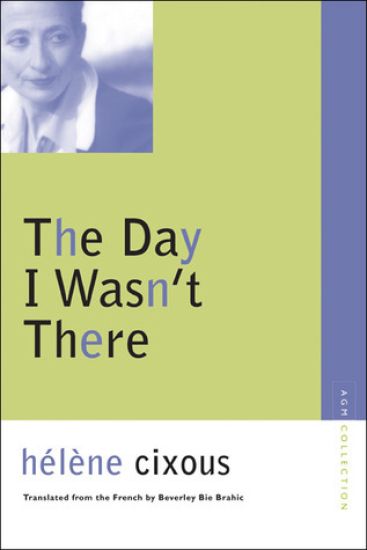
The Day I Wasn't There

The Day I Wasn't There

Helene Cixous

Northwestern University Press
2006
nidottu
In this memoir-novel, a narrator who resembles Helene Cixous obsessively recounts an incident - the premature death of her first-born child, a Down syndrome baby left in the care of the clinic in Algeria where her midwife mother works. She uses this event to probe her family history and her relationship with her mother, a refugee from Nazi Germany; her dead father, after whom the baby is named; and her medical-student brother, who takes on some of the duties of a father figure. Cixous's elusive writing bears all the trademarks of her poetic, provocative style, vivid with word play, intense feeling and a stream-of-consciousness that moves freely over time and place. The narrator's mother claims not to remember what happened, and the brother tries to fill in some gaps in the story. By the end of the book we understand the significance of the title: one day Cixous's mother returned to the clinic to find the baby on the brink of death. Rather than attempt to save him she chose to end his suffering. By closing the door to the imaginary clinic at the end, the narrator at last resolves the feelings of guilt and realizes that each human being has a fate they must endure. Informed by psychoanalytical theory, and always brutally honest, ""The Day I Wasn't There"" is above all an intimate study of a woman's inner landscape.
Newly Born Woman

Newly Born Woman

Helene Cixous

University of Minnesota Press
1986
nidottu
Published in France as La jeune née in 1975, and found here in its first English translation, The Newly Born Woman is a landmark text of the modern feminist movement. In it, Hélène Cixous and Catherine Clément put forward the concept of écriture feminine, exploring the ways women’s sexuality and unconscious shape their imaginary, their language, and their writing. Through their readings of historical, literary, and psychoanalytic accounts, Cixous and Clément explore what is hidden and repressed in culture, revealing the unconscious of history.
Reading With Clarice Lispector

Reading With Clarice Lispector

Helene Cixous

University of Minnesota Press
1990
nidottu
The texts that comprise this volume were selected from Helene Cixous's seminars on the work of Clarice Lispector. They reflect Cixous's own meditations on problems of reading and writing, and on related themes such as exchange and the gift, love and passion, as well as trace the influence of Lispector's work on her own development. Reading the Brazilian writer from the vantage point of modern theory, Cixous aims to draw her into the mainstream of current debates which question the concept of the so-called rational "Cartesian" individual and which note the increasing power of the social and applied sciences that seek to establish control over the individual. The book includes extracts of Clarice Lispector's prose writing, such as "The Apple in the Dark - The Temptations of Understanding" and "The Hour of the Star:How Does One Desire Wealth or Poverty?".
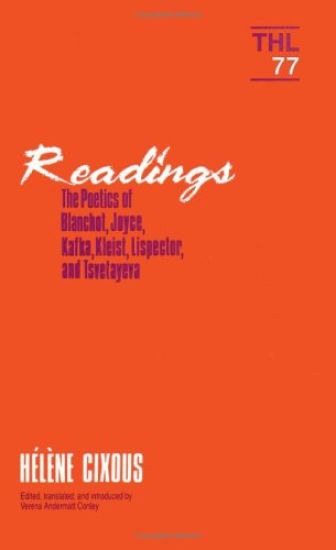
Readings

Readings

Helene Cixous

University of Minnesota Press
1991
nidottu
Readings: The Poetics of Blanchot, Joyce, Kafka, Kleist, Lispector, and Tsvetayeva offers striking and novel textual studies of major literary figures and emergent authors. Selected from Cixous’s seminars taught between 1980 and 1986 at the Universite de Paris VII (Saint-Denis) and at the College International de Philosophie, the texts chronicle the French intellectual scene with its shifting tastes over the decade following May 1986.In their simple and accessible language, the texts can be read as inspiration for Cixous’s fictional and critical practices. They not only introduce readers to emergent texts from Brazil and Russia, such as Clarice Lispector’s “Foreign Legion” and Marina Tsvetayeva’s “Mother and Music,” but also give new, incisive insights into Joyce’s Portrait of the Artist and Kafka’s “Before the Law.” Drawing from philosophy and psychoanalysis, Readings: The Poetics of Blanchot, Joyce, Kafka, Kleist, Lispector, and Tsvetayeva can be read side-by-side with Reading with Clarice Lispector, as an ongoing meditation on ethics and poetics.Also from MinnesotaReading with Clarice LispectorHelene CixousEdited, translated, and introduced by Verena Andermatt ConleyFor Cixous, Lispector’s work represents one of the finest examples of ecriture feminine in that she practices, in writing, what Cixous is searching for in her theoretical practice: the giving, spending, and inscribing of pleasure; an apprenticeship in the lessons of life.Theory and History of Literature, volume 73
First Days Of The Year

First Days Of The Year

Helene Cixous

University of Minnesota Press
1998
nidottu
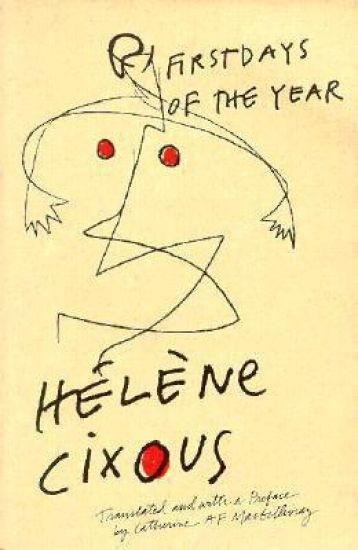
A searching meditation on "authorship" by an eminent theorist.An inner journey across space and time linking the "author" to other poets, this lyrical essay-poem continues Helene Cixous's exhilarating rewriting of notions of boundary, self, other, and author. The renowned source of the notion of ecriture feminine, Cixous here interrogates the status of the author, connecting distant instances of herself with other writers who traverse genders, generations, and national boundaries. In doing so, she pursues the rhythms of a mind thinking, tentatively following each thought from its enigmatic inception through all its twists and turns into the next thought's mysterious beginnings. Here, then, is the "flux full of silent words flowing from one community to the other, from one life to the other, the strange legend, inaudible except to the heart of one or the other, the narrative weaving itself on high". By turns thrilling and chimerical, hypnotic and startling, this first-person meditation -- or, in Freud's term for a dream-text, theorie-fiction -- does not aspire to reflect reality so much as transform the ways in which we perceive it, creating new terms for subjectivity and the "real". Above all, First Days of the Year (published originally in French as Jours de l'an) is a celebration of beginnings and future possibilities, based on necessity and hope, constantly mediating writing and living, life and death. Like all of Cixous's profoundly original works, it seductively leads the reader into a new way of thinking by disrupting fixed ideas of psychic identity, subjectivity, and language.
Manhattan

Manhattan

Hélène Cixous

Fordham University Press
2007
sidottu
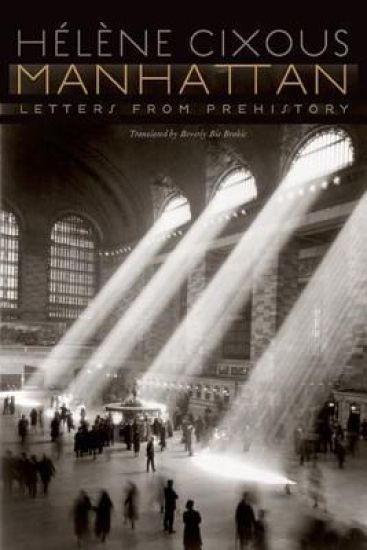
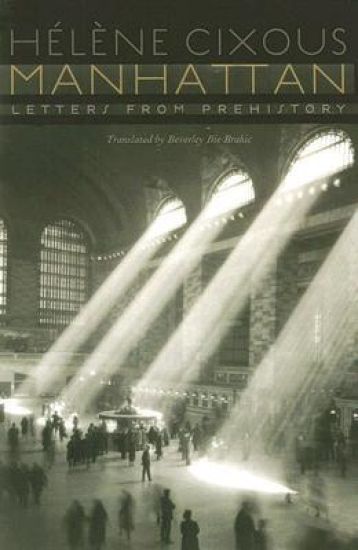
Manhattan is the tale of a young French scholar who travels to the United States in 1965 on a Fulbright Fellowship to consult the manuscripts of beloved authors. In Yale University’s Beinecke Library, tantalized by the conversational and epistolary brilliance of a fellow researcher, she is lured into a picaresque and tragic adventure. Meanwhile, back in France, her children and no-nonsense mother await her return. A young European intellectual’s first contact with America and the city of New York are the background of this story. The experience of Manhattan haunts this labyrinth of a book as, over a period of thirty-five years, its narrator visits and revisits Central Park and a half-buried squirrel, the Statue of Liberty and a never again to be found hotel in the vicinity of Morningside Heights: a journey into memory in which everything is never the same. Traveling from library to library, France to the United States, Shakespeare to Kafka to Joyce, Manhattan deploys with gusto all the techniques for which Cixous’s fiction and essays are known: rapid juxtapositions of time and place, narrative and description, analysis and philosophical reflection. It investigates subjects Cixous has spent her life probing: reading, writing, and the “omnipotence-other” seductions of literature; a family’s flight from Nazi Germany and postcolonial Algeria; childhood, motherhood, and, not least, the strange experience of falling in love with, as Jacques Derrida writes, “a counterfeit genius.”
Manhattan

Manhattan

Hélène Cixous

Fordham University Press
2007
pokkari
Manhattan is the tale of a young French scholar who travels to the United States in 1965 on a Fulbright Fellowship to consult the manuscripts of beloved authors. In Yale University's Beinecke Library, tantalized by the conversational and epistolary brilliance of a fellow researcher, she is lured into a picaresque and tragic adventure. Meanwhile, back in France, her children and no-nonsense mother await her return. A young European intellectual's first contact with America and the city of New York are the background of this story. The experience of Manhattan haunts this labyrinth of a book as, over a period of thirty-five years, its narrator visits and revisits Central Park and a half-buried squirrel, the Statue of Liberty and a never again to be found hotel in the vicinity of Morningside Heights: a journey into memory in which everything is never the same. Traveling from library to library, France to the United States, Shakespeare to Kafka to Joyce, Manhattan deploys with gusto all the techniques for which Cixous's fiction and essays are known: rapid juxtapositions of time and place, narrative and description, analysis and philosophical reflection. It investigates subjects Cixous has spent her life probing: reading, writing, and the "omnipotence-other" seductions of literature; a family's flight from Nazi Germany and postcolonial Algeria; childhood, motherhood, and, not least, the strange experience of falling in love with, as Jacques Derrida writes, "a counterfeit genius."
The Writing Notebooks

The Writing Notebooks

Helene Cixous

Continuum International Publishing Group Ltd.
2004
sidottu
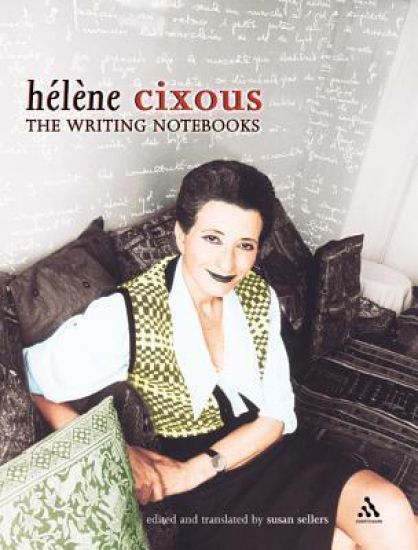
Helene Cixous is among the most influential and original literary critics and feminist thinkers of our time. This volume reproduces - for the first time, in any language - a collection of pages from her original writing notebooks, offering a unique insight into her radical thought and work. The material gathered here ranges across the full spectrum of Cixous' writing, including the concept of ecriture feminine, and the starting points and sources of inspiration for her poetry and prose. The editor's introduction succinctly outlines the central tenets of Cixous' theory of writing. Each extract is accompanied by editorial commentary and a translation, both by Susan Sellers. The book concludes with an interview with Cixous herself, in which she discusses the writing process, her own criticism, fiction and poetry and the value and importance of these notebooks. Students and teachers of literature, psychoanalysis, philosophy and feminist theory will find this an illuminating and inspiring collection of writings.
Tomb(e)

Tomb(e)

Hélène Cixous

Seagull Books London Ltd
2014
sidottu
In 1968-69 I wanted to die, that is to say, stop living, being killed, but it was blocked on all sides," wrote Helene Cixous, esteemed French feminist, playwright, philosopher, literary critic, and novelist. Instead of suicide, she began to dream of writing a tomb for herself. This tomb became a work that is a testament to Cixous' life and spirit and a secret book, the first book she ever authored. Originally written in 1970, Tombe is a Homerian recasting of Shakespeare's Venus and Adonis in the thickets of Central Park, a book Cixous provocatively calls the "all-powerful-other of all my books, it sparks them off, makes them run, it is their Messiah." Masterfully translated by Laurent Milesi, Tombe preserves the sonic complexities and intricate wordplay at the core of Cixous' writing, and reveals the struggles, ideas, and intents at the center of her work. With a new prologue by the author, this is a necessary document inx the development of Cixous' aesthetic as a writer and theorist and will be eagerly welcomed by readers as a crucial building block in the foundation of her later work.
Tomb(e)

Tomb(e)

Helene Cixous

Seagull Books London Ltd
2020
nidottu
'In 196869 I wanted to die, that is to say, stop living, being killed, but it was blocked on all sides,' wrote Helene Cixous, esteemed French feminist, playwright, philosopher, literary critic, and novelist. Instead of suicide, she began to dream of writing a tomb for herself. This tomb became a work that is a testament to Cixous's life and spirit and a secret book, the first book she ever authored. Originally written in 1970, Tomb(e) is a Homerian recasting of Shakespeare's Venus and Adonis in the thickets of Central Park, a book Cixous provocatively calls the 'all-powerful-other of all my books, it sparks them off, makes them run, it is their Messiah'.Masterfully translated by Laurent Milesi, Tomb(e) preserves the sonic complexities and intricate wordplay at the core of Cixous's writing, and reveals the struggles, ideas, and intents at the centre of her work. With a new prologue by the author, this is a necessary document in the development of Cixous's aesthetic as a writer and theorist, and will be eagerly welcomed by readers as a crucial building block in the foundation of her later work.
We Defy Augury

We Defy Augury

Hélène Cixous

Seagull Books London Ltd
2020
sidottu
We defy augury. There’s a special providence in the fall of a sparrow. If it be now, ’tis not to come … the readiness is all. Under the sign of Hamlet’s last act, Hélène Cixous, in her eightieth year, launched her new book—and the latest chapter in her Human Comedy, her Search for Lost Time. Surely one of the most delightful, in its exposure of the seams of her extraordinary craft, We Defy Augury finds the reader among familiar faces. In these pages we encounter Eve, the indomitable mother; Jacques Derrida, the faithful friend; children, neighbors; and always the literary forebears: Montaigne, Diderot, Proust, and, in one moving passage, Erich Maria Remarque. We Defy Augury moves easily from Cixous’s Algerian childhood, to Bacharach in the Rhineland, to, eerily, the Windows on the World restaurant atop the World Trade Center, in the year 2000. In one of the most astonishing passages in this tour-de-force performance of the art of digression, Cixous proclaims: “My books are free in their movements and in their choice of routes […] They are the product of many makers, dreamed, dictated, cobbled together.” This unique experience, which could only have come from the pen of Cixous, is now available in English, and readers are sure to delight in this latest work by one of France’s most celebrated writer-philosophers.
Stigmata

Stigmata

Hélène Cixous

Routledge
2015
sidottu
A 'wilful extremist' according to the London Times, Hélène Cixous is hailed as one of the most formidable writers and thinkers of our time. Acclaimed by luminaries such as Jacques Derrida, her writing has nonetheless been misunderstood and misread, to a surprising extent. With the inclusion of Stigmata, one of her greatest works into the Routledge Classics series, this is about to change. Questions that have long concerned her – the self and the other, autobiographies of writing, sexual difference, literary theory, post-colonial theory, death and life – are explored here, woven into a stunning narrative. Displaying a remarkable virtuosity, the work of Cixous is heady stuff indeed: exciting, powerful, moving, and dangerous.
Mother Homer is Dead

Mother Homer is Dead

Helene Cixous

Edinburgh University Press
2020
nidottu
Helene Cixous chronicles the last six months of her mother's life, transgressing the mother-daughter relation in the experience of dyingMother Homer is Dead was written in the immediate aftermath of the death of the writer's mother in the 103rd year of her life. ve Cixous, nee Klein, has figured centrally in her daughter's writing since the publication of Osnabrck (1999). Since then, Cixous's work has turned in ever-tighter orbits around the relation to her mother's life as it tapers down toward death. The writer discovers a guide book for the task written in her mother's own hand, where the narrator comes to realise that she will have been midwife to her mother's death. In French, this substitutability or reversibility of birth and death is facilitated by the noun accouchement, childbirth or labour, but which literally says 'bedding, putting or going to bed'. The reversal also concerns the positions of mother/child. What is happening requires the child to become the mother of the mother. How then must she hear her child's repeated cry of 'Help me, help me'? Is it help dying that she wants? And how to know this is indeed her desire? The narrator/writer, when in doubt, opts always for life, for more life for her mother, but to the point that many of those around her-family, friends, doctors, nurses-warn that she has lost touch with 'reality'. Perhaps never has the agony of letting go of the dying one been so unflinchingly rendered. Cixous's exquisitely poetic prose has also never been put to a more harrowing test of its inventive capacities. Key FeaturesThe first translation into EnglishPrimary text by a celebrated French author and intellectualExtraordinary account of the experience of death and coping with bereavement