Kirjojen hintavertailu. Mukana 11 244 527 kirjaa ja 12 kauppaa.

Kirjahaku

Etsi kirjoja tekijän nimen, kirjan nimen tai ISBN:n perusteella.

1000 tulosta hakusanalla Henri Rohan

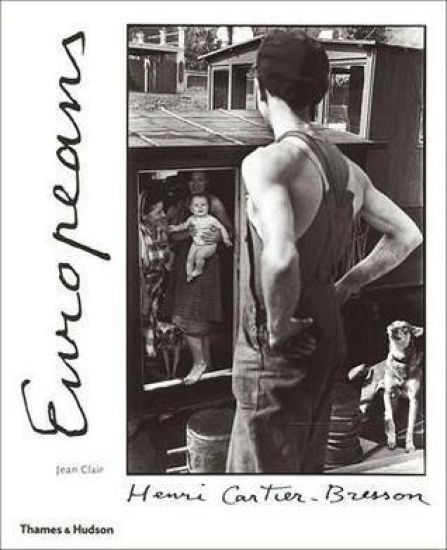
Henri Cartier-Bresson: Europeans

Henri Cartier-Bresson: Europeans

Jean Clair

Thames Hudson Ltd
1999
nidottu
In 1955, Henri Cartier-Bresson published The Europeans, a collection of photographs taken over a period of five years. His portrait of the continent documented a landscape shadowed by war, where people lived among ruins and still bore the mark of hunger. For this book, first published forty-five years later, the celebrated photographer brought together a far broader range of images, spanning the years from the late 1920s to the early 1990s. Cartier-Bresson travelled across Europe, from the Scandinavian shield to the Balkan karst, from the Breton granites to the Irish bogs, in order to capture what it means to be European. Beyond nationalism and the particular characteristics of each culture and nation, he found evidence of a greater identity, a family likeness shared by the people and the landscape. The Europeans recorded here inhabit both city and countryside, where we see them at work, in the streets, travelling and gossiping. Sometimes they are lone figures; a photograph may show only a single gaze, a glimpse of a face. Often, however, Cartier-Bresson turns his camera to couples, twin figures, mirrored individuals, linked solitudes. He captures crowds, gathering both to celebrate and to protest. Unified by the clarity and compassion of his vision, Cartier-Bresson's photographs speak of the same daily ceremony, of the ongoing business of living for people across Europe, whether Polish priests in alb or cassock, or Abruzzi peasants shrouded in the black of their coats and hats. With his remarkable ability to capture the fragile reality of European life, Henri Cartier-Bresson underscores his reputation as one of the twentieth century's most influential and original photographers.
Henri Cartier-Bresson: The man, the image & the world

Henri Cartier-Bresson: The man, the image & the world

Jean Clair; Claude Cookman; Robert Delpire; Peter Galassi; Jean-Noël Jeanneney; Jean Leymarie; Serge Toubiana

Thames Hudson Ltd
2006
nidottu
A richly illustrated retrospective of the critically acclaimed work of the master photographer honors the ninety-fifth birthday of Cartier-Bresson with a collection of some of his finest works, representing all periods of his life, along with a selection of drawings, paintings, film stills, and previously unpublished photographs. Reprint.
Henri Cartier-Bresson

Henri Cartier-Bresson

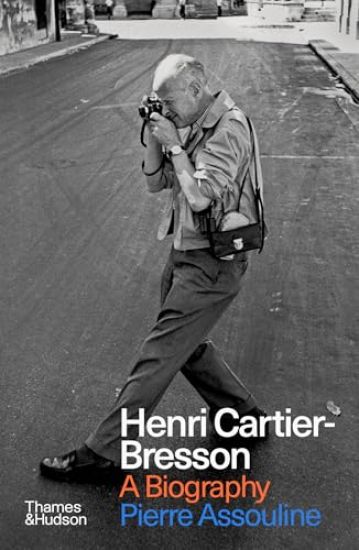
Pierre Assouline

THAMES HUDSON LTD
2024
nidottu
The definitive biography of the greatest photographer of modern times - a vital addition to the library of everyone with an interest in photography. Henri Cartier-Bresson was the eye of the 20th century. His lens chronicled the decisive moments of his time – from Chinese communist victories to the Spanish Civil War and the Liberation of Paris. A co-founder of Magnum Photos, Cartier-Bresson produced unparalleled portraits of his contemporaries, capturing the spirit of Albert Camus, Jean-Paul Sartre and William Faulkner. Cartier-Bresson took Pierre Assouline into his confidence over a number of years, detailing his youthful devotion to surrealism, lifelong passion for drawing, and experiences of war and prison camps. This sensitive biography emerges from a meeting of two minds, revealed with the same truth as one of Cartier Bresson’s photographs.
Henri Cartier-Bresson

Henri Cartier-Bresson

Clément Chéroux; Alain Seban; Alfred Pacquement; Kristen van Riel

THAMES HUDSON LTD
2025
nidottu
Described as ‘magnificent’ by the Good Book Guide, this lavishly illustrated monograph traces Cartier-Bresson’s development as a photographer, activist, journalist and artist. This is an indispensable work for lovers of photography and admirers of Henri Cartier-Bresson (1908–2004), whose influence continues to endure so powerfully today. In addition to some of his best-known photographs, here are many seldom seen or unpublished images, and some rarities in colour as well as black and white. His work embraced art, politics, revolution and war. But more powerful than any of these overarching themes was his evident concern for the human individual at every social level. Cartier-Bresson’s observations of the effects of poverty and revolution around the world led directly to his pioneering photojournalism, and his co-founding of Magnum Photos. He also became renowned for his penetrating portraits of the most prominent figures of his time: Cartier-Bresson’s biographer Pierre Assouline called him ‘the eye of the century’.
Henri Cartier-Bresson

Henri Cartier-Bresson

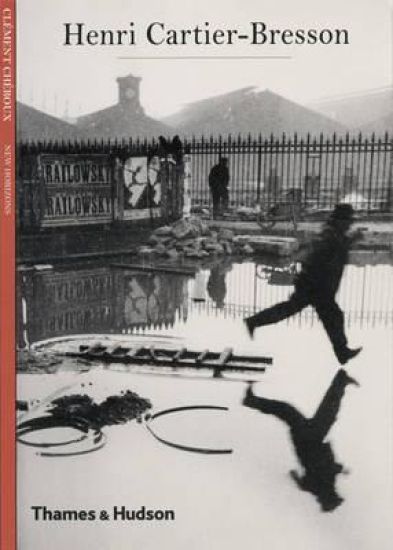
Clement Cheroux

Thames Hudson Ltd
2008
pokkari
From his early encounters with the Surrealists, his film work and his experiences in the Second World War, to the development of his own personal aesthetic, the concept of the decisive moment, and the foundation of Magnum Photos, Henri Cartier-Bresson's influence on the world has been profound. This book tells his life story through his images.
Henri Cartier-Bresson

Henri Cartier-Bresson

Thames Hudson Ltd
2007
nidottu
A visual analysis of the life and work of the Magnum photography agency co-founder best known for his ability to capture fleeting scenes with a camera includes key examples of his work in Europe, America, and pre-revolutionary China. Original.
Henri Matisse Jazz

Henri Matisse Jazz

Francesco Poli; Corrado Mingardi

Thames Hudson Ltd
2013
sidottu
By 1947, Matisse – in his seventies and suffering poor health – much preferred the simple, fluid act of cutting forms from painted paper to drawing or painting. It was his intention to use this assemblage technique to illustrate a collection of poems, which would be printed as a limited edition book. As this project evolved, Matisse’s notes, written with a paintbrush in looping letters, became integral, and the publisher agreed that they should replace the poems. They appear here in their original ‘rough’ form, creating a visual counterpoint to the images. Henri Matisse Jazz has stood the test of time, and is regarded as one of Matisse’s greatest achievements – its original illustrations still exhibited as significant works in their own right. This edition is accompanied by a special book mounted on the reverse of the presentation box’s cover, featuring both a translation of Matisse’s text and two new essays: one examining its principal place among other artists’ books, and the other surveying the history of artists’ books as a field
Henri Cartier-Bresson and the Artless Art

Henri Cartier-Bresson and the Artless Art

Jean-Pierre Montier

Thames Hudson Ltd
1996
sidottu
Henri Cartier-Bresson was perhaps the greatest photographer of the twentieth century. In a career spanning over sixty years, he used his camera as an impassive and neutral third eye to capture the vagaries of human behaviour and to produce some of the most memorable and compelling photographs ever published. In this impressive biographical study, Jean-Pierre Montier traces Cartier-Bresson's artistic progression from his early training as a painter and draughtsman; he provides a detailed analysis of his most famous images and discusses the various philosophies that informed his work, notably Zen and Surrealism. Drawing together a remarkable selection of the paintings, sketches, and photographs, this book attempts a serious evaluation, not just of Cartier-Bresson's photojournalism, but of his œuvre as a whole.
Henri Cartier-Bresson: Landscape/Townscape
The incomparable photographer Henri Cartier-Bresson is renowned for his ability to capture striking and memorable images of people and places. He has described his personal approach to photography as being 'at one and the same time the recognition of a fact in a fraction of a second and the rigorous arrangement of the forms visually perceived which give the fact expression and significance'. This book is the first major publication to deal with Cartier-Bresson's landscape photography. His work as a reporter took Cartier-Bresson through many countries and continents - his passion for China, India and Spain is well-known and well documented in other books published by Thames & Hudson - but his extraordinary country and city landscapes are a lesser-known part of his oeuvre. These richly diverse and compelling images, many of which have never been published before, are superbly reproduced in this volume by the finest quality duotone printing. They underscore yet again Cartier-Bresson's reputation as the geniune master of photography.
Henri Cartier-Bresson / Scrapbook
Published in its entirety for the first time, a memorial volume of the late iconic photographer's famous 1940s scrapbook features restored images of his prints and showcases the pieces hand-selected by the photographer that originally appeared in his 1947 Museum of Modern Art exhibition.
Henri Cartier-Bresson: China 1948–1949, 1958

Henri Cartier-Bresson: China 1948–1949, 1958

Michel Frizot; Ying-lung Su

Thames Hudson Ltd
2019
sidottu
In December 1948, Henri Cartier-Bresson travelled to China at the request of Life magazine. He stayed for ten months and captured some of the most spectacular moments in China’s history: he photographed Beijing in ‘the last days of the Kuomintang’, and then headed back to Shanghai, where he recorded the new regime’s takeover. Moreover, in 1958, Henri Cartier-Bresson was one of the first Western photographers to go back to China to explore the changes that had occurred over the preceding decade. The ‘picture stories’ he sent to Magnum and Life on a regular basis played a key role in Westerners’ understanding of Chinese political events. Many of these images are among the most significant photographs in Cartier-Bresson’s oeuvre; his empathy with the populace and sense of responsibility as a witness making them an important part of his legacy. Henri Cartier-Bresson in China allows these photographs to be re-examined along with all of the documents that were preserved: the photographer’s captions and comments, contact sheets and abundant correspondence, as well as the published versions that appeared in both American and European magazines. A welcome addition to any photography lover’s bookshelf, this is an exciting new volume on one of the 20th century’s most important photographers.
Henri Cartier-Bresson: Paris Revisited
Henri Cartier-Bresson was ‘the eye of the 20th century’ and one of the world’s most acclaimed photographers. Paris was his home, on and off, for most of his life (1908–2004). The photographs he took of the city and its people manage to be both dreamlike and free of affectation. Here are around 160 photographs taken over a more than fifty-year career. Mostly in black and white, this selection reveals the strong influence on Cartier-Bresson of pioneering documentary photographer Eugène Atget (1857–1927), and the clear visual links with Surrealism that infused Cartier-Bresson’s early pictures. After an apprenticeship with Cubist painter André Lhote, in 1932 Cartier-Bresson bought his first Leica, a small portable camera that allowed him to capture movement and the rhythms of daily life in Paris. Cartier-Bresson observed from close quarters the Liberation in August 1944 and the civil disturbances of May 1968. In between he also succeeded in capturing the faces of Parisians in their natural habitat, celebrated artists and writers and citizens alike. Ever-attentive to different ways of portraying the city around him, Cartier-Bresson returned to drawing during the last two decades of his life. This collection is not only a superb portrait of Paris in the 20th century, it is testament to Cartier-Bresson’s skill as a supreme observer of human life.With 200 illustrations
Love, Henri: Letters on the Spiritual Life

Love, Henri: Letters on the Spiritual Life

Henri J. M. Nouwen

Prh Christian Publishing
2018
nidottu
Seven million copies of his books in print This collection of over 100 unpublished letters from the bestselling author of such spiritual classics as The Return of the Prodigal Son and The Wounded Healer offers deep spiritual insight into human experience, intimacy, brokeness, and mercy. Over the course of his life, Henri Nouwen wrote thousands of letters to friends, acquaintances, parishioners, students, and readers of his work all around the world. He corresponded in English, Dutch, German, French, and Spanish, and took great care to store and archive the letters decade after decade. He believed that a thoughtful letter written in love could truly change someone's life. Many people looked to Nouwen as a long distance spiritual advisor. Love, Henri consists of over a hundred letters that stretch from the earliest years of Henri's career up through his last 10 years at L'Arche Daybreak. Rich in spiritual insights the letters highlight a number themes that emerged in both Henri's work over the years, including vocation, solitude, prayer, suffering, and perseverance in difficult times. These deeply spiritual letters, sometimes poignant, sometimes funny, ulimately demonstrate the rich value of communicating with God through others.