Kirjojen hintavertailu. Mukana 12 384 319 kirjaa ja 12 kauppaa.

Kirjahaku

Etsi kirjoja tekijän nimen, kirjan nimen tai ISBN:n perusteella.

1000 tulosta hakusanalla Henry C. Thode

Inside the Future

Inside the Future

Henry C. Lucas

Praeger Publishers Inc
2008
sidottu
From iPods to EZPass technology to YouTube to eGovernment initiatives, the impact of technology is changing our lives more and more each day. This book, a counterpart to a Maryland Public Television documentary, chronicles how and why and shows ways people can take advantage of the revolution in their personal and professional lives. As technology expert Henry C. Lucas, Jr., argues, the fundamentals of business and the economy—not to mention the details of daily life—are changing in every market, in every industry, and in every nation. This book explores the most significant of these technology-enabled transformations to help readers understand and appreciate the opportunities and threats presented by a new, technology-driven global economy.Among other things, Inside the Future demonstrates that: -A revolution in technology is transforming business and the way individuals live and work. -It's essential to adapt to change. Resisting technological advances is futile, and countries or people that fall behind in technology may never catch up. -The U.S. needs to prepare current and future workers for an economy that incorporates technology in every business process, an economy in which there are almost no constraints from time and place, and an economy in which most hierarchical organizations disappear. -The future competitiveness of the country depends on our ability to innovate and implement change enabled by technology. This revolution is leaving no person or organization untouched. From business to education and healthcare, the digitization and mobilization of every process affects us all. Yet this isn't a book about technology, but one that shows how people and organizations can adapt technology to transform their businesses as well as create a more productive, satisfying personal life. Readers will gain a new awareness of how leading organizations apply IT to create transformations, and how they can use technology to improve their lives, remain competitive in the workforce, and survive in this new age of constant change and re-invention.

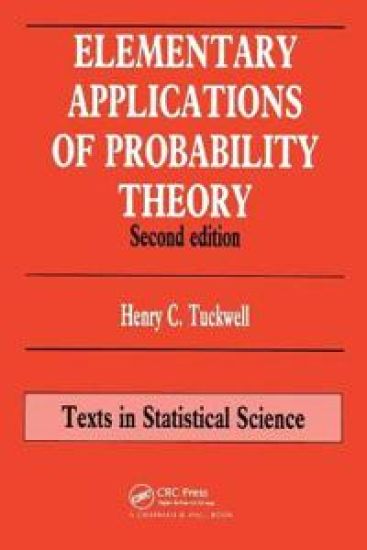
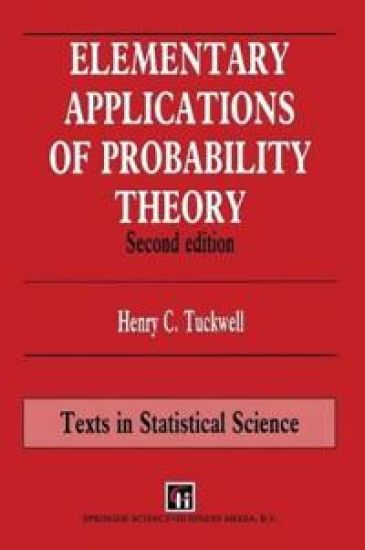
Elementary Applications of Probability Theory
This book provides a clear and straightforward introduction to applications of probability theory with examples given in the biological sciences and engineering. The first chapter contains a summary of basic probability theory. Chapters two to five deal with random variables and their applications. Topics covered include geometric probability, estimation of animal and plant populations, reliability theory and computer simulation. Chapter six contains a lucid account of the convergence of sequences of random variables, with emphasis on the central limit theorem and the weak law of numbers. The next four chapters introduce random processes, including random walks and Markov chains illustrated by examples in population genetics and population growth. This edition also includes two chapters which introduce, in a manifestly readable fashion, the topic of stochastic differential equations and their applications.
Elementary Applications of Probability Theory

Elementary Applications of Probability Theory

Henry C. Tuckwell

Chapman Hall/CRC
1995
sidottu
This book provides a clear and straightforward introduction to applications of probability theory with examples given in the biological sciences and engineering. The first chapter contains a summary of basic probability theory. Chapters two to five deal with random variables and their applications. Topics covered include geometric probability, estimation of animal and plant populations, reliability theory and computer simulation. Chapter six contains a lucid account of the convergence of sequences of random variables, with emphasis on the central limit theorem and the weak law of numbers. The next four chapters introduce random processes, including random walks and Markov chains illustrated by examples in population genetics and population growth. This edition also includes two chapters which introduce, in a manifestly readable fashion, the topic of stochastic differential equations and their applications.
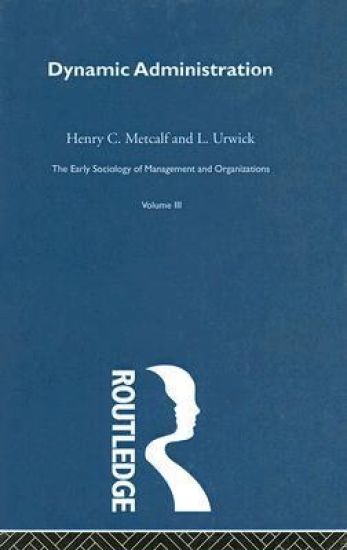
Dynamic Administration

Dynamic Administration

Henry C. Metcalf; L. Urwick

Routledge
2003
sidottu
Mary Parker Follett was a prominent business philosopher of the period, who agreed with Sheldon about the need to emphasize human factors in management, but placing greater stress on the need to develop a science of cooperation. According to Follett, what she called her 'Law of the Situation' could be a means for bridging the gap between an ideal of scientific management and the unilateral position that it seemed to involve in practice. In effect she was proposing the same collaboration between leaders and subordinates that was usually to be found between leaders of the same rank.
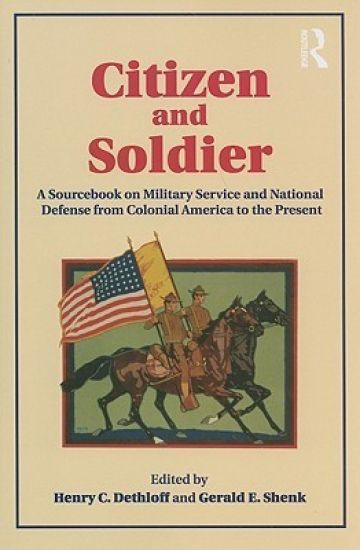
Citizen and Soldier

Citizen and Soldier

Henry C. Dethloff; Gerald E. Shenk

Routledge
2010
sidottu
Americans grow up expecting that in a time of need, their country can depend on its people for volunteer service to the military. Indeed, this has been a social and at times legal expectation for the citizenship of this country since 1776. Yet, since the end of World War II United States forces have been caught up in many long term military engagements, and the military aspect of citizenship has become an increasingly marginalized one in a world where only a minority of citizens even vote.Citizen and Soldier: A Sourcebook on Military Service and National Defense from Colonial America to the Present provides a useful framework and supporting documentary evidence for an informed discussion of the development of the American ideal of the "Citizen Soldier". Presented with insightful introductions and useful discussion questions, this concise collection of 27 primary documents takes a close look at the United States military and shows how it became entwined with the rise of American national identity.
Citizen and Soldier

Citizen and Soldier

Henry C. Dethloff; Gerald E. Shenk

Routledge
2010
nidottu
Americans grow up expecting that in a time of need, their country can depend on its people for volunteer service to the military. Indeed, this has been a social and at times legal expectation for the citizenship of this country since 1776. Yet, since the end of World War II United States forces have been caught up in many long term military engagements, and the military aspect of citizenship has become an increasingly marginalized one in a world where only a minority of citizens even vote.Citizen and Soldier: A Sourcebook on Military Service and National Defense from Colonial America to the Present provides a useful framework and supporting documentary evidence for an informed discussion of the development of the American ideal of the "Citizen Soldier". Presented with insightful introductions and useful discussion questions, this concise collection of 27 primary documents takes a close look at the United States military and shows how it became entwined with the rise of American national identity.
Information Technology

Information Technology

Henry C. Lucas

John Wiley Sons Inc
2004
nidottu
Managers must be able to keep pace with the latest technological advances and make decisions on what needs to be implemented. This book gives them the tools to effectively manage technology in a 21st Century organization. The author clearly demonstrates how to best allocate resources to and within the technology function. He also includes a framework for determining IT strategy given the dynamic environment of electronic commerce and the Internet. Throughout the chapters, emphasis is placed on strategy and management issues to show the relevance of information technology.
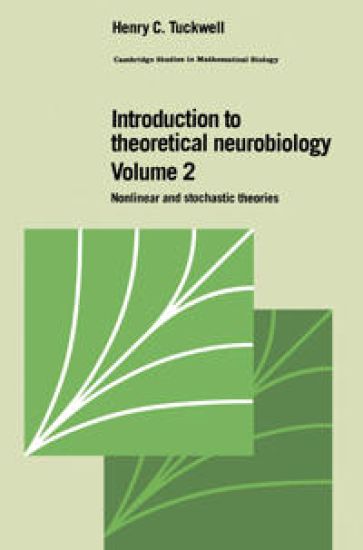
Introduction to Theoretical Neurobiology: Volume 2, Nonlinear and Stochastic Theories
The second part of this two-volume set contains advanced aspects of the quantitative theory of the dynamics of neurons. It begins with an introduction to the effects of reversal potentials on response to synaptic input. It then develops the theory of action potential generation based on the seminal Hodgkin-Huxley equations and gives methods for their solution in the space-clamped and non-space-clamped cases. The remainder of the book discusses stochastic models of neural activity and ends with a statistical analysis of neuronal data with emphasis on spike trains. The mathematics is more complex in this volume than in the first volume and involves numerical methods of solution of partial differential equations and the statistical analysis of point processes.
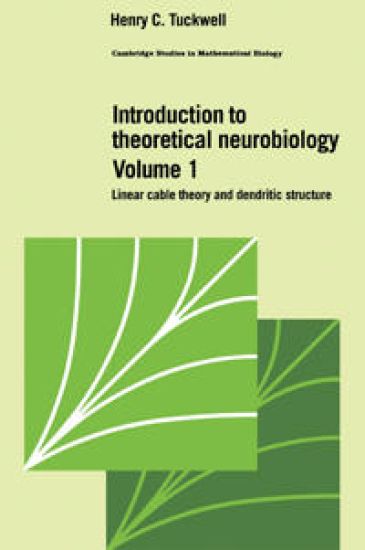
Introduction to Theoretical Neurobiology: Volume 1, Linear Cable Theory and Dendritic Structure
The human brain contains billions of nerve cells whose activity plays a critical role in the way we behave, feel, perceive, and think. This two-volume set explains the basic properties of a neuron - an electrically active nerve cell - and develops mathematical theories for the way neurons respond to the various stimuli they receive. Volume 1 contains descriptions and analyses of the principal mathematical models that have been developed for neurons in the past thirty years. It provides a brief review of the basic neuroanatomical and neurophysiological facts that will form the focus of the mathematical treatment. Tuckwell discusses the mathematical theories, beginning with the theory of membrane potentials. He then goes on to treat the Lapicque model, linear cable theory, and time-dependent solutions of the cable equations. He concludes with a description of Rall's model nerve cell. Because the level of mathematics increases steadily upward from Chapter Two, some familiarity with differential equations and linear algebra is desirable.
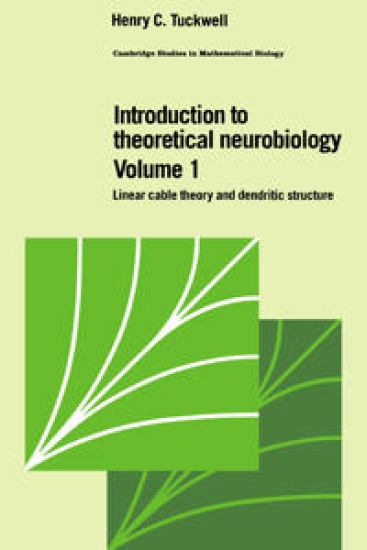
Introduction to Theoretical Neurobiology: Volume 1, Linear Cable Theory and Dendritic Structure
The human brain contains billions of nerve cells whose activity plays a critical role in the way we behave, feel, perceive, and think. This two-volume set explains the basic properties of a neuron--an electrically active nerve cell--and develops mathematical theories for the way neurons respond to the various stimuli they receive. Volume 1 contains descriptions and analyses of the principle mathematical models that have been developed for neurons in the past thirty years. It provides a brief review of the basic neuroanatomical and neurophysiological facts that will form the focus of the mathematical treatment. Tuckwell discusses the mathematical theories, beginning with the theory of membrane potentials. He then goes on to treat the Lapicque model, linear cable theory, and time-dependent solutions of the cable equations. He concludes with a description of Rall's model nerve cell. Because the level of mathematics increases steadily upward from Chapter Two some familiarity with differential equations and linear algebra is desirable.
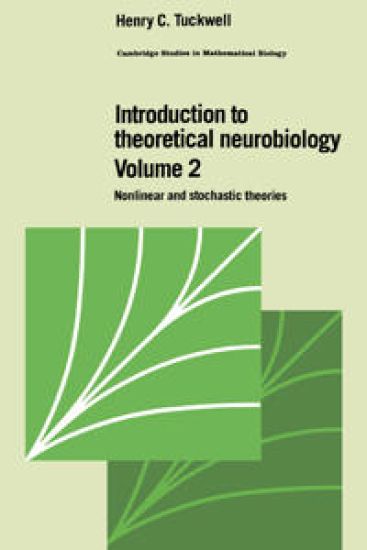
Introduction to Theoretical Neurobiology: Volume 2, Nonlinear and Stochastic Theories
The second part of this two-volume set contains advanced aspects of the quantitative theory of the dynamics of neurons. It begins with an introduction to the effects of reversal potentials on response to synaptic input. It then develops the theory of action potential generation based on the seminal Hodgkin-Huxley equations and gives methods for their solution in the space-clamped and nonspaceclamped cases. The remainder of the book discusses stochastic models of neural activity and ends with a statistical analysis of neuronal data with emphasis on spike trains. The mathematics is more complex in this volume than in the first volume and involves numerical methods of solution of partial differential equations and the statistical analysis of point processes.