Kirjojen hintavertailu. Mukana 12 406 951 kirjaa ja 12 kauppaa.

Kirjahaku

Etsi kirjoja tekijän nimen, kirjan nimen tai ISBN:n perusteella.

1000 tulosta hakusanalla Henry Ellis

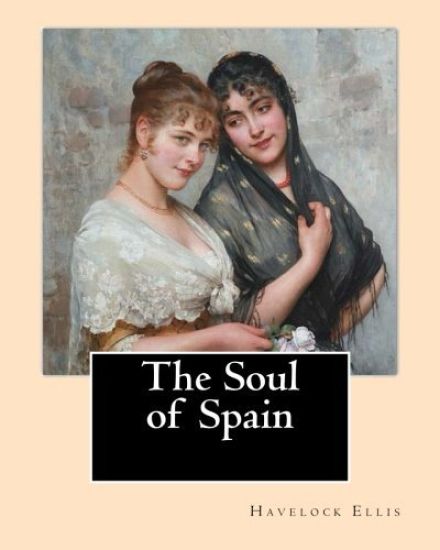
The Soul of Spain. By: Havelock Ellis: Henry Havelock Ellis, known as Havelock Ellis (2 February 1859 - 8 July 1939), was an English physicia
Henry Havelock Ellis, known as Havelock Ellis (2 February 1859 - 8 July 1939), was an English physician, writer, progressive intellectual and social reformer who studied human sexuality. He was co-author of the first medical textbook in English on homosexuality in 1897, and also published works on a variety of sexual practices and inclinations, as well as transgender psychology. He is credited with introducing the notions of narcissism and autoeroticism, later adopted by psychoanalysis. Like many intellectuals of his era, he supported eugenics and he served as president of the Eugenics Society. Early life and teaching career: Ellis, son of Edward Peppen Ellis and Susannah Mary Wheatley, was born in Croydon, Surrey (now part of Greater London). He had four sisters, none of whom married. His father was a sea captain, his mother the daughter of a sea captain, and many other relatives lived on or near the sea. When he was seven his father took him on one of his voyages, during which they called at Sydney, Callao and Antwerp. After his return, Ellis attended the French and German College near Wimbledon, and afterward attended a school in Mitcham. In April 1875, Ellis sailed on his father's ship for Australia; soon after his arrival in Sydney, he obtained a position as a master at a private school. After the discovery of his lack of training, he was fired and became a tutor for a family living a few miles from Carcoar. He spent a year there and then obtained a position as a master at a grammar school in Grafton. The headmaster had died and Ellis carried on the school for that year, but was unsuccessful. At the end of the year, he returned to Sydney and, after three months' training, was given charge of two government part-time elementary schools, one at Sparkes Creek, near Scone, New South Wales and the other at Junction Creek. He lived at the school house on Sparkes Creek for a year. He wrote in his autobiography, "In Australia, I gained health of body, I attained peace of soul, my life task was revealed to me, I was able to decide on a professional vocation, I became an artist in literature . . . these five points covered the whole activity of my life in the world. Some of them I should doubtless have reached without the aid of the Australian environment, scarcely all, and most of them I could never have achieved so completely if chance had not cast me into the solitude of the Liverpool Range." Medicine and psychology: Ellis returned to England in April 1879. He had decided to take up the study of sex, and felt his first step must be to qualify as a physician. He studied at St Thomas's Hospital Medical School now part of King's College London, but never had a regular medical practice. His training was aided by a small legacy and also income earned from editing works in the Mermaid Series of lesser known Elizabethan and Jacobean drama. He joined The Fellowship of the New Life in 1883, meeting other social reformers Eleanor Marx, Edward Carpenter and George Bernard Shaw.The 1897 English translation of Ellis's book Sexual Inversion, co-authored with John Addington Symonds and originally published in German in 1896, was the first English medical textbook on homosexuality. It describes the sexual relations of homosexual males, including men with boys. Ellis wrote the first objective study of homosexuality, as he did not characterise it as a disease, immoral, or a crime. The work assumes that same-sex love transcended age taboos as well as gender taboos. In 1897 a bookseller was prosecuted for stocking Ellis's book. Although the term homosexual is attributed to Ellis, citation needed] he wrote in 1897, "'Homosexual' is a barbarously hybrid word, and I claim no responsibility for it."...........
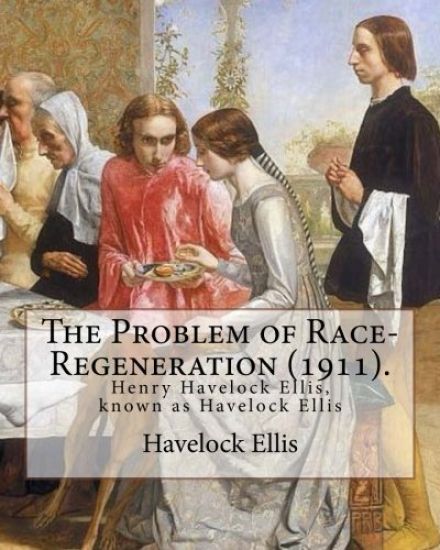
The Problem of Race-Regeneration (1911). By: Havelock Ellis: Henry Havelock Ellis, known as Havelock Ellis (2 February 1859 - 8 July 1939), was an Eng
Henry Havelock Ellis, known as Havelock Ellis (2 February 1859 - 8 July 1939), was an English physician, writer, progressive intellectual and social reformer who studied human sexuality. He was co-author of the first medical textbook in English on homosexuality in 1897, and also published works on a variety of sexual practices and inclinations, as well as transgender psychology. He is credited with introducing the notions of narcissism and autoeroticism, later adopted by psychoanalysis. Like many intellectuals of his era, he supported eugenics and he served as president of the Eugenics Society. Early life and teaching career: Ellis, son of Edward Peppen Ellis and Susannah Mary Wheatley, was born in Croydon, Surrey (now part of Greater London). He had four sisters, none of whom married. His father was a sea captain, his mother the daughter of a sea captain, and many other relatives lived on or near the sea. When he was seven his father took him on one of his voyages, during which they called at Sydney, Callao and Antwerp. After his return, Ellis attended the French and German College near Wimbledon, and afterward attended a school in Mitcham. In April 1875, Ellis sailed on his father's ship for Australia; soon after his arrival in Sydney, he obtained a position as a master at a private school. After the discovery of his lack of training, he was fired and became a tutor for a family living a few miles from Carcoar. He spent a year there and then obtained a position as a master at a grammar school in Grafton. The headmaster had died and Ellis carried on the school for that year, but was unsuccessful. At the end of the year, he returned to Sydney and, after three months' training, was given charge of two government part-time elementary schools, one at Sparkes Creek, near Scone, New South Wales and the other at Junction Creek. He lived at the school house on Sparkes Creek for a year. He wrote in his autobiography, "In Australia, I gained health of body, I attained peace of soul, my life task was revealed to me, I was able to decide on a professional vocation, I became an artist in literature . . . these five points covered the whole activity of my life in the world. Some of them I should doubtless have reached without the aid of the Australian environment, scarcely all, and most of them I could never have achieved so completely if chance had not cast me into the solitude of the Liverpool Range." Medicine and psychology: Ellis returned to England in April 1879. He had decided to take up the study of sex, and felt his first step must be to qualify as a physician. He studied at St Thomas's Hospital Medical School now part of King's College London, but never had a regular medical practice. His training was aided by a small legacy and also income earned from editing works in the Mermaid Series of lesser known Elizabethan and Jacobean drama. He joined The Fellowship of the New Life in 1883, meeting other social reformers Eleanor Marx, Edward Carpenter and George Bernard Shaw.The 1897 English translation of Ellis's book Sexual Inversion, co-authored with John Addington Symonds and originally published in German in 1896, was the first English medical textbook on homosexuality. It describes the sexual relations of homosexual males, including men with boys. Ellis wrote the first objective study of homosexuality, as he did not characterise it as a disease, immoral, or a crime. The work assumes that same-sex love transcended age taboos as well as gender taboos. In 1897 a bookseller was prosecuted for stocking Ellis's book. Although the term homosexual is attributed to Ellis, citation needed] he wrote in 1897, "'Homosexual' is a barbarously hybrid word, and I claim no responsibility for it." Ellis may have developed psychological concepts of autoerotism and narcissism, both of which were later developed further by Sigmund Freud....
The criminal. By: Havelock Ellis, (with 40 illustration): Henry Havelock Ellis, known as Havelock Ellis (2 February 1859 - 8 July 1939),
Henry Havelock Ellis, known as Havelock Ellis (2 February 1859 - 8 July 1939), was an English physician, writer, progressive intellectual and social reformer who studied human sexuality. He was co-author of the first medical textbook in English on homosexuality in 1897, and also published works on a variety of sexual practices and inclinations, as well as transgender psychology. He is credited with introducing the notions of narcissism and autoeroticism, later adopted by psychoanalysis. Like many intellectuals of his era, he supported eugenics and he served as president of the Eugenics Society. Early life and teaching career: Ellis, son of Edward Peppen Ellis and Susannah Mary Wheatley, was born in Croydon, Surrey (now part of Greater London). He had four sisters, none of whom married. His father was a sea captain, his mother the daughter of a sea captain, and many other relatives lived on or near the sea. When he was seven his father took him on one of his voyages, during which they called at Sydney, Callao and Antwerp. After his return, Ellis attended the French and German College near Wimbledon, and afterward attended a school in Mitcham. In April 1875, Ellis sailed on his father's ship for Australia; soon after his arrival in Sydney, he obtained a position as a master at a private school. After the discovery of his lack of training, he was fired and became a tutor for a family living a few miles from Carcoar. He spent a year there and then obtained a position as a master at a grammar school in Grafton. The headmaster had died and Ellis carried on the school for that year, but was unsuccessful. At the end of the year, he returned to Sydney and, after three months' training, was given charge of two government part-time elementary schools, one at Sparkes Creek, near Scone, New South Wales and the other at Junction Creek. He lived at the school house on Sparkes Creek for a year. He wrote in his autobiography, "In Australia, I gained health of body, I attained peace of soul, my life task was revealed to me, I was able to decide on a professional vocation, I became an artist in literature . . . these five points covered the whole activity of my life in the world. Some of them I should doubtless have reached without the aid of the Australian environment, scarcely all, and most of them I could never have achieved so completely if chance had not cast me into the solitude of the Liverpool Range." Medicine and psychology: Ellis returned to England in April 1879. He had decided to take up the study of sex, and felt his first step must be to qualify as a physician. He studied at St Thomas's Hospital Medical School now part of King's College London, but never had a regular medical practice. His training was aided by a small legacy and also income earned from editing works in the Mermaid Series of lesser known Elizabethan and Jacobean drama. He joined The Fellowship of the New Life in 1883, meeting other social reformers Eleanor Marx, Edward Carpenter and George Bernard Shaw.The 1897 English translation of Ellis's book Sexual Inversion, co-authored with John Addington Symonds and originally published in German in 1896, was the first English medical textbook on homosexuality. It describes the sexual relations of homosexual males, including men with boys. Ellis wrote the first objective study of homosexuality, as he did not characterise it as a disease, immoral, or a crime. The work assumes that same-sex love transcended age taboos as well as gender taboos. In 1897 a bookseller was prosecuted for stocking Ellis's book. Although the term homosexual is attributed to Ellis, citation needed] he wrote in 1897, "'Homosexual' is a barbarously hybrid word, and I claim no responsibility for it." Ellis may have developed psychological concepts of autoerotism and narcissism, both of which were later developed further by Sigmund Freud....
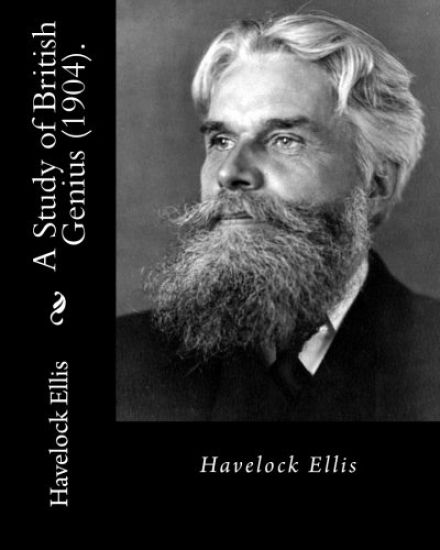
A Study of British Genius (1904). By: Havelock Ellis (Original Classics): Henry Havelock Ellis, known as Havelock Ellis (2 February 1859 - 8 July 1939
Henry Havelock Ellis, known as Havelock Ellis (2 February 1859 - 8 July 1939), was an English physician, writer, progressive intellectual and social reformer who studied human sexuality. He was co-author of the first medical textbook in English on homosexuality in 1897, and also published works on a variety of sexual practices and inclinations, as well as transgender psychology. He is credited with introducing the notions of narcissism and autoeroticism, later adopted by psychoanalysis. Like many intellectuals of his era, he supported eugenics and he served as president of the Eugenics Society. Early life and teaching career: Ellis, son of Edward Peppen Ellis and Susannah Mary Wheatley, was born in Croydon, Surrey (now part of Greater London). He had four sisters, none of whom married. His father was a sea captain, his mother the daughter of a sea captain, and many other relatives lived on or near the sea. When he was seven his father took him on one of his voyages, during which they called at Sydney, Callao and Antwerp. After his return, Ellis attended the French and German College near Wimbledon, and afterward attended a school in Mitcham. In April 1875, Ellis sailed on his father's ship for Australia; soon after his arrival in Sydney, he obtained a position as a master at a private school. After the discovery of his lack of training, he was fired and became a tutor for a family living a few miles from Carcoar. He spent a year there and then obtained a position as a master at a grammar school in Grafton. The headmaster had died and Ellis carried on the school for that year, but was unsuccessful. At the end of the year, he returned to Sydney and, after three months' training, was given charge of two government part-time elementary schools, one at Sparkes Creek, near Scone, New South Wales and the other at Junction Creek. He lived at the school house on Sparkes Creek for a year. He wrote in his autobiography, "In Australia, I gained health of body, I attained peace of soul, my life task was revealed to me, I was able to decide on a professional vocation, I became an artist in literature . . . these five points covered the whole activity of my life in the world. Some of them I should doubtless have reached without the aid of the Australian environment, scarcely all, and most of them I could never have achieved so completely if chance had not cast me into the solitude of the Liverpool Range." Medicine and psychology: Ellis returned to England in April 1879. He had decided to take up the study of sex, and felt his first step must be to qualify as a physician. He studied at St Thomas's Hospital Medical School now part of King's College London, but never had a regular medical practice. His training was aided by a small legacy and also income earned from editing works in the Mermaid Series of lesser known Elizabethan and Jacobean drama. He joined The Fellowship of the New Life in 1883, meeting other social reformers Eleanor Marx, Edward Carpenter and George Bernard Shaw.The 1897 English translation of Ellis's book Sexual Inversion, co-authored with John Addington Symonds and originally published in German in 1896, was the first English medical textbook on homosexuality. It describes the sexual relations of homosexual males, including men with boys. Ellis wrote the first objective study of homosexuality, as he did not characterise it as a disease, immoral, or a crime. The work assumes that same-sex love transcended age taboos as well as gender taboos. In 1897 a bookseller was prosecuted for stocking Ellis's book. Although the term homosexual is attributed to Ellis, he wrote in 1897, "'Homosexual' is a barbarously hybrid word, and I claim no responsibility for it."....
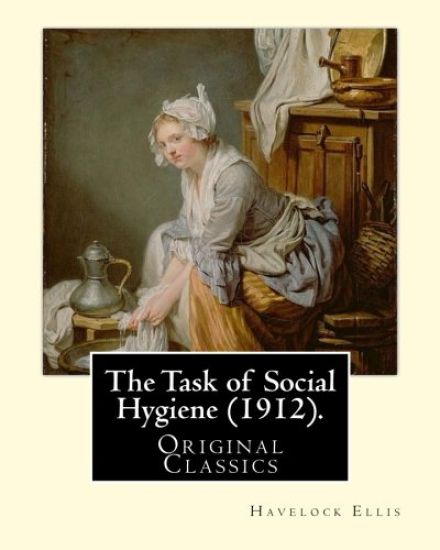
The Task of Social Hygiene (1912). By: Havelock Ellis (Original Classics): Henry Havelock Ellis, known as Havelock Ellis (2 February 1859 - 8 July 193
Henry Havelock Ellis, known as Havelock Ellis (2 February 1859 - 8 July 1939), was an English physician, writer, progressive intellectual and social reformer who studied human sexuality. He was co-author of the first medical textbook in English on homosexuality in 1897, and also published works on a variety of sexual practices and inclinations, as well as transgender psychology. He is credited with introducing the notions of narcissism and autoeroticism, later adopted by psychoanalysis. Like many intellectuals of his era, he supported eugenics and he served as president of the Eugenics Society. Early life and teaching career: Ellis, son of Edward Peppen Ellis and Susannah Mary Wheatley, was born in Croydon, Surrey (now part of Greater London). He had four sisters, none of whom married. His father was a sea captain, his mother the daughter of a sea captain, and many other relatives lived on or near the sea. When he was seven his father took him on one of his voyages, during which they called at Sydney, Callao and Antwerp. After his return, Ellis attended the French and German College near Wimbledon, and afterward attended a school in Mitcham. In April 1875, Ellis sailed on his father's ship for Australia; soon after his arrival in Sydney, he obtained a position as a master at a private school. After the discovery of his lack of training, he was fired and became a tutor for a family living a few miles from Carcoar. He spent a year there and then obtained a position as a master at a grammar school in Grafton. The headmaster had died and Ellis carried on the school for that year, but was unsuccessful. At the end of the year, he returned to Sydney and, after three months' training, was given charge of two government part-time elementary schools, one at Sparkes Creek, near Scone, New South Wales and the other at Junction Creek. He lived at the school house on Sparkes Creek for a year. He wrote in his autobiography, "In Australia, I gained health of body, I attained peace of soul, my life task was revealed to me, I was able to decide on a professional vocation, I became an artist in literature . . . these five points covered the whole activity of my life in the world. Some of them I should doubtless have reached without the aid of the Australian environment, scarcely all, and most of them I could never have achieved so completely if chance had not cast me into the solitude of the Liverpool Range." Medicine and psychology: Ellis returned to England in April 1879. He had decided to take up the study of sex, and felt his first step must be to qualify as a physician. He studied at St Thomas's Hospital Medical School now part of King's College London, but never had a regular medical practice. His training was aided by a small legacy and also income earned from editing works in the Mermaid Series of lesser known Elizabethan and Jacobean drama. He joined The Fellowship of the New Life in 1883, meeting other social reformers Eleanor Marx, Edward Carpenter and George Bernard Shaw.The 1897 English translation of Ellis's book Sexual Inversion, co-authored with John Addington Symonds and originally published in German in 1896, was the first English medical textbook on homosexuality. It describes the sexual relations of homosexual males, including men with boys. Ellis wrote the first objective study of homosexuality, as he did not characterise it as a disease, immoral, or a crime. The work assumes that same-sex love transcended age taboos as well as gender taboos. In 1897 a bookseller was prosecuted for stocking Ellis's book. Although the term homosexual is attributed to Ellis, citation needed] he wrote in 1897, "'Homosexual' is a barbarously hybrid word, and I claim no responsibility for it.".............
Little essays of love and virtue (1922). By: Havelock Ellis (World's classic's): Henry Havelock Ellis, known as Havelock Ellis (2 February 1859 - 8 Ju
Henry Havelock Ellis, known as Havelock Ellis (2 February 1859 - 8 July 1939), was an English physician, writer, progressive intellectual and social reformer who studied human sexuality. He was co-author of the first medical textbook in English on homosexuality in 1897, and also published works on a variety of sexual practices and inclinations, as well as transgender psychology. He is credited with introducing the notions of narcissism and autoeroticism, later adopted by psychoanalysis. Like many intellectuals of his era, he supported eugenics and he served as president of the Eugenics Society. Early life and teaching career: Ellis, son of Edward Peppen Ellis and Susannah Mary Wheatley, was born in Croydon, Surrey (now part of Greater London). He had four sisters, none of whom married. His father was a sea captain, his mother the daughter of a sea captain, and many other relatives lived on or near the sea. When he was seven his father took him on one of his voyages, during which they called at Sydney, Callao and Antwerp. After his return, Ellis attended the French and German College near Wimbledon, and afterward attended a school in Mitcham. In April 1875, Ellis sailed on his father's ship for Australia; soon after his arrival in Sydney, he obtained a position as a master at a private school. After the discovery of his lack of training, he was fired and became a tutor for a family living a few miles from Carcoar. He spent a year there and then obtained a position as a master at a grammar school in Grafton. The headmaster had died and Ellis carried on the school for that year, but was unsuccessful. At the end of the year, he returned to Sydney and, after three months' training, was given charge of two government part-time elementary schools, one at Sparkes Creek, near Scone, New South Wales and the other at Junction Creek. He lived at the school house on Sparkes Creek for a year. He wrote in his autobiography, "In Australia, I gained health of body, I attained peace of soul, my life task was revealed to me, I was able to decide on a professional vocation, I became an artist in literature . . . these five points covered the whole activity of my life in the world. Some of them I should doubtless have reached without the aid of the Australian environment, scarcely all, and most of them I could never have achieved so completely if chance had not cast me into the solitude of the Liverpool Range." Medicine and psychology: Ellis returned to England in April 1879. He had decided to take up the study of sex, and felt his first step must be to qualify as a physician. He studied at St Thomas's Hospital Medical School now part of King's College London, but never had a regular medical practice. His training was aided by a small legacy and also income earned from editing works in the Mermaid Series of lesser known Elizabethan and Jacobean drama. He joined The Fellowship of the New Life in 1883, meeting other social reformers Eleanor Marx, Edward Carpenter and George Bernard Shaw.The 1897 English translation of Ellis's book Sexual Inversion, co-authored with John Addington Symonds and originally published in German in 1896, was the first English medical textbook on homosexuality. It describes the sexual relations of homosexual males, including men with boys. Ellis wrote the first objective study of homosexuality, as he did not characterise it as a disease, immoral, or a crime. The work assumes that same-sex love transcended age taboos as well as gender taboos. In 1897 a bookseller was prosecuted for stocking Ellis's book. Although the term homosexual is attributed to Ellis, citation needed] he wrote in 1897, "'Homosexual' is a barbarously hybrid word, and I claim no responsibility for it.".............
The philosophy of conflict, and other essays in war-time (1919). By: Havelock Ellis: Henry Havelock Ellis, known as Havelock Ellis (2 February 1859 -
Henry Havelock Ellis, known as Havelock Ellis (2 February 1859 - 8 July 1939), was an English physician, writer, progressive intellectual and social reformer who studied human sexuality. He was co-author of the first medical textbook in English on homosexuality in 1897, and also published works on a variety of sexual practices and inclinations, as well as transgender psychology. He is credited with introducing the notions of narcissism and autoeroticism, later adopted by psychoanalysis. Like many intellectuals of his era, he supported eugenics and he served as president of the Eugenics Society. Early life and teaching career: Ellis, son of Edward Peppen Ellis and Susannah Mary Wheatley, was born in Croydon, Surrey (now part of Greater London). He had four sisters, none of whom married. His father was a sea captain, his mother the daughter of a sea captain, and many other relatives lived on or near the sea. When he was seven his father took him on one of his voyages, during which they called at Sydney, Callao and Antwerp. After his return, Ellis attended the French and German College near Wimbledon, and afterward attended a school in Mitcham. In April 1875, Ellis sailed on his father's ship for Australia; soon after his arrival in Sydney, he obtained a position as a master at a private school. After the discovery of his lack of training, he was fired and became a tutor for a family living a few miles from Carcoar. He spent a year there and then obtained a position as a master at a grammar school in Grafton. The headmaster had died and Ellis carried on the school for that year, but was unsuccessful. At the end of the year, he returned to Sydney and, after three months' training, was given charge of two government part-time elementary schools, one at Sparkes Creek, near Scone, New South Wales and the other at Junction Creek. He lived at the school house on Sparkes Creek for a year. He wrote in his autobiography, "In Australia, I gained health of body, I attained peace of soul, my life task was revealed to me, I was able to decide on a professional vocation, I became an artist in literature . . . these five points covered the whole activity of my life in the world. Some of them I should doubtless have reached without the aid of the Australian environment, scarcely all, and most of them I could never have achieved so completely if chance had not cast me into the solitude of the Liverpool Range." Medicine and psychology: Ellis returned to England in April 1879. He had decided to take up the study of sex, and felt his first step must be to qualify as a physician. He studied at St Thomas's Hospital Medical School now part of King's College London, but never had a regular medical practice. His training was aided by a small legacy and also income earned from editing works in the Mermaid Series of lesser known Elizabethan and Jacobean drama. He joined The Fellowship of the New Life in 1883, meeting other social reformers Eleanor Marx, Edward Carpenter and George Bernard Shaw.The 1897 English translation of Ellis's book Sexual Inversion, co-authored with John Addington Symonds and originally published in German in 1896, was the first English medical textbook on homosexuality. It describes the sexual relations of homosexual males, including men with boys. Ellis wrote the first objective study of homosexuality, as he did not characterise it as a disease, immoral, or a crime. The work assumes that same-sex love transcended age taboos as well as gender taboos. In 1897 a bookseller was prosecuted for stocking Ellis's book. Although the term homosexual is attributed to Ellis, citation needed] he wrote in 1897, "'Homosexual' is a barbarously hybrid word, and I claim no responsibility for it."...
Original Letters Illustrative Of English History, 3
This work has been selected by scholars as being culturally important, and is part of the knowledge base of civilization as we know it. This work was reproduced from the original artifact, and remains as true to the original work as possible. Therefore, you will see the original copyright references, library stamps (as most of these works have been housed in our most important libraries around the world), and other notations in the work.This work is in the public domain in the United States of America, and possibly other nations. Within the United States, you may freely copy and distribute this work, as no entity (individual or corporate) has a copyright on the body of the work.As a reproduction of a historical artifact, this work may contain missing or blurred pages, poor pictures, errant marks, etc. Scholars believe, and we concur, that this work is important enough to be preserved, reproduced, and made generally available to the public. We appreciate your support of the preservation process, and thank you for being an important part of keeping this knowledge alive and relevant.
The Psychology of Red and Yellow

The Psychology of Red and Yellow

Henry Havelock Ellis

Createspace Independent Publishing Platform
2018
nidottu
Among all colors, the most poignantly emotional tone undoubtedly belongs to red... In all parts of the world red is symbolical of joyous emotion. Often, either alone or in association with yellow, occasionally with green, it is the fortunate or sacred color. In lauds so far apart as France and Madagascar scarlet garments were at one time the exclusive privilege of the royal family. A great many different colors are symbolical of mourning in various parts of the world; white, gray, yellow, brown, blue, violet, black can be so used, but, so far as I am aware, red never. Everywhere we find, again, that red pigments and dyes, and especially red ochre, are apparently the first to be used at the beginning of civilization, and that they usually continue to be preferred even after other colors are introduced. There is indeed one quarter of the globe where the allied color of yellow, which often elsewhere is the favorite after red, may be said to come first. In a region of which the Malay peninsula is the center and which includes a large part of China. Burmah and the lower coast of India, yellow is the sacred and preferred color, but this is the only large district which presents us with any exception to the general rule, among either higher or lower races, and since yellow falls into the same group as red, and belongs to a neighboring part of the spectrum, even this phenomenon can scarcely be said to clash seriously with the general uniformity...
The Homes Of The Agricultural Labourers, A Paper
This work has been selected by scholars as being culturally important, and is part of the knowledge base of civilization as we know it. This work was reproduced from the original artifact, and remains as true to the original work as possible. Therefore, you will see the original copyright references, library stamps (as most of these works have been housed in our most important libraries around the world), and other notations in the work.This work is in the public domain in the United States of America, and possibly other nations. Within the United States, you may freely copy and distribute this work, as no entity (individual or corporate) has a copyright on the body of the work.As a reproduction of a historical artifact, this work may contain missing or blurred pages, poor pictures, errant marks, etc. Scholars believe, and we concur, that this work is important enough to be preserved, reproduced, and made generally available to the public. We appreciate your support of the preservation process, and thank you for being an important part of keeping this knowledge alive and relevant.
New York - The Planting and the Growth of the Empire State
New York - The Planting and the Growth of the Empire State - Vol. II is an unchanged, high-quality reprint of the original edition of 1893. Hansebooks is editor of the literature on different topic areas such as research and science, travel and expeditions, cooking and nutrition, medicine, and other genres. As a publisher we focus on the preservation of historical literature. Many works of historical writers and scientists are available today as antiques only. Hansebooks newly publishes these books and contributes to the preservation of literature which has become rare and historical knowledge for the future.
Government Revenue

Government Revenue

Ellis Henry Roberts

Hansebooks
2017
pokkari
Government Revenue is an unchanged, high-quality reprint of the original edition of 1884. Hansebooks is editor of the literature on different topic areas such as research and science, travel and expeditions, cooking and nutrition, medicine, and other genres. As a publisher we focus on the preservation of historical literature. Many works of historical writers and scientists are available today as antiques only. Hansebooks newly publishes these books and contributes to the preservation of literature which has become rare and historical knowledge for the future.