

Kirjahaku
Etsi kirjoja tekijän nimen, kirjan nimen tai ISBN:n perusteella.
1000 tulosta hakusanalla Henry T. Cheever



Remy wants to be the greatest painter the world has ever known, but when he discovers Jean Marat dead in his bath, he may never get the chance.The Dream Artist tells the story of Remy Remington, seeking to forge an artistic identity against the wishes of his domineering papa, his descent into madness, and his unrequited love for fellow work colleague, the dreamy Vittoria Corcos.




The End of Sex and the Future of Human Reproduction
Henry T. Greely
Harvard University Press
2018
nidottu
“Will the future confront us with human GMOs? Greely provocatively declares yes, and, while clearly explaining the science, spells out the ethical, political, and practical ramifications.”—Paul Berg, Nobel Laureate and recipient of the National Medal of ScienceWithin twenty, maybe forty, years most people in developed countries will stop having sex for the purpose of reproduction. Instead, prospective parents will be told as much as they wish to know about the genetic makeup of dozens of embryos, and they will pick one or two for implantation, gestation, and birth. And it will be safe, lawful, and free. In this work of prophetic scholarship, Henry T. Greely explains the revolutionary biological technologies that make this future a seeming inevitability and sets out the deep ethical and legal challenges humanity faces as a result.“Readers looking for a more in-depth analysis of human genome modifications and reproductive technologies and their legal and ethical implications should strongly consider picking up Greely’s The End of Sex and the Future of Human Reproduction… [It has] the potential to empower readers to make informed decisions about the implementation of advancements in genetics technologies.”—Dov Greenbaum, Science“[Greely] provides an extraordinarily sophisticated analysis of the practical, political, legal, and ethical implications of the new world of human reproduction. His book is a model of highly informed, rigorous, thought-provoking speculation about an immensely important topic.”—Glenn C. Altschuler, Psychology Today

First Published in 1997. Economic adjustment programs that combine macroeconomic stability and structural reforms are being implemented in several Arab countries. Policy-makers also are devoting more attention to improving the operation of domestic capital markets. To invest in this region now would be a far-sighted move by entering at a stage when the process is still under way. This book is one of very few readily available sources of reference on the region's stock and bond markets, presented in a concise and accessible form. It provides investors, policy-makers, analysts, bankers and other market participants with comprehensive information covering the top 10 Arab stock markets of Saudi Arabia, Egypt, Jordan, Kuwait, UAE, Bahrain, Oman, Lebanon, Morocco and Tunisia. For each market, a historical background is given together with structure, listing and trading procedures, performance trends, financial indicators, sectoral analysis and underlying strengths and weaknesses.

While Flannery O'Connor is hailed as one of the most important writers of the twentieth-century American south, few appreciate O'Connor as a philosopher as well. In Return to Good and Evil, Henry T. Edmondson introduces us to a remarkable thinker who uses fiction to confront and provoke us with the most troubling moral questions of modern existence. "Right now the whole world seems to be going through a dark night of the soul," O'Connor once said, in response to the nihilistic tendencies she saw in the world around her. Nihilism—Nietzche's idea that "God is dead"—preoccupied O'Connor, and she used her fiction to draw a tableau of human civilization on the brink of a catastrophic moral, philosophical, and religious crisis. Again and again, O'Connor suggests that the only way back from this precipice is to recognize the human need for grace, redemption, and God. She argues brilliantly and persuasively through her novels and short stories that the Nietzschean challenge to the notions of good and evil is an ill-conceived effort that will result only in disaster. With rare access to O'Connor's correspondence, prose drafts, and other personal writings, Edmondson investigates O'Connor's deepest motivations through more than just her fiction and illuminates the philosophical and theological influences on her life and work. Edmondson argues that O'Connor's artistic brilliance and philosophical genius reveal the only possible response to the nihilistic despair of the modern world: a return to good and evil through humility and grace.
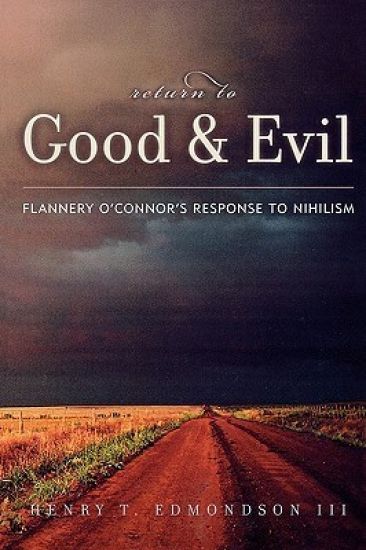
While Flannery O'Connor is hailed as one of the most important writers of the twentieth-century American south, few appreciate O'Connor as a philosopher as well. In Return to Good and Evil, Henry T. Edmondson introduces us to a remarkable thinker who uses fiction to confront and provoke us with the most troubling moral questions of modern existence. 'Right now the whole world seems to be going through a dark night of the soul,' O'Connor once said, in response to the nihilistic tendencies she saw in the world around her. Nihilism—Nietzche's idea that 'God is dead'—preoccupied O'Connor, and she used her fiction to draw a tableau of human civilization on the brink of a catastrophic moral, philosophical, and religious crisis. Again and again, O'Connor suggests that the only way back from this precipice is to recognize the human need for grace, redemption, and God. She argues brilliantly and persuasively through her novels and short stories that the Nietzschean challenge to the notions of good and evil is an ill-conceived effort that will result only in disaster. With rare access to O'Connor's correspondence, prose drafts, and other personal writings, Edmondson investigates O'Connor's deepest motivations through more than just her fiction and illuminates the philosophical and theological influences on her life and work. Edmondson argues that O'Connor's artistic brilliance and philosophical genius reveal the only possible response to the nihilistic despair of the modern world: a return to good and evil through humility and grace.

Presents the reality of Asian successes and problems and challenges faced by immigrants in the USA. Case studies and episodes are presented and the book shows data that calibrates the differential success of various Asian populations and the need to assist those who are less successful.

An anthology of true stories, drawn from Henry Bradford's personal experience as a Registered Docker in the Port of London - when traffic through the docks was at its peak.

Dockers’ Stories from the Second World War is a collection of several true stories, drawn from Henry Bradford’s time as a Registered Docker in the Port of London. Men were often killed and injured during their every-day work on the docks; nonetheless, never was the bravery of these men so tested as during times of war. Henry heard many stories from dockers in his time working the docks but it was their wartime adventures that seemed most vivid. Henry Bradford’s lively stories and colourful characters reveal the bravery of ordinary men in World War Two, from Captain Jim Fryer’s ship towage work on Calais roads and Dunkirk beaches, and saving lives of survivors from the bombed hospital ship Paris, for which he was awarded the DSC, to Petty Officer Jack Hicks’ quieter but equally memorable posting steering a clinker-built boat on a hush-hush job from the Thames to the north-east, his crew consisting only of an inexperienced co-man and an incredibly efficient WREN. This book is sure to appeal to those whose relatives worked as dockers, and to anyone with an interest in London’s East End at war.


This book offers a close 'inside' account of the psyche of Albert Speer, one of the most powerful men in the Third Reich and a close personal associate of Hitler. King, a Nuremberg prosecutor, offers firsthand observations based upon his encounter with Speer as a defendant at Nuremberg, as well as his 35 year relationship with Speer which ended with the latter's death in 1981.

This book offers a close 'inside' account of the psyche of Albert Speer, one of the most powerful men in the Third Reich and a close personal associate of Hitler. King, a Nuremberg prosecutor, offers firsthand observations based upon his encounter with Speer as a defendant at Nuremberg, as well as his 35 year relationship with Speer which ended with the latter's death in 1981.


Experiencing God Day by Day
Henry T. Blackaby; Richard Blackaby
Broadman Holman Publishers
2006
sidottu

Experiencing God Day-By-Day
Henry T. Blackaby; Richard Blackaby
Broadman Holman Publishers
1997
sidottu
Experiencing God Day-By-Day is a devotional journal designed to reinforce the spiritual precepts set forth in the Experiencing God book, workbook, and study Bible. There is a page for each day of the year with a Bible verse, a short devotional reading, and a space for your own thoughts and reflections. Its interactive format invites you to trace your journey toward a closer relationship with God. The readings are filled with truths gleaned from the Blackabys' writing and ministry, and written with characteristic grace and spiritual insight.Knowing God's will requires discipline and perseverance. There are no shortcuts. Experiencing God Day-By-Day is a unique and valuable guide for helping you achieve results in your spiritual quest day by day.