Kirjojen hintavertailu. Mukana 12 390 323 kirjaa ja 12 kauppaa.

Kirjahaku

Etsi kirjoja tekijän nimen, kirjan nimen tai ISBN:n perusteella.

1000 tulosta hakusanalla Henry Wadsworth Longfellow

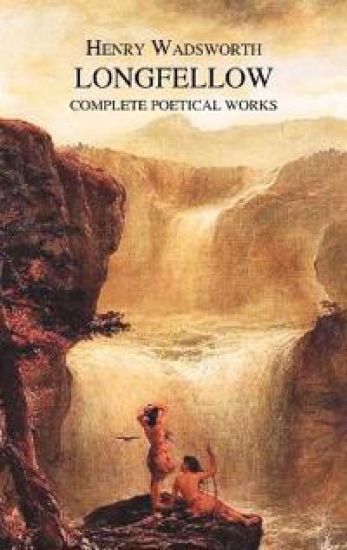
The Complete Poetical Works of Henry Wadsworth Longfellow

The Complete Poetical Works of Henry Wadsworth Longfellow

Henry Wadsworth Longfellow

Literary Licensing, LLC
2014
sidottu
The Complete Poetical Works of Henry Wadsworth Longfellow is a comprehensive collection of the poetry written by the renowned American poet, Henry Wadsworth Longfellow. This book is a must-have for anyone who appreciates the art of poetry and wants to explore the works of one of the most celebrated poets of the 19th century.The book includes all of Longfellow's major works, including his famous epic poem, The Song of Hiawatha, as well as his shorter poems, sonnets, ballads, and other works. The poems are arranged chronologically, allowing readers to trace the development of Longfellow's poetic style over the course of his career.The collection also includes a biographical introduction that provides insight into Longfellow's life and work, as well as notes on the individual poems that offer context and interpretation. The book is beautifully designed and printed, with illustrations and decorative elements that enhance the reading experience.Overall, The Complete Poetical Works of Henry Wadsworth Longfellow is a valuable addition to any poetry lover's library, offering a comprehensive and engaging look at the work of one of America's most beloved poets.This Is A New Release Of The Original 1893 Edition.This scarce antiquarian book is a facsimile reprint of the old original and may contain some imperfections such as library marks and notations. Because we believe this work is culturally important, we have made it available as part of our commitment for protecting, preserving, and promoting the world's literature in affordable, high quality, modern editions, that are true to their original work.
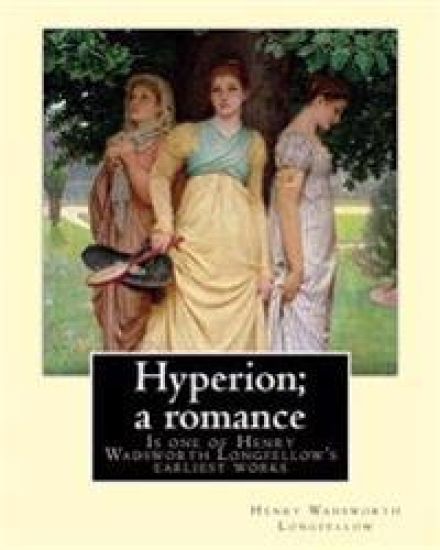
Hyperion; a romance. By: Henry Wadsworth Longfellow: Hyperion: A Romance is one of Henry Wadsworth Longfellow's earliest works, published in 1839.
Hyperion: A Romance is one of Henry Wadsworth Longfellow's earliest works, published in 1839. It is a prose romance which was published alongside his first volume of poems, Voices of the Night.Hyperion follows a young American protagonist named Paul Flemming as he travels through Germany. The character's wandering is partially inspired by the death of a friend. The author had also recently lost someone close to him. Longfellow's first wife, Mary Storer Potter, died in Rotterdam in the Netherlands after a miscarriage in 1836; Longfellow was deeply saddened by her death and noted in his diary: "All day I am weary and sad ... and at night I cry myself to sleep like a child." Hyperion was inspired in part by his trips to Europe as well as his then-unsuccessful courtship of Frances Appleton, daughter of businessman Nathan Appleton. In the book, Flemming falls in love with an Englishwoman, Mary Ashburton, who rejects him...... Henry Wadsworth Longfellow (February 27, 1807 - March 24, 1882) was an American poet and educator whose works include "Paul Revere's Ride", The Song of Hiawatha, and Evangeline. He was also the first American to translate Dante Alighieri's Divine Comedy, and was one of the five Fireside Poets. Longfellow was born in Portland, Maine, which was then a part of Massachusetts. He studied at Bowdoin College. After spending time in Europe he became a professor at Bowdoin and, later, at Harvard College. His first major poetry collections were Voices of the Night (1839) and Ballads and Other Poems (1841). Longfellow retired from teaching in 1854, to focus on his writing, living the remainder of his life in Cambridge, Massachusetts, in a former Revolutionary War headquarters of George Washington. His first wife Mary Potter died in 1835, after a miscarriage. His second wife Frances Appleton died in 1861, after sustaining burns when her dress caught fire. After her death, Longfellow had difficulty writing poetry for a time and focused on translating works from foreign languages. He died in 1882. Longfellow wrote many lyric poems known for their musicality and often presenting stories of mythology and legend. He became the most popular American poet of his day and also had success overseas. He has been criticized, however, for imitating European styles and writing specifically for the masses.
The Courtship of Miles Standish (1858). By: Henry Wadsworth Longfellow: (Original Classics)

The Courtship of Miles Standish (1858). By: Henry Wadsworth Longfellow: (Original Classics)

Henry Wadsworth Longfellow

Createspace Independent Publishing Platform
2018
nidottu
Henry Wadsworth Longfellow (February 27, 1807 - March 24, 1882) was an American poet and educator whose works include "Paul Revere's Ride", The Song of Hiawatha, and Evangeline. He was also the first American to translate Dante Alighieri's Divine Comedy and was one of the five Fireside Poets from New England. Longfellow was born in Portland, Maine, which was then still part of Massachusetts. He studied at Bowdoin College and, after spending time in Europe, he became a professor at Bowdoin and later at Harvard College. His first major poetry collections were Voices of the Night (1839) and Ballads and Other Poems (1841). Longfellow retired from teaching in 1854 to focus on his writing, and he lived the remainder of his life in a former Revolutionary War headquarters of George Washington in Cambridge, Massachusetts. His first wife Mary Potter died in 1835 after a miscarriage. His second wife Frances Appleton died in 1861 after sustaining burns when her dress caught fire. After her death, Longfellow had difficulty writing poetry for a time and focused on translating works from foreign languages. He died in 1882. Longfellow wrote many lyric poems known for their musicality and often presenting stories of mythology and legend. He became the most popular American poet of his day and also had success overseas. He has been criticized, however, for imitating European styles and writing specifically for the masses. Death of Frances: July 9, 1861 was a hot day, and Fanny was putting locks of her children's hair into an envelope and attempting to seal it with hot sealing wax while Longfellow took a nap. 70] Her dress suddenly caught fire, though it is unclear exactly how;burning wax or a lighted candle may have fallen onto it. Longfellow was awakened from his nap and rushed to help her, throwing a rug over her, though it was too small. He stifled the flames with his body as best he could, but she was already badly burned.Over half a century later, Longfellow's youngest daughter Annie explained the story differently, claiming that there had been no candle or wax but that the fire had started from a self-lighting match that had fallen on the floor. Both accounts state that Fanny was taken to her room to recover and a doctor was called. She was in and out of consciousness throughout the night and was administered ether. She died shortly after 10:00 the next morning, July 10, after requesting a cup of coffee. Longfellow, in trying to save her, had burned himself badly enough so that he was unable to attend her funeral.His facial injuries led him to stop shaving, and he wore a beard from then on that became his trademark. Longfellow was devastated by her death and never fully recovered; he occasionally resorted to laudanum and ether to deal with his grief. He worried that he would go insane, begging "not to be sent to an asylum" and noting that he was "inwardly bleeding to death".He expressed his grief in the sonnet "The Cross of Snow" (1879) which he wrote 18 years later to commemorate her death: Such is the cross I wear upon my breast These eighteen years, through all the changing scenes And seasons, changeless since the day she died.
Evangeline: A Tale of Acadie (1847). By: Henry Wadsworth Longfellow: Henry Wadsworth Longfellow (February 27, 1807 - March 24, 188
Henry Wadsworth Longfellow (February 27, 1807 - March 24, 1882) was an American poet and educator whose works include "Paul Revere's Ride", The Song of Hiawatha, and Evangeline. He was also the first American to translate Dante Alighieri's Divine Comedy and was one of the five Fireside Poets from New England. Longfellow was born in Portland, Maine, which was then still part of Massachusetts. He studied at Bowdoin College and, after spending time in Europe, he became a professor at Bowdoin and later at Harvard College. His first major poetry collections were Voices of the Night (1839) and Ballads and Other Poems (1841). Longfellow retired from teaching in 1854 to focus on his writing, and he lived the remainder of his life in a former Revolutionary War headquarters of George Washington in Cambridge, Massachusetts. His first wife Mary Potter died in 1835 after a miscarriage. His second wife Frances Appleton died in 1861 after sustaining burns when her dress caught fire. After her death, Longfellow had difficulty writing poetry for a time and focused on translating works from foreign languages. He died in 1882. Longfellow wrote many lyric poems known for their musicality and often presenting stories of mythology and legend. He became the most popular American poet of his day and also had success overseas. He has been criticized, however, for imitating European styles and writing specifically for the masses. Death of Frances: July 9, 1861 was a hot day, and Fanny was putting locks of her children's hair into an envelope and attempting to seal it with hot sealing wax while Longfellow took a nap. 70] Her dress suddenly caught fire, though it is unclear exactly how;burning wax or a lighted candle may have fallen onto it. Longfellow was awakened from his nap and rushed to help her, throwing a rug over her, though it was too small. He stifled the flames with his body as best he could, but she was already badly burned.Over half a century later, Longfellow's youngest daughter Annie explained the story differently, claiming that there had been no candle or wax but that the fire had started from a self-lighting match that had fallen on the floor. Both accounts state that Fanny was taken to her room to recover and a doctor was called. She was in and out of consciousness throughout the night and was administered ether. She died shortly after 10:00 the next morning, July 10, after requesting a cup of coffee. Longfellow, in trying to save her, had burned himself badly enough so that he was unable to attend her funeral.His facial injuries led him to stop shaving, and he wore a beard from then on that became his trademark. Longfellow was devastated by her death and never fully recovered; he occasionally resorted to laudanum and ether to deal with his grief. He worried that he would go insane, begging "not to be sent to an asylum" and noting that he was "inwardly bleeding to death".He expressed his grief in the sonnet "The Cross of Snow" (1879) which he wrote 18 years later to commemorate her death: Such is the cross I wear upon my breast These eighteen years, through all the changing scenes And seasons, changeless since the day she died.
Tales of a Wayside Inn (1863). By: Henry Wadsworth Longfellow: Collection of poems

Tales of a Wayside Inn (1863). By: Henry Wadsworth Longfellow: Collection of poems

Henry Wadsworth Longfellow

Createspace Independent Publishing Platform
2018
nidottu
Tales of a Wayside Inn is a collection of poems by American poet Henry Wadsworth Longfellow. The book, published in 1863, depicts a group of people at the Wayside Inn in Sudbury, Massachusetts as each tells a story in the form of a poem. Overview: The poems in the collection are told by a group of adults in the tavern of the Wayside Inn in Sudbury, Massachusetts, 20 miles from the poet's home in Cambridge, and a favorite resort for parties from Harvard College. The narrators are friends of the author who, though they were not named, were so plainly characterized as to be easily recognizable. Among those of wider fame are Ole Bull, the violinist, and Thomas William Parsons, the poet and translator of Dante. Each of the three parts has a prelude and a finale, and there are interludes which link together the tales and introduce the narrators. The prelude for the first part begins: "One Autumn night, in Sudbury town, Across the meadows bare and brown, The windows of the wayside inn Gleamed red with fire-light..." Henry Wadsworth Longfellow (February 27, 1807 - March 24, 1882) was an American poet and educator whose works include "Paul Revere's Ride", The Song of Hiawatha, and Evangeline. He was also the first American to translate Dante Alighieri's Divine Comedy and was one of the five Fireside Poets from New England. Longfellow was born in Portland, Maine, which was then still part of Massachusetts. He studied at Bowdoin College and, after spending time in Europe, he became a professor at Bowdoin and later at Harvard College. His first major poetry collections were Voices of the Night (1839) and Ballads and Other Poems (1841). Longfellow retired from teaching in 1854 to focus on his writing, and he lived the remainder of his life in a former Revolutionary War headquarters of George Washington in Cambridge, Massachusetts. His first wife Mary Potter died in 1835 after a miscarriage. His second wife Frances Appleton died in 1861 after sustaining burns when her dress caught fire. After her death, Longfellow had difficulty writing poetry for a time and focused on translating works from foreign languages. He died in 1882. Longfellow wrote many lyric poems known for their musicality and often presenting stories of mythology and legend. He became the most popular American poet of his day and also had success overseas. He has been criticized, however, for imitating European styles and writing specifically for the masses. Death of Frances: July 9, 1861 was a hot day, and Fanny was putting locks of her children's hair into an envelope and attempting to seal it with hot sealing wax while Longfellow took a nap. 70] Her dress suddenly caught fire, though it is unclear exactly how;burning wax or a lighted candle may have fallen onto it. Longfellow was awakened from his nap and rushed to help her, throwing a rug over her, though it was too small. He stifled the flames with his body as best he could, but she was already badly burned.Over half a century later, Longfellow's youngest daughter Annie explained the story differently, claiming that there had been no candle or wax but that the fire had started from a self-lighting match that had fallen on the floor. Both accounts state that Fanny was taken to her room to recover and a doctor was called. She was in and out of consciousness throughout the night and was administered ether. She died shortly after 10:00 the next morning, July 10, after requesting a cup of coffee. Longfellow, in trying to save her, had burned himself badly enough so that he was unable to attend her funeral.His facial injuries led him to stop shaving, and he wore a beard from then on that became his trademark..............
The Complete Poetical Works of Henry Wadsworth Longfellow

The Complete Poetical Works of Henry Wadsworth Longfellow

Henry Wadsworth Longfellow

BENEDICTION CLASSICS
2021
pokkari
This book ambitiously brings together all Longfellow's poems into a single volume. As well as his justly famous works such as 'Hiawatha', 'The Wreck of the Hesperus' and 'Evangeline', there is much else here to delight the reader, such as his many short poems, translations and verse-dramas. This is a new edition of the text - not a scan - carefully hand-edited to be clear and complete.
Evangeline: A Tale of Acadie (1847) by: Henry Wadsworth Longfellow

Evangeline: A Tale of Acadie (1847) by: Henry Wadsworth Longfellow

Henry Wadsworth Longfellow

Createspace Independent Publishing Platform
2017
nidottu
Henry Wadsworth Longfellow (February 27, 1807 - March 24, 1882) was an American poet and educator whose works include "Paul Revere's Ride", The Song of Hiawatha, and Evangeline. He was also the first American to translate Dante Alighieri's Divine Comedy, and was one of the five Fireside Poets from New England. Longfellow was born in Portland, Maine, which was then still part of Massachusetts. He studied at Bowdoin College. After spending time in Europe, he became a professor at Bowdoin and, later, at Harvard College. His first major poetry collections were Voices of the Night (1839) and Ballads and Other Poems (1841). Longfellow retired from teaching in 1854, to focus on his writing. He lived the remainder of his life in Cambridge, Massachusetts, in a former Revolutionary War headquarters of George Washington. His first wife Mary Potter died in 1835, after a miscarriage. His second wife Frances Appleton died in 1861, after sustaining burns when her dress caught fire. After her death, Longfellow had difficulty writing poetry for a time and focused on translating works from foreign languages. He died in 1882. Longfellow wrote many lyric poems known for their musicality and often presenting stories of mythology and legend. He became the most popular American poet of his day and also had success overseas. He has been criticized, however, for imitating European styles and writing specifically for the masses.
The song of Hiawatha . By: Henry Wadsworth Longfellow. and illu. Frederic Remington

The song of Hiawatha . By: Henry Wadsworth Longfellow. and illu. Frederic Remington

Henry Wadsworth Longfellow

Createspace Independent Publishing Platform
2017
nidottu
Henry Wadsworth Longfellow (February 27, 1807 - March 24, 1882) was an American poet and educator whose works include "Paul Revere's Ride", The Song of Hiawatha, and Evangeline. He was also the first American to translate Dante Alighieri's Divine Comedy, and was one of the five Fireside Poets from New England. Longfellow was born in Portland, Maine, which was then still part of Massachusetts. He studied at Bowdoin College. After spending time in Europe, he became a professor at Bowdoin and, later, at Harvard College. His first major poetry collections were Voices of the Night (1839) and Ballads and Other Poems (1841). Longfellow retired from teaching in 1854, to focus on his writing. He lived the remainder of his life in Cambridge, Massachusetts, in a former Revolutionary War headquarters of George Washington. His first wife Mary Potter died in 1835, after a miscarriage. His second wife Frances Appleton died in 1861, after sustaining burns when her dress caught fire. After her death, Longfellow had difficulty writing poetry for a time and focused on translating works from foreign languages. He died in 1882. Longfellow wrote many lyric poems known for their musicality and often presenting stories of mythology and legend. He became the most popular American poet of his day and also had success overseas. He has been criticized, however, for imitating European styles and writing specifically for the masses.
The Courtship of Miles Standish (1858) by: Henry Wadsworth Longfellow

The Courtship of Miles Standish (1858) by: Henry Wadsworth Longfellow

Henry Wadsworth Longfellow

Createspace Independent Publishing Platform
2017
nidottu
Henry Wadsworth Longfellow (February 27, 1807 - March 24, 1882) was an American poet and educator whose works include "Paul Revere's Ride", The Song of Hiawatha, and Evangeline. He was also the first American to translate Dante Alighieri's Divine Comedy, and was one of the five Fireside Poets from New England. Longfellow was born in Portland, Maine, which was then still part of Massachusetts. He studied at Bowdoin College. After spending time in Europe, he became a professor at Bowdoin and, later, at Harvard College. His first major poetry collections were Voices of the Night (1839) and Ballads and Other Poems (1841). Longfellow retired from teaching in 1854, to focus on his writing. He lived the remainder of his life in Cambridge, Massachusetts, in a former Revolutionary War headquarters of George Washington. His first wife Mary Potter died in 1835, after a miscarriage. His second wife Frances Appleton died in 1861, after sustaining burns when her dress caught fire. After her death, Longfellow had difficulty writing poetry for a time and focused on translating works from foreign languages. He died in 1882. Longfellow wrote many lyric poems known for their musicality and often presenting stories of mythology and legend. He became the most popular American poet of his day and also had success overseas. He has been criticized, however, for imitating European styles and writing specifically for the masses.
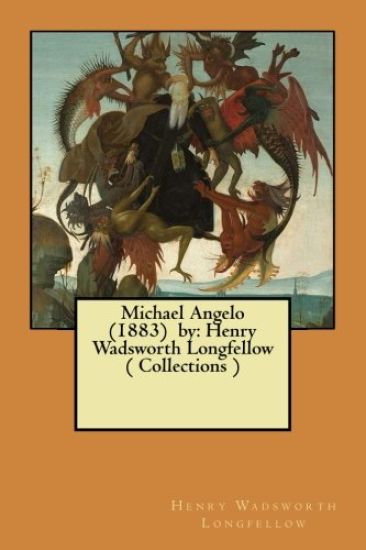
Michael Angelo (1883) by: Henry Wadsworth Longfellow ( Collections )

Michael Angelo (1883) by: Henry Wadsworth Longfellow ( Collections )

Henry Wadsworth Longfellow

Createspace Independent Publishing Platform
2017
nidottu
Henry Wadsworth Longfellow (February 27, 1807 - March 24, 1882) was an American poet and educator whose works include "Paul Revere's Ride", The Song of Hiawatha, and Evangeline. He was also the first American to translate Dante Alighieri's Divine Comedy, and was one of the five Fireside Poets from New England. Longfellow was born in Portland, Maine, which was then still part of Massachusetts. He studied at Bowdoin College. After spending time in Europe, he became a professor at Bowdoin and, later, at Harvard College. His first major poetry collections were Voices of the Night (1839) and Ballads and Other Poems (1841). Longfellow retired from teaching in 1854, to focus on his writing. He lived the remainder of his life in Cambridge, Massachusetts, in a former Revolutionary War headquarters of George Washington. His first wife Mary Potter died in 1835, after a miscarriage. His second wife Frances Appleton died in 1861, after sustaining burns when her dress caught fire. After her death, Longfellow had difficulty writing poetry for a time and focused on translating works from foreign languages. He died in 1882. Longfellow wrote many lyric poems known for their musicality and often presenting stories of mythology and legend. He became the most popular American poet of his day and also had success overseas. He has been criticized, however, for imitating European styles and writing specifically for the masses.