

Kirjahaku
Etsi kirjoja tekijän nimen, kirjan nimen tai ISBN:n perusteella.
1000 tulosta hakusanalla Herbert Blumer
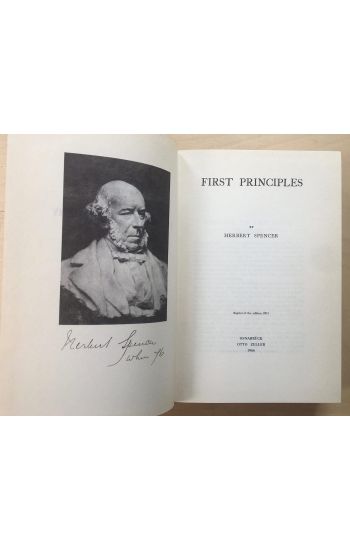
Herbert Spencer (1820-1903) was regarded by the Victorians as the foremost philosopher of the age, the prophet of evolution at a time when the idea had gripped the popular imagination. Until recently Spencer's posthumous reputation rested almost excusively on his social and political thought, which has itself frequently been subject to serious misrepresentation. But historians of ideas now recognise that an acquaintance with Spencer's thought is essential for the proper understanding of many aspects of Victorian intellectual life, and the present selection is designed to answer this need. It provides a cross-section of Spencer's works from his more popular and approachable essays to a number of the volumes of the Synthetic Philosophy itself.
Herbert Spencer
Routledge
1999
muu
Herbert Spencer (1820-1903) was a major figure in the early development of sociology, famous for work which likened society to an organism and analysed it in evolutionary terms. In this context he was contributing to evolutionary theory before as well as after Darwin and argued consistently that society would be perfected through the operation of the principle that every man should be left free to do what he would as long as he did not interfere with another man's freedom. Spencer's work has been neglected in recent years, but its indirect influence lives on both in libertarian political thought and in the discipline of sociology itself particularly through the work of Durkheim who was heavily influenced by Spencer. This major set traces that influence from the reaction of Spencer's contemporaries to the present day. Contributions come from across the social science disciplines and are often taken from difficult to access contemporary sources.
Herbert Marcuse
Routledge
2003
sidottu
The Legacy of Herbert Marcuse: A Critical Reader is a collection of brand new papers by seventeen Marcuse scholars, which provides a comprehensive reassessment of the relevance of Marcuse's critical theory at the beginning of the 21st century.Although best known for his reputation in critical theory, Herbert Marcuse's work has had impact on areas as diverse as politics, technology, aesthetics, psychoanalysis and ecology. This collection addresses the contemporary relevance of Marcuse's work in this broad variety of fields and from an international perspective. In Part One, veteran scholars of Marcuse and the Frankfurt school examine the legacy of various specific areas of Marcuse's thought, including the quest for radical subjectivity, the maternal ethic and the negative dialectics of imagination. Part Two focuses on a very new trend in Marcuse scholarship: the link between Marcuse's ideas and environmental thought. The third part of this collection is dedicated to the work of younger Marcuse scholars, with the aim of documenting Marcuse's reception among the next generation of critical theorists. The final section of the book contains recollections on Marcuse's person rather than his critical theory, including an informative look back over his life by his son, Peter.

Herbert Marcuse
Routledge
2003
nidottu
The Legacy of Herbert Marcuse: A Critical Reader is a collection of brand new papers by seventeen Marcuse scholars, which provides a comprehensive reassessment of the relevance of Marcuse's critical theory at the beginning of the 21st century.Although best known for his reputation in critical theory, Herbert Marcuse's work has had impact on areas as diverse as politics, technology, aesthetics, psychoanalysis and ecology. This collection addresses the contemporary relevance of Marcuse's work in this broad variety of fields and from an international perspective. In Part One, veteran scholars of Marcuse and the Frankfurt school examine the legacy of various specific areas of Marcuse's thought, including the quest for radical subjectivity, the maternal ethic and the negative dialectics of imagination. Part Two focuses on a very new trend in Marcuse scholarship: the link between Marcuse's ideas and environmental thought. The third part of this collection is dedicated to the work of younger Marcuse scholars, with the aim of documenting Marcuse's reception among the next generation of critical theorists. The final section of the book contains recollections on Marcuse's person rather than his critical theory, including an informative look back over his life by his son, Peter.
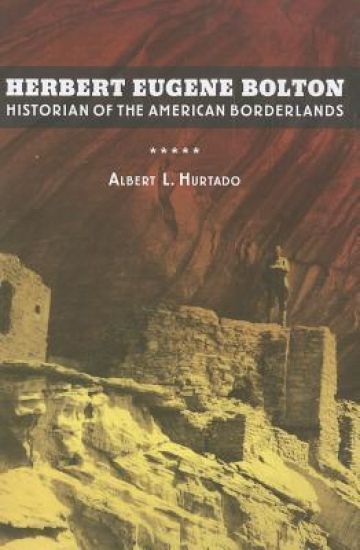
This definitive biography offers a new critical assessment of the life, works, and ideas of Herbert E. Bolton (1870-1953), a leading historian of the American West, Mexico, and Latin America. Bolton, a famous pupil of Frederick Jackson Turner, formulated a concept - the borderlands - that is a foundation of historical studies today. His research took him not only to the archives and libraries of Mexico but out on the trails blazed by Spanish soldiers and missionaries during the colonial era. Bolton helped establish the reputation of the University of California and the Bancroft Library in the eyes of the world and was influential among historians during his lifetime, but interest in his ideas waned after his death. Now, more than a century after Bolton began to investigate the Mexican archives, Albert L. Hurtado explores his life against the backdrop of the cultural and political controversies of his day.
The Theological Works Of Herbert Thorndike V4
Herbert Thorndike
KESSINGER PUBLISHING, LLC
2007
sidottu

Herbert Spencer On The Americans And The Americans On Herbert Spencer
Edward Livingston Youmans
Kessinger Pub
2007
pokkari

Herbert Spencer And Scientific Education
Gabriel Compayre; Maria E. (TRN) Findlay
Kessinger Pub
2007
pokkari
