

Kirjahaku
Etsi kirjoja tekijän nimen, kirjan nimen tai ISBN:n perusteella.
1000 tulosta hakusanalla Herbert Marcuse

Back in print after fifty years and with a new introduction by Ray Brassier, this often overlooked but prescient collection of Marcuse's lectures makes an impassioned plea for the overthrowing of capitalism. Analysing the work of Freud and Marx, and taking in topics like automation, work, postcapitalism, utopia, and technology, Psychoanalysis, Politics, and Utopia excavates the psychic roots of the current crisis of capitalist civilisation, and gives us a blueprint for the emancipation of humanity from the toils of capitalism. In a world reeling from the ongoing collapse of the neoliberal consensus, coupled with the accelerating pace of catastrophic climate change wrought by capitalism, Marcuse’s radical insights in Psychoanalysis, Politics, and Utopia are as urgently relevant today as they were in 1970.

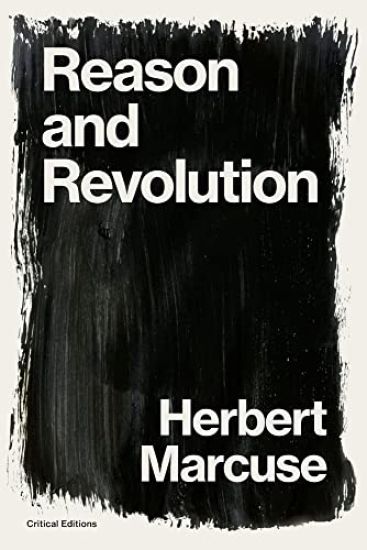
"Brilliant and penetrating ... the most important work which has opened up an understanding of Marx's humanism." - Erich FrommReason and Revolution: Hegel and the Rise of Social Theory is the philosopher Herbert Marcuse's first major work in English - a masterful interpretation of Hegel's philosophy and the influence it has had on European political thought from the French Revolution to the present day.Reason & Revolution, written in 1941, was the first Hegelian Marxist text to appear in English, the first systematic study of Hegel by a Marxist, and the first work in English to discuss the young Marx seriously. It introduced introduced Hegelian and Marxist concepts such as alienation, subjectivity, negativity, and the Frankfurt School's critique of positivism to a wide international audience. Acclaimed for its profound and undistorted reading of Hegel's social and political theory, the appreciation of Reason and Revolution has remained high, more relevant now than ever before. There is no better guide than Marcuse to where we have been and to what we might expect. The most influential radical philosopher of the 1960s, Marcuse's writings are as relevant to today's society as they were at the time they were written."We fell in love with Marcuse's mind, his method, his scholarship. We read everything he wrote... His book on Hegel and Marx, Reason and Revolution, was high on our list because we wanted to understand the intellectual origins of revolutionary Marxism." - Dan La Botz, author of A Troublemakers' Handbook: How to Fight Back Where You Work and Win "A Marxian philosopher who became a hero to the student radicals of the 1960s because of his view that modern society has enslaved mankind" - The Washington Post"A guiding figure to many social activists" - The New York TimesAbout the authorHerbert Marcuse (1898-1979) was a philosopher, sociologist, and political theorist. He studied at the University of Berlin and the University of Freiburg, and became a crucial figure at the Frankfurt Institute for Social Research, and of the Frankfurt School of social theory. He was forced to leave Germany in 1933, eventually settling in the United States, where he would spend much of his life and taught at many of the country's greatest schools and universities. A Hegelian-Freudian-Marxist, Marcuse highlighted the cultural forms of repression and the role of technology and the expansion of the production of consumer goods in the maintenance of the stability of capitalism. His classic studies of capitalist society were important influences on the New Left of the 1960s and 1970s and his libertarian socialism remains an important intellectual resource. Philosophical speculation seldom attracts headlines, let alone threats of death. Yet such was the fate that overtook Herbert Marcuse in the late 1960s, when he was catapulted into international controversy as a prophet of the revolutionary student movement. Among his major writings are Reason and Revolution, One-Dimensional Man, and Eros and Civilization.


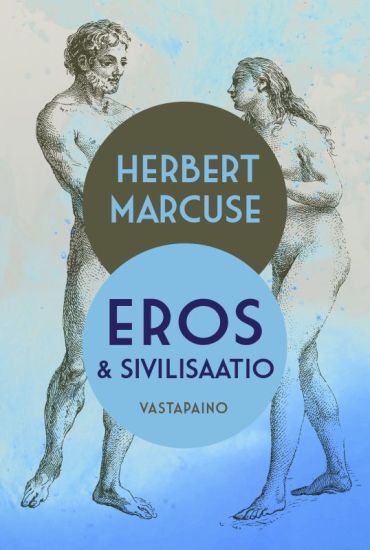
Herbert Marcusen (1898-1979) Eros ja sivilisaatio on mannermaisen yhteiskuntafilosofian klassikko. Teos edustaa Frankfurtin koulukunnan kriittistä teoriaa, jossa yhdistyy kiinnostus Sigmund Freudin psykoanalyysiin ja Marxin kapitalismikritiikkiin.Teoksessa tarkastellaan kapitalismia tiedostumattoman näkökulmasta. Kuinka kapitalistinen talous tunkeutuu jokapäiväiseen elämään, ihmissuhteisiin, tunteisiin ja haluihin? Millaisia vastavoimia mielihyvä, halut ja ruumiillisuus voisivat muodostaa?Marcuselle psyykkinen torjunta ei ole pelkästään ihmisen biologisen olemuksen edellyttämää vaan osittain alistavien yhteiskunnallisten olosuhteiden tuotosta. Ihmiseksi kasvaminen on myös alistumista yhteiskunnallisille hierarkioille ja välineellisen järjen paaluttamille normeille. Mielihyvä ja Eros ovat Marcuselle vallankumouksellisia voimia. Niihin sisältyvä dynamiikka ilmenee erityisesti taiteessa, estetiikassa ja ruumiillisuudessa. Eros ja sivilisaatio vaikutti 1900-luvun puolivälissä vastakulttuurin muotoutumiseen ja innosti seksuaalivähemmistöjen kamppailuja. Herbert Marcuse oli 1960-luvulla opiskelijaradikalismin keskeinen innoittaja. Kiinnostus Marcusen filosofiaan on nyt uudessa nousussa.

Secret Reports on Nazi Germany
Franz Neumann; Herbert Marcuse; Otto Kirchheimer; Raymond Geuss
Princeton University Press
2013
sidottu
During the Second World War, three prominent members of the Frankfurt School--Franz Neumann, Herbert Marcuse, and Otto Kirchheimer--worked as intelligence analysts for the Office of Strategic Services, the wartime forerunner of the CIA. This book brings together their most important intelligence reports on Nazi Germany, most of them published here for the first time. These reports provide a fresh perspective on Hitler's regime and the Second World War, and a fascinating window on Frankfurt School critical theory. They develop a detailed analysis of Nazism as a social and economic system and the role of anti-Semitism in Nazism, as well as a coherent plan for the reconstruction of postwar Germany as a democratic political system with a socialist economy. These reports played a significant role in the development of postwar Allied policy, including denazification and the preparation of the Nuremberg Trials. They also reveal how wartime intelligence analysis shaped the intellectual agendas of these three important German-Jewish scholars who fled Nazi persecution prior to the war. Secret Reports on Nazi Germany features a foreword by Raymond Geuss as well as a comprehensive general introduction by Raffaele Laudani that puts these writings in historical and intellectual context.
This series provides a forum for the critical review of enduring issues concerning ethics and society. The text of the debate between Herbert Marcuse and Sir Karl Popper which follows in this volume raises many important issues. The crucial issues between the two participants are (1) their anthropological-axiological positions with respect to the “nature” of man, society, and the practical functions of democracy as a mode of self-government; (2) the conceptions of science and of philosophy which lie behind each thinker’s claims with respect to these; and (3) their respective conceptions of the means required and feasible for attaining their respective social goals. The remarks which follow will attempt to focus upon, and deal critically with, the problems implicit in these three areas.
This series provides a forum for the critical review of enduring issues concerning ethics and society. The text of the debate between Herbert Marcuse and Sir Karl Popper which follows in this volume raises many important issues. The crucial issues between the two participants are (1) their anthropological-axiological positions with respect to the “nature” of man, society, and the practical functions of democracy as a mode of self-government; (2) the conceptions of science and of philosophy which lie behind each thinker’s claims with respect to these; and (3) their respective conceptions of the means required and feasible for attaining their respective social goals. The remarks which follow will attempt to focus upon, and deal critically with, the problems implicit in these three areas.

Prophets of Deceit
Leo Lowenthal; Norbert Guterman; Max Horkheimer; Herbert Marcuse
Verso Books
2021
nidottu
A classic book that analyzes and defines media appeals specific to American pro-fascist and anti-Semite agitators of the 1940s, such as the application of psychosocial manipulation for political ends. The book details psychological deceits that idealogues or authoritarians commonly used. The techniques are grouped under the headings "Discontent", "The Opponent", "The Movement" and "The Leader". The authors demonstrate repetitive patterns commonly utilized, such as turning unfocused social discontent towards a targeted enemy. The agitator positions himself as a unifying presence: he is the ideal, the only leader capable of freeing his audience from the perceived enemy. Yet, as the authors demonstrate, he is a shallow person who creates social or racial disharmony, thereby reinforcing that his leadership is needed. The authors believed fascist tendencies in America were at an early stage in the 1940s, but warned a time might come when Americans could and would be "susceptible to ... [the] psychological manipulation" of a rabble rouser. A book once again relevant in the Trump era, as made clear by Corey Robin's new introduction.





The speeches of M. Tullius Cicero against Catiline and Antony and for Murena and Milo
Marcus Tullius Cicero; Herbert E D Blakiston
Alpha Edition
2020
pokkari

The speeches of M. Tullius Cicero against Catiline and Antony and for Murena and Milo
Marcus Tullius Cicero; Herbert E D Blakiston
Alpha Edition
2020
sidottu

Studies in Bibliography and Booklore, V5: Library Dedication Issue
Herbert C. Zafren; I. Edward Kiev; Jacob R. Marcus
Literary Licensing, LLC
2012
sidottu
""Studies In Bibliography And Booklore, V5: Library Dedication Issue"" is a book written by Herbert C. Zafren. This volume is a compilation of scholarly articles and essays on the topics of bibliography and booklore. It is the fifth volume in a series that explores the history and culture of the book. This particular issue is dedicated to the topic of library dedication, and includes essays on the history of library dedications, the role of libraries in society, and the importance of preserving and promoting the written word. The book is intended for scholars, librarians, and anyone interested in the history of books and libraries. It is a valuable resource for those who are passionate about the preservation and dissemination of knowledge and culture through books.Additional Editors Are Moses Marx And Ellis Rivkin. Contributing Authors Are Victor E. Reichert, Fritz Bamberger, Julius Lewy, And Many Others.This scarce antiquarian book is a facsimile reprint of the old original and may contain some imperfections such as library marks and notations. Because we believe this work is culturally important, we have made it available as part of our commitment for protecting, preserving, and promoting the world's literature in affordable, high quality, modern editions, that are true to their original work.