Kirjojen hintavertailu. Mukana 11 420 697 kirjaa ja 12 kauppaa.

Kirjahaku

Etsi kirjoja tekijän nimen, kirjan nimen tai ISBN:n perusteella.

1000 tulosta hakusanalla Herman M Johnson

Optimizing the Contributions of Air Force Civilian STEM Workforce

Optimizing the Contributions of Air Force Civilian STEM Workforce

Shirley M Ross; Rebecca Herman; Irina a Chindea; Samantha E Dinicola; Amy Grace Donohue

RAND
2020
nidottu
The Air Force's ability to accomplish national security goals relies heavily on research advances in the science, technology, engineering, and mathematics (STEM) fields. In this context RAND researchers explored the existing academic and professional literature to gain insights into how organizations such as the Air Force should manage, support, and organize their current civilian STEM workerforce to best leverage talent and maximize performance.
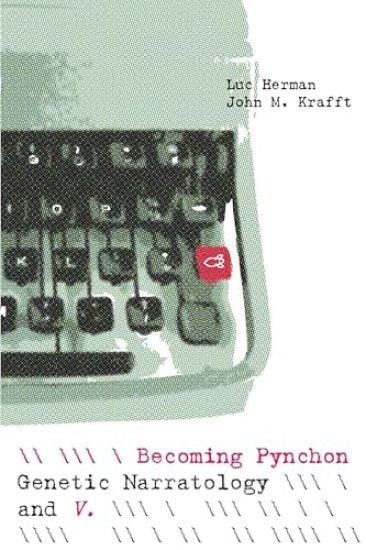
Becoming Pynchon: Genetic Narratology and V.

Becoming Pynchon: Genetic Narratology and V.

Luc Herman; John M. Krafft

OHIO STATE UNIVERSITY PRESS
2026
nidottu
The 1963 publication of Thomas Pynchon's V. changed the landscape of American fiction. Becoming Pynchon: Genetic Narratology and V. offers a detailed examination of the dramatic transformations that took place as Pynchon's foundational novel went from typescript to published work. Luc Herman and John M. Krafft develop and deploy a rich theory of genetic narratology to examine the performance of genre in the novel. Pushing back against the current dominance of cognitive narratology, they discuss focalization, character construction, and evocation of consciousness as clues to Pynchon's developing narratology of historical fiction. Their theoretical interventions offer an important and timely corrective to the field of narratology with a method that brings the author back into the analytical frame. Herman and Krafft use as their guide the typescript of V. that surfaced in 2001, when it was acquired by the Harry Ransom Humanities Research Center, as well as Pynchon's editorial correspondence with Corlies Smith, his first editor at J. B. Lippincott. Becoming Pynchon assembles a comprehensive and unequaled picture of Pynchon's writing process that will appeal both to Pynchonians and to postmodernism scholars more broadly.
Project Management for Engineering, Business and Technology

Project Management for Engineering, Business and Technology

John M. Nicholas; Herman Steyn

Routledge
2020
sidottu
Project Management for Engineering, Business and Technology is a highly regarded textbook that addresses project management across all industries. First covering the essential background, from origins and philosophy to methodology, the bulk of the book is dedicated to concepts and techniques for practical application. Coverage includes project initiation and proposals, scope and task definition, scheduling, budgeting, risk analysis, control, project selection and portfolio management, program management, project organization, and all-important "people" aspects—project leadership, team building, conflict resolution, and stress management.The systems development cycle is used as a framework to discuss project management in a variety of situations, making this the go-to book for managing virtually any kind of project, program, or task force. The authors focus on the ultimate purpose of project management—to unify and integrate the interests, resources and work efforts of many stakeholders, as well as the planning, scheduling, and budgeting needed to accomplish overall project goals.This sixth edition features: updates throughout to cover the latest developments in project management methodologies; a new chapter on project procurement management and contracts; an expansion of case study coverage throughout, including those on the topic of sustainability and climate change, as well as cases and examples from across the globe, including India, Africa, Asia, and Australia; and extensive instructor support materials, including an instructor’s manual, PowerPoint slides, answers to chapter review questions and a test bank of questions. Taking a technical yet accessible approach, this book is an ideal resource and reference for all advanced undergraduate and graduate students in project management courses, as well as for practicing project managers across all industry sectors.
Project Management for Engineering, Business and Technology

Project Management for Engineering, Business and Technology

John M. Nicholas; Herman Steyn

Routledge
2020
nidottu
Project Management for Engineering, Business and Technology is a highly regarded textbook that addresses project management across all industries. First covering the essential background, from origins and philosophy to methodology, the bulk of the book is dedicated to concepts and techniques for practical application. Coverage includes project initiation and proposals, scope and task definition, scheduling, budgeting, risk analysis, control, project selection and portfolio management, program management, project organization, and all-important "people" aspects—project leadership, team building, conflict resolution, and stress management.The systems development cycle is used as a framework to discuss project management in a variety of situations, making this the go-to book for managing virtually any kind of project, program, or task force. The authors focus on the ultimate purpose of project management—to unify and integrate the interests, resources and work efforts of many stakeholders, as well as the planning, scheduling, and budgeting needed to accomplish overall project goals.This sixth edition features: updates throughout to cover the latest developments in project management methodologies; a new chapter on project procurement management and contracts; an expansion of case study coverage throughout, including those on the topic of sustainability and climate change, as well as cases and examples from across the globe, including India, Africa, Asia, and Australia; and extensive instructor support materials, including an instructor’s manual, PowerPoint slides, answers to chapter review questions and a test bank of questions. Taking a technical yet accessible approach, this book is an ideal resource and reference for all advanced undergraduate and graduate students in project management courses, as well as for practicing project managers across all industry sectors.
Vegetation Dynamics & Global Change

Vegetation Dynamics & Global Change

Allen M. Solomon; Herman H. Shugart

Chapman and Hall
1993
sidottu
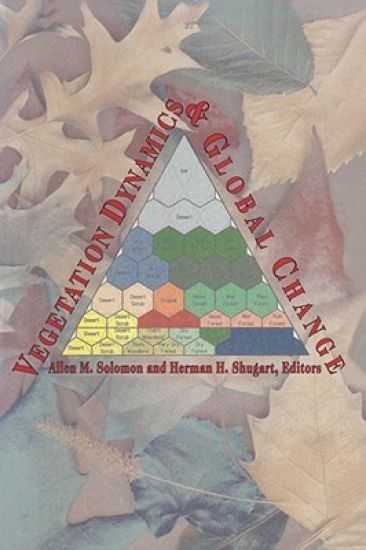
During the summer of 1987, a series of discussions I was held at the International Institute for Applied Systems Analysis (nASA) in Laxenburg, Austria, to plan a study of global vegetation change. The work was aimed at promoting the Interna­ tional Geosphere-Biosphere Programme (IGBP), sponsored by the International Council of Scientific Unions (lCSU), of which nASA is a member. Our study was designed to provide initial guidance in the choice of approaches, data sets and objectives for constructing global models of the terrestrial biosphere. We hoped to provide substantive and concrete assistance in formulating the working plans of IGBP by involving program planners in the development and application of models which were assembled from available data sets and modeling ap­ proaches. Recent acceptance of the "nASA model" as the starting point for endeavors of the Global Change and Terrestrial Ecosystems Core Project of the IGBP suggests we were successful in that aim. The objective was implemented by our initiation of a mathematical model of global vegetation, including agriculture, as defined by the forces which control and change vegetation. The model was to illustrate the geographical consequences to vegetation structure and functioning of changing climate and land use, based on plant responses to environmental variables. The completed model was also expected to be useful for examining international environmental policy responses to global change, as well as for studying the validity of IIASA's experimental approaches to environmental policy development.
Vegetation Dynamics And Global Change

Vegetation Dynamics And Global Change

Allen M. Solomon; Herman H. Shugart

Chapman and Hall
1993
nidottu
The response of forests to global climate change is one of the most hotly contested issues in the greenhouse effect debate. Much effort is being devoted to the construction of models which describe the function of the forests and their rate of change. There are a wealth of techniques available to project large-scale vegetation patterns, all based on different underlying models that contain fundamental biological and ecological mechanisms. Vegetation Dynamics and Global Change will introduce both students and professionals to the sophisticated mathematical and computational tools used to predict the rate of change in the world's forests. It emphasizes the importance of scale in global studies. Leaders in the field of vegetation modeling cover physiological phenomena typically measured at small time and space scales; the stand dynamics of forests; large-scale models of forest dynamics; the reconstruction of forest vegetation of past climates as a way to understand current global changes; and the role of forests in the global carbon cycle. Several themes run through the book, including the need to understand how processes important at one time and space scale can be conceptualized at larger scales; the need to optimize the conceptual benefits of representing processes in detail and the attendant difficulties of estimating parameters and designing tests for elaborate models; and the need to identify the most appropriate system variables.
Alaska

Alaska

Claus M. Naske; Herman E. Slotnick

University of Oklahoma Press
2014
nidottu
The largest by far of the fifty states, Alaska is also the state of greatest mystery and diversity. And, as Claus-M. Naske and Herman E. Slotnick show in this comprehensive survey, the history of Alaska's peoples and the development of its economy have matched the diversity of its land- and seascapes.Alaska: A History begins by examining the region's geography and the Native peoples who inhabited it for thousands of years before the first Europeans arrived. The Russians claimed northern North America by right of discovery in 1741. During their occupation of ""Russian America"" the region was little more than an outpost for fur hunters and traders. When the czar sold the territory to the United States in 1867, nobody knew what to do with ""Seward's Folly."" Mainland America paid little attention to the new acquisition until a rush of gold seekers flooded into the Yukon Territory. In 1906 Congress granted Alaska Territory a voteless delegate and in 1912 gave it a territorial legislature. Not until 1959, however, was Alaska's long-sought goal of statehood realized. During World War II, Alaska's place along the great circle route from the United States to Asia firmly established its military importance, which was underscored during the Cold War. The developing military garrison brought federal money and many new residents. Then the discovery of huge oil and natural-gas deposits gave a measure of economic security to the state. Alaska: A History provides a full chronological survey of the region's and state's history, including the precedent-setting Alaska Native Claims Settlement Act of 1971, which compensated Native Americans for their losses; the effect of the oil industry and the trans-Alaska pipeline on the economy; the Exxon Valdez oil spill; and Alaska politics through the early 2000s.
Project Management for Engineering, Business, and Technology

Project Management for Engineering, Business, and Technology

John M. Nicholas; Herman Steyn

TAYLOR FRANCIS LTD
2025
nidottu
Project Management for Engineering, Business, and Technology is a highly regarded textbook that addresses project management across all industries. First covering the essential background, from origins and philosophy to methodology, the bulk of the book is dedicated to concepts and techniques for practical application.The systems development cycle is used as a framework to discuss project management in a variety of situations, making this the go-to book for managing virtually any kind of project, program, or task force. It focuses on the ultimate purpose of project management—to unify and integrate the interests, resources, and work efforts of many stakeholders, as well as the planning, scheduling, and budgeting needed to accomplish overall project goals.The seventh edition features:• Updates to cover the latest developments in project management methodologies, including new material on applications of visual management, agile and hybrid methodologies, PM 2.0, and artificial intelligence to project management, and on the “dark side” of projects, projects in developing countries, and megaprojects.•Sixty-two end-of-chapter case studies that apply concepts and practices from the book to real-life project situations.• Updated support materials, including an instructor’s manual, PowerPoints, answers to chapter review questions, and a test bank of questions.Taking a technical yet accessible approach, this book is an ideal resource and reference for all advanced undergraduate and graduate students in project management courses, as well as for practicing project managers across all industry sectors.

Project Management for Engineering, Business, and Technology

Project Management for Engineering, Business, and Technology

John M. Nicholas; Herman Steyn

TAYLOR FRANCIS LTD
2025
sidottu
Project Management for Engineering, Business, and Technology is a highly regarded textbook that addresses project management across all industries. First covering the essential background, from origins and philosophy to methodology, the bulk of the book is dedicated to concepts and techniques for practical application.The systems development cycle is used as a framework to discuss project management in a variety of situations, making this the go-to book for managing virtually any kind of project, program, or task force. It focuses on the ultimate purpose of project management—to unify and integrate the interests, resources, and work efforts of many stakeholders, as well as the planning, scheduling, and budgeting needed to accomplish overall project goals.The seventh edition features:• Updates to cover the latest developments in project management methodologies, including new material on applications of visual management, agile and hybrid methodologies, PM 2.0, and artificial intelligence to project management, and on the “dark side” of projects, projects in developing countries, and megaprojects.•Sixty-two end-of-chapter case studies that apply concepts and practices from the book to real-life project situations.• Updated support materials, including an instructor’s manual, PowerPoints, answers to chapter review questions, and a test bank of questions.Taking a technical yet accessible approach, this book is an ideal resource and reference for all advanced undergraduate and graduate students in project management courses, as well as for practicing project managers across all industry sectors.

Revisiting Psychology

Revisiting Psychology

Jared M. Bartels; William E Herman

Red Globe Press
2018
nidottu
This textbook presents overviews of 12 landmark studies in psychology from diverse areas of research such as consciousness, developmental psychology, learning, memory, social psychology and psychopathology. Through a range of critical thinking exercises and reflective questions, students can evaluate the methodology and impact of these classic studies and quickly hone their analytical and critical thinking skills.Accessible, clearly-structured and written with undergraduate students in mind, this book will make essential reading for any psychology course.
Vegetation Dynamics & Global Change

Vegetation Dynamics & Global Change

Allen M. Solomon; Herman H. Shugart

Springer-Verlag New York Inc.
2012
nidottu
During the summer of 1987, a series of discussions I was held at the International Institute for Applied Systems Analysis (nASA) in Laxenburg, Austria, to plan a study of global vegetation change. The work was aimed at promoting the Interna­ tional Geosphere-Biosphere Programme (IGBP), sponsored by the International Council of Scientific Unions (lCSU), of which nASA is a member. Our study was designed to provide initial guidance in the choice of approaches, data sets and objectives for constructing global models of the terrestrial biosphere. We hoped to provide substantive and concrete assistance in formulating the working plans of IGBP by involving program planners in the development and application of models which were assembled from available data sets and modeling ap­ proaches. Recent acceptance of the "nASA model" as the starting point for endeavors of the Global Change and Terrestrial Ecosystems Core Project of the IGBP suggests we were successful in that aim. The objective was implemented by our initiation of a mathematical model of global vegetation, including agriculture, as defined by the forces which control and change vegetation. The model was to illustrate the geographical consequences to vegetation structure and functioning of changing climate and land use, based on plant responses to environmental variables. The completed model was also expected to be useful for examining international environmental policy responses to global change, as well as for studying the validity of IIASA's experimental approaches to environmental policy development.
Everyday Architecture of the Mid-Atlantic

Everyday Architecture of the Mid-Atlantic

Gabrielle M. Lanier; Bernard L. Herman

Johns Hopkins University Press
1997
pokkari
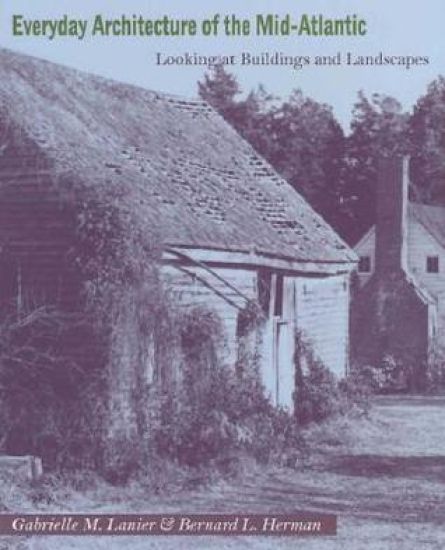
From the eighteenth-century single-room "mansions" of Delaware's Cypress Swamp district to the early twentieth-century suburban housing around Philadelphia and Wilmington, the architectural landscape of the mid-Atlantic region is both rich and varied. In this pioneering field guide to the region's historic vernacular architecture, Gabrielle Lanier and Bernard Herman describe the remarkably diverse building traditions that have overlapped and influenced one another for generations. With more than 300 illustrations and photographs, Everyday Architecture of the Mid-Atlantic explores the character of pre-1940 domestic and agricultural buildings in the towns and rural landscapes of southern New Jersey, Delaware, and coastal Maryland and Virginia. Approaching their subject "archaeologically," the authors examine the "layers" of a structure's past to show how it has changed over time and to reveal telling details about its occupants and the community in which they lived. The book provides architectural information as well as a working methodology for anyone wanting to explore and learn from traditional architecture and landscapes. The authors conclude that, as a vital cultural artifact, the distinctive architecture of the mid-Atlantic needs to be identified, recorded, and preserved. Everyday Architecture of the Mid-Atlantic gives proof to the insights architecture offers into who we are culturally as a community, a region, and a nation.