Kirjahaku
Etsi kirjoja tekijän nimen, kirjan nimen tai ISBN:n perusteella.
1000 tulosta hakusanalla Hope Larson

In the Dark Ages, in France, the first vampires came to be. Erin knows the accepted version of the story, but she's also heard that there's more to be told.While humanity struggles through ever-darkening nights, an ancient evil wreaks havoc upon the world. Erin feels responsible, yet unsure of its true aim. A disturbing drawing in a centuries-old book adds to her fear that the lost vampire past portends a grim future.Her search for answers puts her on the trail of an ancient immortal eager to stay hidden. Erin soon learns that her fear for the future isn't so far-fetched.


"If we could see the miracle of a single flower, clearly our entire life would change." -Buddha. This book is all about tulip, from its mania history to the cultivation method. Readers could also enjoy thousands of words of wisdom, poems, quotes, and the paper art of tulip arranged in colorful pictures. A book to share with your loved ones and family as an inspiration of love and hope. A knowledgeable gift for your children to learn about nature's wonder.

Our world is experiencing a daily decline of cultural, moral, and other important values. Persisting on the edge of nuclear and environmental disaster, for consolation and happiness the novel Hope returns trust to the individual and society, as his characters find themselves in the focus of depressive influences, but never forget their values. Love, perseverance and hope are levers for advancing the human being in the true direction, which primarily implies healing human dignity and achieving success that serve as an example.

Reeling from the loss of his wife Maura to a drunk driver, TC Phillips retreats to his mother's home on Block Island with his newborn son, who was saved by an emergency C-section. Whiskey and beer become his companions to dampen down the inner turmoil. When he attempts to return to his job as psychologist at Cranston State Prison, he is told to take more time off as Leon Alexander, the drunk driver, is now being held at the prison awaiting trial. He returns to Block Island, where he finds out that Alexander was murdered a few days after his visit to the prison and that he is now the prime suspect in orchestrating the execution. In attempting to clear his name, he seeks assistance from friends in the FBI only to be led back into conflicts he thought were long since resolved.Hope is a psychological suspense story of loss, grief, internal and external struggles, choices, and duty.

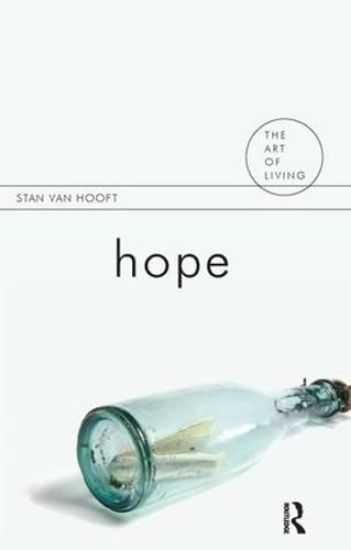
From the now iconic Barack Obama 'Hope' poster of the 2008 presidential campaign to the pit-head 'Camp Hope' of the families of the trapped Chilean miners, the language of hope can be hugely powerful as it draws on resources that are uniquely human and universal. We are beings who hope. But what does that say about us? What is hope and what role does it play in our lives? In his fascinating and thought-provoking investigation into the meaning of hope, Stan van Hooft shows that hope is a fundamental structure of the way we live our lives. For Aristotle being hopeful was part of a well-lived life, a virtue. For Aquinas it was a fundamentally theological virtue and for Kant a basic moral motivation. It shapes how we view ourselves and the world in which we live. Whether we hope for a life after death or for good weather tomorrow - whether our hopes are grand or humble - hoping is part of our outlook on life. What we hope for defines who we are. Drawing on everyday examples as well as more detailed discussion of hope in the arenas of medicine, politics and religion, van Hooft shows how hopefulness in not the same as hope and offers a convincing and powerful defense of the need for realism. There are few contemporary philosophical discussions of hope and Stan van Hooft's book offers an accessible and insightful discussion of the topic that shows the relevance of philosophical thinking and distinctions to this important aspect of human life.

Hope: A cancer doctor's life secrets is a must-have for all cancer patients and their support network. Dr David Schlect and Damian Mason draw on their extensive personal and professional experience in the field of cancer care and provide intuitive, kind, and professional guidance on the importance of hope in the cancer journey, as well as practical suggestions for daily living and suggestions for further reading and information.

Hope permeates our lives at every hour and minute of the day; we live with and in hope, even though we sometimes meet with disappointment when our hopes fall short of their realization. We hope for good health and happiness in the lives of our families, friends, and others. We hope for peace in the world, even though politicians thrust us into wars to boost their ratings and to save their careers at the expense of our lives while they stay home safe and protected. We hope for fewer natural disasters-tornadoes, droughts, fires, and floods. We are always trying to keep up hope in the face of the failures and tragedies of life and living. We hope for frivolous things, too. So hope is a ubiquitous concept that we employ all the time without ever stopping to reflect on its role in shaping our lives. In this book I discuss the nature of hope and the role of desire, belief, and optimism in shaping our hopes. I also discuss the phenomenology of hope, what it feels like to entertain hope. I then discuss the role of false hopes and self-deception in contributing to, and setting up the individual for hopelessness and despair, the antitheses of hope. I close with the observation that there is always hope for a better world and life beyond that of frustration, hopelessness, and despair. Sunrise, daylight, and hope will always follow the gloom and darkness of hopelessness and despair. So we should never give up hope or give in to despair in the face of whatever difficulties may be challenging us in life, because there is always hope for a way up and out of the dark pit of hopelessness and despair that lead to failure in life, but we have to work hard for the realization of that hope.

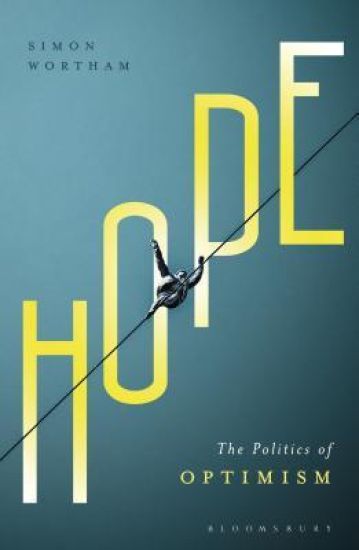
A colourful map of the current conflict between pessimism and optimism in Western politics and theory, Hope attempts to reveal both the deep history and contemporary necessity of political hopefulness. Starting in the 17th century with Spinoza, Wortham tells the story of the various fallacies and insights of pessimism and optimism through the 18th century with the help of Kant and Voltaire through to the famously nihilistic writings of Nietzsche and the 20th century works of thinkers such as Benjamin, Arendt, Kristeva and Fanon (to name but a few). He explores the contemporary significance of ideas such as affirmation, sovereignty, violence, therapy, existentialism and, of course, the oft maligned notion of 'hopefulness' to create a politics of optimism which avoids the pitfalls of uncritical acceptance of the status quo or the newest political idea. Short chapters written in an engaging narrative manner enable the reader to follow the story of political optimism over the last 4 centuries inspiring a new way of thinking about the transformative uses of hopefulness.

A colourful map of the current conflict between pessimism and optimism in Western politics and theory, Hope attempts to reveal both the deep history and contemporary necessity of political hopefulness. Starting in the 17th century with Spinoza, Wortham tells the story of the various fallacies and insights of pessimism and optimism through the 18th century with the help of Kant and Voltaire through to the famously nihilistic writings of Nietzsche and the 20th century works of thinkers such as Benjamin, Arendt, Kristeva and Fanon (to name but a few). He explores the contemporary significance of ideas such as affirmation, sovereignty, violence, therapy, existentialism and, of course, the oft maligned notion of 'hopefulness' to create a politics of optimism which avoids the pitfalls of uncritical acceptance of the status quo or the newest political idea. Short chapters written in an engaging narrative manner enable the reader to follow the story of political optimism over the last 4 centuries inspiring a new way of thinking about the transformative uses of hopefulness.


For many people, worry, anxiety, and fear are constant companions: fear of death, fear of danger, fear of disease. In today's unpredictable and contentious world, who can blame us?All too often, these fears are crippling, keeping us from the life God has called us to live. Is there any hope amidst all this darkness?There is. As Christians, we have been given all we need in order to face down even the most frightening, unexpected, and overwhelming obstacles in life. In Hope, Dr. David Jeremiah explores the top ten fears that are holding so many of us back from the life God has called us to live and shares secrets for facing down these fears with hope in God. With each page, you'll grow in your conviction that God is the answer you've been looking for: as you look to the future, you'll begin to see nothing except his power and love guarding your every step.Step into the truth and start living the fearless life God created you to enjoy.