Kirjojen hintavertailu. Mukana 12 595 353 kirjaa ja 12 kauppaa.

Kirjahaku

Etsi kirjoja tekijän nimen, kirjan nimen tai ISBN:n perusteella.

1000 tulosta hakusanalla Hubert C. Walter

The Spirit of British Administration and Some European Comparisons

The Spirit of British Administration and Some European Comparisons

C. H. (Charles Hubert) 1914- Sisson

Hassell Street Press
2021
nidottu
This work has been selected by scholars as being culturally important and is part of the knowledge base of civilization as we know it.This work is in the public domain in the United States of America, and possibly other nations. Within the United States, you may freely copy and distribute this work, as no entity (individual or corporate) has a copyright on the body of the work.Scholars believe, and we concur, that this work is important enough to be preserved, reproduced, and made generally available to the public. To ensure a quality reading experience, this work has been proofread and republished using a format that seamlessly blends the original graphical elements with text in an easy-to-read typeface.We appreciate your support of the preservation process, and thank you for being an important part of keeping this knowledge alive and relevant.

Diocesan Faculties According To The Code Of Canon Law

Diocesan Faculties According To The Code Of Canon Law

Hubert Louis Motry S. T. D. J. C. L.

Createspace Independent Publishing Platform
2012
nidottu
St. Alphonsus writes: "a single bad book will be sufficient to cause the destruction of a monastery." Pope Pius XII wrote in 1947 at the beatification of Blessed Maria Goretti: "There rises to Our lips the cry of the Saviour: 'Woe to the world because of scandals ' (Matthew 18:7). Woe to those who consciously and deliberately spread corruption-in novels, newspapers, magazines, theaters, films, in a world of immodesty " We at St. Pius X Press are calling for a crusade of good books. We want to restore 1,000 old Catholic books to the market. We ask for your assistance and prayers. This book is a photographic reprint of the original. The original has been inspected and some imperfections may remain. At Saint Pius X Press our goal is to remain faithful to the original in both photographic reproductions and in textual reproductions that are reprinted. Photographic reproductions are given a page by page inspection, whereas textual reproductions are proofread to correct any errors in reproduction.
Medical Support of the Army Air Forces in World War II

Medical Support of the Army Air Forces in World War II

Mae Mills Link; Hubert Anderson Coleman; Dan C. Ogle

Literary Licensing, LLC
2012
sidottu
""Medical Support of the Army Air Forces in World War II"" is a comprehensive historical account of the medical support provided to the United States Army Air Forces during World War II. The book is authored by Mae Mills Link, a renowned medical historian who has extensively researched and documented the various aspects of medical care provided to the soldiers during the war.The book covers the period from the early days of the Army Air Forces to the end of the war, and provides a detailed account of the medical challenges faced by the soldiers during this time. It covers the various medical facilities, equipment, and personnel that were involved in providing medical care to the soldiers, and also discusses the various medical innovations and advancements that were made during this period.The book also covers the various medical conditions and injuries that were common among the soldiers, including combat injuries, illnesses, and psychological trauma. It provides an in-depth analysis of the medical treatments and therapies that were used to treat these conditions, and also discusses the role of medical research and development in improving the quality of medical care provided to the soldiers.Overall, ""Medical Support of the Army Air Forces in World War II"" is an essential read for anyone interested in the history of military medicine, and provides a fascinating insight into the medical challenges faced by the soldiers during this time.This scarce antiquarian book is a facsimile reprint of the old original and may contain some imperfections such as library marks and notations. Because we believe this work is culturally important, we have made it available as part of our commitment for protecting, preserving, and promoting the world's literature in affordable, high quality, modern editions, that are true to their original work.
There Is Nothing Wrong With You

There Is Nothing Wrong With You

Huber C

Keep it Simple Books,U.S.
2001
nidottu
This book reveals the origin of self-hate, how self-hate works, how to identify it, and how to go beyond it. It provides examples of some of the forms self-hate takes, including taking blame but not credit, holding grudges, and trying to be perfect, and explores the many facets of self-hate, including its role in addiction, the battering cycle, and the illusion of control. After addressing these factors, it illustrates how a meditation practice can be developed and practiced in efforts to free oneself from self-hating beliefs.
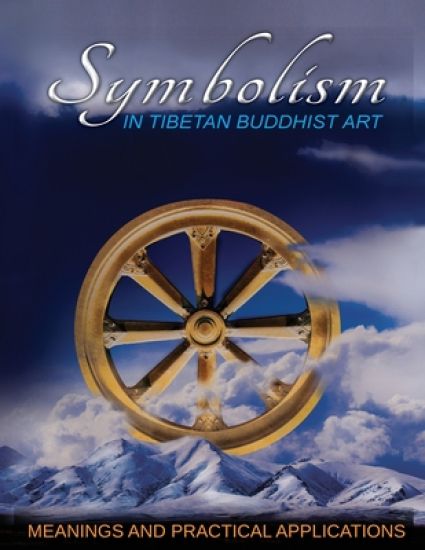
Symbolism in Tibetan Buddist Art

Symbolism in Tibetan Buddist Art

David C Huber; Dave Glantz

Baronet 4 Tibet
2019
sidottu
The book, by using the actual full color art work painted by the Tibetan monks spanning a period of 600 years adds context and aids in the conceptualization of Buddhist philosophy. The art work symbols and the adjoining symbols provides an artistic progression of the philosophy, demonstrating the flow of thought that line drawings of a single symbol cannot provide. The book provides in depth explanations of symbols, using the ancient scriptures and Buddha's own teachings. It examines the Sanskrit words behind many of the symbols and what those words actually mean. As an example it looks at the Four-petaled Flower, the Sanskrit word dukkha, representing the Four Noble Truths that leads to the Dharma Wheel and the Eightfold Noble Path and the Sanskrit word samma that is integral to understanding that path. Over the centuries these symbols have evolved in their depictions to include, through art, the natural progression of the philosophical concepts.Another of the strengths of the book is that the full color images are presented on the same page(s) as the conceptual explanations. This makes it much easier to understand and assimilate, no page turning required. There is also an index provided for the researcher to use in going deeper into the various components of the symbolism.The book, by using Tibetan monks, lamas, geshes, in addition to Tibetan scholars at universities through out Tibet as the source for the information we have stayed true to the intended meaning and context of the symbols. There are some misconceptions about some symbols as to what they are and what they mean presented by other books on the subject. By using learned Tibetans inside of Tibet and at the monasteries that produce the art work in Tibet we have stayed true to the identification, thought process and conceptualization of the symbols.
Symbolism in Tibetan Buddist Art

Symbolism in Tibetan Buddist Art

David C Huber; Dave Glantz

Baronet 4 Tibet
2019
pokkari
The book, by using the actual full color art work painted by the Tibetan monks spanning a period of 600 years adds context and aids in the conceptualization of Buddhist philosophy. The art work symbols and the adjoining symbols provides an artistic progression of the philosophy, demonstrating the flow of thought that line drawings of a single symbol cannot provide. The book provides in depth explanations of symbols, using the ancient scriptures and Buddha's own teachings. It examines the Sanskrit words behind many of the symbols and what those words actually mean. As an example it looks at the Four-petaled Flower, the Sanskrit word dukkha, representing the Four Noble Truths that leads to the Dharma Wheel and the Eightfold Noble Path and the Sanskrit word samma that is integral to understanding that path. Over the centuries these symbols have evolved in their depictions to include, through art, the natural progression of the philosophical concepts.Another of the strengths of the book is that the full color images are presented on the same page(s) as the conceptual explanations. This makes it much easier to understand and assimilate, no page turning required. There is also an index provided for the researcher to use in going deeper into the various components of the symbolism.The book, by using Tibetan monks, lamas, geshes, in addition to Tibetan scholars at universities through out Tibet as the source for the information we have stayed true to the intended meaning and context of the symbols. There are some misconceptions about some symbols as to what they are and what they mean presented by other books on the subject. By using learned Tibetans inside of Tibet and at the monasteries that produce the art work in Tibet we have stayed true to the identification, thought process and conceptualization of the symbols.