Kirjojen hintavertailu. Mukana 12 390 323 kirjaa ja 12 kauppaa.

Kirjahaku

Etsi kirjoja tekijän nimen, kirjan nimen tai ISBN:n perusteella.

1000 tulosta hakusanalla Inger Edelfeldt

Besvärja världen : en ekopoetisk studie i Inger Christensens Alfabet
Vad är meningen med att skriva poesi när män­skligheten ­är upptagen med att förinta sig själv och planeten vi bebor? Den frågan ställde sig den danska poeten Inger Christensen i början av 1980-talet, då hotet om kärnvapenkrig och kemisk förgiftning genomsyrade vardagen. Men frågan är lika aktuell i dag, i klimatkrisens era. Därför har Christensens svar på krisen – diktboken alfabet (1981) – blivit en viktig föregångare för den samtida ekopoesin i och utanför Skandinavien. Denna studie tar alfabet som utgångspunkt för en ut­forsk­ning av ekopoetiken, men visar också hur förbindelserna mellan samtidens ekopoesi och Christensens dikt går åt båda hållen. Att läsa alfabet i dag innebär att läsa dikten i ljuset av ekopoesin och vår tids miljökriser. I Besvärja världen går Sofia Roberg in i det landskap som är alfabet, och frågar sig vad Christensens poetiska undersökning av relationen mellan människan, naturen och fantasin kan lära oss om vår egen tid och kris. Det är en fråga som berör den poetiska praktiken såväl som det vardagliga mötet med världen och de varelser vi delar den med. Sofia Roberg är litteraturvetare verksam vid Stockholms universitet, frilansande litteraturkritiker och poet. Besvärja världen är hennes doktorsavhandling.

Nollpunkten : precisionens betydelse hos Witold Gombrowicz, Inger Christensen och Herta Müller
Varje författare vet att frågan om precision och exakthet är avgörande för skrivandet. Men frågan har också ett historiskt sammanhang. Den blir akut under moderniteten: de exakta vetenskapernas och de precisa kalkylernas epok, men också de genomkalkylerade massmordens och den noggrant planerade övervakningens. Genom att gå i närkamp med tre av det moderna Europas mest inflytelserika författare -- Witold Gombrowicz, Inger Christensen och Herta Müller -- visar Gabriel Itkes-Sznap att litteraturen och poesin utmärks av en egen precision, att den skiljer sig från vetenskapens, matematikens och teknologins precision, och pekar ut en helt annan väg och erfarenhet.Gabriel Itkes-Sznap, född 1985 och bosatt i Stockholm, gav 2015 ut diktsamlingen Tolvfingertal (Albert Bonniers Förlag), som nominerades till Borås Tidningsdebutantpris. Nollpunkten är hans doktorsavhandling i estetik.»Här kommer då Itkes-Sznap in och visar hur estetisk forskning kan vara oupphörligt intressant, läsvärd och drabbande - ett lika givande kvällsfördriv som den senaste romanen eller poesisamlingen, lika sprängfylld av känslor, lika uppfylld av frågor om skapande som liv, som död.« (Valerie Kyeyune Backström, Expressen.)
Nobody Knows the Trouble I’ve Seen

Nobody Knows the Trouble I’ve Seen

Inger Burnett-Zeigler

Amistad Press
2021
sidottu
Black women are beautiful, intelligent and capable —but mostly they embrace strong. Esteemed clinical psychologist, Dr. Inger Burnett-Zeigler, praises the strength of women, while exploring how trauma and adversity have led to deep emotional pain and shaped how they walk through the world. Black women’s strength is intimately tied to their unacknowledged suffering. An estimated eight in ten have endured some form of trauma—sexual abuse, domestic abuse, poverty, childhood abandonment, victim/witness to violence, and regular confrontation with racism and sexism. Nobody Knows the Trouble I’ve Seen shows that trauma often impacts mental and physical well-being. It can contribute to stress, anxiety, PTSD, and depression. Unaddressed it can lead to hypertension, diabetes, heart disease, overeating, and alcohol and drug abuse, and other chronic health issues.Dr. Burnett-Zeigler explains that the strong Black woman image does not take into account the urgency of Black women’s needs, which must be identified in order to lead abundant lives. It interferes with her relationships and ability to function day to day. Through mindfulness and compassionate self-care, the psychologist offers methods for establishing authentic strength from the inside out. This informative guide to healing, is life-changing, showing Black women how to prioritize the self and find everyday joys in self-worth, as well as discover the fullness and beauty within both her strength and vulnerability.
Nobody Knows the Trouble I’ve Seen

Nobody Knows the Trouble I’ve Seen

Inger Burnett-Zeigler

HARPERCOLLINS PUBLISHERS INC
2022
nidottu
Black women are beautiful, intelligent and capable —but mostly they embrace strong. Esteemed clinical psychologist, Dr. Inger Burnett-Zeigler, praises the strength of women, while exploring how trauma and adversity have led to deep emotional pain and shaped how they walk through the world. Black women’s strength is intimately tied to their unacknowledged suffering. An estimated eight in ten have endured some form of trauma—sexual abuse, domestic abuse, poverty, childhood abandonment, victim/witness to violence, and regular confrontation with racism and sexism. Nobody Knows the Trouble I’ve Seen shows that trauma often impacts mental and physical well-being. It can contribute to stress, anxiety, PTSD, and depression. Unaddressed it can lead to hypertension, diabetes, heart disease, overeating, and alcohol and drug abuse, and other chronic health issues.Dr. Burnett-Zeigler explains that the strong Black woman image does not take into account the urgency of Black women’s needs, which must be identified in order to lead abundant lives. It interferes with her relationships and ability to function day to day. Through mindfulness and compassionate self-care, the psychologist offers methods for establishing authentic strength from the inside out. This informative guide to healing, is life-changing, showing Black women how to prioritize the self and find everyday joys in self-worth, as well as discover the fullness and beauty within both her strength and vulnerability.
The Calling

The Calling

Inger Ash Wolfe

HARPER PAPERBACKS
2009
nidottu
There were thirteen crime-scene pictures. Dead faces set in grimaces and shouts. Faces howling, whistling, moaning, crying, hissing. Hazel pinned them to the wall and stood back. It was a silent opera of ghosts.Detective Inspector Hazel Micallef has lived all her days in the small town of Port Dundas and is now making her way toward retirement with something less than grace. Hobbled by a bad back and a dependence on painkillers, and feeling blindsided by divorce after nearly four decades of marriage, sixty-one-year-old Hazel has only the constructive criticism of her old goat of a mother and her own sharp tongue to buoy her. But when a terminally ill Port Dundas woman is gruesomely murdered in her own home, Hazel and her understaffed department must spring to life. And as one terminally ill victim after another is found -- their bodies drained of blood, their mouths sculpted into strange shapes -- Hazel finds herself tracking a truly terrifying serial killer across the country while everything she was barely holding together begins to spin out of control.Through the cacophony of her bickering staff, her unsupportive superiors, a clamoring press, the town's rumor mill, and her own nagging doubts, Hazel can sense the dead trying to call out. But what secret do they have to share? And will she hear it before it's too late?In The Calling, Inger Ash Wolfe brings a compelling new voice and an irresistible new heroine to the mystery world.
Natalja's Stories

Natalja's Stories

Inger Christensen

PENGUIN BOOKS LTD
2025
nidottu
From one of Denmark’s most revered authors, a startlingly original novel about a migrant’s fate, told across several generations This is the story of a young woman who is spirited away to St. Petersburg from Copenhagen by a lovestruck admirer. When she dies after the Revolution, her ashes are carried back to Denmark, igniting a chain reaction of further stories, told and retold by the women in her family against a shifting ground of meaning. We meet murderers and fable-like characters, such as the hilarious and unsettling Viktor Blanke, who manages to seduce not one but three generations of mothers and daughters. Natalja, we discover, cannot be held in one place. Rather than giving in to the tragedy that befalls her, she wills herself to become someone else, reinventing her family’s narrative one irresistible tale at a time. Tantalizing and full of wit, this remarkable, shape-shifting novel is available in English for the first time. Translated by Denise Newman
Advertising on Trial

Advertising on Trial

Inger L. Stole

University of Illinois Press
2006
sidottu
In the 1930s, the United States almost regulated advertising to a degree that seems unthinkable today. Activists viewed modern advertising as propaganda that undermined the ability of consumers to live in a healthy civic environment. Organized consumer movements fought the emerging ad business and its practices with fierce political opposition. Inger L. Stole examines how consumer activists sought to limit corporate influence by rallying popular support to moderate and change advertising. Stole weaves the story through the extensive use of primary sources, including archival research done with consumer and trade group records, as well as trade journals and engagement with the existing literature. Her account of the struggle also demonstrates how public relations developed in order to justify laissez-faire corporate advertising in light of a growing consumer rights movement, and how the failure to rein in advertising was significant not just for civic life in the 1930s but for our era as well.
Advertising at War

Advertising at War

Inger L Stole

University of Illinois Press
2012
sidottu
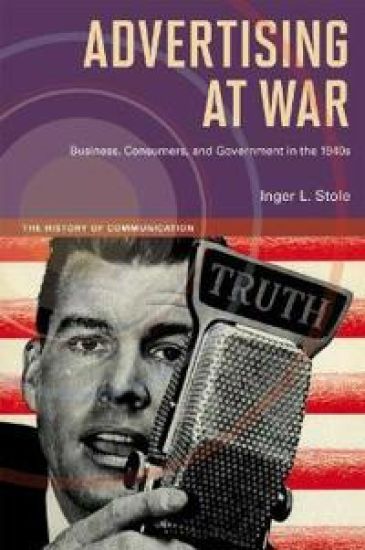
Advertising at War challenges the notion that advertising disappeared as a political issue in the United States in 1938 with the passage of the Wheeler-Lea Amendment to the Federal Trade Commission Act, the result of more than a decade of campaigning to regulate the advertising industry. Inger L. Stole suggests that the war experience, even more than the legislative battles of the 1930s, defined the role of advertising in U.S. postwar political economy and the nation's cultural firmament. She argues that Washington and Madison Avenue were soon working in tandem with the creation of the Advertising Council in 1942, a joint effort established by the Office of War Information, the Association of National Advertisers, and the American Association of Advertising Agencies. Using archival sources, newspapers accounts, and trade publications, Stole demonstrates that the war elevated and magnified the seeming contradictions of advertising and allowed critics of these practices one final opportunity to corral and regulate the institution of advertising. Exploring how New Dealers and consumer advocates such as the Consumers Union battled the advertising industry, Advertising at War traces the debate over two basic policy questions: whether advertising should continue to be a tax-deductible business expense during the war, and whether the government should require effective standards and labeling for consumer products, which would render most advertising irrelevant. Ultimately the postwar climate of political intolerance and reverence for free enterprise quashed critical investigations into the advertising industry. While advertising could be criticized or lampooned, the institution itself became inviolable.
Advertising on Trial

Advertising on Trial

Inger L. Stole

University of Illinois Press
2006
nidottu
In the 1930s, the United States almost regulated advertising to a degree that seems unthinkable today. Activists viewed modern advertising as propaganda that undermined the ability of consumers to live in a healthy civic environment. Organized consumer movements fought the emerging ad business and its practices with fierce political opposition. Inger L. Stole examines how consumer activists sought to limit corporate influence by rallying popular support to moderate and change advertising. Stole weaves the story through the extensive use of primary sources, including archival research done with consumer and trade group records, as well as trade journals and engagement with the existing literature. Her account of the struggle also demonstrates how public relations developed in order to justify laissez-faire corporate advertising in light of a growing consumer rights movement, and how the failure to rein in advertising was significant not just for civic life in the 1930s but for our era as well.
Advertising at War

Advertising at War

Inger L Stole

University of Illinois Press
2012
nidottu
Advertising at War challenges the notion that advertising disappeared as a political issue in the United States in 1938 with the passage of the Wheeler-Lea Amendment to the Federal Trade Commission Act, the result of more than a decade of campaigning to regulate the advertising industry. Inger L. Stole suggests that the war experience, even more than the legislative battles of the 1930s, defined the role of advertising in U.S. postwar political economy and the nation's cultural firmament. She argues that Washington and Madison Avenue were soon working in tandem with the creation of the Advertising Council in 1942, a joint effort established by the Office of War Information, the Association of National Advertisers, and the American Association of Advertising Agencies. Using archival sources, newspapers accounts, and trade publications, Stole demonstrates that the war elevated and magnified the seeming contradictions of advertising and allowed critics of these practices one final opportunity to corral and regulate the institution of advertising. Exploring how New Dealers and consumer advocates such as the Consumers Union battled the advertising industry, Advertising at War traces the debate over two basic policy questions: whether advertising should continue to be a tax-deductible business expense during the war, and whether the government should require effective standards and labeling for consumer products, which would render most advertising irrelevant. Ultimately the postwar climate of political intolerance and reverence for free enterprise quashed critical investigations into the advertising industry. While advertising could be criticized or lampooned, the institution itself became inviolable.