

Kirjahaku
Etsi kirjoja tekijän nimen, kirjan nimen tai ISBN:n perusteella.
1000 tulosta hakusanalla J M Tronson
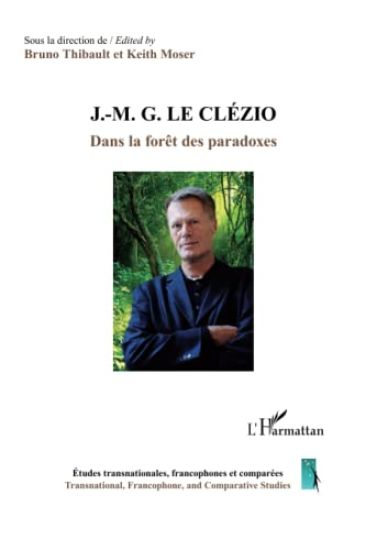
J.-M. G. Le Clézio
Keith Moser; Bruno Thibault
Études transnationales, francophones et comparées
2020
nidottu
J.-M. Nattier, Peintre de la Cour de Louis XV. Texte
Pierre De Nolhac
Hachette Livre - BNF
2018
pokkari
J.-M. Nattier, Peintre de la Cour de Louis XV. Planches
Pierre De Nolhac
Hachette Livre - BNF
2018
pokkari
J.M.G. Le Clézio ; Accéder en vrai à l'autre culturel
Jean-Marie Kouakou
Critiques Littéraires
2020
nidottu
J.-M.G. Le Clézio : Révolutions ou l'appel intérieur des origines
Abdelhaq Anoun
Approches littéraires
2020
nidottu

“Kai Wiegandt’s study offers a nuanced, thoroughgoing and deeply engaging account of novelist J.M. Coetzee’s revision of our core ideas of the human—not least the human sense of uniqueness that we have invested in our belief in reason and conviction of God-likeness. He persuasively analyses the careful ways through which Coetzee deploys narrative as a mode of thinking through such human and post-human questions, so developing a fresh and original approach Wiegandt calls ‘anthropological realism’. Drawing on thinkers from across the French, German and Anglophone traditions, Wiegandt has produced a fiercely insightful and committedly interdisciplinary study.” — Elleke Boehmer, Professor of World Literature in English, University of Oxford “J.M. Coetzee’s Revisions of the Human offers a bold and compelling argument that is sure to make a serious intervention in Coetzee criticism. Wiegandt introduces several new fields of enquiry in relation to Coetzee’s fiction; the discussions thus reframe well-worn debates in an innovative way, making for unexpected insights in seemingly familiar critical terrain. The book opens up a valuable and thought-provoking perspective on Coetzee’s work, and will be of particular interest to the philosophically-minded Coetzee specialist.” — Carrol Clarkson, Professor and Chair of Modern English Literature, University of Amsterdam "Tracking skilfully across the shifting terrain of J. M. Coetzee’s fictions, Kai Wiegandt draws out their philosophical and literary intertexts in this lucid, erudite and compelling book, and thereby illuminates a fundamental concern that has persisted throughout Coetzee’s career: to probe and push our ideas of what it is to be human." — Jarad Zimbler, author of J. M. Coetzee and the Politics of Style This study argues that the most consistent concern in Coetzee’s oeuvre is the question of what makes us human. Ideas of the human that stress language use, reason, self-consciousness, autonomy and God-likeness are revised in his novels via a ‘poetic of testing’ which pits intertextually referenced ideas against each other in polyphonic narratives. In addition to examining the philosophical provenance of questions of the human in the work of such thinkers as Plato, Hegel, Heidegger, Barthes and Foucault, the study charts Coetzee’s reconfiguration of elements drawn from major literary precursors like Cervantes, Heinrich von Kleist, Kafka and Beckett. Its leading argument is that Coetzee revises the Enlightenment idea of the human as a disengaged, autonomous thinker by demonstrating the limitations of reason; that he instead offers a view of humanity as engaged agency, a view most compatible with ideas developed in the discourse of post humanism, theories of materiality and social practice theory; and that his revisions depend on narrative form as much as they recommend a narrative approach to ideas in general.
“Kai Wiegandt’s study offers a nuanced, thoroughgoing and deeply engaging account of novelist J.M. Coetzee’s revision of our core ideas of the human—not least the human sense of uniqueness that we have invested in our belief in reason and conviction of God-likeness. He persuasively analyses the careful ways through which Coetzee deploys narrative as a mode of thinking through such human and post-human questions, so developing a fresh and original approach Wiegandt calls ‘anthropological realism’. Drawing on thinkers from across the French, German and Anglophone traditions, Wiegandt has produced a fiercely insightful and committedly interdisciplinary study.” — Elleke Boehmer, Professor of World Literature in English, University of Oxford “J.M. Coetzee’s Revisions of the Human offers a bold and compelling argument that is sure to make a serious intervention in Coetzee criticism. Wiegandt introduces several new fields of enquiry in relation to Coetzee’s fiction; the discussions thus reframe well-worn debates in an innovative way, making for unexpected insights in seemingly familiar critical terrain. The book opens up a valuable and thought-provoking perspective on Coetzee’s work, and will be of particular interest to the philosophically-minded Coetzee specialist.” — Carrol Clarkson, Professor and Chair of Modern English Literature, University of Amsterdam "Tracking skilfully across the shifting terrain of J. M. Coetzee’s fictions, Kai Wiegandt draws out their philosophical and literary intertexts in this lucid, erudite and compelling book, and thereby illuminates a fundamental concern that has persisted throughout Coetzee’s career: to probe and push our ideas of what it is to be human." — Jarad Zimbler, author of J. M. Coetzee and the Politics of Style This study argues that the most consistent concern in Coetzee’s oeuvre is the question of what makes us human. Ideas of the human that stress language use, reason, self-consciousness, autonomy and God-likeness are revised in his novels via a ‘poetic of testing’ which pits intertextually referenced ideas against each other in polyphonic narratives. In addition to examining the philosophical provenance of questions of the human in the work of such thinkers as Plato, Hegel, Heidegger, Barthes and Foucault, the study charts Coetzee’s reconfiguration of elements drawn from major literary precursors like Cervantes, Heinrich von Kleist, Kafka and Beckett. Its leading argument is that Coetzee revises the Enlightenment idea of the human as a disengaged, autonomous thinker by demonstrating the limitations of reason; that he instead offers a view of humanity as engaged agency, a view most compatible with ideas developed in the discourse of post humanism, theories of materiality and social practice theory; and that his revisions depend on narrative form as much as they recommend a narrative approach to ideas in general.

That the alleged Sturm und Drang writer J.M.R. Lenz was once a long-time student of Immanuel Kant is a fact that literary studies has largely ignored up to now. The present study is the first to extensively examine Kant's strong influence on Lenz's intellectual and artistic developments. The result of this study is not only a modified understanding of Lenz's literary works, but also of a literary movement in which Lenz was wrongfully extolled alongside Goethe as one of its protagonists.
J.M.R.-Lenz-Handbuch
De Gruyter
2017
sidottu
J.M. R. Lenz hat sich keineswegs als ein "vor bergehendes Meteor" erwiesen, wie Goethe urteilte, sondern gilt inzwischen als einer der wichtigsten Autoren des 18. Jahrhunderts. Sein ungl ckliches Schicksal ist, vor allem ber B chner vermittelt, ...
J.M.R.-Lenz-Handbuch
De Gruyter
2025
nidottu
J. M. R. Lenz hat sich keineswegs als ein "vor bergehendes Meteor" erwiesen, wie Goethe urteilte, sondern gilt inzwischen als einer der wichtigsten Autoren des 18. Jahrhunderts. Sein ungl ckliches Schicksal ist, vor allem ber B chner vermittelt, ein bis heute aktuelles Thema der produktiven Rezeption. Seine Werke entziehen sich aufgrund ihrer formalen und thematischen Vielschichtigkeit schnellen Deutungen. Das Lenz-Handbuch, an dem namhafte Vertreter der einschl gigen Forschung wie auch junge Autoren mitgearbeitet haben, vermittelt ein umfassendes und differenziertes Bild von Leben und Werk. Die Artikel erschlie en das Werk nach Gattungen sowie nach bergreifenden innovativen Gesichtspunkten. Die Rezeption von Autor und Werk in Wissenschaft, Literatur, Kunst, Musik und Film wird einbezogen. Dem 'Lenz-Kenner' vermittelt das Handbuch den aktuellen Stand der Wissenschaft, aber auch neue Einsichten und damit die Grundlage f r weitere eigene Forschungsarbeiten, dem Interessenten am Autor, an der Literaturgeschichte des 18. Jahrhunderts und ihrer Aneignung heute bietet das Handbuch eine F lle von Informationen und Anregungen, die zugleich der besonderen Rolle von Lenz im literarischen Feld seiner Zeit gerecht zu werden versuchen.

J.M. Nickell's botanical ready reference especially designed for druggists and physicians,
James Madison. Nickell
Hansebooks
2019
nidottu

J.M. Thorburn & Co.'s Abridged Descriptive Catalogue of Garden Seeds etc.
Outlook Verlag
2024
pokkari
Reprint of the original, first published in 1883.
J.M. Thorburn & Co.'s Annual Descriptive Catalogue of Flower Seeds
Outlook Verlag
2024
pokkari
Reprint of the original, first published in 1875.

J.M. Coetzee, Nobelpreistrager und wohl wichtigster Reprasentant der zeitgenoessischen sudafrikanischen Literatur, wurde von der internationalen Kritik aufgebaut. Dieses Buch fragt nach den Grunden und Interessen. Gleichzeitig werden die Vor-Haltungen und Vorgaben betrachtet, aus denen heraus Coetzee schreibt und von denen er sich nur muhsam freimachen kann. Die Sozialisation im von der Apartheid gepragten Sudafrika ist eine solche Hypothek, nicht anders als die Doppelexistenz als Literat und Literaturwissenschaftler, der die Kreativitat seines Alter ego mit postmodernen Dogmen umstellt. Die Lekture der Romane von Dusklands (1974) bis Elizabeth Costello (2003) zeigt eine von Ruckfallen nicht freie schrittweise Emanzipation, die in Disgrace (1999) auch das akademische Umfeld reliterarisiert.

J.M. Coetzee's Disgrace. A Realistic Criticism of 'New' South-Africa?
Niklas Manhart
Grin Publishing
2012
nidottu
J.M.R. Lenz "Der Hofmeister" im Vergleich zu Goethes Werken
Miriam Marie Hirschauer
Grin Publishing
2013
pokkari