

Kirjahaku
Etsi kirjoja tekijän nimen, kirjan nimen tai ISBN:n perusteella.
1000 tulosta hakusanalla J Watts

Currents: Poetry and Prose from the Hudson Valley Writers Workshop
Sharon Watts; J. P. Daley; Alfred Dioguardi
Createspace Independent Publishing Platform
2015
nidottu
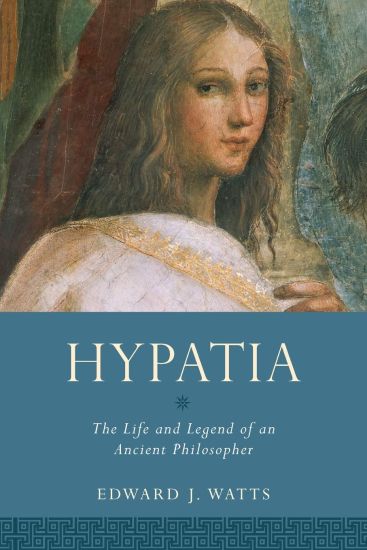
A philosopher, mathematician, and martyr, Hypatia is one of antiquity's best known female intellectuals. During the sixteen centuries following her murder, by a mob of Christians, Hypatia has been remembered in books, poems, plays, paintings, and films as a victim of religious intolerance whose death symbolized the end of the Classical world. But Hypatia was a person before she was a symbol. Her great skill in mathematics and philosophy redefined the intellectual life of her home city of Alexandria. Her talent as a teacher enabled her to assemble a circle of dedicated male students. Her devotion to public service made her a force for peace and good government in a city that struggled to maintain trust and cooperation between pagans and Christians. Despite these successes, Hypatia fought countless small battles to live the public and intellectual life that she wanted. This book rediscovers the life Hypatia led, the unique challenges she faced as a woman who succeeded spectacularly in a man's world, and the tragic story of the events that led to her tragic murder.
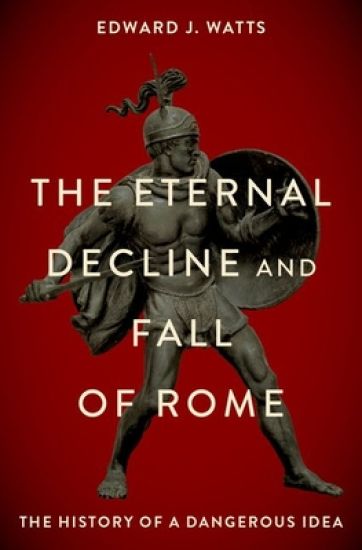
As this book intriguingly explores, for those who would make Rome great again and their victims, ideas of Roman decline and renewal have had a long and violent history. The decline of Rome has been a constant source of discussion for more than 2200 years. Everyone from American journalists in the twenty-first century AD to Roman politicians at the turn of the third century BC have used it as a tool to illustrate the negative consequences of changes in their world. Because Roman history is so long, it provides a buffet of ready-made stories of decline that can help develop the context around any snapshot. And Rome did, in fact, decline and, eventually, fall. An empire that once controlled all or part of more than 40 modern European, Asian, and African countries no longer exists. Roman prophets of decline were, ultimately, proven correct-a fact that makes their modern invocations all the more powerful. If it happened then, it could happen now. The Eternal Decline and Fall of Rome tells the stories of the people who built their political and literary careers around promises of Roman renewal as well as those of the victims they blamed for causing Rome's decline. Each chapter offers the historical context necessary to understand a moment or a series of moments in which Romans, aspiring Romans, and non--Romans used ideas of Roman decline and restoration to seize power and remake the world around them. The story begins during the Roman Republic just after 200 BC. It proceeds through the empire of Augustus and his successors, traces the Roman loss of much of western Europe in the fifth century AD, and then follows Roman history as it runs through the Eastern Roman Empire (Byzantium) until its fall in 1453. The final two chapters look at ideas of Roman decline and renewal from the fifteenth century until today. If Rome illustrates the profound danger of the rhetoric of decline, it also demonstrates the rehabilitative potential of a rhetoric that focuses on collaborative restoration, a lesson of great relevance to our world today.
A philosopher, mathematician, and martyr, Hypatia is one of antiquity's best-known female intellectuals. For the sixteen centuries following her murder by a mob of Christians Hypatia has been remembered in books, poems, plays, paintings, and films as a victim of religious intolerance whose death symbolized the end of the Classical world. But Hypatia was a person before she was a symbol. Her great skill in mathematics and philosophy redefined the intellectual life of her home city of Alexandria. Her talent as a teacher enabled her to assemble a circle of dedicated male students. Her devotion to public service made her a force for peace and good government in a city that struggled to maintain trust and cooperation between pagans and Christians. Despite these successes, Hypatia fought countless small battles to live the public and intellectual life that she wanted. This book rediscovers the life Hypatia led, the unique challenges she faced as a woman who succeeded spectacularly in a man's world, and the tragic story of the events that led to her murder.

Language Myths and the History of English aims to deconstruct the myths that are traditionally reproduced as factual accounts of the historical development of English. Using concepts and interpretive sensibilities developed in the field of sociolinguistics over the past 40 years, Richard J. Watts unearths these myths and exposes their ideological roots. His goal is not to construct an alternative discourse, but to offer alternative readings of the historical data. Watts raises the question of what we mean by a linguistic ideology, and whether any discourse--a hegemonic discourse, an alternative discourse, or even a deconstructive discourse--can ever be free of it. The book argues that a naturalized discourse is always built on a foundation of myths, which are all too easily taken as true accounts.

Language Myths and the History of English aims to deconstruct the myths that are traditionally reproduced as factual accounts of the historical development of English. Using concepts and interpretive sensibilities developed in the field of sociolinguistics over the past 40 years, Richard J. Watts unearths these myths and exposes their ideological roots. His goal is not to construct an alternative discourse, but to offer alternative readings of the historical data. Watts raises the question of what we mean by a linguistic ideology, and whether any discourse--a hegemonic discourse, an alternative discourse, or even a deconstructive discourse--can ever be free of it. The book argues that a naturalized discourse is always built on a foundation of myths, which are all too easily taken as true accounts.
By understanding how and when common sense fails, we can improve our understanding of the present and better plan for the future. Drawing on the latest scientific research, along with a wealth of historical and contemporary examples, Watts shows how common sense reasoning and history conspire to mislead us into believing that we understand more about the world of human behavior than we do; and in turn, why attempts to predict, manage, or manipulate social and economic systems so often go awry. It seems obvious, for example, that people respond to incentives; yet policy makers and managers alike frequently fail to anticipate how people will respond to the incentives they create. Social trends often seem to be driven by certain influential people; yet marketers have been unable to identify these "influencers" in advance. And although successful products or companies always seem in retrospect to have succeeded because of their unique qualities, predicting the qualities of the next hit product or hot company is notoriously difficult even for experienced professionals. Watts' argument has important implications in politics, business, and marketing, as well as in science and everyday life.


Combining a historical survey of the field with real-world examples, this book sets out to explain the research being done to create a blueprint of our connected planet, and shows how a multidiciplinary science of networks has come into being.
City and School in Late Antique Athens and Alexandria
Edward J. Watts
University of California Press
2008
pokkari
A lively and wide-ranging study of the men and ideas of late antique education, this book explores the intellectual and doctrinal milieux in the two great cities Athens and Alexandria from the second to the sixth century to shed new light on the interaction between the pagan cultural legacy and Christianity. Watts crafts two narratives that reveal how differently education was shaped by the local power structures and urban contexts of each city. He touches on the careers of Herodes Atticus, Proclus, Damascius, Ammonius Saccus, Origen, Hypatia and Olympiodorus, and on events including the Herulian sack of Athens and the rise of Arian Christianity to show that by the sixth century, Athens and Alexandria had two distinct, locally determined approaches to pagan teaching with their roots in the unique historical relationships between city and school.
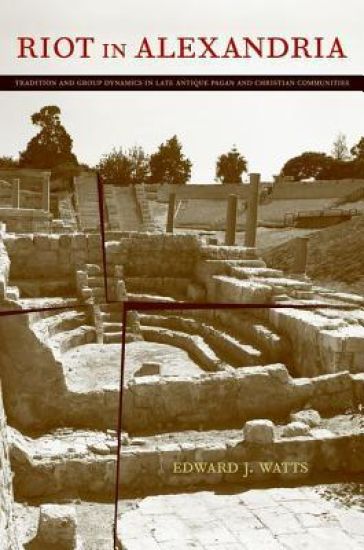
This innovative study uses one well-documented moment of violence as a starting point for a wide-ranging examination of the ideas and interactions of pagan philosophers, Christian ascetics, and bishops from the fourth to the early seventh century. Edward J. Watts reconstructs a riot that erupted in Alexandria in 486 when a group of students attacked a Christian adolescent who had publicly insulted the students' teachers. Pagan students, Christians affiliated with a local monastery, and the Alexandrian ecclesiastical leaders all cast the incident in a different light, and each group tried with that interpretation to influence subsequent events. Watts, drawing on Greek, Latin, Coptic, and Syriac sources, shows how historical traditions and notions of a shared past shaped the interactions and behavior of these high-profile communities. Connecting oral and written texts to the personal relationships that gave them meaning and to the actions that gave them form, "Riot in Alexandria" draws new attention to the understudied social and cultural history of the later fifth-century Roman world and at the same time opens a new window on late antique intellectual life.
The Final Pagan Generation recounts the fascinating story of the lives and fortunes of the last Romans born before the Emperor Constantine converted to Christianity. Edward J. Watts traces their experiences of living through the fourth century's dramatic religious and political changes, when heated confrontations saw the Christian establishment legislate against pagan practices as mobs attacked pagan holy sites and temples. The emperors who issued these laws, the imperial officials charged with implementing them, and the Christian perpetrators of religious violence were almost exclusively young men whose attitudes and actions contrasted markedly with those of the earlier generation, who shared neither their juniors' interest in creating sharply defined religious identities nor their propensity for violent conflict. Watts examines why the "final pagan generation" born to the old ways and the old world in which it seemed to everyone that religious practices would continue as they had for the past two thousand years proved both unable to anticipate the changes that imperially sponsored Christianity produced and unwilling to resist them. A compelling and provocative read, suitable for the general reader as well as students and scholars of the ancient world.
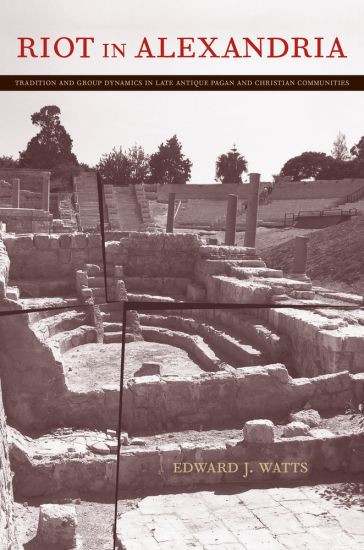
This innovative study uses one well-documented moment of violence as a starting point for a wide-ranging examination of the ideas and interactions of pagan philosophers, Christian ascetics, and bishops from the fourth to the early seventh century. Edward J. Watts reconstructs a riot that erupted in Alexandria in 486 when a group of students attacked a Christian adolescent who had publicly insulted the students' teachers. Pagan students, Christians affiliated with a local monastery, and the Alexandrian ecclesiastical leaders all cast the incident in a different light, and each group tried with that interpretation to influence subsequent events. Watts, drawing on Greek, Latin, Coptic, and Syriac sources, shows how historical traditions and notions of a shared past shaped the interactions and behavior of these high-profile communities. Connecting oral and written texts to the personal relationships that gave them meaning and to the actions that gave them form, Riot in Alexandria draws new attention to the understudied social and cultural history of the later fifth-century Roman world and at the same time opens a new window on late antique intellectual life.
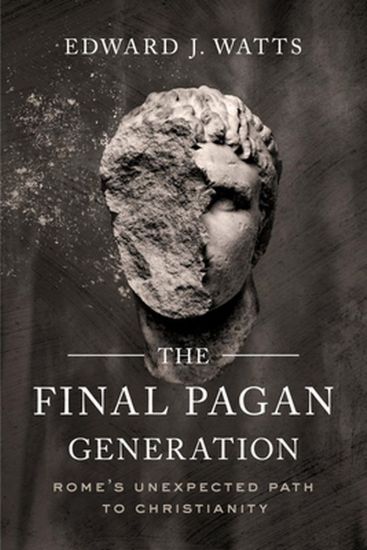
A compelling history of radical transformation in the fourth-century--when Christianity decimated the practices of traditional pagan religion in the Roman Empire.The Final Pagan Generation recounts the fascinating story of the lives and fortunes of the last Romans born before the Emperor Constantine converted to Christianity. Edward J. Watts traces their experiences of living through the fourth century’s dramatic religious and political changes, when heated confrontations saw the Christian establishment legislate against pagan practices as mobs attacked pagan holy sites and temples. The emperors who issued these laws, the imperial officials charged with implementing them, and the Christian perpetrators of religious violence were almost exclusively young men whose attitudes and actions contrasted markedly with those of the earlier generation, who shared neither their juniors’ interest in creating sharply defined religious identities nor their propensity for violent conflict. Watts examines why the "final pagan generation"—born to the old ways and the old world in which it seemed to everyone that religious practices would continue as they had for the past two thousand years—proved both unable to anticipate the changes that imperially sponsored Christianity produced and unwilling to resist them. A compelling and provocative read, suitable for the general reader as well as students and scholars of the ancient world.
During the fifteen years prior to the first publication of this book, existing models of linguistic politeness generated a huge amount of empirical research. Using a wide range of data from real-life speech situations, this introduction to politeness breaks away from the limitations of those models and argues that the proper object of study in politeness theory must be commonsense notions of what politeness and impoliteness are. From this, Watts argues, a more appropriate model, one based on Bourdieu's concept of social practice, is developed. The book aims to show that the terms 'polite' and 'impolite' can only be properly examined as they are contested discursively. In doing so, 'polite' and 'impolite' utterances inevitably involve their users in a struggle for power. A radically new account of linguistic politeness, the book will appeal to students and researchers in a wide range of disciplines, in linguistics and the social sciences.
During the last fifteen years, existing models of linguistic politeness have generated a huge amount of empirical research. Using a wide range of data from real-life speech situations, this new introduction to politeness breaks away from the limitations of current models and argues that the proper object of study in politeness theory must be commonsense notions of what politeness and impoliteness are. From this, Watts argues, a more appropriate model, one based on Bourdieu’s concept of social practice, is developed. The book aims to show that the terms ‘polite’ and ‘impolite’ can only be properly examined as they are contested discursively. In doing so, ‘polite’ and ‘impolite’ utterances inevitably involve their users in a struggle for power. A radically new account of linguistic politeness, the book will appeal to students and researchers in a wide range of disciplines, in linguistics and the social sciences.
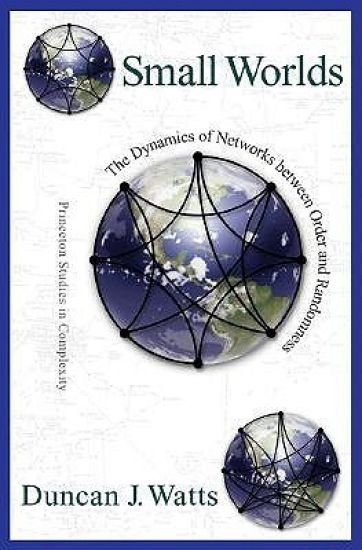
Everyone knows the small-world phenomenon: soon after meeting a stranger, we are surprised to discover that we have a mutual friend, or we are connected through a short chain of acquaintances. In his book, Duncan Watts uses this intriguing phenomenon--colloquially called "six degrees of separation"--as a prelude to a more general exploration: under what conditions can a small world arise in any kind of network? The networks of this story are everywhere: the brain is a network of neurons; organisations are people networks; the global economy is a network of national economies, which are networks of markets, which are in turn networks of interacting producers and consumers. Food webs, ecosystems, and the Internet can all be represented as networks, as can strategies for solving a problem, topics in a conversation, and even words in a language. Many of these networks, the author claims, will turn out to be small worlds. How do such networks matter? Simply put, local actions can have global consequences, and the relationship between local and global dynamics depends critically on the network's structure. Watts illustrates the subtleties of this relationship using a variety of simple models---the spread of infectious disease through a structured population; the evolution of cooperation in game theory; the computational capacity of cellular automata; and the sychronisation of coupled phase-oscillators. Watts's novel approach is relevant to many problems that deal with network connectivity and complex systems' behaviour in general: How do diseases (or rumours) spread through social networks? How does cooperation evolve in large groups? How do cascading failures propagate through large power grids, or financial systems? What is the most efficient architecture for an organisation, or for a communications network? This fascinating exploration will be fruitful in a remarkable variety of fields, including physics and mathematics, as well as sociology, economics, and biology.

This title includes charms of enchantment to entice and keep a lover. You can enhance your relationships by making beautiful and inspiring love charms to give to lovers and friends. It includes practical projects for spells, enchantments and potions to bewitch the one you love. You can use rituals to explore your affections and emotions, and discover how to interpret your dreams to help find lasting love and happiness. You can learn about the love tokens, the wheel of love, and the seasons of dreams, hope, passion and fulfilment. For centuries, people have been making love tokens and performing rituals to enhance their relationships and friendships. This book explains the origins and traditions of spellweaving and the symbols used when trying to attract or captivate a loved one. It gives practical advice on how to bring love into your life, and how to work with the cycle of love and its four seasons of dreams, hope, passion and fulfilment. It also clearly demonstrates, step-by-step, how to prepare, design and create love charms for different situations in life, such as a traditional Dream Catcher for enhancing dreams, the Wishing Stone for holding hopes, and the Talking Stick to aid listening and communication. With over 120 photographs, this is an inspirational and practical guide for everyone who wants to bring a little more love and magic into their lives.