Kirjojen hintavertailu. Mukana 11 244 527 kirjaa ja 12 kauppaa.

Kirjahaku

Etsi kirjoja tekijän nimen, kirjan nimen tai ISBN:n perusteella.

1000 tulosta hakusanalla JAMES JOYCE

James Joyce

James Joyce

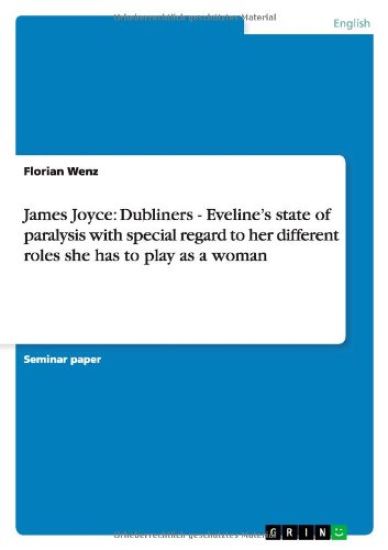
Florian Wenz

Grin Publishing
2012
nidottu
Seminar paper from the year 2005 in the subject English Language and Literature Studies - Literature, grade: 1,7, University of Bamberg (Lehrstuhl f r Anglistik), language: English, abstract: In the following text I would like to give an approach to the paralysis of the main character in James Joyce's short story Eveline. In doing so, I will take a look at the origin and the consequences of her paralysis and the different roles she has to play as a woman. In addition I'm going to examine the relationships that she has to the people in her closer environment i. e. her father and her "lover" Frank.
James Joyce

James Joyce

Bjørn Tysdahl

Cappelen
2007
sidottu
I den første nordiske biografien om James Joyce, tegner Bjørn Tysdahl et nyansert portrett av en de viktigste forfatterne i moderne litteratur. Med utgangspunkt i en adresse i Dublin og et familieportrett skildres Joyces oppvekst i et spenningsfylt Irland. Det fortelles levende om hans flukt til det europeiske kontinent, hvor han tilbringer resten av sitt liv i landflyktighet. Sammen med sin kone, Nora Barnacle, og deres to barn har han en omflakkende tilværelse i Italia, Sveits og Frankrike. Den store forfatterens hverdag er preget av pengeproblemer og flytting, av arbeid som språklærer og turbulent familieliv, av vennskap, kjærlighet og erotikk. I biografien følger vi hvordan Joyces litterære verk blir til. Hans ungdomsverk, som Portrett av kunstneren som ung mann, tar form ved å forvandle egne opplevelser til litteratur. Under arbeidet med Ulysses utvikler han en ny litterær stil som kan fange inn det mangfoldige livet i Dublin - byen han forlot. Forfatterskapet munner ut i en av litteraturhistoriens merkeligste eksperimenter, Finnegans Wake, hvor Joyce blander all verdens språk og dialekter.Bjørn Tysdahl er professor i engelsk og vår fremste kjenner av den irske forfatteren. I James Joyce Liv og diktning kombinerer han omfattende faglig kunnskap med stor formidlingsevne.
James Joyce

James Joyce

Edna O'Brien

Peoples Press
2023
nidottu
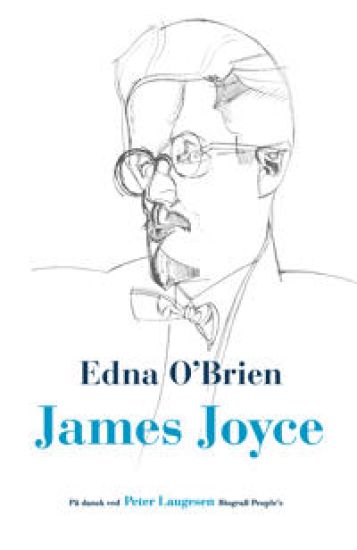
James Joyces roman Ulysses gælder som et af de absolutte hovedværker i verdenslitteraturen. I år er det 100 år siden romanen udkom. I den anledning udsendes denne fine lille biografi over Joyce i digteren Peter Laugesens oversættelse.James Joyce - der sandsynligvis er den mest indflydelsesrige forfatter idet tyvende århundrede – bliver ved med at inspirere forfattere, læsere og tænkere i dag. Edna O'Brien, selv en af Irlands store forfattere, skriver om mesteren, som kun en landsmand kan. Fra Joyces teenageår over hans rejser til udlandet til udgivelsen af Ulysses - det skandaløse mesterværk, der oprindeligt blev forbudt i USA, men senere hyldet som en af de mest geniale romaner gennem tiderne - følger O'Brien buen i Joyces bemærkelsesværdige liv. Hendes biografi er en hyldest, på én gang kærlig og hård, til en af vores mest betydningsfulde litterære forfædre.
Greatest Works of James Joyce

Greatest Works of James Joyce

James Joyce

Prakash Books
2022
sidottu
The Greatest Works of James Joyce features a collection of the renowned Irish author's most celebrated works. This beautifully designed book includes Joyce's classic novels and short stories, showcasing his mastery of language and his unique style. Experience the depth of his innovative storytelling and profound exploration of human consciousness and modernist literature. Includes Joyce's innovative storytelling and unique narrative techniques Essential addition to any literature lover's collection A perfect gift for fans of Irish literature and modernist writing Stunning cover design A must-have for fans lovers of classic literature
James Joyce Ki Lokpriya Kahaniyan

James Joyce Ki Lokpriya Kahaniyan

James Joyce

Prabhat Prakashan
2022
nidottu
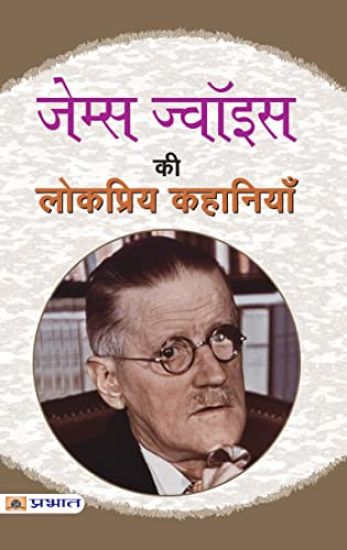
शाम का समय था। वह खिड़की के परदों से अपना सिर सटाकर बैठी बाहर की ओर देख रही थी। लोग चले जा रहे थे। आखिरी छोरवाले मकान में रहनेवाला आदमी भी अपने घर की ओर जा रहा था, जिसके कदमों की आवाज उसे साफ सुनाई दे रही थी। यहाँ कभी एक मैदान हुआ करता था, जिसमें रोज शाम को वे दूसरे बच्चों के साथ खेला करते थे। बाद में बेलफास्ट के एक आदमी ने उसे खरीद लिया और उसपर पक्के मकान बनवा दिए। वही घर, जिसकी एक-एक चीज उसने खुद सलीके से सजाकर रखी थी और अभी एक सप्ताह पहले ही सब चीजें झाड़-पोंछकर रखी थीं। कमरे में खड़ी-खड़ी वह एक-एक चीज को निहार रही थी, जिसे शायद अब वह दुबारा कभी नहीं देख पाएगी। पुराने टूटे पड़े हारमोनियम के ऊपर दीवार पर एक तसवीर थी, लेकिन उसका नाम अब तक वह नहीं जान पाई थी। इतना जानती थी कि वे उसके पिता के स्कूल के दोस्त थे। -इसी पुस्तक से प्रसिद्ध कथाकार जेम्स ज्वॉइस अपनी किस्सागाई के लिए ख्यात हैं। उनकी कहानियों में मानव मन एवं भावनाओं का गहराई से विश्लेषण देखने को मिलता है। उनकी लोकप्रिय कहानियों का पठनीय संकलन।
Selected Short Stories of James Joyce

Selected Short Stories of James Joyce

James Joyce

General Press
2019
sidottu
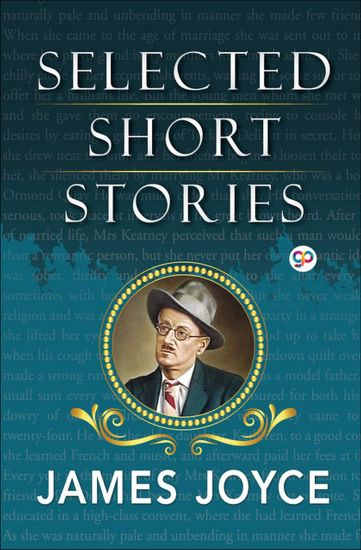
James Joyce was an Irish novelist and poet, considered to be one of the most influential writers in the modernist avant-garde of the early 20th century. Joyce is best known for Ulysses, a landmark work in which the episodes of Homer's Odyssey are paralleled in an array of contrasting literary styles, perhaps most prominent among these the stream of consciousness technique he perfected. Other major works are the short-story collection Dubliners (1914), and the novel A Portrait of the Artist as a Young Man and Chamber Music, all of which are included.
James Joyce

James Joyce

Gibson Andrew

Reaktion Books
2006
nidottu
In this new work, Andrew Gibson sets out to reverse the traditional view of Joyce and his work as the paradigm of international modernism in literature. Where criticism has usually consigned Ireland to secondary status in Joyce's work, Gibson firmly relocates the writer and his work in Ireland, showing them at all points to be intricately bound up in Irish history, politics and culture. Crucially, he views Joyce's departure for Europe as allegiance to an Irish emigratory tradition that is centuries old, rather than the abandonment of the old country. Accounts of Joyce's life and work have tended to give rather short shrift to his profound engagements with Irish history and politics. Gibson argues that there have been important reasons for this, themselves often historical and political. Tracing the development of Joyce as a critic and writer, he maps this development to specific political and historical events. Beginning with the political traditions and allegiances that formed part of Joyce's family background, he pinpoints the fall of Parnell, the collapse of political hope, and the transfer of political energies to cultural activity as crucial in the writer's early formation. Joyce's immense renown has been due above all to his reputation as an experimental, modernist writer. His works' open-endedness and seemingly infinite availability to differing interpretations has allowed criticism to constantly update his politics. The book argues that Joyce's most important concerns were historically material and specific. Yet, it also recognises that Joyce himself encouraged and fostered the view of his work as modernist, which became the dominant tradition in Joyce studies.
James Joyce

James Joyce

James Joyce

Liwi Literatur- Und Wissenschaftsverlag
2025
pokkari
James Joyce's "Ulysses" (first published in 1922) is a landmark modernist novel that follows the events of a single day in Dublin through the intertwined perspectives of three central characters: Stephen Dedalus, Leopold Bloom, and Molly Bloom. Joyce weaves ordinary routines with inventive language, interior monologue, and sharp observational wit to illuminate the complexities of perception, memory, and human connection. Drawing on classical structures while radically experimenting with narrative form, "Ulysses" reshaped the possibilities of the novel and remains one of the most influential works of twentieth-century literature. It is regularly included in major rankings of the world's greatest books, among them the BBC's "100 Novels That Shaped Our World." This edition is the English-language paperback version of Joyce's classic novel. James Joyce. Ulysses. This edition follows the text of the 1922 first edition without corrections or alterations: Shakespeare and Company, Paris, 2 February 1922. For improved readability, we have added descriptive part and episode headings. These have been inserted in square brackets, as they do not appear in the original publication. Vollst ndige Neuausgabe (Complete new edition), 1. Auflage (1st edition), G ttingen 2025. LIWI Literatur- und Wissenschaftsverlag.
James Joyce

James Joyce

James Joyce

Liwi Literatur- Und Wissenschaftsverlag
2025
sidottu
James Joyce's "Ulysses" (first published in 1922) is a landmark modernist novel that follows the events of a single day in Dublin through the intertwined perspectives of three central characters: Stephen Dedalus, Leopold Bloom, and Molly Bloom. Joyce weaves ordinary routines with inventive language, interior monologue, and sharp observational wit to illuminate the complexities of perception, memory, and human connection. Drawing on classical structures while radically experimenting with narrative form, "Ulysses" reshaped the possibilities of the novel and remains one of the most influential works of twentieth-century literature. It is regularly included in major rankings of the world's greatest books, among them the BBC's "100 Novels That Shaped Our World." This edition is the English-language hardcover version of Joyce's classic novel. James Joyce. Ulysses. This edition follows the text of the 1922 first edition without corrections or alterations: Shakespeare and Company, Paris, 2 February 1922. For improved readability, we have added descriptive part and episode headings. These have been inserted in square brackets, as they do not appear in the original publication. Vollst ndige Neuausgabe (Complete new edition), 1. Auflage (1st edition), G ttingen 2025. LIWI Literatur- und Wissenschaftsverlag.
James Joyce and the Language of History

James Joyce and the Language of History

Robert Spoo

Oxford University Press Inc
1995
sidottu
"History is a nightmare from which I am trying to awake." Stephen Dedalus's famous complaint articulates a characteristic modern attitude toward the perceived burden of the past. As Robert Spoo shows in this study, Joyce's creative achievement, from the time of his sojourn in Rome in 1906-07 to the completion of Ulysses in 1922, cannot be understood apart from the ferment of historical thought that dominated the nineteenth and early twentieth centuries. Tracing James Joyce's historiographic art to its formative contexts, Spoo reveals a modernist author passionately engaged with the problem of history, forging a new language that both dramatizes and redefines that problem.
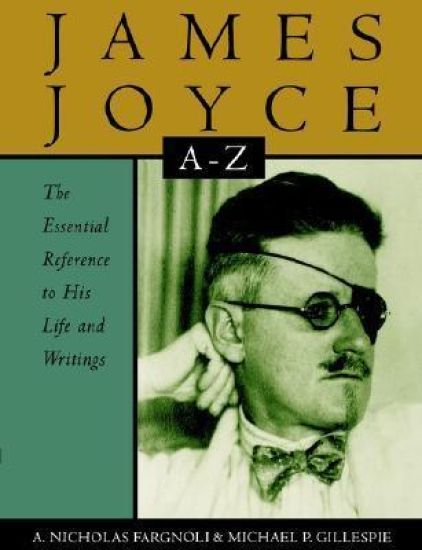
James Joyce A to Z

James Joyce A to Z

Nicholas Fargnoli; Michael Gillespie

Oxford University Press
1996
nidottu
(series copy) These encyclopedic companions are browsable, invaluable individual guides to authors and their works. Useful for students, but written with the general reader in mind, they are clear, concise, accessible, and supply the basic cultural, historical, biographical and critical information so crucial to an appreciation and enjoyment of the primary works. Each is arranged in an A-Z fashion and presents and explains the terms, people, places, and concepts encountered in the literary worlds of James Joyce, Mark Twain, and Virginia Woolf. As a keen explorer of the mundane material of everyday life, James Joyce ranks high in the canon of modernist writers. He is arguably the most influential writer of the twentieth-century, and may be the most read, studied, and taught of all modern writers. The James Joyce A-Z is the ideal companion to Joyce's life and work. Over 800 concise entries relating to all aspects of Joyce are gathered here in one easy-to-use volume of impressive scope.
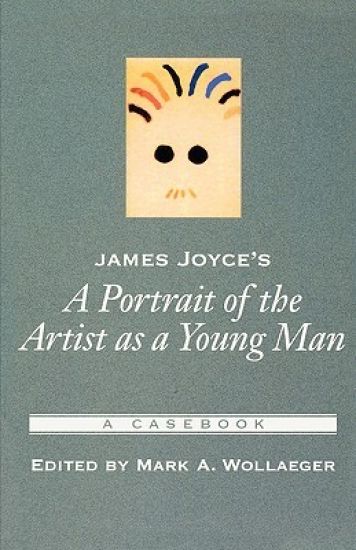
James Joyce's A Portrait of the Artist as a Young Man
James Joyce's A Portrait of the Artist as a Young Man: A Casebook offers a comprehensive introduction to a landmark in modern fiction. The essays collected here will help first-time readers, teachers, and advanced scholars gain new insight into Joyce's semi-autobiographical story of an Irish boy's slow and difficult discovery of his artistic vocation. The epitome of the modernist Bildungsroman, or novel of education, Joyce's novel was controversial from the moment of its publication in 1916, and Mark Wollaeger's introduction provides an overview of the composition and early reception of A Portrait of the Artist as a Young Man as well as a survey of some of the recurrent issues debated by literary critics. The selection of the essays is designed to address major critical issues, provide detailed readings of important passages, and trace the evolution of critical responses to the novel. Essays by Hugh Kenner and Patrick Parrinder offer both indispensable overviews of the entire novel-its themes, structure, and idiom-and close attention to specific interpretive cruxes. In addition to classic responses to Portrait, such as Wayne Booth's critique of authorial "distance," Fritz Senn's unpacking of the epigraph, and Michael Levenson's reading of the diary, the collection includes a newly revised and expanded version of Maud Ellmann's groundbreaking 1982 poststructuralist essay, "Polytropic Man," and essays by Hélène Cixous, Joseph Valente, Vicki Mahaffey, Emer Nolan, Marian Eide, Marjorie Howes, and Mark Wollaeger. Some essays are oriented toward literary history, genre, biography or formalism; others draw on recent developments in queer theory and postcolonial studies; others on the turn towards history exemplified in Irish studies. All are very readable and pay close attention to intricacies of Joyce's text. Together the essays bring into focus the wide range of questions that have kept A Portrait of the Artist as a Young Man fresh for the new millennium.
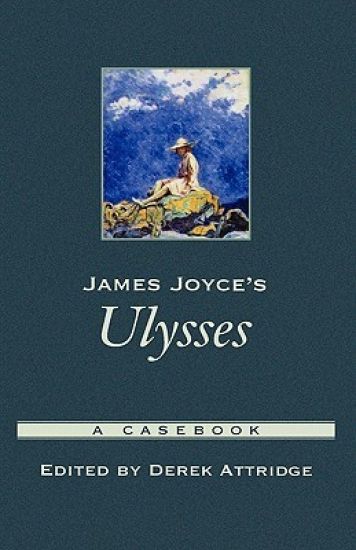
James Joyce's Ulysses

James Joyce's Ulysses

Oxford University Press Inc
2004
sidottu
James Joyce's Ulysses is probably the most famous-or notorious-novel published in the twentieth century. Its length and difficulty mean that readers often turn to critical studies to help them in getting the most out of it. But the vast quantity of secondary literature on the book poses problems for readers, who often don't know where to begin. This casebook includes some of the most influential critics to have written on Joyce, such as Hugh Kenner and Fritz Senn, as well as newer voices who have made a considerable impact in recent years. A wide range of critical schools is represented, from textual analysis to historical and psychoanalytic approaches, from feminism to post-colonialism. One essay considers the relation between art and life, nature and culture, in Ulysses, while another explores the implications of the impassioned debates about the proper editing of Joyce's great work. In an iconoclastic discussion of the book, Leo Bersani finds reasons for giving up reading Joyce. All the contributions are characterized by scrupulous attention to Joyce's words and a sense of the powerful challenge his work offers to our ways of thinking about ourselves, our world, and our language. Also included are records of some of the conversations Joyce had with his friend Frank Budgen during the composition of Ulysses in Zurich, and in an appendix readers will find a version of the schema which Joyce drew up as a guide to his book. Derek Attridge provides an introduction that offers advice on reading Ulysses for the first time, an account of the remarkable story of its composition, and an outline of the history of the critical reception that has played such an important part in our understanding and enjoyment of this extraordinary work.
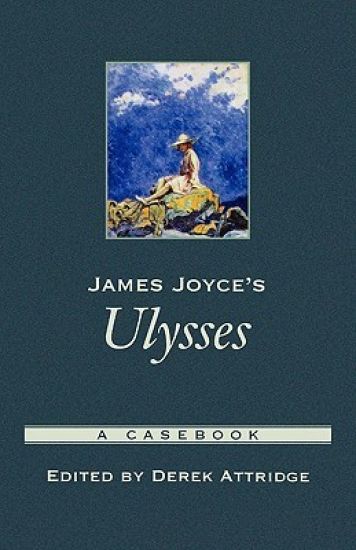
James Joyce's Ulysses

James Joyce's Ulysses

Oxford University Press Inc
2004
nidottu
James Joyce's Ulysses is probably the most famous-or notorious-novel published in the twentieth century. Its length and difficulty mean that readers often turn to critical studies to help them in getting the most out of it. But the vast quantity of secondary literature on the book poses problems for readers, who often don't know where to begin. This casebook includes some of the most influential critics to have written on Joyce, such as Hugh Kenner and Fritz Senn, as well as newer voices who have made a considerable impact in recent years. A wide range of critical schools is represented, from textual analysis to historical and psychoanalytic approaches, from feminism to post-colonialism. One essay considers the relation between art and life, nature and culture, in Ulysses, while another explores the implications of the impassioned debates about the proper editing of Joyce's great work. In an iconoclastic discussion of the book, Leo Bersani finds reasons for giving up reading Joyce. All the contributions are characterized by scrupulous attention to Joyce's words and a sense of the powerful challenge his work offers to our ways of thinking about ourselves, our world, and our language. Also included are records of some of the conversations Joyce had with his friend Frank Budgen during the composition of Ulysses in Zurich, and in an appendix readers will find a version of the schema which Joyce drew up as a guide to his book. Derek Attridge provides an introduction that offers advice on reading Ulysses for the first time, an account of the remarkable story of its composition, and an outline of the history of the critical reception that has played such an important part in our understanding and enjoyment of this extraordinary work.
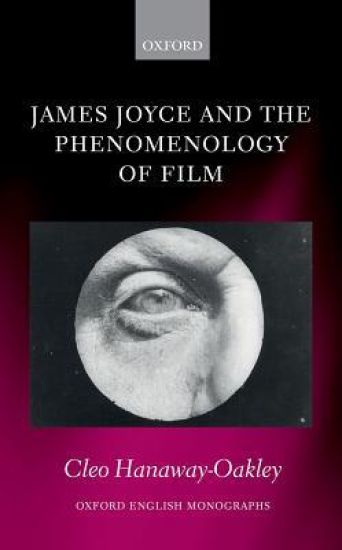
James Joyce and the Phenomenology of Film

James Joyce and the Phenomenology of Film

Cleo Hanaway-Oakley

Oxford University Press
2017
sidottu
James Joyce and the Phenomenology of Film reappraises the lines of influence said to exist between Joyce's writing and early cinema and provides an alternative to previous psychoanalytic readings of Joyce and film. Through a compelling combination of historical research and critical analysis, Cleo Hanaway-Oakley demonstrates that Joyce, early film-makers, and phenomenologists (Maurice Merleau-Ponty, in particular) share a common enterprise: all are concerned with showing, rather than explaining, the 'inherence of the self in the world'. Instead of portraying an objective, neutral world, bereft of human input, Joyce, the film-makers, and the phenomenologists present embodied, conscious engagement with the environment and others: they are interested in the world-as-it-is-lived and transcend the seemingly-rigid binaries of seer/seen, subject/object, absorptive/theatrical, and personal/impersonal. This book re-evaluates the history of body- and spectator-focused film theories, placing Merleau-Ponty at the centre of the discussion, and considers the ways in which Joyce may have encountered such theories. In a wealth of close analyses, Joyce's fiction is read alongside the work of early film-makers such as Charlie Chaplin, Georges Méliès, and Mitchell and Kenyon, and in relation to the philosophical dimensions of early-cinematic devices such as the Mutoscope, the stereoscope, and the panorama. By putting Joyce's literary work--Ulysses above all--into dialogue with both early cinema and phenomenology, this book elucidates and enlivens literature, film, and philosophy.
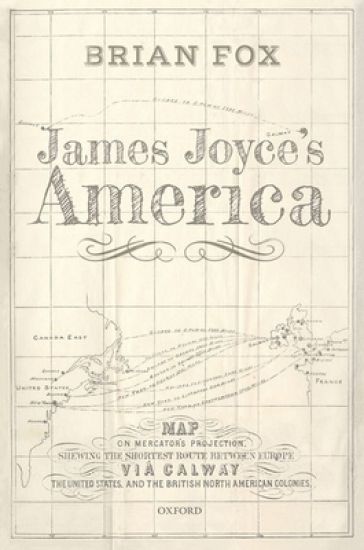
James Joyce's America

James Joyce's America

Brian Fox

Oxford University Press
2019
sidottu
James Joyce's America is the first study to address the nature of Joyce's relation to the United States. It challenges the prevalent views of Joyce as merely indifferent or hostile towards America, and argues that his works show an increasing level of engagement with American history, culture, and politics that culminates in the abundance of allusions to the US in Finnegans Wake, the very title of which comes from an Irish-American song and signals the importance of America to that work. The volume focuses on Joyce's concept of America within the framework of an Irish history that his works obsessively return to. It concentrates on Joyce's thematic preoccupation with Ireland and its history and America's relation to Irish post-Famine history. Within that context, it explores first Joyce's relation to Irish America and how post-Famine Irish history, as Joyce saw it, transformed the country from a nation of invasions and settlements to one spreading out across the globe, ultimately connecting Joyce's response to this historical phenomenon to the diffusive styles of Finnegans Wake. It then discusses American popular and literary cultures in terms of how they appear in relation to, or as a function of, the British-Irish colonial context in the post-Famine era, and concludes with a consideration of how Joyce represented his American reception in the Wake.
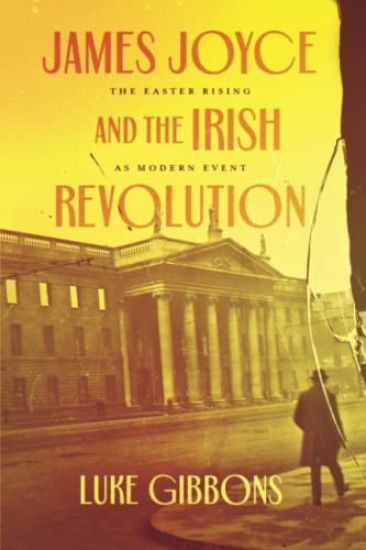
James Joyce and the Irish Revolution

James Joyce and the Irish Revolution

Luke Gibbons

THE UNIVERSITY OF CHICAGO PRESS
2023
sidottu
A provocative history of Ulysses and the Easter Rising as harbingers of decolonization. When revolutionaries seized Dublin during the 1916 Easter Rising, they looked back to unrequited pasts to point the way toward radical futures—transforming the Celtic Twilight into the electric light of modern Dublin in James Joyce’s Ulysses. For Luke Gibbons, the short-lived rebellion converted the Irish renaissance into the beginning of a global decolonial movement. James Joyce and the Irish Revolution maps connections between modernists and radicals, tracing not only Joyce’s projection of Ireland onto the world stage, but also how revolutionary leaders like Ernie O’Malley turned to Ulysses to make sense of their shattered worlds. Coinciding with the centenary of both Ulysses and Irish independence, this book challenges received narratives about the rebellion and the novel that left Ireland changed, changed utterly.
James Joyce and the Irish Revolution

James Joyce and the Irish Revolution

Luke Gibbons

THE UNIVERSITY OF CHICAGO PRESS
2023
nidottu
A provocative history of Ulysses and the Easter Rising as harbingers of decolonization. When revolutionaries seized Dublin during the 1916 Easter Rising, they looked back to unrequited pasts to point the way toward radical futures—transforming the Celtic Twilight into the electric light of modern Dublin in James Joyce’s Ulysses. For Luke Gibbons, the short-lived rebellion converted the Irish renaissance into the beginning of a global decolonial movement. James Joyce and the Irish Revolution maps connections between modernists and radicals, tracing not only Joyce’s projection of Ireland onto the world stage, but also how revolutionary leaders like Ernie O’Malley turned to Ulysses to make sense of their shattered worlds. Coinciding with the centenary of both Ulysses and Irish independence, this book challenges received narratives about the rebellion and the novel that left Ireland changed, changed utterly.