Kirjojen hintavertailu. Mukana 11 244 527 kirjaa ja 12 kauppaa.

Kirjahaku

Etsi kirjoja tekijän nimen, kirjan nimen tai ISBN:n perusteella.

1000 tulosta hakusanalla James C. Rodkey

Away Down South

Away Down South

James C. Cobb

Oxford University Press Inc
2005
sidottu
From the seventeenth century Cavaliers and Uncle Tom's Cabin to Civil Rights museums and today's conflicts over the Confederate flag, here is a brilliant portrait of southern identity, served in an engaging blend of history, literature, and popular culture. In this insightful book, written with dry wit and sharp insight, James C. Cobb explains how the South first came to be seen--and then came to see itself--as a region apart from the rest of America. As Cobb demonstrates, the legend of the aristocratic Cavalier origins of southern planter society was nurtured by both northern and southern writers, only to be challenged by abolitionist critics, black and white. After the Civil War, defeated and embittered southern whites incorporated the Cavalier myth into the cult of the "Lost Cause," which supplied the emotional energy for their determined crusade to rejoin the Union on their own terms. After World War I, white writers like Ellen Glasgow, William Faulkner and other key figures of "Southern Renaissance" as well as their African American counterparts in the "Harlem Renaissance"--Cobb is the first to show the strong links between the two movements--challenged the New South creed by asking how the grandiose vision of the South's past could be reconciled with the dismal reality of its present. The Southern self-image underwent another sea change in the wake of the Civil Rights movement, when the end of white supremacy shook the old definition of the "Southern way of life"--but at the same time, African Americans began to examine their southern roots more openly and embrace their regional, as well as racial, identity. As the millennium turned, the South confronted a new identity crisis brought on by global homogenization: if Southern culture is everywhere, has the New South become the No South? Here then is a major work by one of America's finest Southern historians, a magisterial synthesis that combines rich scholarship with provocative new insights into what the South means to southerners and to America as well.
Mercy, Mercy Me

Mercy, Mercy Me

James C. Hall

Oxford University Press Inc
2001
sidottu
Using an interdisciplinary approach, this book argues that American artistry in the Sixties can be understood as one of the most vital and compelling interrogations of modernity. James C. Hall finds that the legacy of slavery and the resistance to it have by necessity made African Americans among the most incisive critics and celebrants of the Enlightenment inheritance. Focusing on the work of six individuals--Robert Hayden, William Demby, Paule Marshall, John Coltrane, Romare Bearden, and W.E.B. DuBois--Mercy, Mercy Me seeks to recover an American tradition of evaluating the "dialectic of the Enlightenment."
Developmental Neuropsychiatry: Volume 2: Assessment, Diagnosis, and Treatment of Developmental Disorders
This comprehensive textbook is made up of two volumes, the first of which provides fundamental background information needed for understanding the neurodevelopmental disorders, while the second provides a comprehensive review of their assessment, diagnosis, and treatment. Divided into nine parts, these books provide a synthesis of recent developments on basic neurobiology, cognitive neuroscience, child development, and developmental psychopathology. The purpose of the book is to assist the professional working with developmental disorders to facilitate the mental growth and social adaptation of affected children and adolescents.
The Germanization of Early Medieval Christianity

The Germanization of Early Medieval Christianity

James C. Russell

Oxford University Press Inc
1996
nidottu
While historians of Christianity have generally acknowledged some degree of Germanic influence in the development of early medieval Christianity, Russell goes further, arguing for a fundamental Germanic reinterpretation of Christianity. This first full-scale treatment of the subject follows a truly interdisciplinary approach, applying to the early medieval period a sociohistorical method similar to that which has already proven fruitful in explicating the history of Early Christianity and Late Antiquity. The encounter of the Germanic peoples with Christianity is studied from within the larger context of the encounter of a predominantly "world-accepting" Indo-European folk-religiosity with predominantly "world-rejecting" religious movements. While the first part of the book develops a general model of religious transformation for such encounters, the second part applies this model to the Germano-Christian scenario. Russell shows how a Christian missionary policy of temporary accommodation inadvertently contributed to a reciprocal Germanization of Christianity.
Developmental Neuropsychiatry: Volume 1: Fundamentals

Developmental Neuropsychiatry: Volume 1: Fundamentals

James C. Harris

Oxford University Press Inc
2000
nidottu
Although developmental concepts have held a prominent place in American psychiatry for over fifty years because of the dominance of psychodynamic theory, it is only in recent years that advances in neuroscience have begun to impact developmental psychiatry. James Harris's two volume work on developmental neuropsychiatry sets the agenda for this emerging clinical specialty. Written by an individual with the developmental expertise of a pediatrician, the behavioral sophistication of an adult and child psychiatrist, and a deep appreciation of neuroscience, these two books offer an integrated yet comprehensive approach to developmental neuropsychiatry. In Volume I, Part I discusses basic neural science, including aspects of molecular neurobiology, developmental neuroanatomy, neurotransmitter systems and neuronal signaling mechanisms, sleep and circadian rhythms, and basic genetics. Part II provides background on cognitive neuroscience that relate to attention, emotion, language, memory, neural networks, and consciousness. Part III emphasizes the developmental perspective which is crucial to an understanding of neurodevelopmental disorders. It offers an ethological framework as well as background information on cognitive development, emotion expression and regulation, language development, temperament and personality, and the emergence of the self.
Developmental Neuropsychiatry: Volume 2: Assessment, Diagnosis, and Treatment of Developmental Disorders
James Harris's two volume work on developmental neuropsychiatry sets the agenda for this emerging clinical specialty. Written by an individual with the developmental expertise of a pediatrician, the behavioral sophistication of an adult and child psychiatrist, and a deep appreciation of neuroscience, these two books offer an integrated yet comprehensive approach to developmental neuropsychiatry. Grounded in neuroscience but enriched by clinical realities, Volume II provides a comprehensive review of the developmental neuropsychiatric disorders. Throughout the text current DSM-IV diagnostic criteria are provided. Part I outlines the diagnostic process and the genetic history, provides details on the conduct of neuropsychological testing, and offers a detailed review of brain imaging techniques, moving from CT and MRI scanning to the most recent developments in functional MRI and PET scanning. Part II discusses mental retardation, cerebral palsy, the learning disorders, the pervasive developmental disorders, and traumatic brain injury. Part III describes behavioral phenotypes in cytogenetic and other genetic disorders, genetic metabolic disorders, and disorders that result from gestational substance abuse. Part IV is devoted to developmental psychopathology and includes Attention Deficit/Hyperactivity disorder, schizophrenia, Tourette's disorder, sleep disorders, and the syndromes of aggression and self-injury primarily occurring in mentally retarded persons. Part V covers treatment and includes detailed descriptions of psychotherapy, behavior therapy, pharmacological interventions, genetic counseling, and gene therapy. Finally, Part VI deals with legal and ethical issues as they pertain to developmentally disabled persons.
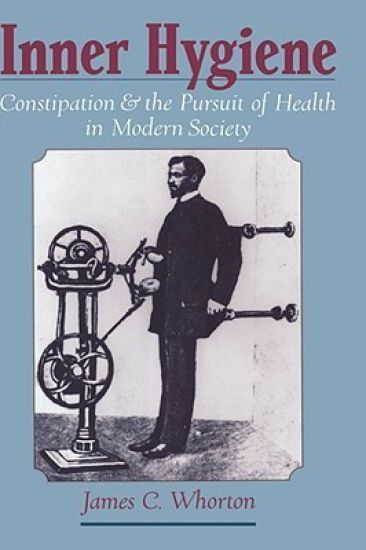
Inner Hygiene

Inner Hygiene

James C. Whorton

Oxford University Press Inc
2000
sidottu
Inner Hygiene explores the serious health threat of constipation, and discusses the extraordinary variety of preventive and curative measures that have been developed to save people from the toxic effects of intestinal irregularity. The book examines the evolution over the last two centuries of the belief that constipation is a disease brought on by an unnatural lifestyle of urban, industrial society. Particular attention is given to the many constipation therapies that people have used, including laxatives, enemas, mineral waters, bran cereals, yogurts, electrotherapy, calisthenics, rectal dilation devices, and many other remedies. The story is carried up to the present and demonstrates that many of constipation therapies of the nineteenth and twentieth centuries are continuing into the twenty-first.
The South and America since World War II

The South and America since World War II

James C. Cobb

Oxford University Press Inc
2011
sidottu
In this superb volume, James C. Cobb provides the first truly comprehensive history of the South since World War II, brilliantly capturing an era of dramatic change, both in the South and in its relationship with the rest of the nation. Here is a panoramic narrative that flows seamlessly from the Dixiecrats to the "southern strategy," to the South's domination of today's GOP, and from the national ascendance of southern culture and music, to a globalized Dixie's allure for foreign factories and a flood of immigrants, to the roles of women and an increasingly visible gay population in contemporary southern life. The heart of the book illuminates the struggle for Civil Rights. Jim Crow still towered over the South in 1945, but Cobb shows that Pearl Harbor unloosed forces that would bring its ultimate demise. Growing black political clout outside the South and the contradiction of fighting racist totalitarianism abroad while tolerating it at home set the stage for returning black veterans to spearhead the NAACP's postwar assault on the South's racial system. This assault sparked not only vocal white resistance but mounting violence that culminated in the murder of young Emmett Till in 1955. Energized rather than intimidated, however, blacks in Montgomery staged the famous bus boycott, bringing the Rev. Martin Luther King to the fore and paving the way for the dramatic protests and confrontations that finally brought profound racial changes as well as two-party politics to the South. As he did in the prize-winning The Most Southern Place on Earth and Away Down South, Cobb writes with wit and grace, showing a thorough grasp of his native region. Exhaustively researched and brimming with original insights, The South and America Since World War II is indeed the definitive history of the postwar South and its changing role in national life.
The South and America since World WarII

The South and America since World WarII

James C. Cobb

Oxford University Press Inc
2011
nidottu
In this superb volume, James C. Cobb provides the first truly comprehensive history of the South since World War II, brilliantly capturing an era of dramatic change, both in the South and in its relationship with the rest of the nation. Here is a panoramic narrative that flows seamlessly from the Dixiecrats to the "southern strategy," to the South's domination of today's GOP, and from the national ascendance of southern culture and music, to a globalized Dixie's allure for foreign factories and a flood of immigrants, to the roles of women and an increasingly visible gay population in contemporary southern life. The heart of the book illuminates the struggle for Civil Rights. Jim Crow still towered over the South in 1945, but Cobb shows that Pearl Harbor unloosed forces that would bring its ultimate demise. Growing black political clout outside the South and the contradiction of fighting racist totalitarianism abroad while tolerating it at home set the stage for returning black veterans to spearhead the NAACP's postwar assault on the South's racial system. This assault sparked not only vocal white resistance but mounting violence that culminated in the murder of young Emmett Till in 1955. Energized rather than intimidated, however, blacks in Montgomery staged the famous bus boycott, bringing the Rev. Martin Luther King to the fore and paving the way for the dramatic protests and confrontations that finally brought profound racial changes as well as two-party politics to the South. As he did in the prize-winning The Most Southern Place on Earth and Away Down South, Cobb writes with wit and grace, showing a thorough grasp of his native region. Exhaustively researched and brimming with original insights, The South and America Since World War II is indeed the definitive history of the postwar South and its changing role in national life.
Intellectual Disability

Intellectual Disability

James C. Harris

Oxford University Press Inc
2005
sidottu
It is estimated that 7.2 million people in the United States have mental retardation or associated impairments - a spectrum now referred to as "intellectual disability." This book provides professionals with the latest and most reliable information on these disabilities. It utilizes a developmental perspective and reviews the various types of intellectual disabilities, discusses approaches to classification, diagnosis, and appropriate interventions, and provides information on resources that may offer additional help. Case examples are included in each section to highlight specific diagnostic and treatment issues. The emphasis in this book is on the development of the person, the provision of interventions for behavioral and emotional problems associated with intellectual disability, and the positive support necessary for self-determination. It discusses the facilitation of transitions throughout the lifespan from infancy to maturity and old age. Additionally, the book reviews evaluations for behavioral and emotional problems, genetic factors, appropriate psychosocial, medical, and pharmacological interventions, and family and community support.
Plague and Fire

Plague and Fire

James C. Mohr

Oxford University Press Inc
2006
nidottu
A little over a century ago, bubonic plague--the same Black Death that decimated medieval Europe--arrived on the shores of Hawaii just as the islands were about to become a U.S. territory. In this absorbing narrative, James Mohr tells the story of that fearful visitation and its fiery climax--a vast conflagration that engulfed Honolulu's Chinatown. Mohr tells this gripping tale largely through the eyes of the people caught up in the disaster, from members of the white elite to Chinese doctors, Japanese businessmen, and Hawaiian reporters. At the heart of the narrative are three American physicians--the Honolulu Board of Health--who became virtual dictators when the government granted them absolute control over the armed forces and the treasury. The doctors soon quarantined Chinatown, where the plague was killing one or two people a day and clearly spreading. They resisted intense pressure from the white community to burn down all of Chinatown at once and instead ordered a careful, controlled burning of buildings where plague victims had died. But a freak wind whipped one of those small fires into a roaring inferno that destroyed everything in its path, consuming roughly thirty-eight acres of densely packed wooden structures in a single afternoon. Some 5000 people lost their homes and all their possessions and were marched in shock to detention camps, where they were confined under armed guard for weeks. Next to the attack on Pearl Harbor in 1941, the Chinatown fire is the worst civic disaster in Hawaiian history. A dramatic account of people struggling in the face of mounting catastrophe, Plague and Fire is a stimulating and thought-provoking read.
Away Down South

Away Down South

James C. Cobb

Oxford University Press Inc
2007
nidottu
From the seventeenth century Cavaliers and Uncle Tom's Cabin to Civil Rights museums and today's conflicts over the Confederate flag, here is a brilliant portrait of southern identity, served in an engaging blend of history, literature, and popular culture. In this insightful book, written with dry wit and sharp insight, James C. Cobb explains how the South first came to be seen--and then came to see itself--as a region apart from the rest of America. As Cobb demonstrates, the legend of the aristocratic Cavalier origins of southern planter society was nurtured by both northern and southern writers, only to be challenged by abolitionist critics, black and white. After the Civil War, defeated and embittered southern whites incorporated the Cavalier myth into the cult of the "Lost Cause," which supplied the emotional energy for their determined crusade to rejoin the Union on their own terms. After World War I, white writers like Ellen Glasgow, William Faulkner and other key figures of "Southern Renaissance" as well as their African American counterparts in the "Harlem Renaissance"--Cobb is the first to show the strong links between the two movements--challenged the New South creed by asking how the grandiose vision of the South's past could be reconciled with the dismal reality of its present. The Southern self-image underwent another sea change in the wake of the Civil Rights movement, when the end of white supremacy shook the old definition of the "Southern way of life"--but at the same time, African Americans began to examine their southern roots more openly and embrace their regional, as well as racial, identity. As the millennium turned, the South confronted a new identity crisis brought on by global homogenization: if Southern culture is everywhere, has the New South become the No South? Here then is a major work by one of America's finest Southern historians, a magisterial synthesis that combines rich scholarship with provocative new insights into what the South means to southerners and to America as well.

Ethical Decision-Making in School Mental Health

Ethical Decision-Making in School Mental Health

James C. Raines; Nic T. Dibble

Oxford University Press Inc
2021
nidottu
Ethical predicaments are endemic for mental health professionals working in schools. New interventions, evolving technologies, and a patchwork of ethical and legal guidelines create a constant stream of potential dilemmas. The seven-step model presented in this book allows readers to apply a practical process to complex questions while both minimizing liability and protecting students. Beginning with an introduction of the moral, legal, and clinical foundations that undergird ethical practice, James C. Raines and Nic T. Dibble present an ethical decision making model with seven steps: know yourself and your responsibilities, analyze the dilemma, seek consultation, identify courses of action, manage clinical concerns, enact the decision, and reflect on the process. Ethical Decision-Making in School Mental Health provides ethical guidelines from four different professions and addresses mental health issues in schools. This new edition includes meticulously updated chapters based on recent changes to all of the codes of ethics over the past ten years.
The Arsenic Century

The Arsenic Century

James C. Whorton

Oxford University Press
2011
nidottu
Arsenic is rightly infamous as the poison of choice for Victorian murderers. Yet the great majority of fatalities from arsenic in the nineteenth century came not from intentional poisoning, but from accident. Kept in many homes for the purpose of poisoning rats, the white powder was easily mistaken for sugar or flour and often incorporated into the family dinner. It was also widely present in green dyes, used to tint everything from candles and candies to curtains, wallpaper, and clothing (it was arsenic in old lace that was the danger). Whether at home amidst arsenical curtains and wallpapers, at work manufacturing these products, or at play swirling about the papered, curtained ballroom in arsenical gowns and gloves, no one was beyond the poison's reach. Drawing on the medical, legal, and popular literature of the time, The Arsenic Century paints a vivid picture of its wide-ranging and insidious presence in Victorian daily life, weaving together the history of its emergence as a nearly inescapable household hazard with the sordid story of its frequent employment as a tool of murder and suicide. And ultimately, as the final chapter suggests, arsenic in Victorian Britain was very much the pilot episode for a series of environmental poisoning dramas that grew ever more common during the twentieth century and still has no end in sight.
Harris' Developmental Neuropsychiatry: The Interface with Cognitive and Social Neuroscience
Harris' Developmental Neuropsychiatry: The Interface with Cognitive and Social Neuroscience provides updated information to the first edition which was awarded Dewey's Medical Book of the Year. The outcome of many discussions with faculty members, residents, medical students, and nonmedical professionals over the past three decades at the Johns Hopkins Medical Institution, Harvard Medical School, and McLean Hospital, this revamped second edition provides a comprehensive summary of knowledge and literature acquired through the authors' work with children and adolescents with developmental disorders and their families. This second edition features new material including epigenetics, social and affective neuroscience, updated DSM definitions and criteria for specific disorders, as well as all the latest genetics from the past 15 years. Harris' Developmental Neurospychiatry will be an invaluable resource for medical and graduate students.
Introduction to Rhetorical Communication

Introduction to Rhetorical Communication

James C Mccroskey

Routledge Member of the Taylor and Francis Group
2005
nidottu
An Introduction to Rhetorical Communication offers a true integration of rhetorical theory and social science approaches to public communication. This highly successful text guides students through message planning and presentation in an easy step-by-step process. An Introduction to Rhetorical Communication provides students with a solid grounding in the rhetorical tradition and the basis for developing effective messages.
Saving Alma Mater

Saving Alma Mater

James C. Garland

University of Chicago Press
2009
sidottu
America's public universities educate 80 per cent of our nation's college students. But in the wake of rising demands on state treasuries, changing demographics, growing income inequality, and legislative indifference, many of these institutions have fallen into decline. Tuition costs have skyrocketed, class sizes have gone up, the number of courses offered has gone down, and the overall quality of education has decreased significantly. Here James C. Garland draws on more than thirty years of experience as a professor, administrator, and university president to argue that a new compact between state government and public universities is needed to make these schools more affordable and financially secure. "Saving Alma Mater" challenges a change-resistant culture in academia that places too low a premium on efficiency and productivity. Seeing a crisis of campus leadership, Garland takes state legislators to task for perpetuating the decay of their public university systems and calls for reforms in the way university presidents and governing boards are selected. He concludes that the era is long past when state appropriations can enable public universities to keep their fees low and affordable. "Saving Alma Mater" thus calls for the partial deregulation of public universities and a phase-out of their state appropriations. Garland's plan would tie university revenues to their performance and exploit the competitive pressures of the academic marketplace to control costs, rein in tuition, and make schools more responsive to student needs. A much-needed blueprint for reform based on Garland's real-life successes as the head of Miami University of Ohio, "Saving Alma Mater" will be essential for anyone concerned with the costs and quality of higher education in America today.
Boll Weevil Blues

Boll Weevil Blues

James C. Giesen

University of Chicago Press
2011
sidottu
Between the 1890s and the early 1920s, the boll weevil slowly ate its way across the Cotton South from Texas to the Atlantic Ocean. At the turn of the century, some Texas counties were reporting crop losses of over 70 percent, as were areas of Louisiana, Arkansas, and Mississippi. By the time the boll weevil reached the limits of the cotton belt, it had destroyed much of the region's chief cash crop - tens of billions of pounds of cotton, worth nearly a trillion dollars. As staggering as these numbers may seem, James C. Giesen demonstrates that it was the very idea of the boll weevil and the struggle over its meanings that most profoundly changed the South - as different groups, from policymakers to blues singers, projected onto this natural disaster the consequences they feared and the outcomes they sought. Giesen asks how the myth of the boll weevil's lasting impact helped obscure the real problems of the region - those caused not by insects, but by landowning patterns, antiquated credit systems, white supremacist ideology, and declining soil fertility. "Boll Weevil Blues" brings together these cultural, environmental, and agricultural narratives in a novel and important way that allows us to reconsider the making of the modern American South.
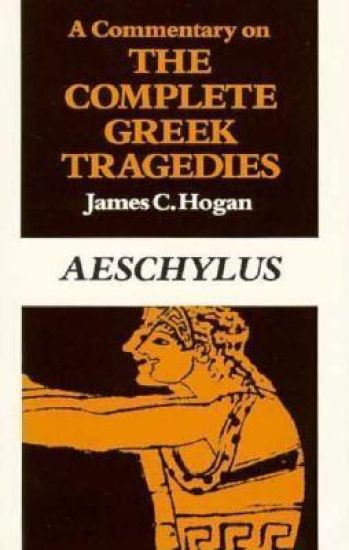
A Commentary on The Complete Greek Tragedies. Aeschylus

A Commentary on The Complete Greek Tragedies. Aeschylus

James C. Hogan

University of Chicago Press
1985
nidottu
This commentary offers a rich introduction and useful guide to the seven surviving plays attributed to Aeschylus. Though it may profitably be used with any translation of Aeschylus, the commentary is based on the acclaimed Chicago translations, The Complete Greek Tragedies, edited by David Grene and Richmond Lattimore. James C. Hogan provides a general introduction to Aeschylean theater and drama, followed by a line-by-line commentary on each of the seven plays. He places Aeschylus in the historical, cultural, and religious context of fifth-century Athens, showing how the action and metaphor of Aeschylean theater can be illuminated by information on Athenian law athletic contests, relations with neighboring states, beliefs about the underworld, and countless other details of Hellenic life. Hogan clarifies terms that might puzzle modern readers, such as place names and mythological references, and gives special attention to textual and linguistic issues: controversial questions of interpretation; difficult or significant Greek words; use of style, rhetoric, and commonplaces in Greek poetry; and Aeschylus's place in the poetic tradition of Homer, Hesiod, and the elegiac poets. Practical information on staging and production is also included, as are maps and illustrations, a bibliography, indexes, and extensive cross-references between the seven plays. Forthcoming volumes will cover the works of Sophocles and Euripides.