Dave Cole; Viet Thanh Nguyen; Jacqueline woodson; Ann Patchett; Brit Bennett; Steven Okazaki; David Handler; Geraldine Brooks; Yaa Gyasi; Sergio De La Pava; Dave Eggers; Timothy Egan; Li Yiyun; Meg Wolitzer; Hector Tobar; Aleksandar Hemon; Elizabeth Strout; Rabih Alameddine; Moriel Rothman-Zecher; Jonathan Lethem; Salman Rushdie; Lauren Groff; Jennifer Egan; Scott Turow; Morgan Parker; Victor Lavalle; Michael Cunningham; Neil Gaiman; Jesmyn Ward; Moses Sumney; George Saunders; Marlon James; William Finnegan; Anthony Doerr
To mark its 100-year anniversary, the American Civil Liberties Union partners with award-winning authors Michael Chabon and Ayelet Waldman to bring together many of our greatest living writers, each contributing an original piece inspired by a historic ACLU case.On January 19, 1920, a small group of idealists and visionaries, including Helen Keller, Jane Addams, Roger Baldwin, and Crystal Eastman, founded the American Civil Liberties Union. A century after its creation, the ACLU remains the nation’s premier defender of the rights and freedoms guaranteed by the Constitution. In collaboration with the ACLU, authors Michael Chabon and Ayelet Waldman have curated an anthology of essays about landmark cases in the organization’s one-hundred-year history. Fight of the Century takes you inside the trials and the stories that have shaped modern life. Some of the most prominent cases that the ACLU has been involved in—Brown v. Board of Education, Roe v. Wade, Miranda v. Arizona—need little introduction. Others you may never even have heard of, yet their outcomes quietly defined the world we live in now. Familiar or little-known, each case springs to vivid life in the hands of the acclaimed writers who dive into the history, narrate their personal experiences, and debate the questions at the heart of each issue. Hector Tobar introduces us to Ernesto Miranda, the felon whose wrongful conviction inspired the now-iconic Miranda rights—which the police would later read to the man suspected of killing him. Yaa Gyasi confronts the legacy of Brown v. Board of Education, in which the ACLU submitted a friend of- the-court brief questioning why a nation that has sent men to the moon still has public schools so unequal that they may as well be on different planets. True to the ACLU’s spirit of principled dissent, Scott Turow offers a blistering critique of the ACLU’s stance on campaign finance. These powerful stories, along with essays from Neil Gaiman, Meg Wolitzer, Salman Rushdie, Ann Patchett, Viet Thanh Nguyen, Louise Erdrich, George Saunders, and many more, remind us that the issues the ACLU has engaged over the past one hundred years remain as vital as ever today, and that we can never take our liberties for granted. Chabon and Waldman are donating their advance to the ACLU and the contributors are forgoing payment.
Dave Cole; Viet Thanh Nguyen; Jacqueline woodson; Ann Patchett; Brit Bennett; Steven Okazaki; David Handler; Geraldine Brooks; Yaa Gyasi; Sergio De La Pava; Dave Eggers; Timothy Egan; Li Yiyun; Meg Wolitzer; Hector Tobar; Aleksandar Hemon; Elizabeth Strout; Rabih Alameddine; Moriel Rothman-Zecher; Jonathan Lethem; Salman Rushdie; Lauren Groff; Jennifer Egan; Scott Turow; Morgan Parker; Victor Lavalle; Michael Cunningham; Neil Gaiman; Jesmyn Ward; Moses Sumney; George Saunders; Marlon James; William Finnegan; Anthony Doerr
The American Civil Liberties Union partners with award-winning authors Michael Chabon and Ayelet Waldman in this “forceful, beautifully written” (Associated Press) collection that brings together many of our greatest living writers, each contributing an original piece inspired by a historic ACLU case. On January 19, 1920, a small group of idealists and visionaries, including Helen Keller, Jane Addams, Roger Baldwin, and Crystal Eastman, founded the American Civil Liberties Union. A century after its creation, the ACLU remains the nation’s premier defender of the rights and freedoms guaranteed by the Constitution. In collaboration with the ACLU, authors Michael Chabon and Ayelet Waldman have curated an anthology of essays “full of struggle, emotion, fear, resilience, hope, and triumph” (Los Angeles Review of Books) about landmark cases in the organization’s one-hundred-year history. Fight of the Century takes you inside the trials and the stories that have shaped modern life. Some of the most prominent cases that the ACLU has been involved in—Brown v. Board of Education, Roe v. Wade, Miranda v. Arizona—need little introduction. Others you may never even have heard of, yet their outcomes quietly defined the world we live in now. Familiar or little-known, each case springs to vivid life in the hands of the acclaimed writers who dive into the history, narrate their personal experiences, and debate the questions at the heart of each issue. Hector Tobar introduces us to Ernesto Miranda, the felon whose wrongful conviction inspired the now-iconic Miranda rights—which the police would later read to the man suspected of killing him. Yaa Gyasi confronts the legacy of Brown v. Board of Education, in which the ACLU submitted a friend of- the-court brief questioning why a nation that has sent men to the moon still has public schools so unequal that they may as well be on different planets. True to the ACLU’s spirit of principled dissent, Scott Turow offers a blistering critique of the ACLU’s stance on campaign finance. These powerful stories, along with essays from Neil Gaiman, Meg Wolitzer, Salman Rushdie, Ann Patchett, Viet Thanh Nguyen, Louise Erdrich, George Saunders, and many more, remind us that the issues the ACLU has engaged over the past one hundred years remain as vital as ever today, and that we can never take our liberties for granted. Chabon and Waldman are donating their advance to the ACLU and the contributors are forgoing payment.
The 18th century was a wealth of knowledge, exploration and rapidly growing technology and expanding record-keeping made possible by advances in the printing press. In its determination to preserve the century of revolution, Gale initiated a revolution of its own: digitization of epic proportions to preserve these invaluable works in the largest archive of its kind. Now for the first time these high-quality digital copies of original 18th century manuscripts are available in print, making them highly accessible to libraries, undergraduate students, and independent scholars.The Age of Enlightenment profoundly enriched religious and philosophical understanding and continues to influence present-day thinking. Works collected here include masterpieces by David Hume, Immanuel Kant, and Jean-Jacques Rousseau, as well as religious sermons and moral debates on the issues of the day, such as the slave trade. The Age of Reason saw conflict between Protestantism and Catholicism transformed into one between faith and logic -- a debate that continues in the twenty-first century.++++The below data was compiled from various identification fields in the bibliographic record of this title. This data is provided as an additional tool in helping to insure edition identification: ++++British LibraryT057564London: printed in the year, 1710. 39, 1]p.; 8
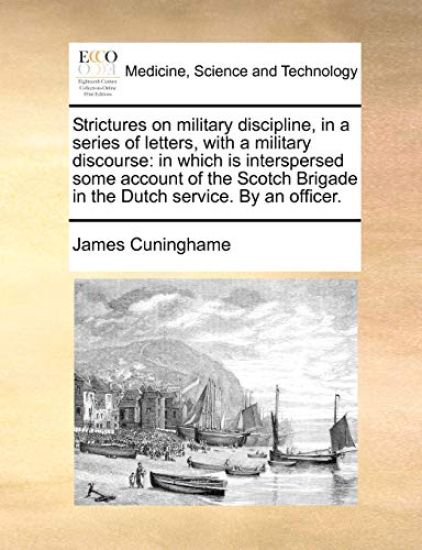
The 18th century was a wealth of knowledge, exploration and rapidly growing technology and expanding record-keeping made possible by advances in the printing press. In its determination to preserve the century of revolution, Gale initiated a revolution of its own: digitization of epic proportions to preserve these invaluable works in the largest archive of its kind. Now for the first time these high-quality digital copies of original 18th century manuscripts are available in print, making them highly accessible to libraries, undergraduate students, and independent scholars.Medical theory and practice of the 1700s developed rapidly, as is evidenced by the extensive collection, which includes descriptions of diseases, their conditions, and treatments. Books on science and technology, agriculture, military technology, natural philosophy, even cookbooks, are all contained here.++++The below data was compiled from various identification fields in the bibliographic record of this title. This data is provided as an additional tool in helping to insure edition identification: ++++British LibraryT048745Signed J. C., i.e. James Cuninghame. With a final advertisement leaf.London: printed for John Donaldson, 1774. viii,212, 2]p.; 8
Title: Cuninghame, topographized by Timothy Pont ... 1604-1608, with continuations and illustrative notices by ... J. Dobie, ... edited by J. S. Dobie. With a map.]Publisher: British Library, Historical Print EditionsThe British Library is the national library of the United Kingdom. It is one of the world's largest research libraries holding over 150 million items in all known languages and formats: books, journals, newspapers, sound recordings, patents, maps, stamps, prints and much more. Its collections include around 14 million books, along with substantial additional collections of manuscripts and historical items dating back as far as 300 BC.The GEOGRAPHY & TOPOGRAPHY collection includes books from the British Library digitised by Microsoft. Offering some insights into the study and mapping of the natural world, this collection includes texts on Babylon, the geographies of China, and the medieval Islamic world. Also included are regional geographies and volumes on environmental determinism, topographical analyses of England, China, ancient Jerusalem, and significant tracts of North America. ++++The below data was compiled from various identification fields in the bibliographic record of this title. This data is provided as an additional tool in helping to insure edition identification: ++++ British Library Pont, Timothy; Scot, James; Dobie, John Shedden; 1876. xix. 426 p.; 4 . 10370.g.17.
Follow Dr. Jeremiah through the book of James in a chapter-by-chapter study that will help you understand what it meant to the people at the time it was written, and what it means to Christians today. The connection between faith and works lies at the very heart of the letter of James. The author of this short letter is concerned not only with what we as followers of Christ believe but also with how those beliefs shape our actions.James' words contain enduring practical advice for putting faith into action.Each of this study's twelve lessons is clearly organized to include:Getting Started: An opening question to introduce you to the lesson.Setting the Stage: A short reflection to explain the context of the study.Exploring the Text: The Scripture reading for the lesson with related study questions.Reviewing the Story: Questions to help you identify key points in the reading.Applying the Message: Questions to help you apply the key ideas to their lives.Reflecting on the Meaning: A closing reflection on the key teachings in the lesson.—ABOUT THE SERIES—The Jeremiah Bible Study Series captures Dr. David Jeremiah's forty-plus years of commitment in teaching the Word of God. In each study, you'll gain insights into the text, identify key stories and themes, and be challenged to apply the truths you uncover to your life. By the end of each study, you'll come away with a clear and memorable understanding of that Bible book.
Live full of faith through hard timesDo you ever feel like you can’t take one more thing? You’re on the edge. Your nerves are shot. Your mind is done. Your body is tired, and your emotions are a mess. If you could gather yourself for even a moment you might explode at the reality of all you’ve been through. In the face of the fears, frustrations, and failures of this world, we have a choice. We can sit and stare at the life we live and hope something changes. Or we can rise up and walk in faith.In this Bible study, author and speaker Micah Maddox walks you through the book of James and compares the teaching of James with what Jesus said in the Sermon on the Mount from Matthew and the wisdom of Solomon we find in Proverbs. When we discover the themes of what a faith-filled life looked like before, during, and after the time of Christ, we see how Scripture points us to honor God in an active life of faith.This five-week study will help you to:Revisit the foundation of your faithLook to God first in hard situationsDiscover faith isn’t a list of do’s and don’tsMove from a place of struggle to a place of comfortGain a fresh perspective on how to live full of faith when feeling tired and testedIncludes historical and biblical background insight and questions for reflection.InScribed is a collection of studies that lead women to not just survive but thrive by encouraging them to immerse themselves in the Word of God.
Concentrate on the biblical author’s message as it unfolds.Designed to assist the pastor and Bible teacher in conveying the significance of God’s Word, the Zondervan Exegetical Commentary on the New Testament series treats the literary context and structure of every passage of the New Testament book in the original Greek.With a unique layout designed to help you comprehend the form and flow of each passage, the ZECNT unpacks:The key message.The author’s original translation.An exegetical outline.Verse-by-verse commentary.Theology in application.While primarily designed for those with a basic knowledge of biblical Greek, all who strive to understand and teach the New Testament will benefit from the depth, format, and scholarship of these volumes.
The NIV Application Commentary helps you communicate and apply biblical text effectively in today's context.To bring the ancient messages of the Bible into today's world, each passage is treated in three sections:Original Meaning. Concise exegesis to help readers understand the original meaning of the biblical text in its historical, literary, and cultural context.Bridging Contexts. A bridge between the world of the Bible and the world of today, built by discerning what is timeless in the timely pages of the Bible.Contemporary Significance. This section identifies comparable situations to those faced in the Bible and explores relevant application of the biblical messages. The author alerts the readers of problems they may encounter when seeking to apply the passage and helps them think through the issues involved.This unique, award-winning commentary is the ideal resource for today's preachers, teachers, and serious students of the Bible, giving them the tools, ideas, and insights they need to communicate God's Word with the same powerful impact it had when it was first written.The book you receive may have a different cover design than shown on the website.
Real Christian faith doesn't remain hidden in the heart: It shows itself through the lives we live. Faith grows as we cultivate perseverance, humility, and patience -- key attributes that the book of James commends. James calls us to demonstrate our faith in practical ways in the world around us. Studying James will help you prove the reality of your faith through sound actions, attitudes, and words in your everyday life.
James, the brother of the Lord Jesus Christ, has been argued against because of his apparent emphasis on works rather than faith. Any who feel this way have not studied this New Testament book. James is not at odds with Paul in any way. His down to earth view of being a child of God is that without works our faith is useless but faith is of the utmost importance. It is through faith that we are given wisdom from God to face the many trials and temptations that face each of us. Do not sell James short. He is a very practical man and does not pull any punches. Are you saved? Show it don't just talk about it.
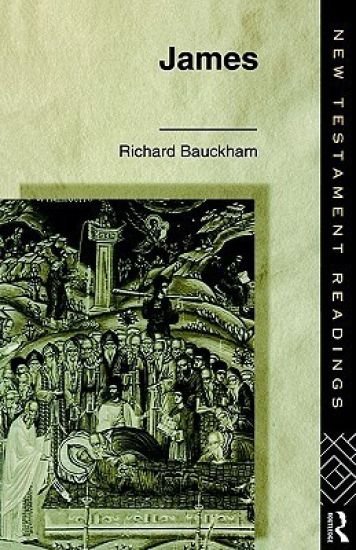
Richard Bauckham explores the historical and literary contexts of the Epistle of James, discussing the significance of James as the brother of Jesus and leader of the early Jerusalem church. He gives special attention to the aphorisms which encapsulate James' wisdom, and to the way that James' teaching closely resembles that of Jesus.
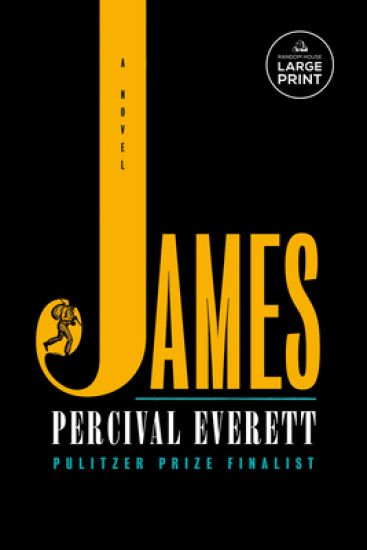
PULITZER PRIZE WINNER - #1 NEW YORK TIMES BESTSELLER - NATIONAL BOOK AWARD WINNER - A brilliant, action-packed reimagining of Adventures of Huckleberry Finn, both harrowing and darkly humorous, told from the enslaved Jim's point of view NATIONAL BOOK CRITICS CIRCLE AWARD FINALIST - ONE OF THE NEW YORK TIMES BOOK REVIEW'S 10 BEST BOOKS OF THE YEAR - SHORTLISTED FOR THE BOOKER PRIZE - KIRKUS PRIZE WINNER - A LOS ANGELES TIMES BEST FICTION BOOK OF THE LAST 30 YEARS In development as a feature film to be produced by Steven Spielberg - A Best Book of the Year: The New York Times Book Review, LA Times, The New Yorker, The Atlantic, The Economist, TIME, and more. "Genius"--The Atlantic - "A masterpiece that will help redefine one of the classics of American literature, while also being a major achievement on its own."--Chicago Tribune - "A provocative, enlightening literary work of art."--The Boston Globe - "Everett's most thrilling novel, but also his most soulful."--The New York Times When Jim overhears that he is about to be sold to a man in New Orleans, separated from his wife and daughter forever, he runs away until he can formulate a plan. Meanwhile, Huck has faked his own death to escape his violent father. As all readers of American literature know, thus begins the dangerous and transcendent journey by raft down the Mississippi River toward the elusive and unreliable promise of the Free States and beyond. Brimming with the electrifying humor and lacerating observations that have made Everett a literary icon, this brilliant and tender novel radically illuminates Jim's agency, intelligence, and compassion as never before. James is destined to be a major publishing event and a cornerstone of twenty-first century American literature.
In this new authoritative volume of the New Testament Library series, Joel B. Green presents the writer of James as a sort of practical theologian, directly addressing the lived experiences of Jewish Christ followers beset by Roman social conventions and sensibilities contrary to the divine command to love God and love neighbor. The book of James is nothing if not pragmatic. Its core arguments rest on urging its audience to take concrete action to develop faithful life patterns in a world that is often set against those who seek to follow Jesus Christ as Lord. Joel B. Green shows how the practical wisdom of James can continue to speak prophetically to a range of issues that plague our contemporary experience—the entrenched and growing gap between the wealthy and impoverished foremost among them. But readers who might be tempted to formulate a simple to-do list from James’s precepts are encouraged instead to enter into the world of the text as fully and as humanly as possible by asking questions like: How would the letter’s first audience (and then how might we) hear, and internalize, the writer’s words about perfection, moral purity, humans made in God’s likeness, and prayer for the sick and disabled? How might their lives (and then how might ours) be shaped by James’s central concern with the double love of love of God and love of neighbor? James: A Commentary examines the Letter of James from a variety of angles—its social and cultural contexts, its relationship to Israel’s Scriptures and to the teaching of Jesus, the development of its message, and its significance theologically. As with other volumes in the New Testament Library series, this commentary strives to come to terms with the literary and historical aspects of James: its arguments, its appeals, its perspectives; its interpretation of Jesus’ message and Israel’s Scriptures; its grasp of contemporary Jewish and Greco-Roman thought. But it most deeply aims to show how James points readers toward envisaging the world as God does and acting accordingly—personally and communally. The New Testament Library series offers authoritative commentary on every book and major aspect of the New Testament, providing fresh translations based on the best available ancient manuscripts, critical portrayals of the historical world in which the books were created, careful attention to their literary design, and a theologically perceptive exposition of the biblical text. The contributors are scholars of international standing. The editorial board consists of John T. Carroll, Union Presbyterian Seminary; Susan E. Hylen, Candler School of Theology, Emory University; and Emerson B. Powery, Messiah University.
The Letter of James is the focus of the latest commentary in the Belief series. In the Letter of James, the writer sends encouragement to the early church, in the midst of the struggles and strife that marked its early days. Theologian Martha L. Moore-Keish guides the reader through the brief but important letter, most known for its discussion of the importance of actions to make a true life of faith. The volumes in the Belief series offer a fresh and invigorating approach to all the books of the Bible. Building on a wide range of sources from biblical studies and the Christian tradition, noted scholars focus less on traditional, historical and literary angles in favor of a theologically focused commentary that considers the contemporary relevance of the text.
Sleeper's lucid exposition of James restores this often neglected work to its rightful place in the Christian canon. Carefully charting the verbal structures and argument of the letter, he demonstrates that it is a coherent piece of moral teaching intended to encourage the development of Christian character, not just a collection of disparate maxims. As he guides the reader through the letter's basic themes, Sleeper is attentive to its echoes in the Old Testament, hellenistic-Jewish wisdom literature, and sayings of Jesus (Q), as well as to its affinities with other Christian writings. Moreover, he shows that the author's understanding of God and of human nature provides a significant theological foundation for practical wisdom about the Christian moral life.
The apostle James, the oldest half-brother of Jesus, was a key leader in the Jerusalem church. During the early days of the young church, the Jewish believers had been scattered by persecution. Out of compassion, James wrote this epistle to confront them and motivate them to test the quality and consistency of their faith.Pastor John MacArthur will take you through the book of James, passage by passage, so that you can better understand this short but powerful book and how James gives us practical guidance on issues that also measure our true faith and our spiritual fruitfulness. James calls all believers—then and now—to live a life that demonstrates saving faith marked by godly behavior.—ABOUT THE SERIES—The MacArthur Bible Study series is designed to help you study the Word of God with guidance from widely respected pastor and author John MacArthur. Each guide provides intriguing examinations of the whole of Scripture by examining its parts and incorporates:Extensive, but straight-forward commentary on the text.Detailed observations on overriding themes, timelines, history, and context.Word and phrase studies to help you unlock the broader meaning and apply it to your life.Probing, interactive questions with plenty of space to write down your response and thoughts.