Kirjojen hintavertailu. Mukana 11 627 374 kirjaa ja 12 kauppaa.

Kirjahaku

Etsi kirjoja tekijän nimen, kirjan nimen tai ISBN:n perusteella.

1000 tulosta hakusanalla James S Spiegel

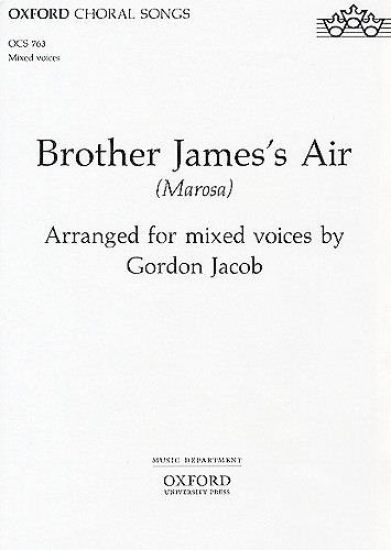
Brother James's Air

Brother James's Air

Oxford University Press
1985
muu
for unison and SATB choirs, and piano/organ This is an accessible piece that is both rich and moving. The unison line, which can be sung by a junior choir, has some short sections needing simple divisi.
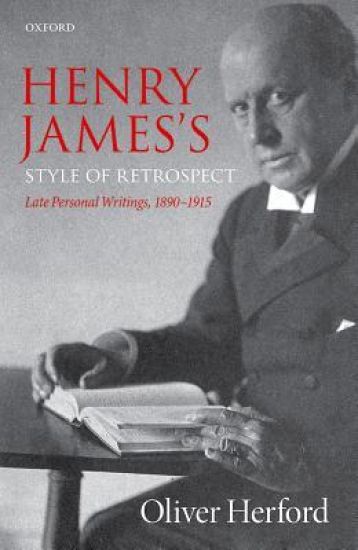
Henry James's Style of Retrospect

Henry James's Style of Retrospect

Oliver Herford

Oxford University Press
2016
sidottu
Henry James's Style of Retrospect traces James's engagement with the writing of the recent past across the last twenty-five years of his life and examines the thoroughgoing change his style underwent in this last phase of his career, as his focus turned from the observation of contemporary manners to biographical commemoration and autobiographical reminiscence, and the balance of his output gradually shifted from fiction to non-fiction. The 'late personal writings' of the book's subtitle are works of retrospective non-fiction. They are a varied group, representing a broad array of genres and occasions: commemorative essays and obituary tributes, textual revisions and accounts of revisiting familiar places, cultural and literary criticism, biography and autobiography, and family memoir. Oliver Herford proposes that we read the late personal writings as a coherent sequence, bound together by a close texture of cross-references and allusive echoes, and united by James's newly discovered sense for the literary possibilities of non-fiction. Closely analyzing the style of these writings, this study offers a boldly revisionist account of the way style itself challenges and preoccupies the very late James. A linked series of innovative close readings takes the major works of this period in sequence, addressing a key point of style in each: particular attention is paid to procedures of reference (to the historical past, to real persons and places and objects), a dimension of style often neglected and sometimes actively slighted in analyses of James's late work. Henry James's Style of Retrospect asks what it means for so distinguished a novelist to alter the foundations of his written manner so strikingly in late life, and shows how we may begin to reconfigure our understanding of late Jamesian aesthetics accordingly.
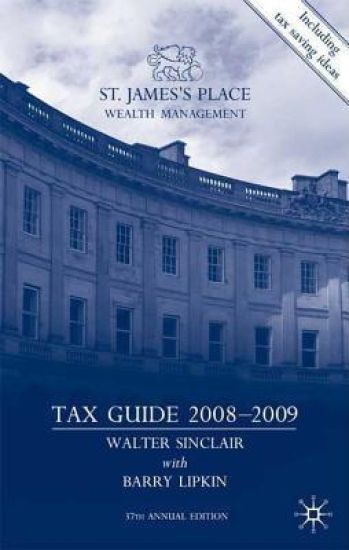
St James's Place Tax Guide 2008-2009

St James's Place Tax Guide 2008-2009

W. Sinclair; E. Lipkin

Palgrave Macmillan
2008
sidottu
The 37th annual edition of the leading guide to taxation in Britain. This practical and user-friendly guide is a bestseller with students, professionals, accountants and private individuals, explaining in simple terms how the UK tax system works and how best to minimise tax liabilities
St James's Place Tax Guide 2010-2011

St James's Place Tax Guide 2010-2011

Walter Sinclair; E. Barry Lipkin

Palgrave Macmillan
2010
sidottu
The 39th annual edition of the leading guide to taxation in Britain. This practical and user-friendly guide is a bestseller with students, professionals, accountants and private individuals, explaining in simple terms how the UK tax system works and how best to minimise tax liabilities.
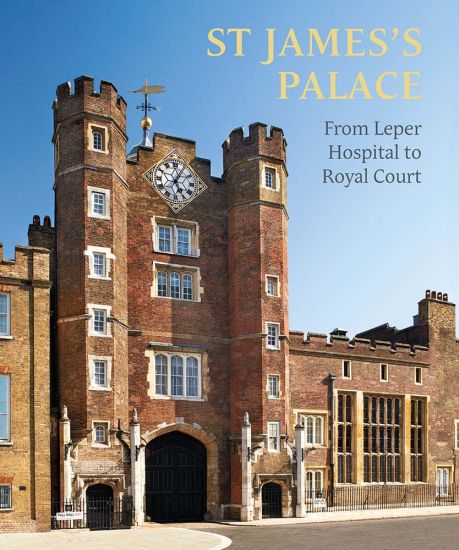
St James's Palace

St James's Palace

Simon Thurley; Rufus Bird; Michael Turner

YALE UNIVERSITY PRESS
2022
sidottu
The first modern history of St James’s Palace, shedding light on a remarkable building at the heart of the history of the British monarchy that remains by far the least known of the royal residences In this first modern history of St James’s Palace, the authors shed new light on a remarkable building that, despite serving as the official residence of the British monarchy from 1698 to 1837, is by far the least known of the royal residences. The book explores the role of the palace as home to the heir to the throne before 1714, its impact on the development of London and the West end during the late Stuart period, and how, following the fire at the palace of Whitehall, St James’s became the principal seat of the British monarchy in 1698. The arrangement and display of the paintings and furnishings making up the Royal Collection at St James’s is chronicled as the book follows the fortunes of the palace through the Victorian and Edwardian periods up to the present day. Specially commissioned maps, phased plans, and digital reconstructions of the palace at key moments in its development accompany a rich array of historical drawings, watercolors, photographs, and plans. The book includes a foreword by His Royal Highness The Prince of Wales.Published in association with Royal Collection Trust
Henry James’s Permanent Adolescence

Henry James’s Permanent Adolescence

J. Bradley

Palgrave Macmillan
2000
sidottu
Henry James remained throughout his life focused on his boyhood and early manhood, and correspondingly on younger boys and men, and John R. Bradley illustrates how it is in the context of such narcissism that James consistently dealt with male desire in his fiction. He also traces a more subtle but related trajectory in James's writing from a Classical to a Modernist gay discourse, which in turn is shown to have been paralleled by a shift in James's fiction from naturalistic beginnings to later stylistic evasion and obscurity. This radical book, which covers the whole of James's career, will quickly be recognized as a defining text in this emerging field of James studies.
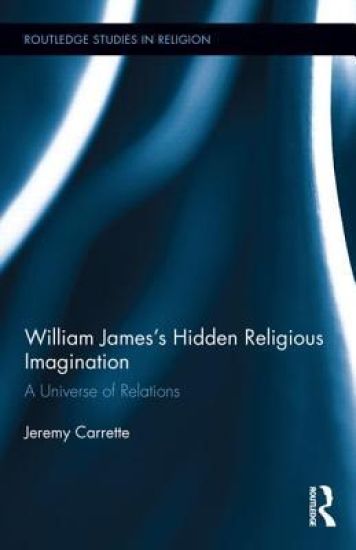
William James's Hidden Religious Imagination
This book offers a radical new reading of William James’s work on the idea of ‘religion.’ Moving beyond previous psychological and philosophical interpretations, it uncovers a dynamic, imaginative, and critical use of the category of religion. This work argues that we can only fully understand James’s work on religion by returning to the ground of his metaphysics of relations and by incorporating literary and historical themes. Author Jeremy Carette develops original perspectives on the influence of James’s father and Calvinism, on the place of the body and sex in James, on the significance of George Eliot’s novels, and Herbert Spencer’s ‘unknown,’ revealing a social and political discourse of civil religion and republicanism and a poetic imagination at the heart of James understanding of religion. These diverse themes are brought together through a post-structural sensitivity and a recovery of the importance of the French philosopher Charles Renouvier to James’s work. This study pushes new boundaries in Jamesian scholarship by reading James with pluralism and from the French tradition. It will be a benchmark text in the reshaping of James and the nineteenth-century foundations of the modern study of ‘religion.’
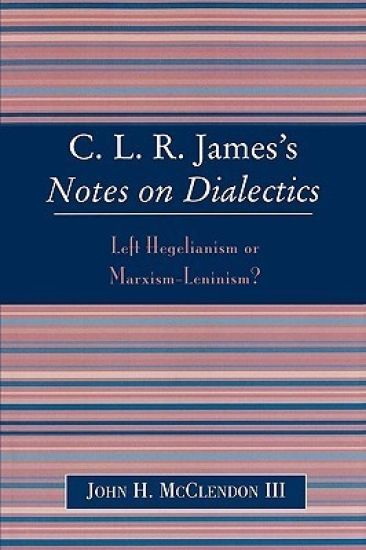
CLR James's Notes on Dialectics

CLR James's Notes on Dialectics

John H. McClendon

Lexington Books
2004
sidottu
John H. McClendon III's CLR James's Notes on Dialectics: Left Hegelianism or Marxism-Leninism? is the first-ever book devoted exclusively to James's 'magnum opus,' Notes on Dialectics: Hegel-Marx-Lenin. The seed for this study was planted over thirty years ago when James handed the author his personal copy of Notes. James's contribution to dialectical philosophy and his vast intellectual and scholarly output is rivalled only by the seemingly bottomless depths of McClendon's own analysis and erudition. McClendon provides a thorough-going critique of James's exploration into the dialectic of Hegel, Marx, and Lenin while challenging all the seminal texts on James's Notes'. A book of this magnitude is rare. This is ever more the truth when it is focused on a giant like James who stands at the nexus of so many disciplines: philosophy, history, sociology, Caribbean studies, cultural studies, African, and African American studies. CLR James's Notes on Dialectics: Left Hegelianism or Marxism-Leninism? is a must read for anyone concerned with how revolutionary theory is a guide to contemporary struggles.
CLR James's Notes on Dialectics

CLR James's Notes on Dialectics

John H. McClendon

Lexington Books
2004
nidottu
John H. McClendon III's CLR James's Notes on Dialectics: Left Hegelianism or Marxism-Leninism? is the first-ever book devoted exclusively to James's "magnum opus," Notes on Dialectics: Hegel-Marx-Lenin. The seed for this study was planted over thirty years ago when James handed the author his personal copy of Notes. James's contribution to dialectical philosophy and his vast intellectual and scholarly output is rivalled only by the seemingly bottomless depths of McClendon's own analysis and erudition. McClendon provides a thorough-going critique of James's exploration into the dialectic of Hegel, Marx, and Lenin while challenging all the seminal texts on James's Notes'. A book of this magnitude is rare. This is ever more the truth when it is focused on a giant like James who stands at the nexus of so many disciplines: philosophy, history, sociology, Caribbean studies, cultural studies, African, and African American studies. CLR James's Notes on Dialectics: Left Hegelianism or Marxism-Leninism? is a must read for anyone concerned with how revolutionary theory is a guide to contemporary struggles.
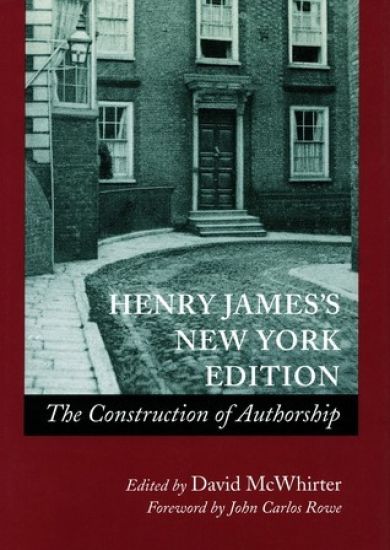
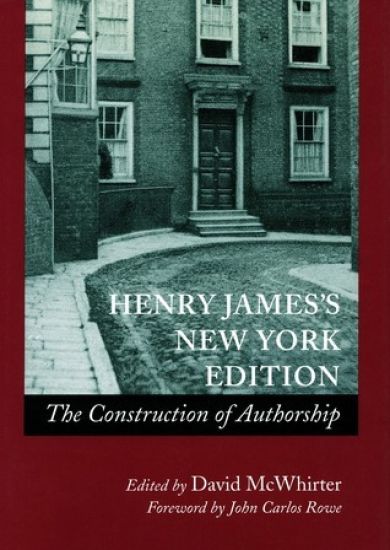
Henry James’s New York Edition

Henry James’s New York Edition

Stanford University Press
1995
sidottu
Toward the end of Henry James's career, Charles Scribner's Sons offered him the opportunity to publish his collected works in a single edition under the overall title The New York Edition of the Novels and Tales of Henry James (1907-1909). Rather than simply reprint his fictional oeuvre, James entered into a massive work of self-monumentalization: revising the texts extensively; writing prefaces that have become classic texts on prose aesthetics and the novelist's art; and omitting many works, among them some major novels. The thirty illustrations include all twenty-four frontispiece photographs made, under James's supervision, for the edition.
Henry James’s New York Edition

Henry James’s New York Edition

Rowe John Carlos

Stanford University Press
1998
pokkari
Toward the end of Henry James's career, Charles Scribner's Sons offered him the opportunity to publish his collected works in a single edition under the overall title The New York Edition of the Novels and Tales of Henry James (1907-1909). Rather than simply reprint his fictional oeuvre, James entered into a massive work of self-monumentalization: revising the texts extensively; writing prefaces that have become classic texts on prose aesthetics and the novelist's art; and omitting many works, among them some major novels. The thirty illustrations include all twenty-four frontispiece photographs made, under James's supervision, for the edition.
Henry James’s Thwarted Love

Henry James’s Thwarted Love

Stanford University Press
1999
sidottu
This provocative book argues that in his fiction Henry James was more canny about sexual identities, more focused on sexual pleasure, and more insistent on flouting heterosexual convention than has been acknowledged by his critics and biographers. Without leaping to the construction of a "gay" Henry James, whose writings aver a conscious sexual preference, the author demonstrates James's deep engagement with the construct of sexual "inversion," his familiarity with the tropes and traffic of the late-Victorian sexual underground, and his resistance to the cultural codes and institutions that disciplined social and private behavior. The volume aligns biographical and textual readings with specific topics in intellectual and cultural history, placing the novelist and his works within the key discursive frameworks that emerged during his lifetime: mental hygiene, sexology, psychiatry, and cultural anthropology. In reconsidering James's reputed celibacy and effeminacy, the author makes use of recent gender and queer theory, while remaining carefully attentive to the contemporary terms at James's disposal for understanding his own sexuality and gender identification. The author also elaborates the family dynamics that affected James's gender and professional identity conflicts, notably his turbulent relations with his brother William James, whose pathologizing of the "unhygienic" creative life conditioned his thinking about both sexuality and art. Extended discussions of four novels—Roderick Hudson, The Bostonians, The Princess Casamassima, and The Wings of the Dove—underscore James's resistance to the disciplinary mechanisms that regulate homoerotic desire under the aegis of mental hygiene and sexual "responsibility." Understanding, with queer theory, that sublimation can be a form of pleasure in a non-heterosexual community, the book views James's erotic economy of artistic production—even as it increasingly emphasized self-discipline—as a means of circumventing the suppression of sexual nonconformity.
Henry James’s Thwarted Love

Henry James’s Thwarted Love

Graham Wendy

Stanford University Press
1999
pokkari
This provocative book argues that in his fiction Henry James was more canny about sexual identities, more focused on sexual pleasure, and more insistent on flouting heterosexual convention than has been acknowledged by his critics and biographers. Without leaping to the construction of a "gay" Henry James, whose writings aver a conscious sexual preference, the author demonstrates James's deep engagement with the construct of sexual "inversion," his familiarity with the tropes and traffic of the late-Victorian sexual underground, and his resistance to the cultural codes and institutions that disciplined social and private behavior. The volume aligns biographical and textual readings with specific topics in intellectual and cultural history, placing the novelist and his works within the key discursive frameworks that emerged during his lifetime: mental hygiene, sexology, psychiatry, and cultural anthropology. In reconsidering James's reputed celibacy and effeminacy, the author makes use of recent gender and queer theory, while remaining carefully attentive to the contemporary terms at James's disposal for understanding his own sexuality and gender identification. The author also elaborates the family dynamics that affected James's gender and professional identity conflicts, notably his turbulent relations with his brother William James, whose pathologizing of the "unhygienic" creative life conditioned his thinking about both sexuality and art. Extended discussions of four novels—Roderick Hudson, The Bostonians, The Princess Casamassima, and The Wings of the Dove—underscore James's resistance to the disciplinary mechanisms that regulate homoerotic desire under the aegis of mental hygiene and sexual "responsibility." Understanding, with queer theory, that sublimation can be a form of pleasure in a non-heterosexual community, the book views James's erotic economy of artistic production—even as it increasingly emphasized self-discipline—as a means of circumventing the suppression of sexual nonconformity.