Kirjojen hintavertailu. Mukana 11 342 296 kirjaa ja 12 kauppaa.

Kirjahaku

Etsi kirjoja tekijän nimen, kirjan nimen tai ISBN:n perusteella.

1000 tulosta hakusanalla James Simpson

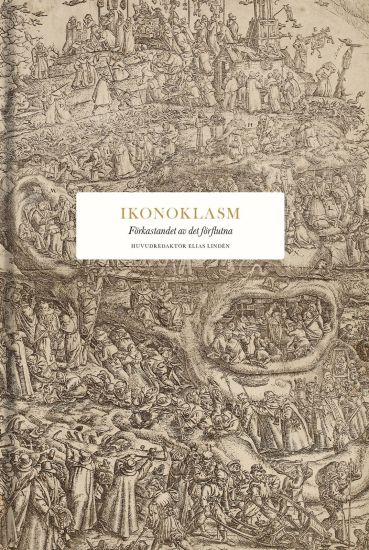
Ikonoklasm : förkastandet av det förflutna

Ikonoklasm : förkastandet av det förflutna

Robin Dunbar; Andreas Winkler; Daniel Reynolds; James Simpson; Malise Ruthven; Michael Freeden; Ingrid Dunér; Marie Kawthar Daouda; Peter Jackson Rova; Joel Halldorf; Natalie Lantz; Per-Arne Bodin; Nathan Shachar; Jesper Huor; Svante Nordin; Adam Cwejman

Bokförlaget Stolpe
2024
sidottu
Ikonoklasm, eller bildstormande, är en del av vår historia: från förstörelsen av religiösa bilder under den tidiga kristendomen till dagens nedrivning av statyer på sydstatsgeneraler och slavhandlare. Bilder, byggnader och föremål som strider mot religiös eller ideologisk övertygelse måste förstöras. De som utför rensningen, ikonoklasterna, är övertygade om att de utför en reningsaktion. Det förflutna välts över ända i en önskan att börja om från början. De olika bidragen till antologin Ikonoklasm: förkastandet av det förflutna visar med all önskvärd tydlighet konsekvenserna. Inte bara ovärderliga kulturskatter utan också människoliv går förlorade när fanatismen får fritt spelrum. Vi ser det när Islamiska staten slår sönder flera tusen år gamla museiföremål, när Maos rödgardister bränner böcker och förföljer oliktänkande under den kinesiska kulturrevolutionen eller när ryska bolsjeviker spränger kyrkor och skändar ikoner. Exemplen på de destruktiva krafternas skadegörelse genom seklen kan mångfaldigas. Att ikonoklasmens stridsrop ljuder så starkt i vår tid visar på dess fortsatta lockelse. Ikonoklasm är en varningsklocka, ett larm för hotet mot det demokratiska samhällets tolerans och öppenhet.
Index of Middle English Prose volumes I-X

Index of Middle English Prose volumes I-X

Ralph Hanna; G.A. Lester; Patrick J. Horner; Laurel Braswell; Peter Brown; Elton D. Higgs; Oliver S Pickering; Susan Powell; James Simpson; Sarah Ogilvie-Thomson; L.M. Eldredge; Irma Taavitseinen

D.S. Brewer
1995
muu
The Index of Middle English Prose is an international collaborative project which will ultimately locate, identify and record all extant Middle English prose texts composed between c.1200 and c.1500, in both manuscript andprinted form in medieval and post-medieval versions. The first step towards this goal has been this series of Handlists, each recording the holdings of a major library or group of libraries. Compiled by scholars, Handlists include detailed descriptions ofeach prose item with identifications, categorisations and full bibliographical data. Every Handlist will also contain a series of indexes including listings of opening and closing lines, authors, titles, subject matter and rubrics. For students of the middle ages Handlists provide essential bibliographical tools and shed light on a wide range of subjects.
Livestock Development In Subsaharan Africa

Livestock Development In Subsaharan Africa

James R Simpson

TAYLOR FRANCIS LTD
2020
sidottu
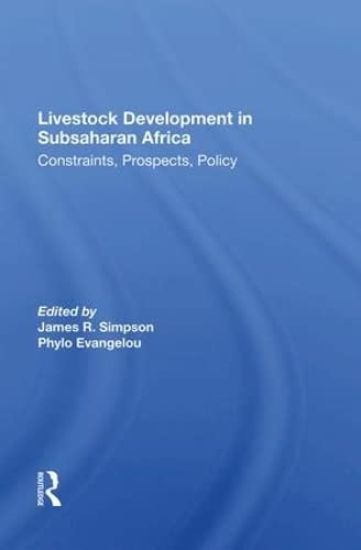
"The nations of Subsaharan Africa experienced declining levels of food production per capita throughout the 1970s and early 1980s, particularly in the area of livestock production. Addressing that problem, the authors of this book assess in a systems context the environmental, biological, and social constraints on future African livestock development and consider prospects for improving productivity, They focus especially on changes needed in production and marketing systems, pointing to important policy considerations . The book is divided into four parts containing twenty-one chapters, each authored by one or more respective authorities in his or her field. Each section in its own way addresses the entire set of questions; topics include aspects of animal breeding and nutrition, anthropology, economics, ecology, farming systems, governmental policy, land tenure, marketing, modelling, and veterinary medicine."
Livestock Development In Subsaharan Africa

Livestock Development In Subsaharan Africa

James R Simpson

TAYLOR FRANCIS LTD
2022
nidottu
"The nations of Subsaharan Africa experienced declining levels of food production per capita throughout the 1970s and early 1980s, particularly in the area of livestock production. Addressing that problem, the authors of this book assess in a systems context the environmental, biological, and social constraints on future African livestock development and consider prospects for improving productivity, They focus especially on changes needed in production and marketing systems, pointing to important policy considerations . The book is divided into four parts containing twenty-one chapters, each authored by one or more respective authorities in his or her field. Each section in its own way addresses the entire set of questions; topics include aspects of animal breeding and nutrition, anthropology, economics, ecology, farming systems, governmental policy, land tenure, marketing, modelling, and veterinary medicine."

Technological Change In Japan's Beef Industry

Technological Change In Japan's Beef Industry

James R Simpson; Tadashi Yoshida; Akira Miyazaki; Ryohei Kada

Routledge
2019
sidottu
The Japanese Cattle industry has been undergoing major changes for the past three decades. During the 1950's and 1960's mechanized power rapidly. The process of beef industry structure change accelerated in the 1970's as medium scale feedlots came into being, regional packing plants were established, and the beef marketing system matured. Economic forces, both within and external to the industry. A major objective of this book is to test the authors’ hypothesis that beef production by Japan's cattle industry could become competitive with imported beef.
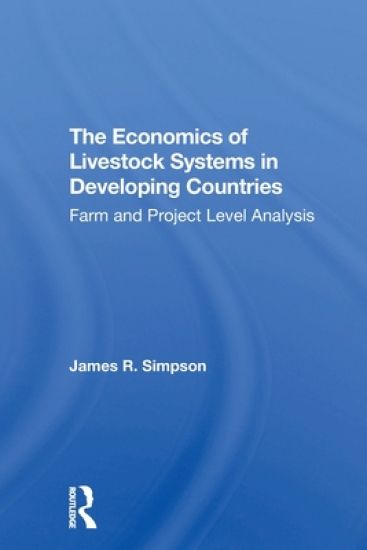
The Economics Of Livestock Systems In Developing Countries
Improvement of the world's livestock industry necessitates input from many directions. Planning by a host of national and international agencies is required in order to provide optimal stimulus in very diverse areas ranging from formulation of laws and incentives that stimulate competition yet prevent undue competition, to the optimal provision of credit. Planning is needed to carry out a complex array of interrelated research. The purpose of this book is specifically tasked with setting forth frameworks and methods for evaluation of investments and associated economic decision-making in the livestock industries of developing countries. Economists will find this book useful because it synthesizes .much material into a cohesive whole--material that is often presented in a cursory manner or overlooked as emphasis has shifted to sophisticated quantitative techniques.
Technological Change In Japan's Beef Industry

Technological Change In Japan's Beef Industry

James R Simpson; Tadashi Yoshida; Akira Miyazaki; Ryohei Kada

Routledge
2021
nidottu
The Japanese Cattle industry has been undergoing major changes for the past three decades. During the 1950's and 1960's mechanized power rapidly. The process of beef industry structure change accelerated in the 1970's as medium scale feedlots came into being, regional packing plants were established, and the beef marketing system matured. Economic forces, both within and external to the industry. A major objective of this book is to test the authors’ hypothesis that beef production by Japan's cattle industry could become competitive with imported beef.
The Economics Of Livestock Systems In Developing Countries
Improvement of the world's livestock industry necessitates input from many directions. Planning by a host of national and international agencies is required in order to provide optimal stimulus in very diverse areas ranging from formulation of laws and incentives that stimulate competition yet prevent undue competition, to the optimal provision of credit. Planning is needed to carry out a complex array of interrelated research. The purpose of this book is specifically tasked with setting forth frameworks and methods for evaluation of investments and associated economic decision-making in the livestock industries of developing countries. Economists will find this book useful because it synthesizes .much material into a cohesive whole--material that is often presented in a cursory manner or overlooked as emphasis has shifted to sophisticated quantitative techniques.
AI Prevails

AI Prevails

James R Simpson

Poverty Bay Publishing
2021
sidottu
The world is very different now. For man holds in his mortal hands the power to abolish all forms of human poverty and all forms of human life. --John F. Kennedy In this book I reveal a vision of the future that will keep you up at night. Researchers all over the world are racing to develop technologies using Artificial Intelligence (AI). Some in the scientific community are engaged in the study and development of superintelligence. If they are successful in that endeavor, the outcome would be that AI would become smarter than their creators. We have all seen sci-fi movies that imagine hellish, apocalyptic futures where AI destroys our world. What if it comes on gradually-a drumbeat growing louder every day, until one day the defining roar overtakes everything? What if that day is not very far away? Join me as I started searching for keys about who and what is behind research and development of these technologies. Was it a cabal, which is a secret political clique or faction? Was it the technocrats, a member of a powerful technical elite or someone who advocates the supremacy of technical experts? Was it the plutocracy, formally known as government by the wealthy? Or was it our government?Are those around the world who develop technologies that will dramatically affect our destinies truly concerned about life satisfaction, quality of life, or whatever else happiness is termed? Should we simply internalize a life of uncontrolled artificial intelligence and bend to prophet-like futurists' scenarios? Critically, a plausible risk is that unenhanced humans could become superfluous as soon as the 2050s.
AI Prevails

AI Prevails

James R Simpson

Poverty Bay Publishing
2021
pokkari
The world is very different now. For man holds in his mortal hands the power to abolish all forms of human poverty and all forms of human life. --John F. Kennedy In this book I reveal a vision of the future that will keep you up at night. Researchers all over the world are racing to develop technologies using Artificial Intelligence (AI). Some in the scientific community are engaged in the study and development of superintelligence. If they are successful in that endeavor, the outcome would be that AI would become smarter than their creators. We have all seen sci-fi movies that imagine hellish, apocalyptic futures where AI destroys our world. What if it comes on gradually-a drumbeat growing louder every day, until one day the defining roar overtakes everything? What if that day is not very far away? Join me as I started searching for keys about who and what is behind research and development of these technologies. Was it a cabal, which is a secret political clique or faction? Was it the technocrats, a member of a powerful technical elite or someone who advocates the supremacy of technical experts? Was it the plutocracy, formally known as government by the wealthy? Or was it our government?Are those around the world who develop technologies that will dramatically affect our destinies truly concerned about life satisfaction, quality of life, or whatever else happiness is termed? Should we simply internalize a life of uncontrolled artificial intelligence and bend to prophet-like futurists' scenarios? Critically, a plausible risk is that unenhanced humans could become superfluous as soon as the 2050s.