Kirjahaku
Etsi kirjoja tekijän nimen, kirjan nimen tai ISBN:n perusteella.
1000 tulosta hakusanalla James Stephens
James Stephens is one of the writers who produced the works that have come to be called the "Celtic Revival". In the late Victorian era writers in Ireland, Scotland and Wales had their own rennaisance of the classical works of medieval celtic literature. In Ireland this revival took on an added dimension as it became associated through figures such as Yeates and Maude Gonne with the struggle for Irish Independence. Ultimately the rediscovery of classical celtic poetry and prose gave a language, a history and a nationalistic justification to the rebels. William Butler Yeates, John Millington Synge, Oliver St.John Gogarty, James Joyce and Samuel Beckett are all renowned worldwide for their contributions to international literature. Be it on stage or in prose, they brought a poetic flavour to their art, a free flowing and lilting verse that permeates all their work. This signature blank verse gives an ancient grandeur to the literature of the period, carrying echoes of the ancient celtic poets, and redolent of Chauser and Shakespeare. James Stephens is less well known than his compatriots, but no lesser in quality. If anything his is the purest voice of the Celtic Revival. He is easily on a par with writers such as John Milton and Edmunde Spencer, who wrote similarly high works of art. But the beauty of Stephens is that his subject is the folklore of daily Irish life. Happy and jolly tales of leperachauns and fairies, small events of great import, the philosophy of field and wood. It is at once grand and accessible. The tales have a childlike attraction and simplicity to them that is belied by the quality of the prose. Whether reading for a bit of fantasy, a good laugh, or to study literature, you will not regret reading these tales.
Ghost Town: Book 1 of the Afterlife Chronicles
James Stephens
Createspace Independent Publishing Platform
2014
nidottu
The Adventures of Seumas Beg the Rocky Road to Dublin
James Stephens
Createspace Independent Publishing Platform
2014
nidottu
A collection of stories, including: THE STORY OF TUAN MAC CAIRILL THE BOYHOOD OF FIONN THE BIRTH OF BRAN OISIN'S MOTHER THE WOOING OF BECFOLA THE LITTLE BRAWL AT ALLEN THE CARL OF THE DRAB COAT THE ENCHANTED CAVE OF CESH CORRAN BECUMA OF THE WHITE SKIN MONGAN'S FRENZY
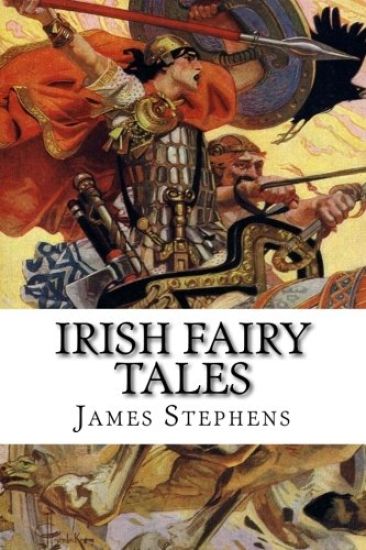
Irish Fairy Tales is a selection of mythical stories highlighting themes of love, duty and deception in the magical setting of ancient and medieval Ireland. Each narrative presents internal and external conflicts that test the moral code of its leading characters. James Stephens explores Ireland’s cherished history though the eyes of fabled hunters, soldiers, kings and queens. Many stories feature the Fianna, a group of tribal warriors, and their legendary leader, Fionn mac Cumhaill. Other tales include “The Wooing of Becfola,” “Becuma of the White Skin” and “Mongan's Frenzy.” It’s a marvelous display of culture and tradition that balances morality with adventure. With colorful prose and larger than life characters, Irish Fairy Tales delves into the Fenian Cycle—a prominent part of both Irish and Scottish mythology. This spirited retelling captivates readers pulling them into a world of wonder and mystery. It’s one of Stephens’ most successful works and has been a literary staple for generations. With an eye-catching new cover, and professionally typeset manuscript, this edition of Irish Fairy Tales is both modern and readable.
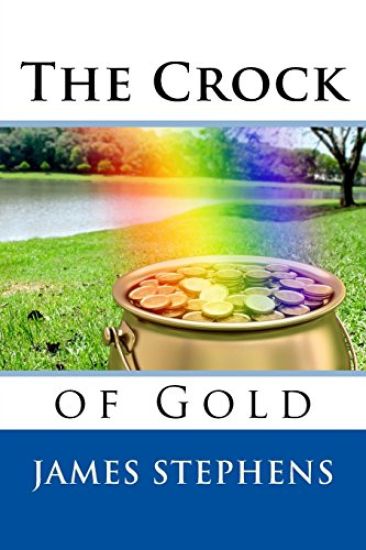
The Crock of Gold (1912), one of three original novels by James Stephens, is a work only a master of fiction and folklore could imagine. Taking up the major philosophical and psychological concerns of the early-twentieth century—over a decade before works by T.S. Eliot, James Joyce, and Virginia Woolf, among others, would cement literary Modernism’s place in history—Stephens’ novel is a groundbreaking and important work. The text centers on the Philosopher and his wife, the Thin Woman, who undergo a series of journeys and harrowing trials. Faced with danger both human and divine, the two characters are forced to weather the winds of change in order to change themselves. Divided into six books, The Crock of Gold—no doubt inspired by the Irish oral tradition of storytelling—follows the Philosopher’s quest to save the most beautiful woman in the world; his encounter with the gods who have captured her; his return home and arrest for murder (he has been framed by leprechauns incensed at the loss of their crock of gold); and finally, the Thin Woman’s quest to find the fabled Three Infinites. James Stephens’ The Crock of Gold is perhaps unparalleled in its ability to weave together ancient narrative techniques, mythological sources, and such dominant themes of its day as gender equality and humanity’s quest for self-understanding beyond the traditional boundaries of faith and religion. It is also a darkly comic novel, full of ironic political commentary and suspiciously human conversations situated within the animal world. Most popular of Stephens’ works, The Crock of Gold conceals in its humorous, irreverent outlook a deeply serious, ultimately reverent love for the human soul—unsurprising for an author whose life was marked with difficulty from the very beginning. With a beautifully designed cover and professionally typeset manuscript, this new edition of James Stephens’ The Crock of Gold is a classic of Irish literature reimagined for modern readers.
The Crock of Gold (1912), one of three original novels by James Stephens, is a work only a master of fiction and folklore could imagine. Taking up the major philosophical and psychological concerns of the early-twentieth century—over a decade before works by T.S. Eliot, James Joyce, and Virginia Woolf, among others, would cement literary Modernism’s place in history—Stephens’ novel is a groundbreaking and important work. The text centers on the Philosopher and his wife, the Thin Woman, who undergo a series of journeys and harrowing trials. Faced with danger both human and divine, the two characters are forced to weather the winds of change in order to change themselves. Divided into six books, The Crock of Gold—no doubt inspired by the Irish oral tradition of storytelling—follows the Philosopher’s quest to save the most beautiful woman in the world; his encounter with the gods who have captured her; his return home and arrest for murder (he has been framed by leprechauns incensed at the loss of their crock of gold); and finally, the Thin Woman’s quest to find the fabled Three Infinites. James Stephens’ The Crock of Gold is perhaps unparalleled in its ability to weave together ancient narrative techniques, mythological sources, and such dominant themes of its day as gender equality and humanity’s quest for self-understanding beyond the traditional boundaries of faith and religion. It is also a darkly comic novel, full of ironic political commentary and suspiciously human conversations situated within the animal world. Most popular of Stephens’ works, The Crock of Gold conceals in its humorous, irreverent outlook a deeply serious, ultimately reverent love for the human soul—unsurprising for an author whose life was marked with difficulty from the very beginning. With a beautifully designed cover and professionally typeset manuscript, this new edition of James Stephens’ The Crock of Gold is a classic of Irish literature reimagined for modern readers.
Irish Fairy Tales is a selection of mythical stories highlighting themes of love, duty and deception in the magical setting of ancient and medieval Ireland. Each narrative presents internal and external conflicts that test the moral code of its leading characters. James Stephens explores Ireland’s cherished history though the eyes of fabled hunters, soldiers, kings and queens. Many stories feature the Fianna, a group of tribal warriors, and their legendary leader, Fionn mac Cumhaill. Other tales include “The Wooing of Becfola,” “Becuma of the White Skin” and “Mongan's Frenzy.” It’s a marvelous display of culture and tradition that balances morality with adventure. With colorful prose and larger than life characters, Irish Fairy Tales delves into the Fenian Cycle—a prominent part of both Irish and Scottish mythology. This spirited retelling captivates readers pulling them into a world of wonder and mystery. It’s one of Stephens’ most successful works and has been a literary staple for generations. With an eye-catching new cover, and professionally typeset manuscript, this edition of Irish Fairy Tales is both modern and readable.
The Adventures of Seumas Beg; The Rocky Road to Dublin
James Stephens
Createspace Independent Publishing Platform
2015
nidottu