Kirjojen hintavertailu. Mukana 12 394 072 kirjaa ja 12 kauppaa.

Kirjahaku

Etsi kirjoja tekijän nimen, kirjan nimen tai ISBN:n perusteella.

1000 tulosta hakusanalla James T Edwards

Why I Shouldn't Work with a Werewolf: A Samuel the Vampire Novel

Why I Shouldn't Work with a Werewolf: A Samuel the Vampire Novel

James T. Carpenter

Createspace Independent Publishing Platform
2016
nidottu
As a special agent of VATE (Vampires Against the Evil), Samuel Johnson is no stranger to ridding the world of unsavory creatures. But in this Midwestern shopping mall, on this seemingly typical Friday night, Samuel faces his greatest challenge yet.Under orders from his superiors, the vampire must track down and capture a sinister vampwolf, while rescuing any humans that remain under its threat. And to make matters worse, he'll have to complete his mission working side-by-side with an ancient enemy of vampirekind-one of the wild, impulsive Hairy Ones known more commonly as werewolves.As if dealing with human stupidity wasn't bad enough, Samuel now has to find common ground with this mutt-who, by the way, is under his own orders to kill, rather than capture, the vampwolf on sight.As the unlikely duo embark on their dangerous search-and-rescue mission, will their story be a touching testament to the power of cooperation? Or will they prove, once and for all, why vampires and werewolves should never work together?
The Handbook of Program Management: How to Facilitate Project Success with Optimal Program Management, Second Edition
THE DEFINITIVE GUIDE TO PROGRAM MANAGEMENT--FULLY UPDATED AND REVISEDProgram managers must strike a balance between operations and project implementations in order to develop and maintain a culture in which the components of success are repeatable. The Handbook of Program Management is designed to help you do exactly that.This go-to guide supplies you with the insight and tools you need to establish processes that ensure the success of your project managers--and increase the profitability of your products and services. Fully updated and heavily revised, this new edition helps you incorporate new technologies and people into your processes while delivering improved products and services that continually outpace your competition.The Handbook of Program Management providescritical information from a trusted expert. In addition to the classic chapters on Attributes of the Effective Program Manager, Stakeholder Management, and Portfolio Management Essentials, this updated edition is packed with brandnew material covering:Change managementInterfacesHow bad projects are stopped or postponedHow consultants and subcontractors should be usedProgram performance analysisThe role of governanceAvoiding the complicated theories and phantom quick-fixes you'll find in other books, The Handbook of Program Management offers straightforward, actionable methods for establishing a highly effective project management culture: one with integrity, energy, and full stakeholder support.Nowhere else will you find such comprehensive,authoritative information on creating successful program management outcomes. The author takes you on the entire journey, from strategically creating a program culture, to building effective relationships, and to analyzing ways ofaccomplishing your program objectives.The Handbook of Program Management is essential reading for program managers of all levels, whether you're a novice seeking certification in the field or an executive looking to build a flexible organization that can support dynamic on-going product development.Praise for the previous edition of The Handbook of Program Management:"Brown's book captures the essential skills of program and project management. It serves as a 'how to' guide for those entering the business, as well as a refresher on the skills and attributes for those ready to take the next step. The book effectively defines the leader’s role in creating the team culture and environment for success." -- Eugene F. Kranz, Apollo 13 Flight Director, author of Failure Is Not an Option, and retired Director NASA Space Operations"Program management is one of the toughest jobs a person can hold…and James Brown knows Program Management. Here's a chance to learn from the scar tissue of others rather than your own." -- Norman R. Augustine, retired Chairman and CEO, Lockheed Martin Corporation"Finally, a pragmatic book that shares the secrets behind successful program management. If I was giving one book to program managers, this would be it! Any business leader in today's environment of accelerating change willbenefit from this book." -- Jack Cooper, former CIO, Bristol-Myers Squibb
Functional Analysis

Functional Analysis

James T. Chok; Jill M. Harper; Mary Jane Weiss; Frank L. Bird; James K. Luiselli

Academic Press Inc
2019
nidottu
Functional Analysis: A Practitioner’s Guide to Implementation and Training provides practitioners with the most updated information about applying the wide span of current functional analysis (FA) methodologies geared specifically to applied service settings. The book serves as a self-instructional implementation to a broad-base of trainees and care-providers within schools, clinics, centers and human services organizations. Adopting a Behavioral Skills Training and competency-based training outcomes approach, the learning materials and activities featured in the book include suggested slideshow presentations, role-play exercises, pre- and post-training quizzes, natural setting evaluation methods, data recording forms, instructional scripts and reproducible handouts.
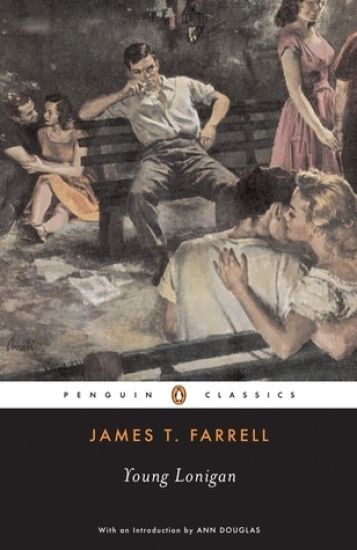
Young Lonigan

Young Lonigan

James T. Farrell

Penguin USA
2003
pokkari
The first volume of James T. Farrell's remarkable Studs Lonigan trilogyAn American classic in the vein of John Steinbeck's The Grapes of Wrath, the first book of James T. Farrell's powerful Studs Lonigan trilogy covers five months of the young hero's life in 1916, when he is sixteen years old. In this relentlessly naturalistic yet richly complex portrait, Studs is carried along by his swaggering and shortsighted companions, his narrow family, and his educational and religious background toward a fate that he resists yet cannot escape.For more than seventy years, Penguin has been the leading publisher of classic literature in the English-speaking world. With more than 1,700 titles, Penguin Classics represents a global bookshelf of the best works throughout history and across genres and disciplines. Readers trust the series to provide authoritative texts enhanced by introductions and notes by distinguished scholars and contemporary authors, as well as up-to-date translations by award-winning translators.
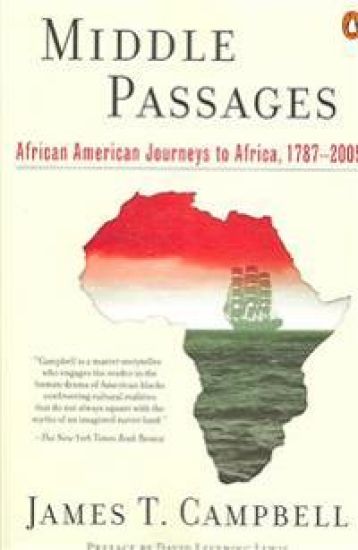
Middle Passages

Middle Passages

James T. Campbell

Penguin USA
2007
pokkari
A three-century history of African-American journeys back to Africa from an America where the profiled travelers or their ancestors were slaves traces the experiences of such people as W. E. B. Du Bois, Martin Luther King, Jr., and the founders of Liberia. Reprint.
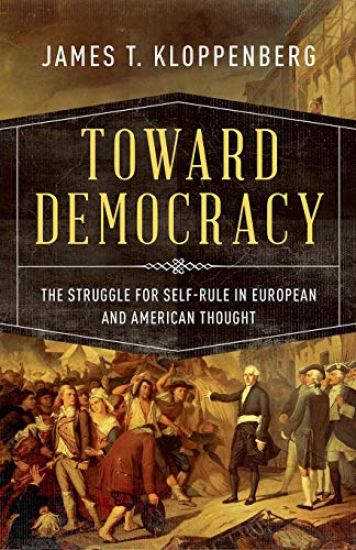
Toward Democracy

Toward Democracy

James T. Kloppenberg

Oxford University Press Inc
2019
nidottu
In this magnificent and encyclopedic overview, James T. Kloppenberg presents the history of democracy from the perspective of those who struggled to envision and achieve it. The story of democracy remains one without an ending, a dynamic of progress and regress that continues to our own day. In the classical age "democracy" was seen as the failure rather than the ideal of good governance. Democracies were deemed chaotic and bloody, indicative of rule by the rabble rather than by enlightened minds. Beginning in the 16th and 17th centuries, however, first in Europe and then in England's North American colonies, the reputation of democracy began to rise, resulting in changes that were sometimes revolutionary and dramatic, sometimes gradual and incremental. Kloppenberg offers a fresh look at how concepts and institutions of representative government developed and how understandings of self-rule changed over time on both sides of the Atlantic. Notions about what constituted true democracy preoccupied many of the most influential thinkers of the Western world, from Montaigne and Roger Williams to Milton and John Locke; from Rousseau and Jefferson to Wollstonecraft and Madison; and from de Tocqueville and J. S. Mill to Lincoln and Frederick Douglass. Over three centuries, explosive ideas and practices of democracy sparked revolutions--English, American, and French--that again and again culminated in civil wars, disastrous failures of democracy that impeded further progress. Comprehensive, provocative, and authoritative, Toward Democracy traces self-government through three pivotal centuries. The product of twenty years of research and reflection, this momentous work reveals how nations have repeatedly fallen short in their attempts to construct democratic societies based on the principles of autonomy, equality, deliberation, and reciprocity that they have claimed to prize. Underlying this exploration lies Kloppenberg's compelling conviction that democracy was and remains an ethical ideal rather than merely a set of institutions, a goal toward which we continue to struggle.
Uncertain Victory

Uncertain Victory

James T. Kloppenberg

Oxford University Press Inc
1988
nidottu
This is the first comparative study of ideas and politics in France, Germany, the US, and Great Britain between 1870 and 1920 - a period when two generations of European and American intellectuals created a transatlantic community of philosophical and political discourse. In particular, it demonstrates how a number of thinkers from different traditions converged to create the theoretical foundations for new programmes of social democracy and progressivism. 'finely researched and imaginative survey ... an interesting and important contribution to the history of political philosophy.' Journal of American History
Toward Democracy

Toward Democracy

James T. Kloppenberg

Oxford University Press Inc
2016
sidottu
The history of democracy, in addition to being a tale of social movements and political and economic developments, is also a story of ideas. In Toward Democracy, James T. Kloppenberg explores this story of ideas, focusing on the evolution of democracy in Britain's North American colonies and then in the United States. By concentrating on historical figures whose pivotal texts and framed arguments helped form the concept of democracy, he examines how American ideas and practices both descended and diverged from earlier European, and particularly English, models. Kloppenberg also shows how American thought, in return, profoundly influenced European ideas about democracy--both negatively and positively. Toward Democracy presents the history of democracy from the perspective of those who helped to form its principles. Kloppenberg neither condemns nor endorses these thinkers, but rather offers a fresh look at how these initial democratic ideals have shifted over time. He argues that democracy has remained an ethical model rather than a mere set of institutions, and sheds light on the many failures faced by democracy and its advocates. This discrepancy--between intentions and results--constitutes the tragic irony of democracy. From the beginnings of democracy in the ancient world, through the Enlightenment, and past the French Revolution, James T. Kloppenberg's authoritative work traces the transformation of democracy over centuries, and reveals how nations have repeatedly failed in their attempts to construct democratic societies based on the autonomy and reciprocity they so prized.
Songs of Zion

Songs of Zion

James T. Campbell

Oxford University Press Inc
1995
sidottu
This is a study of the transplantation of a creed devised by and for African Americans--the African Methodist Episcopal Church--that was appropriated and transformed in a variety of South African contexts. Focusing on a transatlantic institution like the African Methodist Episcopal Church, the book studies the complex human and intellectual traffic that has bound African American and South African experience. It explores the development and growth of the African Methodist Episcopal Church both in South Africa and America, and the interaction between the two churches. This is a highly innovative work of comparative and religious history. Its linking of the United States and African black religious experiences is unique and makes it appealing to readers interested in religious history and black experience in both the United States and South Africa.
Discrete Dynamical Modeling

Discrete Dynamical Modeling

James T. Sandefur

Oxford University Press Inc
1994
sidottu
This book presents an introduction to a wide range of techniques and applications for dynamical mathematical modelling, modelling that is useful in studying how things change over time. The book uses topics from algebra and encourages students to develop a different way of thinking about mathematics and how to use it in their field of interest. Their are no mathematical prerequisites beyond algebra.
Grand Expectations

Grand Expectations

James T. Patterson

Oxford University Press Inc
1998
nidottu
Beginning in 1945, America rocketed through a quarter-century of extraordinary economic growth, experiencing an amazing boom that soared to unimaginable heights in the 1960s. At one point, in the late 1940s, American workers produced 57 percent of the planet's steel, 62 percent of the oil, 80 percent of the automobiles. The U.S. then had three-fourths of the world's gold supplies. English Prime Minister Edward Heath later said that the United States in the post-War era enjoyed "the greatest prosperity the world has ever known." It was a boom that produced a national euphoria, a buoyant time of grand expectations and an unprecedented faith in our government, in our leaders, and in the American dream--an optimistic spirit which would be shaken by events in the '60s and '70s, and particularly by the Vietnam War. Now, in Grand Expectations, James T. Patterson has written a highly readable and balanced work that weaves the major political, cultural, and economic events of the period into a superb portrait of America from 1945 through Watergate. Here is an era teeming with memorable events--from the bloody campaigns in Korea and the bitterness surrounding McCarthyism to the assassinations of the Kennedys and Martin Luther King, to the Vietnam War, Watergate, and Nixon's resignation. Patterson excels at portraying the amazing growth after World War II--the great building boom epitomized by Levittown (the largest such development in history) and the baby boom (which exploded literally nine months after V-J Day)--as well as the resultant buoyancy of spirit reflected in everything from streamlined toasters, to big, flashy cars, to the soaring, butterfly roof of TWA's airline terminal in New York. And he shows how this upbeat, can-do mood spurred grander and grander expectations as the era progressed. Of course, not all Americans shared in this economic growth, and an important thread running through the book is an informed and gripping depiction of the civil rights movement--from the electrifying Brown v. Board of Education decision, to the violent confrontations in Little Rock, Birmingham, and Selma, to the landmark civil rights acts of 1964 and 1965. Patterson also shows how the Vietnam War--which provoked LBJ's growing credibility gap, vast defense spending that dangerously unsettled the economy, and increasingly angry protests--and a growing rights revolution (including demands by women, Hispanics, the poor, Native Americans, and gays) triggered a backlash that widened hidden rifts in our society, rifts that divided along racial, class, and generational lines. And by Nixon's resignation, we find a national mood in stark contrast to the grand expectations of ten years earlier, one in which faith in our leaders and in the attainability of the American dream was becoming shaken. Grand Expectations is the newest volume in the prestigious Oxford History of the United States. The earlier releases were highly acclaimed, and one, Battle Cry of Freedom, was both a New York Times bestseller and a winner of the Pulitzer Prize. Patterson's volume takes its rightful place beside these distinguished works. It is a brilliant summation of the years that created the America that we know today, a time of setbacks amid unmatched and lasting achievements.
Restless Giant

Restless Giant

James T. Patterson

Oxford University Press Inc
2005
sidottu
Restless Giant is a magisterial interpretation of American history between 1974, when the crisis of Watergate imperiled the nation, and November 2000, when the bitterly contested presidential election marked an all-time low in confidence in the electoral process. James T. Patterson, whose earlier contribution to the Oxford History of the United States, Grand Expectations (1996), won a Bancroft Prize for History, offers in this follow-up volume a vivid narrative of this quarter century which did so much to shape American life today. A host of memorable characters, notably Ronald Reagan and Bill Clinton, sought to transform the nation. Conservatives, including a resurgent Religious Right, battled liberals in 'culture wars' that appeared to cut the country in two. The frightening Cold War finally ended, whereupon Americans faced bewildering new developments in international relations. Though a military colossus, the United States discovered-in Panama, Somalia, Bosnia, Iraq-that it was far from easy to direct the outcome of overseas events. Restless Giant explores a wide range of cultural, social, and economic concerns. Many of these-abiding racial tensions, rising income inequality, dismal inner-city schools, tasteless popular entertainment, an ever more exuberant materialism-drove critics to label these years as an 'Era of Conflict', an 'Age of Limits', and an 'Era of Decline'. Patterson, highlighting the buoyancy of American culture, is not so pessimistic. The economy, having wallowed in 'stagflation' between 1974 and 1982, later surged ahead. By 2000, most Americans lived far more comfortably than they had in the 1970s. Thanks to rising tolerance and a powerful rights consciousness, many groups-racial and ethnic minorities, Catholics and Jews, women, the handicapped, senior citizens, gay people-encountered considerably less bigotry and discrimination than they had in the past.
Restless Giant

Restless Giant

James T. Patterson

Oxford University Press Inc
2007
nidottu
James Patterson's Bancroft Prize-winning Grand Expectations, the penultimate volume in the Oxford History of the United States, was hailed by The New York Times as "a spirited, sprawling narrative of American life" and by The Wall Street Journal as "a tour de force." Now, in the final chronological volume of this acclaimed series, Patterson again offers an authoritative and vibrant history of a turbulent period in American life. Restless Giant provides a crisp, concise assessment of the twenty-seven years between the resignation of Richard Nixon and the election of George W. Bush, in a sweeping narrative that seamlessly weaves together social, cultural, political, economic, and international developments. We meet the era's many memorable figures--most notably, Ronald Reagan and Bill Clinton--and explore the "culture wars" where liberals and conservatives, including a resurgent Religious Right, appeared to cut the country in two. Indeed, Reagan helped to usher in a widespread conservative revolution, but even as the Right was ascendant politically, it did not succeed in reversing more liberal trends. Patterson describes how, when the Cold War finally ended, Americans faced bewildering new developments around the world and discovered--in Panama, Somalia, Bosnia, and Iraq--that it was far from easy to direct the outcome of global events. In exploring a wide range of cultural, social, and economic concerns, Patterson shows how the persistence of racial tensions, high divorce rates, alarm over crime, and urban decay all led many writers to portray this era as one of decline. But Restless Giant offers a more positive perspective, arguing that our often unmet expectations caused many of us to view the era negatively, when in fact we were in many ways better off than we thought. By 2000, most Americans lived more comfortably than they had in the 1970s, and though bigotry and discrimination were far from extinct, a powerful rights consciousness insured that these were less pervasive in American life than at any time in the past. With insightful analyses and engaging prose, Restless Giant captures this period of American history in a way that no other book has, illuminating the road that the United States traveled from the dismal days of the mid-1970s through the hotly contested election of 2000.
Communion of Immigrants

Communion of Immigrants

James T. Fisher

Oxford University Press Inc
2007
nidottu
Catholicism has grown from a suppressed and persecuted outsiders' religion in the American colonies to become the nation's single largest denomination. James Fisher surveys more than four centuries of Catholics' involvement in American history, following the transformation of catholicism into one of America's most culturaly and ethnically diverse religions.
Punishing Corporate Crime

Punishing Corporate Crime

James T. O'Reilly; James Patrick Hanlon; Ralph F. Hall; Steven L. Jackson; Erin Lewis

Oxford University Press Inc
2009
sidottu
Punishing Corporate Crime: Legal Penalties for Criminal and Regulatory Violations provides a practical discussion of criminal punishment trends directed at the corporate entity. Corporate punishment, for the most part, has traditionally occurred either in the form of a fine or, in the extreme, a heavy sanction that terminates the business. This timely book analyzes the historical and statutory bases of corporate punishment and reviews the latest remedies now employed by the government, including receivership and monitoring, disgorgement of profits, restitution, integrity agreements, and disbarment from regulated fields. Punishing Corporate Crime explores the new and evolving area of corporate criminal punishment that has emerged in the post- Enron era. This book offers key advice in addressing the new and evolving punishments that face corporations, as well as a consideration of preventative programs.
Warfare State

Warfare State

James T. Sparrow

Oxford University Press Inc
2011
sidottu
Although common wisdom and much scholarship assume that "big government" gained its foothold in the United States under the auspices of the New Deal during the Great Depression, in fact it was World War II that accomplished this feat. Indeed, as the federal government mobilized for war it grew tenfold, quickly dwarfing the New Deal's welfare programs. Warfare State shows how the federal government, in the course of World War II, vastly expanded its influence over American society. Equally important, it looks at how and why Americans adapted to this expansion of authority. Through mass participation in military service, war work, rationing, price control, income taxation and ownership of the national debt in the form of war bonds, ordinary Americans learned to live with the warfare state. They accepted these new obligations because the government encouraged all citizens to think of themselves as personally connected to the battle front, and to imagine the impact of their every action on the combat soldier. By working for the American Soldier, they habituated themselves to the authority of the government. Citizens made their own counter-claims on the state--particularly in the case of industrial workers, women, African Americans, and most of all, the soldiers. Their demands for fuller citizenship offer important insights into the relationship between citizen morale, the uses of patriotism, and the legitimacy of the state in wartime. World War II forged a new bond between citizens, nation, and government. Warfare State tells the story of this dramatic transformation in American life.
Warfare State

Warfare State

James T. Sparrow

Oxford University Press Inc
2013
nidottu
Although common wisdom and much scholarship assume that "big government" gained its foothold in the United States under the auspices of the New Deal during the Great Depression, in fact it was the Second World War that accomplished this feat. Indeed, as the federal government mobilized for war it grew tenfold, quickly dwarfing the New Deal's welfare programs. Warfare State shows how the federal government vastly expanded its influence over American society during World War II. Equally important, it looks at how and why Americans adapted to this expansion of authority. Through mass participation in military service, war work, rationing, price control, income taxation, and the war bond program, ordinary Americans learned to live with the warfare state. They accepted these new obligations because the government encouraged all citizens to think of themselves as personally connected to the battle front, linking their every action to the fate of the combat soldier. As they worked for the American Soldier, Americans habituated themselves to the authority of the government. Citizens made their own counter-claims on the state-particularly in the case of industrial workers, women, African Americans, and most of all, the soldiers. Their demands for fuller citizenship offer important insights into the relationship between citizen morale, the uses of patriotism, and the legitimacy of the state in wartime. World War II forged a new bond between citizens, nation, and government. Warfare State tells the story of this dramatic transformation in American life.