Kirjojen hintavertailu. Mukana 11 342 296 kirjaa ja 12 kauppaa.

Kirjahaku

Etsi kirjoja tekijän nimen, kirjan nimen tai ISBN:n perusteella.

1000 tulosta hakusanalla James T. Cook

Grand Expectations

Grand Expectations

James T. Patterson

Oxford University Press Inc
1998
nidottu
Beginning in 1945, America rocketed through a quarter-century of extraordinary economic growth, experiencing an amazing boom that soared to unimaginable heights in the 1960s. At one point, in the late 1940s, American workers produced 57 percent of the planet's steel, 62 percent of the oil, 80 percent of the automobiles. The U.S. then had three-fourths of the world's gold supplies. English Prime Minister Edward Heath later said that the United States in the post-War era enjoyed "the greatest prosperity the world has ever known." It was a boom that produced a national euphoria, a buoyant time of grand expectations and an unprecedented faith in our government, in our leaders, and in the American dream--an optimistic spirit which would be shaken by events in the '60s and '70s, and particularly by the Vietnam War. Now, in Grand Expectations, James T. Patterson has written a highly readable and balanced work that weaves the major political, cultural, and economic events of the period into a superb portrait of America from 1945 through Watergate. Here is an era teeming with memorable events--from the bloody campaigns in Korea and the bitterness surrounding McCarthyism to the assassinations of the Kennedys and Martin Luther King, to the Vietnam War, Watergate, and Nixon's resignation. Patterson excels at portraying the amazing growth after World War II--the great building boom epitomized by Levittown (the largest such development in history) and the baby boom (which exploded literally nine months after V-J Day)--as well as the resultant buoyancy of spirit reflected in everything from streamlined toasters, to big, flashy cars, to the soaring, butterfly roof of TWA's airline terminal in New York. And he shows how this upbeat, can-do mood spurred grander and grander expectations as the era progressed. Of course, not all Americans shared in this economic growth, and an important thread running through the book is an informed and gripping depiction of the civil rights movement--from the electrifying Brown v. Board of Education decision, to the violent confrontations in Little Rock, Birmingham, and Selma, to the landmark civil rights acts of 1964 and 1965. Patterson also shows how the Vietnam War--which provoked LBJ's growing credibility gap, vast defense spending that dangerously unsettled the economy, and increasingly angry protests--and a growing rights revolution (including demands by women, Hispanics, the poor, Native Americans, and gays) triggered a backlash that widened hidden rifts in our society, rifts that divided along racial, class, and generational lines. And by Nixon's resignation, we find a national mood in stark contrast to the grand expectations of ten years earlier, one in which faith in our leaders and in the attainability of the American dream was becoming shaken. Grand Expectations is the newest volume in the prestigious Oxford History of the United States. The earlier releases were highly acclaimed, and one, Battle Cry of Freedom, was both a New York Times bestseller and a winner of the Pulitzer Prize. Patterson's volume takes its rightful place beside these distinguished works. It is a brilliant summation of the years that created the America that we know today, a time of setbacks amid unmatched and lasting achievements.
Restless Giant

Restless Giant

James T. Patterson

Oxford University Press Inc
2005
sidottu
Restless Giant is a magisterial interpretation of American history between 1974, when the crisis of Watergate imperiled the nation, and November 2000, when the bitterly contested presidential election marked an all-time low in confidence in the electoral process. James T. Patterson, whose earlier contribution to the Oxford History of the United States, Grand Expectations (1996), won a Bancroft Prize for History, offers in this follow-up volume a vivid narrative of this quarter century which did so much to shape American life today. A host of memorable characters, notably Ronald Reagan and Bill Clinton, sought to transform the nation. Conservatives, including a resurgent Religious Right, battled liberals in 'culture wars' that appeared to cut the country in two. The frightening Cold War finally ended, whereupon Americans faced bewildering new developments in international relations. Though a military colossus, the United States discovered-in Panama, Somalia, Bosnia, Iraq-that it was far from easy to direct the outcome of overseas events. Restless Giant explores a wide range of cultural, social, and economic concerns. Many of these-abiding racial tensions, rising income inequality, dismal inner-city schools, tasteless popular entertainment, an ever more exuberant materialism-drove critics to label these years as an 'Era of Conflict', an 'Age of Limits', and an 'Era of Decline'. Patterson, highlighting the buoyancy of American culture, is not so pessimistic. The economy, having wallowed in 'stagflation' between 1974 and 1982, later surged ahead. By 2000, most Americans lived far more comfortably than they had in the 1970s. Thanks to rising tolerance and a powerful rights consciousness, many groups-racial and ethnic minorities, Catholics and Jews, women, the handicapped, senior citizens, gay people-encountered considerably less bigotry and discrimination than they had in the past.
Restless Giant

Restless Giant

James T. Patterson

Oxford University Press Inc
2007
nidottu
James Patterson's Bancroft Prize-winning Grand Expectations, the penultimate volume in the Oxford History of the United States, was hailed by The New York Times as "a spirited, sprawling narrative of American life" and by The Wall Street Journal as "a tour de force." Now, in the final chronological volume of this acclaimed series, Patterson again offers an authoritative and vibrant history of a turbulent period in American life. Restless Giant provides a crisp, concise assessment of the twenty-seven years between the resignation of Richard Nixon and the election of George W. Bush, in a sweeping narrative that seamlessly weaves together social, cultural, political, economic, and international developments. We meet the era's many memorable figures--most notably, Ronald Reagan and Bill Clinton--and explore the "culture wars" where liberals and conservatives, including a resurgent Religious Right, appeared to cut the country in two. Indeed, Reagan helped to usher in a widespread conservative revolution, but even as the Right was ascendant politically, it did not succeed in reversing more liberal trends. Patterson describes how, when the Cold War finally ended, Americans faced bewildering new developments around the world and discovered--in Panama, Somalia, Bosnia, and Iraq--that it was far from easy to direct the outcome of global events. In exploring a wide range of cultural, social, and economic concerns, Patterson shows how the persistence of racial tensions, high divorce rates, alarm over crime, and urban decay all led many writers to portray this era as one of decline. But Restless Giant offers a more positive perspective, arguing that our often unmet expectations caused many of us to view the era negatively, when in fact we were in many ways better off than we thought. By 2000, most Americans lived more comfortably than they had in the 1970s, and though bigotry and discrimination were far from extinct, a powerful rights consciousness insured that these were less pervasive in American life than at any time in the past. With insightful analyses and engaging prose, Restless Giant captures this period of American history in a way that no other book has, illuminating the road that the United States traveled from the dismal days of the mid-1970s through the hotly contested election of 2000.
Communion of Immigrants

Communion of Immigrants

James T. Fisher

Oxford University Press Inc
2007
nidottu
Catholicism has grown from a suppressed and persecuted outsiders' religion in the American colonies to become the nation's single largest denomination. James Fisher surveys more than four centuries of Catholics' involvement in American history, following the transformation of catholicism into one of America's most culturaly and ethnically diverse religions.
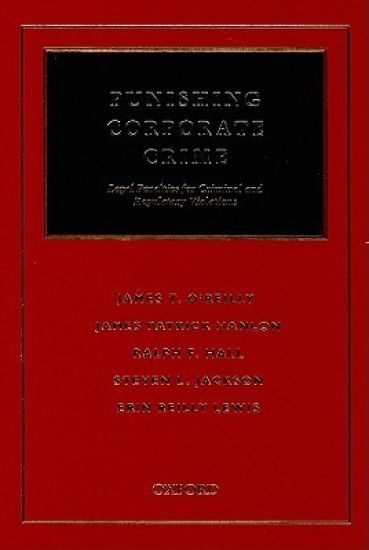
Punishing Corporate Crime

Punishing Corporate Crime

James T. O'Reilly; James Patrick Hanlon; Ralph F. Hall; Steven L. Jackson; Erin Lewis

Oxford University Press Inc
2009
sidottu
Punishing Corporate Crime: Legal Penalties for Criminal and Regulatory Violations provides a practical discussion of criminal punishment trends directed at the corporate entity. Corporate punishment, for the most part, has traditionally occurred either in the form of a fine or, in the extreme, a heavy sanction that terminates the business. This timely book analyzes the historical and statutory bases of corporate punishment and reviews the latest remedies now employed by the government, including receivership and monitoring, disgorgement of profits, restitution, integrity agreements, and disbarment from regulated fields. Punishing Corporate Crime explores the new and evolving area of corporate criminal punishment that has emerged in the post- Enron era. This book offers key advice in addressing the new and evolving punishments that face corporations, as well as a consideration of preventative programs.
Warfare State

Warfare State

James T. Sparrow

Oxford University Press Inc
2011
sidottu
Although common wisdom and much scholarship assume that "big government" gained its foothold in the United States under the auspices of the New Deal during the Great Depression, in fact it was World War II that accomplished this feat. Indeed, as the federal government mobilized for war it grew tenfold, quickly dwarfing the New Deal's welfare programs. Warfare State shows how the federal government, in the course of World War II, vastly expanded its influence over American society. Equally important, it looks at how and why Americans adapted to this expansion of authority. Through mass participation in military service, war work, rationing, price control, income taxation and ownership of the national debt in the form of war bonds, ordinary Americans learned to live with the warfare state. They accepted these new obligations because the government encouraged all citizens to think of themselves as personally connected to the battle front, and to imagine the impact of their every action on the combat soldier. By working for the American Soldier, they habituated themselves to the authority of the government. Citizens made their own counter-claims on the state--particularly in the case of industrial workers, women, African Americans, and most of all, the soldiers. Their demands for fuller citizenship offer important insights into the relationship between citizen morale, the uses of patriotism, and the legitimacy of the state in wartime. World War II forged a new bond between citizens, nation, and government. Warfare State tells the story of this dramatic transformation in American life.
Warfare State

Warfare State

James T. Sparrow

Oxford University Press Inc
2013
nidottu
Although common wisdom and much scholarship assume that "big government" gained its foothold in the United States under the auspices of the New Deal during the Great Depression, in fact it was the Second World War that accomplished this feat. Indeed, as the federal government mobilized for war it grew tenfold, quickly dwarfing the New Deal's welfare programs. Warfare State shows how the federal government vastly expanded its influence over American society during World War II. Equally important, it looks at how and why Americans adapted to this expansion of authority. Through mass participation in military service, war work, rationing, price control, income taxation, and the war bond program, ordinary Americans learned to live with the warfare state. They accepted these new obligations because the government encouraged all citizens to think of themselves as personally connected to the battle front, linking their every action to the fate of the combat soldier. As they worked for the American Soldier, Americans habituated themselves to the authority of the government. Citizens made their own counter-claims on the state-particularly in the case of industrial workers, women, African Americans, and most of all, the soldiers. Their demands for fuller citizenship offer important insights into the relationship between citizen morale, the uses of patriotism, and the legitimacy of the state in wartime. World War II forged a new bond between citizens, nation, and government. Warfare State tells the story of this dramatic transformation in American life.
The Clergy Sex Abuse Crisis and the Legal Responses

The Clergy Sex Abuse Crisis and the Legal Responses

James T. O'Reilly; Margaret S.P. Chalmers

Oxford University Press Inc
2014
sidottu
The sexual abuse of children and teens by rogue priests in the U.S. Catholic Church is a heinous crime, and those who pray for a religious community as its ministers, priests and rabbis should never tolerate those who prey on that community. The legal disputes of recent years have produced many scandalous headlines and fuelled public discussion about the sexual abuse crisis within the clergy, a crisis that has cost the U.S. Catholic Church over $3 billion. In The Clergy Sex Abuse Crisis and the Legal Responses, two eminent experts, James O'Reilly and Margaret Chalmers, draw on the lessons of recent years to discern the interplay between civil damages law and global church-based canon law. In some countries civil and canon law, although autonomous systems of law, both form part of the church's legal duties. In the United States, freedom of religion issues have complicated how the state adjudicates both cases of abuse and who can be held responsible for clerical oversight. This book examines questions of civil and criminal liability, issues of respondeat superior and oversight, issues with statutes of limitations and dealing with allegations that occurred decades ago, and how the Church's internal judicial processes interact or clash with the civil pursuit of these cases.
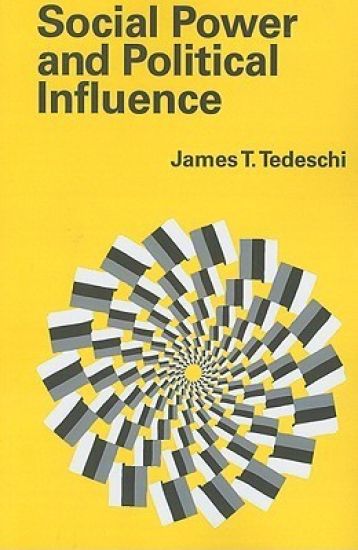
Social Power and Political Influence

Social Power and Political Influence

James T. Tedeschi

AldineTransaction
2008
nidottu
The nature of social power, the ability of individuals to affect the behavior and belief of others, is central to any understanding of the dynamics of change in our society. It is therefore surprising that social scientists, and especially social psychologists, have devoted relatively little attention to the subject and have accumulated relatively little knowledge about it. But this gap may be more apparent than real argues James T. Tedeschi; there has in fact been a great deal of research on many aspects of interpersonal influence. What is missing is the kind of consensus about an operational definition of the concept of power that would bring this work usefully into focus.The purpose of Social Power and Political Influence is to bring together the best work of scholars from many disciplines in order to organize, develop, evaluate, and interpret scientific theories of social, political, and economic power. The contributors are drawn from anthropology, political science, sociology, and social psychology. They illustrate a variety of approaches, ranging from ethnographic case studies to mathematically formalized models. Presenting theory and methods, these chapters treat in provocative and creative ways such important problems as the factors that affect the use of power and the nature of response to its use, the linkages that affect the flow of power between individuals and social systems, the consequences of attributions of power by actors and observers, and the implications of trust as an alternative to explicit influence.This in-depth scholarly sampling of research and theory will be of great interest to everyone concerned with the scientific study of social and political power and the influence processes. The interdisciplinary nature of the topic itself and of the work represented here make Social Power and Political Influence an important contribution for students and scholars in many fields, from social psychology, political science and sociology to communications, management science, and economics.
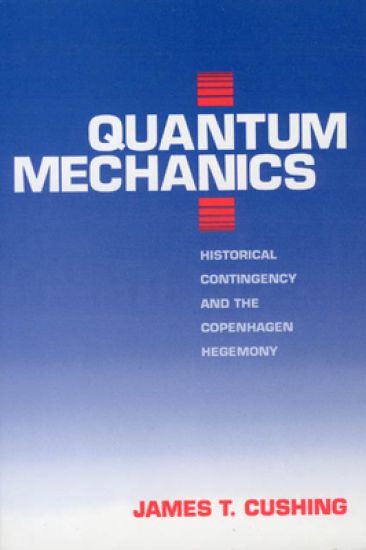
Quantum Mechanics

Quantum Mechanics

James T. Cushing

University of Chicago Press
1994
sidottu
Why does one theory "succeed" while another, possibly clearer interpretation, fails? By exploring two observationally equivalent, yet conceptually incompatible, views of quantum mechanics, James T. Cushing shows how historical contingency can be crucial to determining a theory's construction and its position among competing views. Since the late 1920s, the theory formulated by Niels Bohr and his colleagues at Copenhagen has been the dominant interpretation of quantum mechanics. Yet an alternative interpretation, rooted in the work of Louis de Broglie in the early 1920s and reformulated and extended by David Bohm in the 1950s, equally well explains the observational data. Through a detailed historical and sociological study of the physicists who developed different theories of quantum mechanics, the debates within and between opposing camps, and the receptions given to each theory, Cushing shows that despite the preeminence of the Copenhagen view, the Bohm interpretation cannot be ignored. Cushing contends that the Copenhagen interpretation became widely accepted not because it is a better explanation of subatomic phenomena than Bohm's, but because it happened to appear first. Focusing on the philosophical, social and cultural forces that shaped one of the most important developments in modern physics, this book examines the role that timing can play in the establishment of theory and explanation.
Quantum Mechanics

Quantum Mechanics

James T. Cushing

University of Chicago Press
1994
nidottu
Why does one theory "succeed" while another, possibly clearer interpretation, fails? By exploring two observationally equivalent, yet conceptually incompatible, views of quantum mechanics, James T. Cushing shows how historical contingency can be crucial to determining a theory's construction and its position among competing views. Since the late 1920s, the theory formulated by Niels Bohr and his colleagues at Copenhagen has been the dominant interpretation of quantum mechanics. Yet an alternative interpretation, rooted in the work of Louis de Broglie in the early 1920s and reformulated and extended by David Bohm in the 1950s, equally well explains the observational data. Through a detailed historical and sociological study of the physicists who developed different theories of quantum mechanics, the debates within and between opposing camps, and the receptions given to each theory, Cushing shows that despite the preeminence of the Copenhagen view, the Bohm interpretation cannot be ignored. Cushing contends that the Copenhagen interpretation became widely accepted not because it is a better explanation of subatomic phenomena than Bohm's, but because it happened to appear first. Focusing on the philosophical, social and cultural forces that shaped one of the most important developments in modern physics, this book examines the role that timing can play in the establishment of theory and explanation.
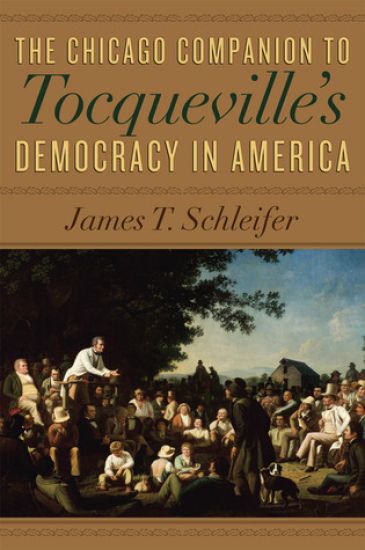
The Chicago Companion to Tocqueville's Democracy in America

The Chicago Companion to Tocqueville's Democracy in America

James T. Schleifer

University of Chicago Press
2012
sidottu
One of the greatest books ever to be written on the United States, "Democracy in America" continues to find new readers who marvel at the lasting insights Alexis de Tocqueville had into our nation and its political culture. The work, however, is as challenging as it is important; its arguments can be complex and subtle, and its sheer length can make it difficult for any reader, especially one coming to it for the first time, to grasp Tocqueville's meaning. "The Chicago Companion" to Tocqueville's "Democracy in America" is the first book written expressly to help general readers and students alike get the most out of this seminal work. James T. Schleifer, an expert on Tocqueville, has provided the background and information readers need in order to understand Tocqueville's masterwork. In clear and engaging prose, Schleifer explains why "Democracy in America" is so important, how it came to be written, and how different generations of Americans have interpreted it since its publication. Drawing upon his intimate knowledge of Tocqueville's papers and manuscripts, Schleifer reveals how Tocqueville's ideas took shape and changed even in the course of writing the book. Schleifer also provides a detailed glossary of key terms and passages, all accompanied by generous citations to the relevant pages in the University of Chicago Press' Mansfield/Winthrop translation. "The Chicago Companion" will serve generations of readers as an essential guide to both the man and his work.
The Chicago Companion to Tocqueville's Democracy in America

The Chicago Companion to Tocqueville's Democracy in America

James T. Schleifer

University of Chicago Press
2012
nidottu
One of the greatest books ever to be written on the United States, "Democracy in America" continues to find new readers who marvel at the lasting insights Alexis de Tocqueville had into our nation and its political culture. The work, however, is as challenging as it is important; its arguments can be complex and subtle, and its sheer length can make it difficult for any reader, especially one coming to it for the first time, to grasp Tocqueville's meaning. "The Chicago Companion" to Tocqueville's "Democracy in America" is the first book written expressly to help general readers and students alike get the most out of this seminal work. James T. Schleifer, an expert on Tocqueville, has provided the background and information readers need in order to understand Tocqueville's masterwork. In clear and engaging prose, Schleifer explains why Democracy in America is so important, how it came to be written, and how different generations of Americans have interpreted it since its publication. Drawing upon his intimate knowledge of Tocqueville's papers and manuscripts, Schleifer reveals how Tocqueville's ideas took shape and changed even in the course of writing the book. Schleifer also provides a detailed glossary of key terms and passages, all accompanied by generous citations to the relevant pages in the University of Chicago Press' Mansfield/Winthrop translation. "The Chicago Companion" will serve generations of readers as an essential guide to both the man and his work.