Kirjojen hintavertailu. Mukana 11 244 527 kirjaa ja 12 kauppaa.

Kirjahaku

Etsi kirjoja tekijän nimen, kirjan nimen tai ISBN:n perusteella.

1000 tulosta hakusanalla Jameson Fitzpatrick

Fredric Jameson and The Wolf of Wall Street

Fredric Jameson and The Wolf of Wall Street

Clint Burnham

Bloomsbury Academic USA
2016
sidottu
The Film Theory in Practice series fills a gaping hole in the world of film theory. By marrying the explanation of a film theory with the interpretation of a film, the volumes provide discrete examples of how film theory can serve as the basis for textual analysis. Fredric Jameson and The Wolf of Wall Street offers a concise introduction to Jameson in jargon-free language and shows how his Marxist theories can be deployed to interpret Martin Scorsese's critically acclaimed 2013 film The Wolf of Wall Street. Beginning with a detailed account of Jameson's extensive writings on Marxist theory and how they have been deployed in the analysis of film writings, Clint Burnham then illustrates how Jameson’s theory can help to make sense of The Wolf of Wall Street, a film that shows in all its glory the excesses, lunacies, and inner workings of 1990s finance capitalism. As Jameson has influentially argued, films like The Wolf of Wall Street are both complicit in and critical of their historical subject: Scorsese’s film is not about the richest stockbrokers, but the Long Island penny traders who made it big. As a narrative of American success, it is also a film about failure. Clint Burnham's reading of Jameson and The Wolf of Wall Street is a book about a contemporary film, and contemporary events, and contemporary theory.
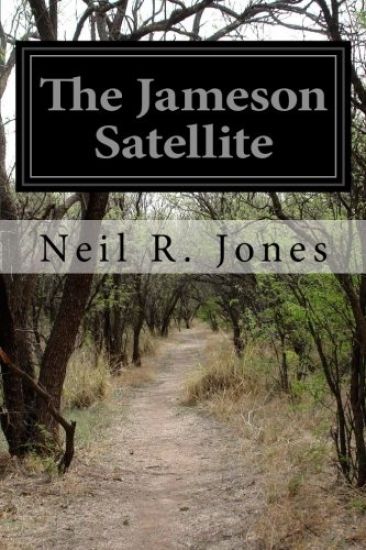
The Jameson Satellite by Neil R. Jones, Science Fiction, Fantasy, Adventure
The mammoths of the ancient world have been wonderfully preserved in the ice of Siberia. The cold, only a few miles out in space, will be far more intense than in the polar regions and its power of preserving the dead body would most probably be correspondingly increased. When the hero-scientist of this story knows he must die, he conceives a brilliant idea for the preservation of his body, the result of which even exceeded his expectations. What, how, and why are cleverly told here.
Anna Jameson

Anna Jameson

Judith Johnston

Ashgate Publishing Limited
1997
sidottu
Anna Brownwell Jameson (1794-1869) was a central figure in the London world of letters and art in the early Victorian period, and an important feminist writer. Her friends included such figures as Harriet Martineau, Lady Byron, Robert Browning and Elizabeth Barrett Browning. This study considers her life and works, using a different Jameson work as the central focus of each chapter. The author considers the particular non-fiction discourse in which the work is written, as well as such issues as gender and colonialism. Arranged chronologically, the book also charts the growth and development of a determined feminism in the vital years of the early Victorian period, and compares Jameson to her contemporaries.
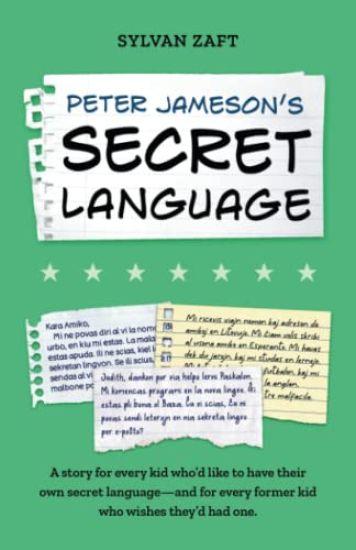
Peter Jameson's Secret Language

Peter Jameson's Secret Language

Sylvan Zaft

Eldonejo Fenikso
2022
pokkari
Peter Jameson and his friends at Cardiff Elementary want their own secret language that grown-ups won't understand, but learning a language like French or Latin would take too long. Their search for a solution finally leads them to Ethel Wingate, an eccentric old lady with an infectious smile ... and a strange obsession with green stars. She introduces them to a special language that they can begin speaking after just a week of study. When they use the language at school, however, some of the other kids start treating them differently. Ugly rumors are spread. Fights break out. And the principal clamps down with an order of "English Only " forcing Peter and his friends to make a difficult choice.Both children and adults can enjoy "Peter Jameson's Secret Language" and start learning the real-life "secret" language along with Peter and his friends.
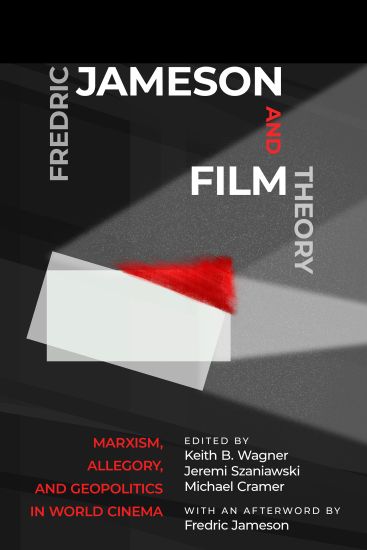
Fredric Jameson and Film Theory

Fredric Jameson and Film Theory

Rutgers University Press
2022
nidottu
Frederic Jameson and Film Theory is the first collection of its kind, it assesses and critically responds to Fredric Jameson’s remarkable contribution to film theory. The essays assembled explore key Jamesonian concepts—such as totality, national allegory, geopolitics, globalization, representation, and pastiche—and his historical schema of realism, modernism, and postmodernism, considering, in both cases, how these can be applied, revised, expanded and challenged within film studies. Featuring essays by leading and emerging voices in the field, the volume probes the contours and complexities of neoliberal capitalism across the globe and explores world cinema's situation within these forces by deploying and adapting Jamesonian concepts, and placing them in dialogue with other theoretical paradigms. The result is an innovative and rigorously analytical effort that offers a range of Marxist-inspired approaches towards cinemas from Asia, Latin America, Europe, and North America in the spirit of Jameson's famous rallying cry: 'always historicize!'.
Fredric Jameson and Film Theory

Fredric Jameson and Film Theory

Rutgers University Press
2022
sidottu
Frederic Jameson and Film Theory is the first collection of its kind, it assesses and critically responds to Fredric Jameson’s remarkable contribution to film theory. The essays assembled explore key Jamesonian concepts—such as totality, national allegory, geopolitics, globalization, representation, and pastiche—and his historical schema of realism, modernism, and postmodernism, considering, in both cases, how these can be applied, revised, expanded and challenged within film studies. Featuring essays by leading and emerging voices in the field, the volume probes the contours and complexities of neoliberal capitalism across the globe and explores world cinema's situation within these forces by deploying and adapting Jamesonian concepts, and placing them in dialogue with other theoretical paradigms. The result is an innovative and rigorously analytical effort that offers a range of Marxist-inspired approaches towards cinemas from Asia, Latin America, Europe, and North America in the spirit of Jameson's famous rallying cry: 'always historicize!'.
The Jameson Satellite

The Jameson Satellite

Neil R Jones

ALPHA EDITION
2022
pokkari
This book "" The Jameson Satellite "", has been considered important throughout the human history, and so that this work is never forgotten we have made efforts in its preservation by republishing this book in a modern format for present and future generations. This whole book has been reformatted, retyped and designed. These books are not made of scanned copies and hence the text is clear and readable.
Fredric Jameson and The Wolf of Wall Street

Fredric Jameson and The Wolf of Wall Street

Clint Burnham

Bloomsbury Academic USA
2016
nidottu
The Film Theory in Practice series fills a gaping hole in the world of film theory. By marrying the explanation of a film theory with the interpretation of a film, the volumes provide discrete examples of how film theory can serve as the basis for textual analysis. Fredric Jameson and The Wolf of Wall Street offers a concise introduction to Jameson in jargon-free language and shows how his Marxist theories can be deployed to interpret Martin Scorsese's critically acclaimed 2013 film The Wolf of Wall Street. Beginning with a detailed account of Jameson's extensive writings on Marxist theory and how they have been deployed in the analysis of film writings, Clint Burnham then illustrates how Jameson’s theory can help to make sense of The Wolf of Wall Street, a film that shows in all its glory the excesses, lunacies, and inner workings of 1990s finance capitalism. As Jameson has influentially argued, films like The Wolf of Wall Street are both complicit in and critical of their historical subject: Scorsese’s film is not about the richest stockbrokers, but the Long Island penny traders who made it big. As a narrative of American success, it is also a film about failure. Clint Burnham's reading of Jameson and The Wolf of Wall Street is a book about a contemporary film, and contemporary events, and contemporary theory.
Margaret Storm Jameson

Margaret Storm Jameson

Jennifer Birkett

Oxford University Press
2009
sidottu
From her childhood in Whitby to her long old age in Cambridge, the life of Margaret Storm Jameson (1891-1986), novelist, autobiographer, and political activist, spanned almost the whole of the twentieth century. A self-styled Little Englander by nature, and European by nurture, equally at home, or out of place, in the North Yorkshire moors and seascape of her birth, metropolitan London, rural France, and the capitals of Central Europe, she wrote of country, cities and the exile from both with equal knowledge and sympathy. Out of the changing landscapes of her present, she fashioned her vision of the future. The title of her autobiography, Journey from the North, is a simultaneous evocation and erasure of nostalgia for lost commonality, and in her long life as writer and activist, President of wartime PEN (the association of Poets, Essayist, Novelists) committed to the values of freedom and social justice, she fought to reconcile the conflicting forms of emergent modernity. Her own journey is the generic experience of twentieth-century Britain, and the England she urges on her contemporaries is one that shares the life and mind of Europe. The present book traces the history of that shared experience. It recovers, through her writing, the aspirations and the disappointments of the generation of socialists that was Class 1914. The soldiers returning from the front in 1918, to unemployment and the General Strike of 1926, fight in 1940 alongside Frenchmen, and against Germans, who are victims of the same system: class conflict, nationalist rivalries, imperialist ambition, all for Jameson have the same defining economic horizon. At the end of the odyssey the stark alternatives take shape: Washington or Moscow, the madness of American capitalism, or the oppression of Stalinist Communism. Alongside the narrative of Jameson's life, and the experiences as daughter, wife, and mother that shaped her personality and her career, the book explores her concern with issues of culture and society, cultural memory, and cultural landscapes, her fascination with aesthetic form and the relation of writing to politics, her insight into the materiality of words, and her persistent probing of the nature of the writing subject. It draws on unpublished archive material and brings new research on neglected areas of cultural history into conjunction with literary-critical analyses of Jameson's novels and studies of her journalism and essays. There is an extensive Bibliography of her work.
John Franklin Jameson and the Development of Humanistic Scholarship in America
John Franklin Jameson (1859-1937) was instrumental in the development of history as an academic discipline in the United States. After the Johns Hopkins University awarded him the country's first doctorate in history, he became a founder of the American Historical Association, served as the first managing editor of the American Historical Review, and was a key figure in the creation of the National Archives, the National Historical Publications Commission, and the Dictionary of American Biography.This book, the first volume in an ambitious documentary edition of Jameson's public and private papers, contains essays representing Jameson's own scholarly concerns, followed by documents that reflect his role as an advocate for public support of historical and humanistic research. Many of these writings appear in print here for the first time.As a writer on historical subjects, Jameson is best known for his small book on the American Revolution, published late in his career. The scholarly essays contained in this volume, however, reveal pioneering work in a variety of subjects, including American political history, black history, southern constitutional and political history, and social history. In such writings Jameson showed great sensitivity to the significance of race, religion, ethnicity, and culture as historical elements. At a time when the study of American political institutions predominated among historical scholars, Jameson championed the claims of social, economic, and religious history and provided a basis for further research that historians have yet to exploit fully.The remaining documents in this volume not only demonstrate Jameson's advocacy of scholarship but also reveal him as a thoughtful commentator on the academic world at a crucial point in its development. Jameson entreated historical societies and professional scholars to decide for themselves the historical research that needed to be done and to seek support accordingly, instead of simply doing whatever work wealthy patrons were willing to subsidize. Similarly, he told colleges and universities to give scholars the freedom to engage in research without being hamstrung by the predilections of trustees. And, finally, he admonished the federal government to fulfill its responsibility to protect and publish historically significant documents."As a young scholar," notes Morey Rothberg in his introduction, "Jameson was trapped between his desire to explore the social aspects of American political history and his conservative political instincts which appeared to frustrate that ambition. Consequently, he established a career as an institution builder rather than as a writer of historical narrative. He ultimately provided the American historical profession a national structure within which the distinctive elements of race, ethnicity, class, and culture could be investigated by others, since he could not bring himself to attempt this task."The two future volumes in this project will bring together Jameson's correspondence and other documents that detail Jameson's strategies for encouraging the growth of professional scholarship. The completed project promises a wealth of rich insights into the significance of humanistic research and education in contemporary society--a tool not only for historians but also for cultural administrators, journalists, and those involved in politics and government.
John Franklin Jameson and the Development of Humanistic Scholarship in America
John Franklin Jameson (1859-1937) was instrumental in the development of history as an academic discipline in the United States. After the Johns Hopkins University awarded him its first doctorate in history, he became a founder of the American Historical Review and was a key figure in the creation of the National Archives, the National Historical Publications Commission, and the Dictionary of American Biography.The first volume of Jameson's papers (Georgia, 1993) provided a representative view of his scholarly concerns and his public positions as an advocate for history through a selection of his lectures, speeches, essays, and articles. The present volume includes diary entries, published here in full for the first time, which cover virtually all of Jameson's collegiate and graduate education and his early teaching career. Also included are letters and official reports that further trace Jameson's emergence as a historian and the strategy he mapped out for promoting historical scholarship.These documents illuminate Jameson's undergraduate career at Amherst, his graduate education and teaching at Johns Hopkins, his tenure as a professor at Brown, and his direction of the history department at the University of Chicago, focusing here mainly on his efforts to establish an institutional home for history at the Carnegie Institution of Washington.The third, and final, volume will also include letters and official reports, and will begin with Jameson's appointment in 1905 as director of the Department of Historical Research at the Carnegie Institution of Washington.
John Franklin Jameson and the Development of Humanistic Scholarship in America
This completes a three-volume documentary history of the work of John Franklin Jameson. Composed principally of Jameson’s extensive public and private correspondence, Volume 3 highlights his most important contributions as managing editor of the American Historical Review, director of the Department of Historical Research at the Carnegie Institution in Washington, fund-raiser for the Dictionary of American Biography, and, most important, chief architect and promoter of both the American Council of Learned Societies and the National Archives. This volume brings once more to life a man whose deeds and thoughts continue to influence the world we live in.
Four Tombstones: A Josie Jameson Mystery

Four Tombstones: A Josie Jameson Mystery

Jennifer Hotes

Storm Mystery Press
2018
nidottu
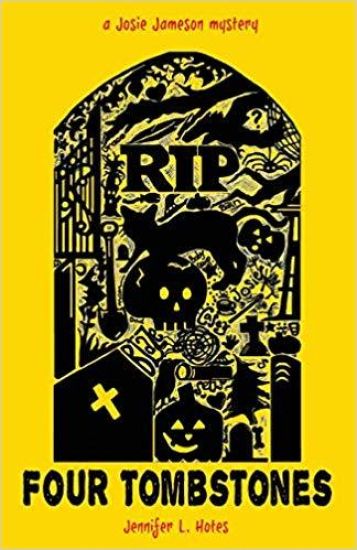
Halloween.The night the barrier between the dead and the living is as thin as muslin. Fifteen-year old Josie, haunted by the death of her mother, leads her best friends to an ancient cemetery to rub graves. Convinced she will come away with proof of her mother's spirit at last, the evening takes an unexpected turn as the teens gravitate four ways into the haunted grounds.Set against the backdrop of the rainy Pacific Northwest, four graves will be rubbed, touching off a series of events that will rattle their once mundane lives. From the lonely World War II hero to an accused witch, the people buried beneath the tombstones have stories that need an ending. The journey to unravel the mysteries leaves the friends wondering if the graves would've been better off left alone.
Stone Heart: A Josie Jameson Mystery

Stone Heart: A Josie Jameson Mystery

Jennifer Hotes

Storm Mystery Press
2018
nidottu
"A delicious supernatural mystery that spans centuries." - Kirkus Reviews In the YA thriller, Stone Heart, readers meet a teen that's been struggling since childhood to fill the shoes of her dead mother. Josie is a caregiver to her little brother, a confidante to her grieving dad, and the backbone of her tight-knit group of friends. But always being teh strong, responsible one has taken its toll on Josie, now fifteen. After stumbling upon the grave of a witch, she's been plagued with nightmares, dark visions, and fainting spells that leave her feeling like a freak. And then suddenly her faulty heart gives out and for 5.4 seconds Josie is technically dead. Hoping the life-saving surgery will finally transform her into a regular teen, Josie's about to discover the witches have other plans. As she struggles to accept the foreign object now regulating her heartbeat, Josie begins to dream the life of a headstrong teen in 1820s England who, along with 11 other girls, is devoted to empowering women in their strict society. The second book in the Josie Jameson mystery series takes readers along with Josie who, with the help of her friends and clinging to the final memories of her mother, must face the challenges of her future as the past battles for her soul. Will she be strong enough to face her fate?
Some Descendants of David and Mary (Gates) Jameson of Central Georgia
This work has been selected by scholars as being culturally important and is part of the knowledge base of civilization as we know it.This work is in the public domain in the United States of America, and possibly other nations. Within the United States, you may freely copy and distribute this work, as no entity (individual or corporate) has a copyright on the body of the work.Scholars believe, and we concur, that this work is important enough to be preserved, reproduced, and made generally available to the public. To ensure a quality reading experience, this work has been proofread and republished using a format that seamlessly blends the original graphical elements with text in an easy-to-read typeface.We appreciate your support of the preservation process, and thank you for being an important part of keeping this knowledge alive and relevant.
Letters of Anna Jameson to Ottilie Von Goethe

Letters of Anna Jameson to Ottilie Von Goethe

(anna) 1794-1860 Jameson

Hassell Street Press
2021
sidottu
This work has been selected by scholars as being culturally important and is part of the knowledge base of civilization as we know it.This work is in the public domain in the United States of America, and possibly other nations. Within the United States, you may freely copy and distribute this work, as no entity (individual or corporate) has a copyright on the body of the work.Scholars believe, and we concur, that this work is important enough to be preserved, reproduced, and made generally available to the public. To ensure a quality reading experience, this work has been proofread and republished using a format that seamlessly blends the original graphical elements with text in an easy-to-read typeface.We appreciate your support of the preservation process, and thank you for being an important part of keeping this knowledge alive and relevant.