Kirjojen hintavertailu. Mukana 11 244 527 kirjaa ja 12 kauppaa.

Kirjahaku

Etsi kirjoja tekijän nimen, kirjan nimen tai ISBN:n perusteella.

1000 tulosta hakusanalla Jan Scheffler

Jan Ken Po

Jan Ken Po

Dennis M. Ogawa

University of Hawai'i Press
2016
sidottu
Jan Ken Po, Ai Kono Sho"" ""Junk An'a Po, I Canna Show""These words to a simple child's game brought from Japan and made local, the property of all of Hawaii's people, symbolize the cultural transformation experienced by Hawaii's Japanese. It is the story of this experience that Dennis Ogawa tells so well here.
Jan de Witt’s Elementa Curvarum Linearum
- Following on from the 2000 edition of Jan De Witt’s Elementa Curvarum Linearum, Liber Primus, this book provides the accompanying translation of the second volume of Elementa Curvarum Linearum (Foundations of Curved Lines). One of the first books to be published on Analytic Geometry, it was originally written in Latin by the Dutch statesman and mathematician Jan de Witt, soon after Descartes’ invention of the subject. - Born in 1625, Jan de Witt served with distinction as Grand Pensionary of Holland for much of his adult life. In mathematics, he is best known for his work in actuarial mathematics as well as extensive contributions to analytic geometry. - Elementa Curvarum Linearum, Liber Secondus moves forward from the construction of the familiar conic sections covered in the Liber Primus, with a discussion of problems connected with their classification; given an equation, it covers how one can recover the standard form, and additionally how one can find the equation's geometric properties. - This volume, begun by Albert Grootendorst (1924-2004) and completed after his death by Jan Aarts, Reinie Erné and Miente Bakker, is supplemented by: - annotation explaining finer points of the translation; - extensive commentary on the mathematics These features make the work of Jan de Witt broadly accessible to today’s mathematicians.
Jan Seale

Jan Seale

Jan Seale

Texas Christian University Press,U.S.
2013
sidottu
For years Jan Seale’s carefully crafted poetry has captivated audiences with its wit, sharp diction, and seamlessness. This eighth volume of the Texas Poets Laureate series discovers the eternal in the transient—coupling the mythological with the present, the spiritual with the sensual, the joyful with the sorrowful. This riveting collection of work, both new and old, celebrates her broad achievements as a poet. Designated the 2012 Texas Poet Laureate, Seale reveres poetry as “the most elegant and most historic of our verbal arts.” Seale’s lifelong love of poetry (she began writing at the age of six) is apparent in this volume. Her work has been described as whittled and sharp, witty and serious. Her precise diction and visual imagery probe themes that range from spiritual faith to women, family, aging, and nature itself. This collection of work is a testament to Seale’s skill, craft, and dedication to the art of poetry.
Jan Steen – The Drawing Lesson

Jan Steen – The Drawing Lesson

. Walsh

J. Paul Getty Museum
1996
nidottu
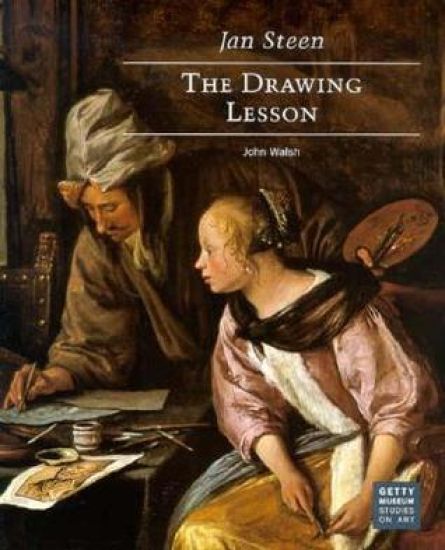
In this fascinating exploration of Jan Steen's The Drawing Lesson, John Walsh offers an explanation of the individual parts and larger patterns of the work, allowing us to see how each prop and pose contributes to the larger theme--the art of painting and the education of the artist. He also recounts Steen's career and the history of the picture itself, presenting, in sum, not only an examination of a fine painting but also a lesson in how to look at and "read" a complex work of art.
Jan Breugel the Elder – The Entry of the Animals into Noah's Ark
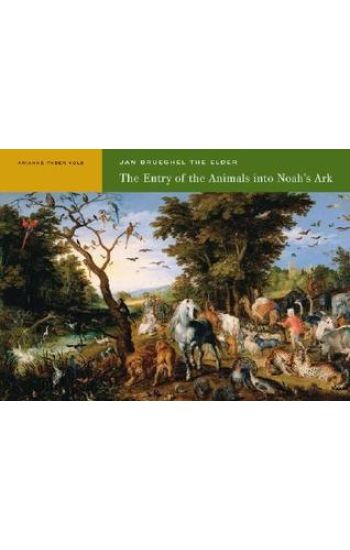
Born in Brussels and trained by his grandmother, Jan Brueghel the Elder (1568-1625) was called "Velvet Brueghel" for his skill at painting rich and delicate textures. The biblical story of Noah's ark provided a subject well suited to Brueghel's abilities. In his painting, a few curious villages stand beside a stream foreshadowing the coming deluge and watch as Noah herds ostriches, goats, camels, and other exotic animals toward the ark. Next to a prancing white stallion, a lion and lioness chase each other's tails, while a pair of leopards frolic under the watchful eye of a bull. Brueghel has created a delightful scene celebrating the beauty and variety of creation. This monograph takes an interdisciplinary approach to the study of Brueghel's fascinating paradise landscape, exploring Renaissance zoology, religious views on nature, and the culture of collecting and cataloguing animals and natural specimens The volume is brilliantly illustrated with paintings of landscapes and animals by artists such as Albrecht Durer, Peter Paul Rubens, and Lucas Cranach the Elder as well as by Brueghel himself. It presents an overview of the tradition of this type of painting and discusses both the cultural context and the artist's background, crucial to understanding Brueghel's approach to nature.
Jan Compagnie in the Straits of Malacca, 1641–1795
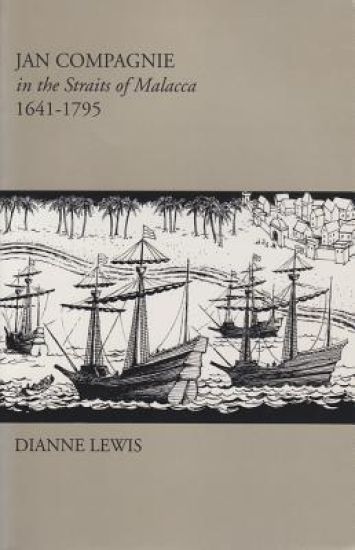
In 1500 Malay Malacca was the queen city of the Malay Archipelago, one of the great trade centers of the world. Its rulers, said to be descendents of the ancient line of Srivijaya, dominated the lands east and west of the straits. The Portuguese, unable to compete in the marketplace, captured the town. They were followed a hundred years later by the Dutch who, lured in their turn by Malacca as symbol of the wealth and luxury of the east, were to rule this port city for more than a hundred and fifty years. It proved to be, in many ways, an empty conquest. Portuguese and Dutch governments imposed restrictions on Malacca's trade, driving it to the newer ports in the north and south. Moreover, by the time the Dutch finally secured the town, they had established their own port at Batavia, in Java. Dutch Malacca was, by 1701, "a place of little trade." Why then did the Dutch maintain their occupation of the port? Lewis draws on the extensive correspondence of the Dutch East India Company to examine the role the Dutch played as Malacca's rulers in the eighteenth-century Malay world, arguing that their presence, though generally too weak to secure their own interests, disrupted the traditional political and economic organization of the Malay polities, contributing significantly to the disarray that beset the Malay world at the beginning of the nineteenth century.
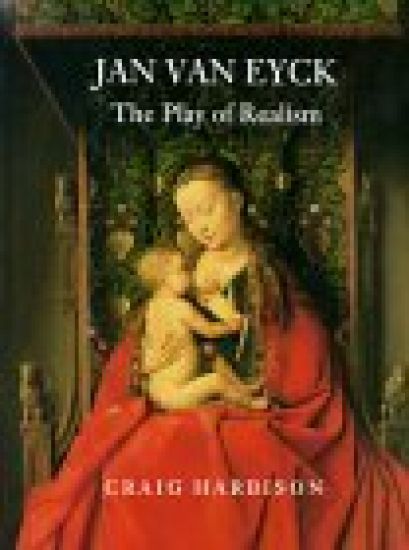
Jan Van Eyck

Jan Van Eyck

Harbison Craig

REAKTION BOOKS
1995
nidottu
Van Eyck's surviving work comprises a series of painstaking detailed oil-paintings of great verisimilitude. Aiming to recover the neglected human dimension present in these works, this book investigates the personal histories of the worldly participants of some of Van Eyck's masterpieces.
Jan and Jerry

Jan and Jerry

Bill Walton; Gary Walton

Daisy Wheel Press
2013
pokkari
Join Janice and Jerry Nickels, the ten-year old twins who live on Riverside Drive, as they travel in time to faraway places, meet interesting strangers and see into the past and future. You may even get a peek into your own past and future . . .
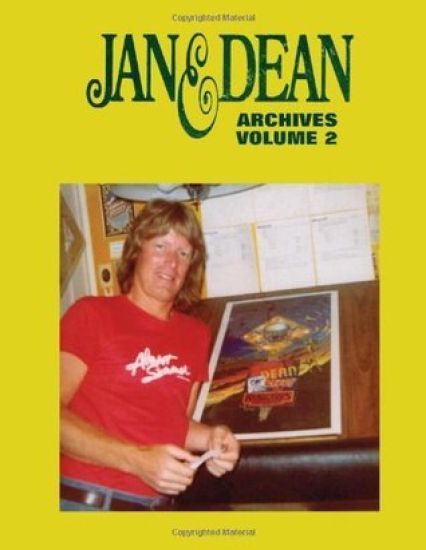
Jan & Dean Archives Volume 2

Jan & Dean Archives Volume 2

Torrence Berry

White Lightning Publications
2013
nidottu
More news articles, artifacts, photos and reprints of items spanning Jan & Dean's career. Published and previously unpublished pieces including tour photos, a 1966 concert book, fanzines and much more. Surf this 200 page book into the inside story on Jan & Dean.
Jan Kaplicky Drawings

Jan Kaplicky Drawings

Richard Rogers; Ivan Margolius

Circa Press
2017
sidottu
Jan Kaplický (1937-2009) was a visionary architect with a passion for drawing. It was his way of discovering, describing and constructing; and through drawing he presented beguiling architectural imagery of the highest order. Many of his sketches, cutaway drawings and photomontages are brought together and celebrated in this book. These drawings date from the early years of his independent practice, Future Systems, in the 1970s, to his final ink drawings, executed in the mid-1990s. Featured projects range from design studies for the International Space Station, undertaken with NASA, to the Media Centre at Lord's Cricket Ground, in London, winner of the 1999 Stirling Prize.