Kirjojen hintavertailu. Mukana 11 238 995 kirjaa ja 12 kauppaa.

Kirjahaku

Etsi kirjoja tekijän nimen, kirjan nimen tai ISBN:n perusteella.

1000 tulosta hakusanalla Janet B. Pascal

Native North American Art

Native North American Art

Janet Catherine Berlo; Ruth B. Phillips

Oxford University Press
1998
nidottu
An innovative survey of Native North American art history which fully incorporates substantive new research and scholarship, and examines such issues as gender, representation, the colonial encounter, and contemporary arts. By encompassing both the sacred and secular, political and domestic, the ceremonial and commercial, it shows the importance of the visual arts in maintaining the integrity of spiritual, social , political, and economic systems within Native North American societies. This exciting new investigation explores the indigenous arts of the US and Canada from the early pre-contact period to the present day, stressing the conceptual and iconographic continuities over five centuries and across an immensely diverse range of regions. The richness of Native American art is emphasized through discussions of basketry, wood and rock carvings, dance masks, and beadwork, alongside the contemporary vitality of paintings and installations by modern artists such as Robert Davidson, Emmi Whitehorse, and Alex Janvier. 'the best guide yet to understanding the complexities of Native North American art . . . a solidly ground, sophisticated history, combining art history, anthropology, and cultural studies . . . splendidly well-written . . . useful and timely.' Gerald McMaster, Curator of Art, Canadian Museum of Civilization
Native North American Art

Native North American Art

Janet Catherine Berlo; Ruth B. Phillips

Oxford University Press
2014
nidottu
This lively introductory survey of indigenous North American arts from ancient times to the present explores both the shared themes and imagery found across the continent and the distinctive traditions of each region. Focusing on the richness of artwork created in the US and Canada, Native North American Art, Second Edition, discusses 3,000 years of architecture, wood and rock carvings, basketry, dance masks, clothing and more. The expanded text discusses twentieth- and twenty-first-century arts in all media including works by James Luna, Kent Monkman, Nadia Myre, Jaune Quick-to-See Smith, Will Wilson, and many more. Authors Berlo and Phillips incorporate new research and scholarship, examining such issues as art and ethics, gender, representation, and the colonial encounter. By bringing into one conversation the seemingly separate realms of the sacred and the secular, the political and the domestic, and the ceremonial and the commercial, Native North American Art shows how visual arts not only maintain the integrity of spiritual and social systems within Native North American societies, but have long been part of a cross-cultural experience as well.
Foucault and the Iranian Revolution

Foucault and the Iranian Revolution

Janet Afary; Kevin B. Anderson

University of Chicago Press
2005
sidottu
In 1978, as the protests against the Shah of Iran reached their zenith, philosopher Michel Foucault was working as a special correspondent for Corriere della Sera and Le Monde. During his little-known stint as a journalist, Foucault traveled to Iran, met with leaders like Ayatollah Khomeini, and wrote a series of articles on the revolution. Foucault and the Iranian Revolution is the first book-length analysis of these essays on Iran, the majority of which have never before appeared in English. Accompanying the analysis are annotated translations of the Iran writings in their entirety and the at times blistering responses from such contemporaneous critics as Middle East scholar Maxime Rodinson as well as comments on the revolution by feminist philosopher Simone de Beauvoir. In this important and controversial account, Janet Afary and Kevin B. Anderson illuminate Foucault's support of the Islamist movement. They also show how Foucault's experiences in Iran contributed to a turning point in his thought, influencing his ideas on the Enlightenment, homosexuality, and his search for political spirituality. Foucault and the Iranian Revolution informs current discussion on the divisions that have reemerged among Western intellectuals over the response to radical Islamism after September 11. Foucault's provocative writings are thus essential for understanding the history and the future of the West's relationship with Iran and, more generally, to political Islam. In their examination of these journalistic pieces, Afary and Anderson offer a surprising glimpse into the mind of a celebrated thinker.
Foucault and the Iranian Revolution

Foucault and the Iranian Revolution

Janet Afary; Kevin B. Anderson

University of Chicago Press
2005
nidottu
In 1978, as the protests against the Shah of Iran reached their zenith, philosopher Michel Foucault was working as a special correspondent for Corriere della Sera and Le Monde. During his little-known stint as a journalist, Foucault traveled to Iran, met with leaders like Ayatollah Khomeini, and wrote a series of articles on the revolution. Foucault and the Iranian Revolution is the first book-length analysis of these essays on Iran, the majority of which have never before appeared in English. Accompanying the analysis are annotated translations of the Iran writings in their entirety and the at times blistering responses from such contemporaneous critics as Middle East scholar Maxime Rodinson as well as comments on the revolution by feminist philosopher Simone de Beauvoir. In this important and controversial account, Janet Afary and Kevin B. Anderson illuminate Foucault's support of the Islamist movement. They also show how Foucault's experiences in Iran contributed to a turning point in his thought, influencing his ideas on the Enlightenment, homosexuality, and his search for political spirituality. Foucault and the Iranian Revolution informs current discussion on the divisions that have reemerged among Western intellectuals over the response to radical Islamism after September 11. Foucault's provocative writings are thus essential for understanding the history and the future of the West's relationship with Iran and, more generally, to political Islam. In their examination of these journalistic pieces, Afary and Anderson offer a surprising glimpse into the mind of a celebrated thinker.
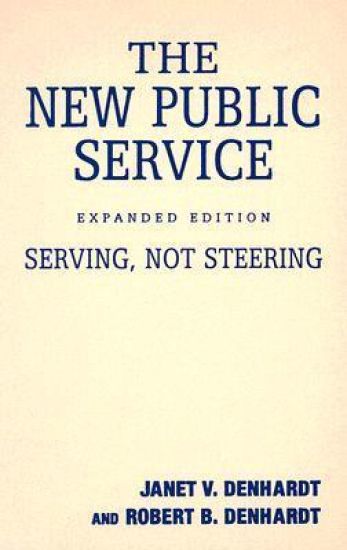
The New Public Service

The New Public Service

Janet V Denhardt; Robert B. Denhardt

Routledge
2007
sidottu
This widely praised work provides a framework for the many voices calling for the reaffirmation of democratic values, citizenship, and service in the public interest. The expanded edition includes an all-new chapter that addresses the practical issues of applying these ideals in actual, real-life situations. "The New Public Service, Expanded Edition" is organized around a set of seven core principles: serve citizens, not customers; seek the public interest; value citizenship and public service above entrepreneurship; think strategically, act democratically; recognize that accountability isn't simple; serve, rather than steer; and value people, not just productivity. The book asks us to think carefully and critically about what public service is, why it is important, and what values ought to guide what we do and how we do it. It celebrates what is distinctive, important and meaningful about public service and considers how we might better live up to those ideals and values. All students and serious practitioners in public administration and public policy should read this book. While debates about public policy issues will surely continue, this compact, clearly written volume provides an important framework for public service based on and fully integrated with citizen discourse and the public interest.
The Methods and Methodologies of Qualitative Family Research

The Methods and Methodologies of Qualitative Family Research

Janet F Gilgun; Marvin B Sussman

Routledge Member of the Taylor and Francis Group
1997
sidottu
The Methods and Methodologies of Qualitative Family Research can provide you with a strong conceptual framework for undertaking qualitative research. As it explores inquiry and theory on the cutting edge, it shows how qualitative methodologies can be applied to family life, education, and research. Designed to demonstrate how emerging and established methodologies can advance the understanding of families and direct social change, this book is a major step in assessing the development, progress, and contributions of qualitative inquiry. Packed with useful information and innovative approaches, this volume pulls together a rich and diverse group of essays that teach readers about the complexities and challenges of qualitative research. Most importantly, you’ll learn how new qualitative approaches are grounded in systems thinking, holistic formulations, attention to context, cultural sensitivity, and nonlinear dynamics.The Methods and Methodologies of Qualitative Family Research is distinct from other books of its kind because it acknowledges the agent, or self, in compiling data and reaching conclusions. Moreover, it analyzes how studying the world affects those doing the studying and how those effects, in turn, play a substantial role in interpreting data and forming conclusions. The Methods and Methodologies of Qualitative Family Research introduces three major types of qualitative clinical family research: conversational analysis, recursive frame analysis, and hermeneutic phenomenology. It exposes a wide array of resources for undertaking qualitative inquiry, including data journals, letters, official files, clinical case notes, folk tales, interviews, and field observations. You’ll learn how these resources are invaluable tools for understanding:couples’decisionmaking generative fathering reflexivity the use of historical data to construct composite cases egalitarianism and oppression in marriage perceptions of gender, race, and class among African-American adolescent women successful aging among individuals who require long-term care poverty and access to servicesA skillful blend of theory and practice, The Methods and Methodologies of Qualitative Family Research offers conceptual schemes, bibliographies, and other useful resources for teaching and conducting qualitative research. It will revolutionize the way you think about qualitative inquiry and your own approaches to qualitative family research. In addition, you’ll come away updated on the current state of qualitative research and with new skills and techniques for tackling your own research.
The Methods and Methodologies of Qualitative Family Research

The Methods and Methodologies of Qualitative Family Research

Janet F Gilgun; Marvin B Sussman

Routledge Member of the Taylor and Francis Group
1997
nidottu
The Methods and Methodologies of Qualitative Family Research can provide you with a strong conceptual framework for undertaking qualitative research. As it explores inquiry and theory on the cutting edge, it shows how qualitative methodologies can be applied to family life, education, and research. Designed to demonstrate how emerging and established methodologies can advance the understanding of families and direct social change, this book is a major step in assessing the development, progress, and contributions of qualitative inquiry. Packed with useful information and innovative approaches, this volume pulls together a rich and diverse group of essays that teach readers about the complexities and challenges of qualitative research. Most importantly, you’ll learn how new qualitative approaches are grounded in systems thinking, holistic formulations, attention to context, cultural sensitivity, and nonlinear dynamics.The Methods and Methodologies of Qualitative Family Research is distinct from other books of its kind because it acknowledges the agent, or self, in compiling data and reaching conclusions. Moreover, it analyzes how studying the world affects those doing the studying and how those effects, in turn, play a substantial role in interpreting data and forming conclusions. The Methods and Methodologies of Qualitative Family Research introduces three major types of qualitative clinical family research: conversational analysis, recursive frame analysis, and hermeneutic phenomenology. It exposes a wide array of resources for undertaking qualitative inquiry, including data journals, letters, official files, clinical case notes, folk tales, interviews, and field observations. You’ll learn how these resources are invaluable tools for understanding:couples’decisionmaking generative fathering reflexivity the use of historical data to construct composite cases egalitarianism and oppression in marriage perceptions of gender, race, and class among African-American adolescent women successful aging among individuals who require long-term care poverty and access to servicesA skillful blend of theory and practice, The Methods and Methodologies of Qualitative Family Research offers conceptual schemes, bibliographies, and other useful resources for teaching and conducting qualitative research. It will revolutionize the way you think about qualitative inquiry and your own approaches to qualitative family research. In addition, you’ll come away updated on the current state of qualitative research and with new skills and techniques for tackling your own research.
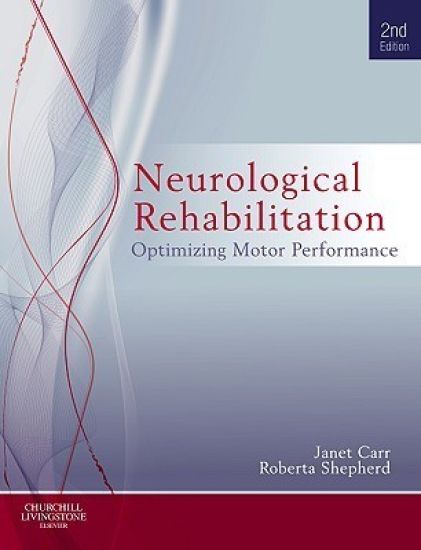
Neurological Rehabilitation

Neurological Rehabilitation

Carr Janet H.; Shepherd Roberta B.

Elsevier Health Sciences
2010
nidottu
Janet Carr and Roberta Shepherd head up a new team of eminent authors for the second edition of this definitive text on neurological physiotherapy. In the first edition, the authors described a model of neurological rehabilitation for individuals with motor dysfunction based on scientific research in the areas of neuromuscular control, biomechanics, motor skill learning, and the link between cognition and action, together with developments in pathology and adaptation. The new edition continues to advance this model while identifying and incorporating the many advances that have occurred in the last decade in the understanding and treatment of adults with neurological conditions, whether caused by accident or disease. Among these advances is the knowledge that the brain retains a plastic potential to reorganize, even in old and/or lesioned brains, and that neural plasticity can be influenced by task-related mental and physical practice in a stimulating environment. There is also an increasing body of knowledge related to the musculoskeletal system's adaptability and the need to prevent length and stiffness- related changes in muscle contractility, together with loss of aerobic fitness and endurance. There is an expanding body of clinical research that appears to support the model provided here. The training guidelines outlined in Neurological Rehabilitation are based on biomechanical constructs and motor relearning research, applied to enhance brain reorganization and muscle contractility, and encourage functional recovery of the patient. It connects science and clinical practice enabling students and practitioners to develop their knowledge and use new clinical methods based on modern scientific understanding. All chapters have been revised, some with the collaboration of five specialists who are engaged in high level scientific research and clinical practice Biomechanical models are presented to provide a framework for action-specific training and exercise to improve performance Clinical guidelines are science- and evidence-based Emphasis is on new approaches to the delivery of neurological rehabilitation that increase the time spent in mental and physical activity, and the intensity of practice and exercise Up-to-date referencing
Stressed Years of Their Lives

Stressed Years of Their Lives

B. Janet Hibbs; Anthony Rostain

Griffin
2020
nidottu
From two leading child and adolescent mental health experts comes a guide for the parents of every college and college-bound student who want to know what's normal mental health and behavior, what's not, and how to intervene before it's too late. "The title says it all...Chock full of practical tools, resources and the wisdom that comes with years of experience, The Stressed Years of their Lives is destined to become a well-thumbed handbook to help families cope with this modern age of anxiety."-- Brigid Schulte, Pulitzer Prize-winning journalist, author of Overwhelmed and director of the Better Life Lab at New America All parenting is in preparation for letting go. However, the paradox of parenting is that the more we learn about late adolescent development and risk, the more frightened we become for our children, and the more we want to stay involved in their lives. This becomes particularly necessary, and also particularly challenging, in mid- to late adolescence, the years just before and after students head off to college. These years coincide with the emergence of many mood disorders and other mental health issues. When family psychologist Dr. B. Janet Hibbs's own son came home from college mired in a dangerous depressive spiral, she turned to Dr. Anthony Rostain. Dr. Rostain has a secret superpower: he understands the arcane rules governing privacy and parental involvement in students' mental health care on college campuses, the same rules that sometimes hold parents back from getting good care for their kids. Now, these two doctors have combined their expertise to corral the crucial emotional skills and lessons that every parent and student can learn for a successful launch from home to college.
You're Not Done Yet: Parenting Young Adults in an Age of Uncertainty

You're Not Done Yet: Parenting Young Adults in an Age of Uncertainty

B. Janet Hibbs; Anthony Rostain

St. Martin's Press
2024
sidottu
A clear-eyed, optimistic guide for parents with adult children who need help navigating the challenges to launching an independent life. Times were already tough for young adults looking for ways to start living independent lives after high school and college: rents were up, wages were down, student loan debt was burdensome, then the Covid-19 pandemic hit. A generation of young people were forced out of their classrooms, jobs, and social lives, returning home to live with their parents. Now many of these young adults carry the scars of the internal pandemic, with increased anxiety and depression, poor coping, and the uncertainty of how to restart their lives. Parents want to help, but the old rules of advice-giving can clash with the need to respect their child's autonomy. In You're Not Done Yet, two leading adolescent and young adult mental health experts provide a practical and compassionate path to parents combatting the worry and frustrating isolation many feel when supporting their twentysomethings. Hibbs and Rostain explain when and how developmental markers changed, and invite parents and young adults to learn new, more effective ways of communicating with each other. Part I of the book covers the "new normal," of young adulthood, with its educational and career changes. The new normal of parent-child relationship asks us to rethink our "shoulds," and in the process develop a closer relationship based on talking and listening to understand each other, rather than "being right." Part II addresses the common and challenging problems that arise when mental illness creates a drag on a young adult's progress, and shows how parents may be engaged in their child's treatment. Packed with helpful information and step-by-step guides to specific problems, this book will be an invaluable resource for parents and their twentysomething children.
The Organizational and Human Resources Sourcebook

The Organizational and Human Resources Sourcebook

Douglas B. Gutknecht; Janet R. Miller

University Press of America
1989
nidottu
This text presents many of the organizational and human resource challenges that organizational leaders, managers, staff and employees will face as we enter a more complex and competitive 1990's. The authors explore old and new ideas, frameworks, models, techniques and strategies that can be utilized at all levels to more effectively handle the new demands and dangers that constant change is exposing. This second edition has been extensively revised and rearranged. Section One now becomes Organizational Theory and Behavior, which is divided into seven chapters: Organizational Structure; Classical Human Relations, and Human Resource Theory; Contingency and System Design Theories; Personality and Job Design Models; Contemporary Motivation Theories and Applications; Communication and Group Behavior; Leadership Theories, Skills, and Managerial Implications. Section Two is now titled Strategic Human Resource Management and is divided into two large chapters Strategic HR Assessment, Planning and Management, and Strategic Performance Management. Section Three becomes Human Resource Development: Integrating Training, Management and Career Development, which is divided into three chapters: Training and Development; Management Development; and Career Development. Section Four, Organization Development is divided into three chapters: The Nature of Planned Change; Organization Development Interventions; and Organization Development Consultants and the Consulting Process.
Parliamentary Bills of Rights

Parliamentary Bills of Rights

Janet L. Hiebert; James B. Kelly

Cambridge University Press
2015
sidottu
Both New Zealand and the United Kingdom challenge assumptions about how a bill of rights functions. Their parliamentary bills of rights constrain judicial review and also look to parliament to play a rights-protecting role. This arises from the requirement to inform parliament if legislative bills are not compatible with rights. But are these bills of rights operating in this proactive manner? Are governments encountering significantly stronger pressures to ensure legislation complies with rights? Are these bills of rights resulting in more reasoned deliberations in parliament about the justification of legislation from a rights perspective? Through extensive interviews with public officials and analysis of parliamentary debates where questions of compliance with rights arise (prisoner voting, parole and sentencing policy, counter-terrorism legislation, and same-sex marriage), this book argues that a serious gap exists between the promise of these bills of rights and the institutional variables that influence how these parliaments function.
Parliamentary Bills of Rights

Parliamentary Bills of Rights

Janet L. Hiebert; James B. Kelly

Cambridge University Press
2015
pokkari
Both New Zealand and the United Kingdom challenge assumptions about how a bill of rights functions. Their parliamentary bills of rights constrain judicial review and also look to parliament to play a rights-protecting role. This arises from the requirement to inform parliament if legislative bills are not compatible with rights. But are these bills of rights operating in this proactive manner? Are governments encountering significantly stronger pressures to ensure legislation complies with rights? Are these bills of rights resulting in more reasoned deliberations in parliament about the justification of legislation from a rights perspective? Through extensive interviews with public officials and analysis of parliamentary debates where questions of compliance with rights arise (prisoner voting, parole and sentencing policy, counter-terrorism legislation, and same-sex marriage), this book argues that a serious gap exists between the promise of these bills of rights and the institutional variables that influence how these parliaments function.
The New Public Service

The New Public Service

Janet V. Denhardt; Robert B. Denhardt

Routledge
2015
sidottu
The New Public Service: Serving, not Steering provides a framework for the many voices calling for the reaffirmation of democratic values, citizenship, and service in the public interest. It is organized around a set of seven core principles: (1) serve citizens, not customers; (2) seek the public interest; (3) value citizenship and public service above entrepreneurship; (4) think strategically, act democratically; (5) recognize that accountability isn’t simple; (6) serve, rather than steer; and (7) value people, not just productivity. The New Public Service asks us to think carefully and critically about what public service is, why it is important, and what values ought to guide what we do and how we do it. It celebrates what is distinctive, important, and meaningful about public service and considers how we might better live up to those ideals and values. The revised fourth edition includes a new chapter that examines how the role and significance of these New Public Service values have expanded in practice and research over the past 15 years. Although the debate about governance will surely continue for many years, this compact, clearly written volume both provides an important framework for a public service based on citizen discourse and the public interest and demonstrates how these values have been put into practice. It is essential reading fo students and serious practitioners in public administration and public policy.
The New Public Service

The New Public Service

Janet V. Denhardt; Robert B. Denhardt

Routledge
2015
nidottu
The New Public Service: Serving, not Steering provides a framework for the many voices calling for the reaffirmation of democratic values, citizenship, and service in the public interest. It is organized around a set of seven core principles: (1) serve citizens, not customers; (2) seek the public interest; (3) value citizenship and public service above entrepreneurship; (4) think strategically, act democratically; (5) recognize that accountability isn’t simple; (6) serve, rather than steer; and (7) value people, not just productivity. The New Public Service asks us to think carefully and critically about what public service is, why it is important, and what values ought to guide what we do and how we do it. It celebrates what is distinctive, important, and meaningful about public service and considers how we might better live up to those ideals and values. The revised fourth edition includes a new chapter that examines how the role and significance of these New Public Service values have expanded in practice and research over the past 15 years. Although the debate about governance will surely continue for many years, this compact, clearly written volume both provides an important framework for a public service based on citizen discourse and the public interest and demonstrates how these values have been put into practice. It is essential reading fo students and serious practitioners in public administration and public policy.
The Big6 Curriculum

The Big6 Curriculum

Michael B. Eisenberg; Janet Murray; Colet Bartow

Libraries Unlimited Inc
2016
nidottu
This practical, hands-on book explains how to ensure that your students are information and communication technology literate—that is, competent with a range of tools, technologies, and techniques for seeking out and applying information.The importance of teaching information and communication technology (ICT) literacy is clear: without it, students will be ill-equipped to find and use information in all its forms as well as produce and present information in all forms. Unfortunately, most ICT literacy educational programs are irregular, incomplete, or arbitrary. Classroom teachers, teacher librarians, and technology teachers need a complete ICT program—one with clearly defined goals and objectives, planned and coordinated instruction, regular and objective assessment of learning, and formal reporting of results. This book explains how to integrate the objectives of ICT literacy into your school's established curricular structure.The book explains the rationale for a having a comprehensive ICT program, describes how to develop a Big6 by the Month program, and defines the challenges in the areas of information-seeking strategies, location and access, use of information, synthesis, and evaluation. It also includes templates for grade-level objectives; a scenario plan, program plan, lesson plan, and unit plan; summary evidence and criteria; performance descriptors; a presentation readiness checklist; and Big6 by the Month checklists for instructional leaders, teachers, and teacher librarians.
The Ashe County Frescoes of Benjamin F. Long IV

The Ashe County Frescoes of Benjamin F. Long IV

Janet C. Pittard; David B. Chiswell

McFarland Co Inc
2021
pokkari
This book documents the history of four ecclesiastical frescoes completed by artist Benjamin F. Long IV in Ashe County, North Carolina, in the 1970s and 1980s. The story of the Ashe County frescoes celebrates their setting in the Blue Ridge Mountains and testifies to Long's intensity, precision and stamina. Commissioned by the Ashe County Frescoes Foundation, the authors contextualize the artistic and the spiritual aspects of the frescoes by connecting the figures in the scenes with their sources in the Bible. Drawn from extensive interviews with the artist, this book explores the frescoes' uniqueness. Interviews with people used as models, assistants, volunteers and observers focus on the frescoes' impact on the community, and the role of the Ashe County Frescoes Foundation in the protection and preservation of these artworks.
Managing Human Behavior in Public and Nonprofit Organizations

Managing Human Behavior in Public and Nonprofit Organizations

Robert B. Denhardt; Janet V. Denhardt; Maria P. Aristigueta; Kelly C. Rawlings

CQ Press
2021
nidottu
"This is a well-thought-out and well-researched textbook on human behavior and relations in organizations. . . .The extensive use of case studies and examples makes the material easy to grasp and apply." —M.S. Kinoti, Ph.D., Regis University Managing Human Behavior in Public and Nonprofit Organizations, Fifth Edition is an established core text designed to help students develop their leadership and management skills. Bestselling authors Denhardt, Denhardt, Aristigueta, and Rawlings cover important topics such as stress, decision-making, motivation, leadership, teams, communication, and change. Cases, self-assessment exercises, and numerous examples provide students with the opportunity to apply concepts and theories discussed in the chapter. Focusing exclusively on organizational behavior in both public and nonprofit organizations, this text is a must-read for students in public administration programs. New to the Fifth Edition: Increased attention to issues related to nonprofit organizations helps students develop a better understanding of the differences and similarities in public and nonprofit organizations, as well as the way they interact with one another and with the private sector. Broadened coverage of issues related to ethics and diversity offers students a broader perspective on important issues to consider, such as the examination of implicit and explicit bias, generational differences, and power and privilege. Additional discussions of collaboration, inclusion, and participation, both within the organization and with external constituencies, show students the value rationale for engagement and its practical effects. Revised and updated information on emerging technology illustrates to students how an increasingly digital, connected, and networked environment affects our ability to manage public and nonprofit organizations.New cases, examples, self-assessments, and exercises cover recent developments in research and practice to engage students with relevant ways to practice and improve their management skills. Give your students the SAGE edge! SAGE edge offers a robust online environment featuring an impressive array of free tools and resources for review, study, and further exploration, keeping both instructors and students on the cutting edge of teaching and learning.
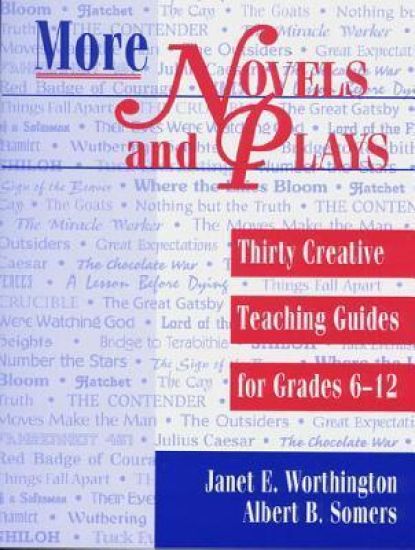
More Novels and Plays

More Novels and Plays

Albert B. Somers; Janet E. Worthington

Libraries Unlimited Inc
2000
nidottu
Entries for thirty novels and plays each include a brief plot summary, an appraisal of the work's reputation, lists of themes and literary concepts, titles for outside reading, discussion questions, and suggested activities for students.