Here is an eclectic collection of poems by five women. Together, they have explored forms and themes and triggered ideas for each other. You will find poems following the unusual Golden Shovel form through to three on tomatoes ] and much else beside.
This work explores the difficulties of solving contemporary environmental problems within existing global institutions. It questions guidelines set out in recent influential policy reports, and suggests new agendas for sustainability, industrial ecology, and institutional reform. Including case studies from the USA, Europe and China, this book investigates a wide range of environmental problems presently confronting experts worldwide.
Sustainability is a word that means different things depending on who is using it, thus underlining the potential problems involved in experts from different fields teaming up to tackle sustainability problems. In this book, Janne Hukkinen argues for a reflexive approach to sustainability as a means of coming to grips with the threatening challenges arising out of human-environment interaction. The author illustrates his argument with a case study of natural resource management in Lapland, showing how sustainability is understood holistically by academics and professionals alike. This book reflects an emerging cognitive turn in sustainability sciences, conceptualizing environmental challenges during action on our social and material environments, rather than in isolation. Hukkinen argues that this conceptual blending enables sustainability experts to hybridize themselves: to immerse themselves in the fields of other experts and imagine the other's work - both prerequisites of trans-disciplinary knowledge integration. This book shows how sustainability experts can reveal their intellectual engagements when designing scenarios and indicators and presents a rigorous framework for organizing expert collaboration.
Sustainability is a word that means different things depending on who is using it, thus underlining the potential problems involved in experts from different fields teaming up to tackle sustainability problems. In this book, Janne Hukkinen argues for a reflexive approach to sustainability as a means of coming to grips with the threatening challenges arising out of human-environment interaction. The author illustrates his argument with a case study of natural resource management in Lapland, showing how sustainability is understood holistically by academics and professionals alike. This book reflects an emerging cognitive turn in sustainability sciences, conceptualizing environmental challenges during action on our social and material environments, rather than in isolation. Hukkinen argues that this conceptual blending enables sustainability experts to hybridize themselves: to immerse themselves in the fields of other experts and imagine the other's work - both prerequisites of trans-disciplinary knowledge integration. This book shows how sustainability experts can reveal their intellectual engagements when designing scenarios and indicators and presents a rigorous framework for organizing expert collaboration.
Marine Ecosystem-Based Management provides a comprehensive exploration of ecosystem-based management (EBM), presenting it as an essential approach that integrates human activities with environmental processes. The book emphasizes the interconnected nature of these ecosystems, which cannot be managed effectively through traditional single-sector methods, and underscores how EBM addresses objectives from multiple sectors to balance ecosystem goods and services, including ecological, economic, and social needs for current and future generations. Authored by well-known champions of EBM, this volume integrates original research with a comprehensive review of decades of scientific work to systematically introduce the theory, modeling, applications, and policy behind this management approach. It conveys the what, why, and how of EBM in easily navigable chapters, making it accessible to broad academic and professional audiences spanning marine ecology, fisheries, oceanography, conservation biology, renewable energy, marine planning, coastal development, shipping, resource use management, and related professions operating in the ocean space. Marine Ecosystem-Based Management covers not only why EBM is necessary, but also how it can be applied. This book aims to contribute to the development and implementation of EBM, refute myths, and encourage action. It is an essential reference for graduate students, researchers, professors, resource managers, and decision-makers interested in all aspects of marine resource management.
A gastronaut’s guide to the globe—for those who like wrangling the GPS to reach the world’s best off-the- Michelin map barbecue restaurant or delight in trekking four hours towards the arctic circle to sit with 16 others and eat moose, moss and lichen. It’s the ultimate bucket list, cherry-picked for those who book their restaurants before they book their air fares. Around the World in 80 Dinners reveals what makes these restaurants special, courtesy of two very seasoned food travellers and their impressive (and delicious) trip notes. This lushly illustrated book will feature 80 of the world’s very best and most timeless dining destinations, plus hundreds of other exciting food experiences in more than 22 countries, with tips on how to snag a booking, best times to go, destination and signature dishes, top tables, and inside knowledge that might save you a fortune or get you onto the chef ’s table.
Denationalisation of Defence consists of two major parts: first, a generic and analytical section which presents the developmental trends in privatization and internationalization of armed force, and second, an empirical section analyzing the impact of these trends on the Nordic countries' defence and security sectors. The Nordic countries have a special relevance as objects of study given their traditionally strong public spheres and state-orientated systems of governance. This volume questions whether the process of denationalization has reached a point where countries are reacting to changes in their security environment by increasingly introducing elements of privatization and international integration.
This text applies financial concepts to various health care settings, details how reimbursement varies between these settings, and teaches nurse managers how to effectively manage financial data specific to each setting. The chapters on long-term care explain the Resident Assessment Instrument (RAI), including the Minimum Data Set (MDS), as well as how to best manage long term care resources. The home care chapters explore how home care is financed, and how to administrate financial resources in a home health agency. In the chapters on ambulatory care, the text discusses the ins and outs of reimbursement in primary care.
Tarot Gothica leads the way from light to lighter and dark to darker, illuminating the circle of life through 78 beautiful art cards depicting Gothic themes. Learn to identify cycles that can be found hidden in the rhythms of each day, year, and throughout life by listening to your inner feelings and noticing that things occur in a certain order. Understand your shadows and lights, your own Devil and God, your fears and strengths. The cards may be read either in spreads or as symbolic images, each choice offering direction through your life situations while discovering the path between Light and Darkness. Journey unafraid as these cards lend their guidance for the voyage of your life.Includes cards and book.Card dimensions: 3 1/2" x 5"
From 1866 through 1886, the U.S. Army occupied southern Arizona and New Mexico in an attempt to claim it for settlement by Americans. Through a postcolonial lens, Janne Lahti examines the army, its officers, their wives, and the enlisted men as agents of an American empire whose mission was to serve as a group of colonizers engaged in ideological as well as military, conquest.Cultural Construction of Empire explores the cultural and social representations of Native Americans, Hispanics, and frontiersmen constructed by the officers, enlisted men, and their dependents. By differentiating themselves from these "less civilized" groups, white military settlers engaged various cultural processes and practices to accrue and exercise power over colonized peoples and places for the sake of creating a more "civilized" environment for other settlers. Considering issues of class, place, and white ethnicity, Lahti shows that the army's construction of empire took place not on the battlefield alone but also in representations of and social interactions in and among colonial places, peoples, settlements, and events, and in the domestic realm and daily life inside the army villages.
After the end of the U.S.-Mexican War in 1848, the Southwest Borderlands remained hotly contested territory. Over following decades, the United States government exerted control in the Southwest by containing, destroying, segregating, and deporting indigenous peoples - in essence conducting an extended military campaign that culminated with the capture of Geronimo and the forced removal of the Chiricahua Apaches in 1886. In this book, Janne Lahti charts these encounters and the cultural differences that shaped them. Wars for Empire offers a new perspective on the conduct, duration, intensity, and ultimate outcome of one of America's longest wars. Centuries of conflict with Spain and Mexico had honed Apache war-making abilities and encouraged a culture based in part on warrior values, from physical prowess and specialized skills to a shared belief in individual effort. In contrast, U.S. military forces lacked sufficient training and had little public support. The splintered, protracted, and ferocious warfare exposed the limitations of the U.S. military and of federal Indian policies, challenging narratives of American supremacy in the West. Lahti maps the ways in which these weaknesses undermined the U.S. advance. He also stresses how various Apache groups reacted differently to the U.S. invasion. Ultimately, new technologies, the expansion of Euro-American settlements, and decades of war and deception ended armed Apache resistance. By comparing competing martial cultures and examining violence in the Southwest, Wars for Empire provides a new understanding of critical decades of American imperial expansion and a moment in the history of settler colonialism with worldwide significance.
"Since the beginning of the crisis precipitated by Iraq's invasion of Kuwait in August 1990, the threat posed by Iraq's arsenal of ballistic missiles has been the focus of international attention. In the opening days of the U.S.-led military counteroffensive beginning on January 16, 1992, Iraq launched ballistic missiles against population centers in Israel and military bases in Saudi Arabia. The attacks intensified the terror of the war and prompted renewed efforts by the multinational force to destroy Saddam Hussein's military machine.The countries aligned against Iraq were prepared for attacks by chemically armed missiles, but Iraq's missile force proved to be of little military consequence. The missiles that survived the opening hours of Operation Desert Storm were conventionally armed, inaccurate and unreliable. Most of those that were actually launched either were intercepted by American antimissile defenses or failed to hit vital targets.But the political impact of the missiles was inestimable. The strikes symbolized Iraq's determination to prosecute the war no matter what the cost. By threatening to involve Israel, they created severe tensions and posed the risk that multinational military coalition would be dissolved, and they underscored the potential vulnerability of all the states in the region to Iraqi aggression.In this book, Janne E. Nolan argues that the use of missiles is a harbinger of the altered international security environment confronting the Untied States and its allies in the late twentieth century. Long believed to be a distant prospect, the adoption of technological resources to missile development is already occurring in over a dozen developing countries, many of them long-standing regional antagonists. These capabilities present complicated challenges to American interests and foreign policy, challenges that have only begun to be explored as a result of the Iraqi crisis.The author examines the evolution of the international technology market, surveys third world missile programs, and analyzes the military significance of ballistic missiles in potential third world combat. She also discusses the way in which domestic and international policy decisions are made to promote or restrain the export of military technology, and assesses the strengths and weaknesses of current policy. Finally, she emphasizes the need for institutional reforms to balance the requirements of protecting the technological edge on which the United States relies for its own security against the growing pressures of international miniaturization."
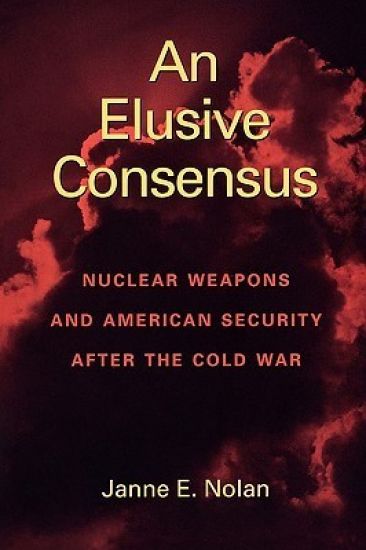
"The United States continues to maintain a large nuclear arsenal guided by a deterrence strategy little changed since the collapse of the Warsaw Pact. Notwithstanding changes in the size and composition of nuclear forces brought about since 1991, the fundamental rationales and planning principles which informed U.S. nuclear policy for decades remain in place--despite the disappearance of a superpower nuclear enemy. In this work, Janne E. Nolan traces the effort to articulate a post-cold war nuclear doctrine through decisions taken in the Bush and Clinton administrations, focusing on the leadership styles of presidents, bureaucratic politics, and broader foreign policy objectives. Based on in-depth interviews with policy participants, this study illuminates in detail the dynamics by which the U.S. government has tried to reflect the dramatically altered international arena in its nuclear policies. In two major policy developments--the 1994 Nuclear Posture Review and the decision to sign the African Nuclear Weapons Free Zone Treaty--U.S. policy makers sought to define the utility of nuclear weapons after the cold war and to gain broad-based consensus. For many reasons, these efforts were largely unsuccessful in developing coherent policies, with the absence of sustained presidential leadership proving most decisive. "
Considered one of the most innovative artists in the history of popular music, John Lennon is also a fascinating example of the relationship between rock music and celebrity. Through investigation of the cultural and historical background of his stardom in England and the United States, this book explores why John Lennon became a much-debated celebrity and why he remains so. Lennon's career from the 1960s until his tragic death in 1980, and even beyond, demonstrates how different expectations articulated by the star, the music industry, the media, and the fans form relations which change in terms of time and place. Using a multidisciplinary approach and intriguing case studies, this book also examines cultural identity, authenticity, and gender in popular music stardom.
The Power of the Gaze, a textbook on visual literacy, entices the reader to seek significant structures in everyday visual reality, which are called visual orders. Visual orders can be found in representations, visible surroundings, or in nonverbal interaction that relies on gaze. In order to understand what one looks at, one must first understand what it means to gaze and what it means to look. Visual literacy is defined as the critical understanding of the meanings of visual orders. The book is written for all readers interested in visual culture and its phenomena.
The American West and the World provides a synthetic introduction to the transnational history of the American West. Drawing from the insights of recent scholarship, Janne Lahti recenters the history of the U.S. West in the global contexts of empires and settler colonialism, discussing exploration, expansion, migration, violence, intimacies, and ideas. Lahti examines established subfields of Western scholarship, such as borderlands studies and transnational histories of empire, as well as relatively unexplored connections between the West and geographically nonadjacent spaces. Lucid and incisive, The American West and the World firmly situates the historical West in its proper global context.
The American West and the World provides a synthetic introduction to the transnational history of the American West. Drawing from the insights of recent scholarship, Janne Lahti recenters the history of the U.S. West in the global contexts of empires and settler colonialism, discussing exploration, expansion, migration, violence, intimacies, and ideas. Lahti examines established subfields of Western scholarship, such as borderlands studies and transnational histories of empire, as well as relatively unexplored connections between the West and geographically nonadjacent spaces. Lucid and incisive, The American West and the World firmly situates the historical West in its proper global context.