Kirjahaku
Etsi kirjoja tekijän nimen, kirjan nimen tai ISBN:n perusteella.
1000 tulosta hakusanalla Jay David Atlas
When the Rogers Place arena opened in downtown Edmonton in September 2016, no amount of buzz could drown out the rumours of manipulation, secret deals, and corporate greed undergirding the project. Working with documentary evidence and original interviews, the authors present an absorbing account of the machinations that got the arena and the adjacent Ice District built, with a price tag of more than $600 million. The arena deal, they argue, established a costly public financing precedent that people across North America should watch closely, as many cities consider building sports facilities for professional teams or international competitions. Their analysis brings clarity and nuance to a case shrouded in secrecy and understood by few besides political and business insiders. Power Play tells a dramatic story about clashing priorities where sports, money, and municipal power meet. Foreword by Richard Gruneau.

Service Management Principles for HospitalityTourism in the Age of Digital Technology
Jay Kandampully; David Solnet
Goodfellow Publishers Ltd
2024
nidottu
Guides managers to see hospitality and tourism as essential service businesses requiring a holistic cross-functional approach to meeting customers' needs. Demonstrates how service organizations can capitalize on, or are impacted by, technological and social changes such as the sharing economy, social media, mobile technologies and more.
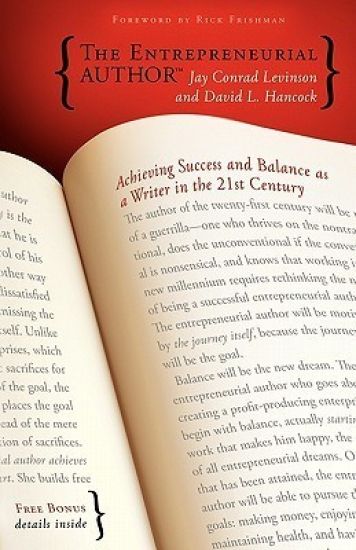
The Entrepreneurial Author
Jay Conrad Levinson; David L Hancock; Rick Frishman
Morgan James Publishing llc
2009
pokkari
A Blueprint For Success Without Stress, Now and In The Future. The face of publishing has changed drastically in recent years, and the twenty-first century promises to bring the most dramatic alterations to the publishing paradigm to date, calling for an overall revision of the structures and attitudes with which authors set up shop. By following the way of The Entrepreneurial Author, new and seasoned authors alike will discover that achieving and maintaining a professionally and personally balanced life is the way to achieve emotional and financial success, now and in the 21st Century.
In 1962, the philosopher Richard Taylor used six commonly accepted presuppositions to imply that human beings have no control over the future. David Foster Wallace not only took issue with Taylor's method, which, according to him, scrambled the relations of logic, language, and the physical world, but also noted a semantic trick at the heart of Taylor's argument. Fate, Time, and Language presents Wallace's brilliant critique of Taylor's work. Written long before the publication of his fiction and essays, Wallace's thesis reveals his great skepticism of abstract thinking made to function as a negation of something more genuine and real. He was especially suspicious of certain paradigms of thought-the cerebral aestheticism of modernism, the clever gimmickry of postmodernism-that abandoned "the very old traditional human verities that have to do with spirituality and emotion and community." As Wallace rises to meet the challenge to free will presented by Taylor, we witness the developing perspective of this major novelist, along with his struggle to establish solid logical ground for his convictions. This volume, edited by Steven M. Cahn and Maureen Eckert, reproduces Taylor's original article and other works on fatalism cited by Wallace. James Ryerson's introduction connects Wallace's early philosophical work to the themes and explorations of his later fiction, and Jay Garfield supplies a critical biographical epilogue.
How better information and better access to it improves the quality of our decisions and makes for a more vibrant participatory society.Information is power. It drives commerce, protects nations, and forms the backbone of systems that range from health care to high finance. Yet despite the avalanche of data available in today's information age, neither institutions nor individuals get the information they truly need to make well-informed decisions. Faulty information and sub-optimal decision-making create an imbalance of power that is exaggerated as governments and corporations amass enormous databases on each of us. Who has more power: the government, in possession of uncounted terabytes of data (some of it obtained by cybersnooping), or the ordinary citizen, trying to get in touch with a government agency? In Missed Information, David Sarokin and Jay Schulkin explore information-not information technology, but information itself-as a central part of our lives and institutions. They show that providing better information and better access to it improves the quality of our decisions and makes for a more vibrant participatory society.Sarokin and Schulkin argue that freely flowing information helps systems run more efficiently and that incomplete information does just the opposite. It's easier to comparison shop for microwave ovens than for doctors or hospitals because of information gaps that hinder the entire health-care system. Better information about such social ills as child labor and pollution can help consumers support more sustainable products. The authors examine the opacity of corporate annual reports, the impenetrability of government secrets, and emerging techniques of "information foraging." The information imbalance of power can be reconfigured, they argue, with greater and more meaningful transparency from government and corporations.
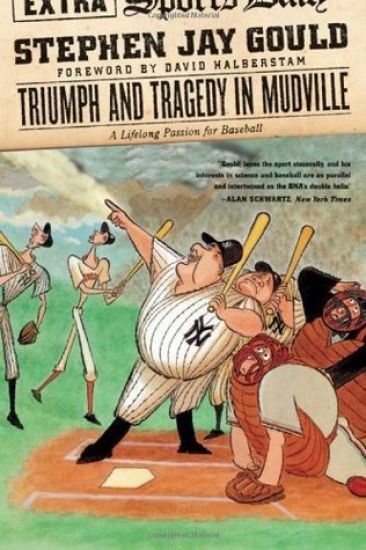
Science meets sport in this vibrant collection of baseball essays by the late evolutionary biologist.Among Stephen Jay Gould's many gifts was his ability to write eloquently about baseball, his great passion. Through the years, the renowned paleontologist published numerous essays on the sport; these have now been collected in a volume alive with the candor and insight that characterized all of Gould's writing. Here are his thoughts on the complexities of childhood streetball and the joys of opening day; tributes to Mickey Mantle, Babe Ruth, and lesser-knowns such as deaf-mute centerfielder "Dummy" Hoy; and a frank admission of the contradictions inherent in being a lifelong Yankees fan with Red Sox season tickets. Gould also deftly applies the tools of evolutionary theory to the demise of the .400 hitter, the Abner Doubleday creation myth, and the improbability of Joe DiMaggio's 56-game hitting streak. This book is a delight, an essential addition to Gould's remarkable legacy, and a fitting tribute to his love for the game.
A joyful exploration of the cuisine of Baja California--hailed as Mexico's Napa Valley--with 60 recipes celebrating the laidback lifestyle found right across the border. Less than an hour's drive from San Diego, Baja California is an up-and-coming destination for tourists looking to experience the best of what Mexico has to offer. From Baja wine country to incredible seafood along the coast, Baja cuisine showcases grilled meats, freshly caught fish, and produce straight from the garden, all mingled with the salt spray of the Pacific Ocean. Inspired by the incredible local landscape and his food from the award-winning restaurant Fauna, star chef David Castro Hussong conducts a dreamy exploration of Baja cuisine featuring 60 recipes ranging from street food such as Grilled Halibut Tacos and Chicharrones to more refined dishes such as Grilled Steak in Salsa Negra and Tomatillo-Avocado Salsa. Each chapter features gorgeous photographs of the region and profiles of top food purveyors are scattered throughout, bringing the spirit of Baja into your kitchen, no matter where you live.
Reconstructing the University
David John Frank; Jay Gabler; John W. Meyer
Stanford University Press
2006
sidottu
Current conversations on the state of academia contain a broad sense of crisis over changes in the body of university knowledge—the decline of literature, the unbridling of ethnic studies, the growth of various applied programs, and so on. Much of the concern revolves around a perceived deterioration of the academic core in which, the thinking goes, the university's teaching and research priorities are increasingly compromised by external financial and political interests. With data on faculty and course composition over the twentieth century for a global sample of universities, this book provides an examination unprecedented in scope and scale of changes in academia. The authors document the changing emphases accorded the branches of learning, the applied and basic divisions, and the disciplinary fields. They find deep transformations, as anticipated, but offer a new explanation for these shifts. Changes in academic focus are less the work of outside interest groups, but instead are cultural maps to the altering features of globally institutionalized understandings of reality.
Reconstructing the University
David John Frank; Jay Gabler; John W. Meyer
Stanford University Press
2006
pokkari
Current conversations on the state of academia contain a broad sense of crisis over changes in the body of university knowledge—the decline of literature, the unbridling of ethnic studies, the growth of various applied programs, and so on. Much of the concern revolves around a perceived deterioration of the academic core in which, the thinking goes, the university's teaching and research priorities are increasingly compromised by external financial and political interests. With data on faculty and course composition over the twentieth century for a global sample of universities, this book provides an examination unprecedented in scope and scale of changes in academia. The authors document the changing emphases accorded the branches of learning, the applied and basic divisions, and the disciplinary fields. They find deep transformations, as anticipated, but offer a new explanation for these shifts. Changes in academic focus are less the work of outside interest groups, but instead are cultural maps to the altering features of globally institutionalized understandings of reality.
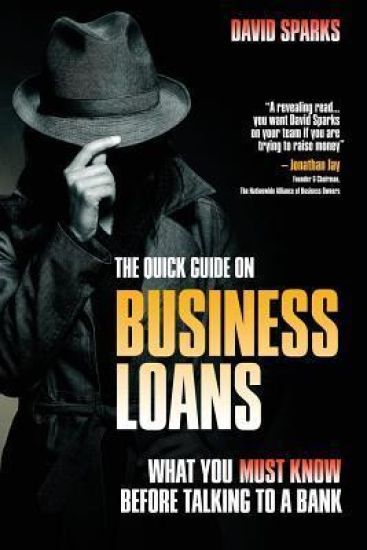
The Quick Guide On Business Loans - What You Must Know Before Talking To A Bank
David SPARKS; Jonathan Jay
Deeno Publishing
2013
pokkari
Huey: The Story of an Assault Helicopter Pilot in Vietnam
David Groen; Jay Groen
Artha Publishing
2014
nidottu
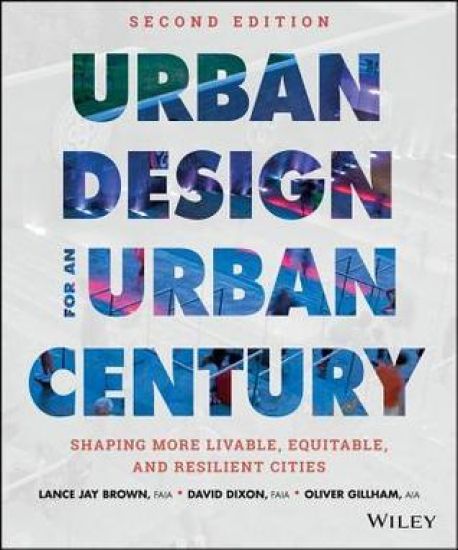
This book offers a comprehensive introduction to urban design, from a historical overview and basic principles to practical design concepts and strategies. It discusses the demographic, environmental, economic, and social issues that influence the decision-making and implementation processes of urban design. The Second Edition has been fully revised to include thorough coverage of sustainability issues and to integrate new case studies into the core concepts discussed.
Cairo By Gaslight
David Ducorbier; Jay Wilburn; Alexandra Bartoli
Createspace Independent Publishing Platform
2015
nidottu
In a Cairo that Never Was and Never Will Be, there are a thousand stories to tell. As ornithopters flit and flutter about overhead, their shadows fall across the ancient, stone forms of the Sphinx and the Great Pyramids. Mad professors wage secret wars by night with mechanical assassins, while societies, secret and ancient, struggle against one another with cunning and magic, with poison and cold, hard steel. Sky smugglers, lovers, air pirates and spies seek rendezvous unseen and undisturbed, as jewel thieves and tomb robbers ply their dangerous trades. Bounty hunters stalk their criminal prey while defiant rebels meet with black-market arms dealers to trade gold for the guns, powder and clockwork soldiers they need to continue their struggles. The mercantile and warrior airships of the Great Powers float lazily overhead while their sea-going sisters traverse the Canal. Airshipmen on leave partake of liquor and hashish in smoke-filled caf s only to wake to find themselves conscripted by Barbary air pirates. Meanwhile, behind closed doors, their breasts adorned with henna and perfume, pagan priestesses frolic and twirl in frenetic, Bacchanalian rites, sharing their flesh in sensual revels to the goddess Bast far from the accusatory gaze of a fanatical Mohammedan priesthood. These are the stories of Cairo By Gaslight.
The Cat Who Lived With Anne Frank
DAVID LEE MILLER; Steven Jay Rubin
Philomel Books,U.S.
2019
sidottu
When Mouschi the cat goes with his boy, Peter, to a secret annex, he meets a girl named Anne. Bright, kind and loving, Anne dreams of freedom and of becoming a writer whose words change the world. But Mouschi, along with Anne and her family and friends, must stay hidden, hoping for the war to end and for a better future. Told from the perspective of the cat who actually lived with Anne Frank in the famous Amsterdam annex, this poignant book paints a picture of a young girl who wistfully dreams of a better life for herself and her friends, tentatively wonders what mark she might leave on the world, and, above all, adamantly believes in the goodness of people. Accompanied by beautiful, vivid art, this book is a perfect introduction to a serious topic for younger readers, especially at a time when respect and inclusion are so important.
My Life My Music: Auto Biography
David Cashmore; Norman Jay
Createspace Independent Publishing Platform
2016
nidottu
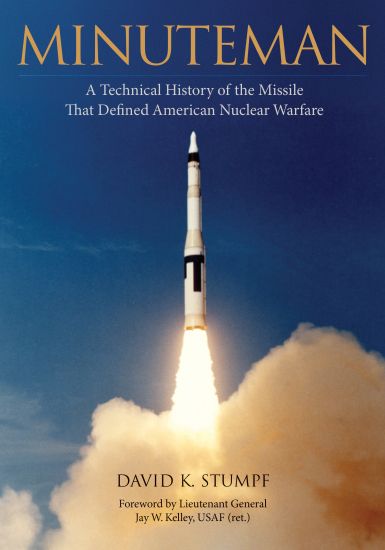
Minuteman: A Technical History of the Missile That Defined American Nuclear Warfare is a detailed history of the Minuteman intercontinental ballistic missile program, which has served as a powerful component of US nuclear strategies for over half a century. David K. Stumpf examines breakthroughs in solid propellant, lightweight inertial guidance systems and lightweight reentry vehicle development, the construction of over a thousand launch and launch control facilities, and key flight test and operational flight programs, and places the Minuteman program in context with world events.