Kirjojen hintavertailu. Mukana 11 717 486 kirjaa ja 12 kauppaa.

Kirjahaku

Etsi kirjoja tekijän nimen, kirjan nimen tai ISBN:n perusteella.

1000 tulosta hakusanalla Jean Kerr

CONTES du Soleil et de la Pluie 1902-1907 Préface et bibliographie par Jean-Luc Buard
Conteur, collaborateur litteraire de journaux quotidiens, du Gil Blas puis du Journal avant d'etre engage en 1902 par L'Auto, Maurice Leblanc etait un admirateur du naturalisme de Maupassant. Mais sa carriere prit un brusque tournant en 1905, lorsqu'il crea le personnage d'Arsene Lupin dans le magazine Je sais tout.Ce recueil rassemble, pour la premiere fois, l'integralite des 110 contes et articles que Maurice Leblanc a publies, de 1902 a 1907, la plupart sous l'intitule " Contes du soleil et de la pluie ", dans le quotidien sportif L'Auto. Il y adapte ses themes favoris a un contexte particulier : les adulteres deviennent sportifs et sont aides par le moyen de la bicyclette ou de l'automobile, deux elements liberateurs des forces naturelles et instinctives des personnages.Presente par Jean-Luc Buard (co-fondateur et redacteur en chef du Rocambole, bulletin des amis du roman populaire), le volume est complete d'une bibliographie commentee des reproductions de ces contes, reeditions et traductions.
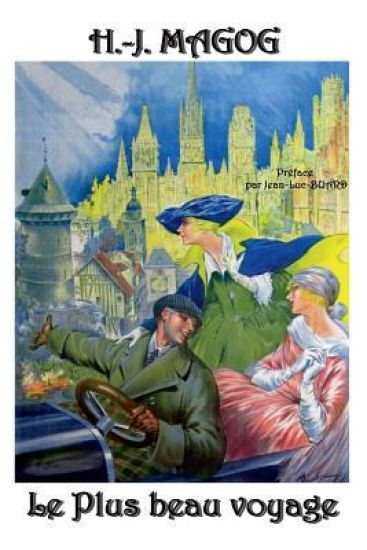
Le Plus beau voyage Préface par Jean-Luc Buard

Le Plus beau voyage Préface par Jean-Luc Buard

Jean-Luc BUARD; H.-J. MAGOG

Lulu.com
2019
nidottu
Henri Georges Jeanne dit H.-J. Magog debuta par des dialogues et des poesies. Il devint feuilletoniste en 1911 au Journal, a Excelsior et a L'Eclair, et fut conteur au quotidien Le Matin, a partir de 1923. Le Plus beau voyage, retrouve lors d'une exploration de " La Page du dimanche " du Matin, a ete compose pour les vacances de l'ete 1923. OEuvre de circonstance, roman de tourisme et de mystere, chaque episode fait l'objet d'une magnifique mise en image composee par Jacques Touchet (1887-1949).Hymne au tourisme hexagonal, au patrimoine et aux richesses archeologiques, architecturales, religieuses et naturelles de la France, a ses paysages, le roman de Magog invite a une decouverte hebdomadaire des differentes regions du pays : pour chaque jour, une etape, une visite, une aventure nouvelle vecues par les personnages et le lecteur, en temps reel.Ce court roman est precede par une introduction de Jean-Luc Buard (co-fondateur et redacteur en chef de la revue Le Rocambole).
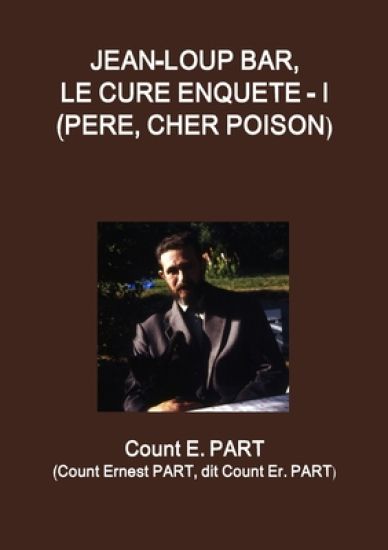
Jean-Loup Bar, le curé enquête - I (Père, Cher poison)
Ce roman est maudit. Il a fait l'objet de contrats a compte d'editeur par deux maisons d'edition du Centre, mais aucune n'a honore son contrat : l'une a fait faillite, l'autre etait dirigee par une "petite fenetre" qui changea d'avis sur un coup de tete d'un petit editeur.De fait, il a fait l'objet d'un tres long travail d'ecriture-corrections-reecriture,etc. sur pres de dix-neuf ans.Jean-Loup Bar est un cure berrichon atypique, ancien mercenaire enquetant sur le suicide du maire communiste de son village. Une atmosphere est creee, les personnages sont bien campes, mais le genre est indefinissable, tenant a la fois du romanesque, du polar noir, de la poesie, de l'ethnologie, et... du franc guignol. Ce roman, aussi atypique que son cure, navigue donc entre plusieurs genres mais s'ecarte volontairement du sanglant et du grand spectaculaire. Il est agreable a lire, n'est pas Vidde de sens.Au final, il est pour l'adulte et pour les grands enfants...
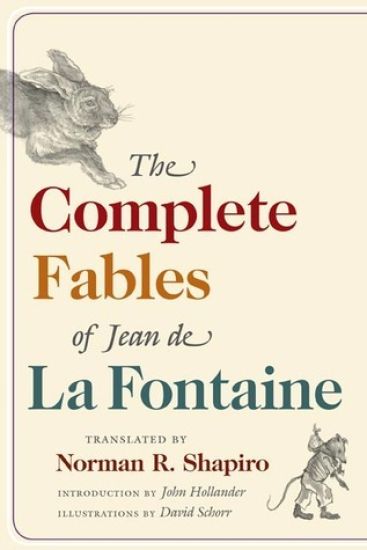
The Complete Fables of Jean de La Fontaine

The Complete Fables of Jean de La Fontaine

Jean La Fontaine

University of Illinois Press
2007
sidottu
Inspired new translations of the work of one of the world's greatest fabulists Told in an elegant style, Jean de la Fontaine's (1621-95) charming animal fables depict sly foxes and scheming cats, vain birds and greedy wolves, all of which subtly express his penetrating insights into French society and the beasts found in all of us. Norman R. Shapiro has been translating La Fontaine's fables for over twenty years, capturing the original work's lively mix of plain and archaic language. This newly complete translation is destined to set the English standard for this work. Awarded the Lewis Galantière Prize by the American Translators Association, 2008.
Jean-Pierre Jeunet

Jean-Pierre Jeunet

Ezra Elizabeth

University of Illinois Press
2008
sidottu
This is the first book on Jean-Pierre Jeunet, the popular and critically acclaimed director of films such as Amélie, Delicatessen, A Very Long Engagement, Alien Resurrection, and City of Lost Children. Jeunet's work exemplifies Europe's engagement with Hollywood, while at the same time making him a figurehead of the critically overlooked, specifically French tradition of the cinema of the fantastic.Having garnered both commercial success and critical esteem in genres such as science fiction, fantasy, romantic comedy, and the war epic, Jeunet's work nevertheless engages with key aspects of French history and contemporary French culture. This study analyzes the director's major films, including those he made with Marc Caro, and his early short works. Elizabeth Ezra brings a new perspective to the study of Jeunet's work, uncovering instances of repressed historical trauma involving France's role in Algeria and the Second World War. The book includes a commentary by Jeunet himself on his career and corpus of films.
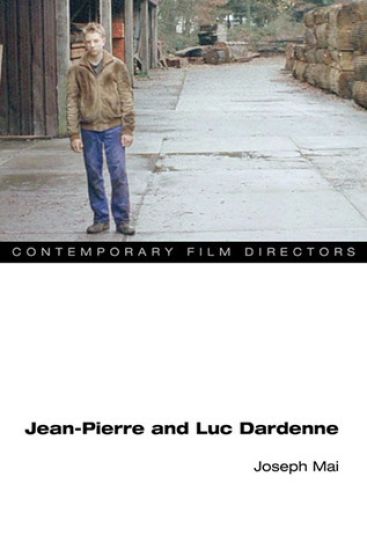
Jean-Pierre and Luc Dardenne

Jean-Pierre and Luc Dardenne

Joseph Mai

University of Illinois Press
2010
sidottu
For well over a decade, Jean-Pierre and Luc Dardenne have produced highly original and ethically charged films that immerse their audiences in an intense and embodied viewing experience. Their work has consistently attracted international recognition, including the rare feat of two Palmes d'Or at Cannes.In this first book-length study of the Belgian brothers, Joseph Mai delivers sophisticated close analyses of their directorial style and explores the many philosophical issues dealt with in their films (especially the ethics of Emmanuel Levinas). Mai discusses the Dardennes' varied and searching career from its inception in the late 1970s, starting with the working-class political consciousness and lost utopias of their documentary period; passing through their transition toward fictional narrative, experimental techniques, and familial themes; and finishing with a series of in-depth and philosophically informed interpretations of the brothers' more recent work. In such highly influential films such as La promesse, Rosetta, The Son, and The Child, the brothers have recast filmmaking through what Mai calls a "sensuous realism"--realism capable of touching the audience with the most compelling problems and moral dilemmas of contemporary society. This volume also features an interview in which the Dardennes discuss their approach to film production and the direction of actors.
Jean Toomer

Jean Toomer

Barbara Foley

University of Illinois Press
2014
sidottu
The 1923 publication of Cane established Jean Toomer as a modernist master and one of the key literary figures of the emerging Harlem Renaissance. Though critics and biographers alike have praised his artistic experimentation and unflinching eyewitness portraits of Jim Crow violence, few seem to recognize how much Toomer's interest in class struggle, catalyzed by the Russian Revolution and the post–World War One radical upsurge, situate his masterwork in its immediate historical context. In Jean Toomer: Race, Repression, and Revolution, Barbara Foley explores Toomer's political and intellectual connections with socialism, the New Negro movement, and the project of Young America. Examining his rarely scrutinized early creative and journalistic writings, as well as unpublished versions of his autobiography, she recreates the complex and contradictory consciousness that produced Cane. Foley's discussion of political repression runs parallel with a portrait of repression on a personal level. Examining family secrets heretofore unexplored in Toomer scholarship, she traces their sporadic surfacing in Cane. Toomer's text, she argues, exhibits a political unconscious that is at once public and private.
The Complete Fables of Jean de La Fontaine

The Complete Fables of Jean de La Fontaine

Jean La Fontaine

University of Illinois Press
2007
nidottu
Inspired new translations of the work of one of the world's greatest fabulists Told in an elegant style, Jean de la Fontaine's (1621-95) charming animal fables depict sly foxes and scheming cats, vain birds and greedy wolves, all of which subtly express his penetrating insights into French society and the beasts found in all of us. Norman R. Shapiro has been translating La Fontaine's fables for over twenty years, capturing the original work's lively mix of plain and archaic language. This newly complete translation is destined to set the English standard for this work. Awarded the Lewis Galantière Prize by the American Translators Association, 2008.
Jean-Pierre Jeunet

Jean-Pierre Jeunet

Elizabeth Ezra

University of Illinois Press
2008
nidottu
This is the first book on Jean-Pierre Jeunet, the popular and critically acclaimed director of films such as Amélie, Delicatessen, A Very Long Engagement, Alien Resurrection, and City of Lost Children. Jeunet's work exemplifies Europe's engagement with Hollywood, while at the same time making him a figurehead of the critically overlooked, specifically French tradition of the cinema of the fantastic.Having garnered both commercial success and critical esteem in genres such as science fiction, fantasy, romantic comedy, and the war epic, Jeunet's work nevertheless engages with key aspects of French history and contemporary French culture. This study analyzes the director's major films, including those he made with Marc Caro, and his early short works. Elizabeth Ezra brings a new perspective to the study of Jeunet's work, uncovering instances of repressed historical trauma involving France's role in Algeria and the Second World War. The book includes a commentary by Jeunet himself on his career and corpus of films.
Jean-Pierre and Luc Dardenne

Jean-Pierre and Luc Dardenne

Joseph Mai

University of Illinois Press
2010
nidottu
For well over a decade, Jean-Pierre and Luc Dardenne have produced highly original and ethically charged films that immerse their audiences in an intense and embodied viewing experience. Their work has consistently attracted international recognition, including the rare feat of two Palmes d'Or at Cannes.In this first book-length study of the Belgian brothers, Joseph Mai delivers sophisticated close analyses of their directorial style and explores the many philosophical issues dealt with in their films (especially the ethics of Emmanuel Levinas). Mai discusses the Dardennes' varied and searching career from its inception in the late 1970s, starting with the working-class political consciousness and lost utopias of their documentary period; passing through their transition toward fictional narrative, experimental techniques, and familial themes; and finishing with a series of in-depth and philosophically informed interpretations of the brothers' more recent work. In such highly influential films such as La promesse, Rosetta, The Son, and The Child, the brothers have recast filmmaking through what Mai calls a "sensuous realism"--realism capable of touching the audience with the most compelling problems and moral dilemmas of contemporary society. This volume also features an interview in which the Dardennes discuss their approach to film production and the direction of actors.
Jean Toomer

Jean Toomer

Barbara Foley

University of Illinois Press
2014
nidottu
The 1923 publication of Cane established Jean Toomer as a modernist master and one of the key literary figures of the emerging Harlem Renaissance. Though critics and biographers alike have praised his artistic experimentation and unflinching eyewitness portraits of Jim Crow violence, few seem to recognize how much Toomer's interest in class struggle, catalyzed by the Russian Revolution and the post–World War One radical upsurge, situate his masterwork in its immediate historical context. In Jean Toomer: Race, Repression, and Revolution, Barbara Foley explores Toomer's political and intellectual connections with socialism, the New Negro movement, and the project of Young America. Examining his rarely scrutinized early creative and journalistic writings, as well as unpublished versions of his autobiography, she recreates the complex and contradictory consciousness that produced Cane. Foley's discussion of political repression runs parallel with a portrait of repression on a personal level. Examining family secrets heretofore unexplored in Toomer scholarship, she traces their sporadic surfacing in Cane. Toomer's text, she argues, exhibits a political unconscious that is at once public and private.
Jean-Luc Godard, Cinema Historian

Jean-Luc Godard, Cinema Historian

Indiana University Press
2013
pokkari
Originally released as a videographic experiment in film history, Jean-Luc Godard's Histoire(s) du cinéma has pioneered how we think about and narrate cinema history, and in how history is taught through cinema. In this stunningly illustrated volume, Michael Witt explores Godard's landmark work as both a specimen of an artist's vision and a philosophical statement on the history of film. Witt contextualizes Godard's theories and approaches to historiography and provides a guide to the wide-ranging cinematic, aesthetic, and cultural forces that shaped Godard's groundbreaking ideas on the history of cinema.
Jean Bethke Elshtain

Jean Bethke Elshtain

University of Notre Dame Press
2018
sidottu
Jean Bethke Elshtain (1941–2013) was a noted ethicist, political philosopher, and public intellectual. Her four decades of scholarship defy easy categorization: she wrote both seminal works of theory and occasional pieces for the popular press, and she was variously viewed as radical and conservative, feminist and traditionalist, anti-war and pro-interventionist. Jean Bethke Elshtain: Politics, Ethics, and Society is the first attempt to evaluate Elshtain's entire published body of work and to give shape to a wide-ranging scholarly career, with an eye to her work's ongoing relevance. This collection of essays brings together scholars and public intellectuals from across the spectrum of disciplines in which Elshtain wrote. The volume is organized around four themes, which identify the central concerns that shaped Elshtain's thought: (1) the nature of politics; (2) politics and religion; (3) international relations and just war; and (4) the end(s) of political life. The essays have been chosen not only for the expertise of each contributor as it bears on Elshtain's work but also for their interpretive and analytic scope. This volume introduces readers to the work of a key contemporary thinker, using Elshtain's writing as a lens through which to reflect on central political and scholarly debates of the last few decades. Jean Bethke Elshtain will be of great interest to specialists researching Elshtain and to scholars of multiple disciplines, particularly political theory, international relations, and religion. Contributors: Debra Erickson Sulai, Michael Le Chevallier, Robin W. Lovin, William A. Galston, Arlene W. Saxonhouse, Don Browning, Peter Berkowitz, Nancy J. Hirschmann, Michael Kessler, Lisa Sowle Cahill, Nigel Biggar, Gilbert Meilaender, Eric Gregory, Daniel Philpott, Marc LiVecche, Nicholas Rengger, John D. Carlson, Chris Brown, Michael Walzer, James Turner Johnson, Erik Owens, Francis Fukuyama, Carl Gershman, and Patrick J. Deneen.
Jean Gerson and the Last Medieval Reformation

Jean Gerson and the Last Medieval Reformation

Brian Patrick McGuire

Pennsylvania State University Press
2005
sidottu
In this biography of the noted French philosopher and theologian Jean Gerson, the first since 1929, Brian Patrick McGuire presents a compelling portrait of Gerson as a voice of reason and Christian humanism during a time of great intellectual and social tumult in the late Middle Ages. Born to a peasant father and mother in the county of Champagne, Gerson (1363–1429) was the first of twelve children. He overcame his modest beginnings to become a scholastic and vernacular theologian, a university intellectual, and a church reformer. McGuire shows us the turning points in Gerson’s life, including his crisis of faith after becoming chancellor of the University of Paris in 1395. Through these key moments, we see the deeper undercurrents of his mystical writings. With their rich display of spiritual and emotional life, these writings were to earn Gerson the appellation “doctor christianissimus.” In turn, they would influence many later thinkers, including Nicholas of Cusa, Ignatius of Loyola, Francis de Sales, and even Martin Luther. Gerson is a man perhaps easier to admire than to love: conscientious to a fault, at once a pragmatist and an idealist in church politics, a university intellectual who both fostered and distrusted the religious aspirations of the laity, a powerful prelate who moved among the great yet never forgot his peasant origins, a self-revealing yet intensely private man who yearned for intimacy almost as much as he feared it. McGuire ably situates Gerson in the context of his age, an age replete with doctrinal controversies and the politics of papal schism on the eve of the Protestant Reformation. Gerson emerges as a proponent of dialogue and discussion, committed to reforming the church from within. His courageous effort to renew the unity of a unique civilization bears examination in our own time.
Jean Gerson and the Last Medieval Reformation

Jean Gerson and the Last Medieval Reformation

Brian Patrick McGuire

Pennsylvania State University Press
2005
pokkari
In this biography of the noted French philosopher and theologian Jean Gerson, the first since 1929, Brian Patrick McGuire presents a compelling portrait of Gerson as a voice of reason and Christian humanism during a time of great intellectual and social tumult in the late Middle Ages. Born to a peasant father and mother in the county of Champagne, Gerson (1363–1429) was the first of twelve children. He overcame his modest beginnings to become a scholastic and vernacular theologian, a university intellectual, and a church reformer. McGuire shows us the turning points in Gerson’s life, including his crisis of faith after becoming chancellor of the University of Paris in 1395. Through these key moments, we see the deeper undercurrents of his mystical writings. With their rich display of spiritual and emotional life, these writings were to earn Gerson the appellation “doctor christianissimus.” In turn, they would influence many later thinkers, including Nicholas of Cusa, Ignatius of Loyola, Francis de Sales, and even Martin Luther. Gerson is a man perhaps easier to admire than to love: conscientious to a fault, at once a pragmatist and an idealist in church politics, a university intellectual who both fostered and distrusted the religious aspirations of the laity, a powerful prelate who moved among the great yet never forgot his peasant origins, a self-revealing yet intensely private man who yearned for intimacy almost as much as he feared it. McGuire ably situates Gerson in the context of his age, an age replete with doctrinal controversies and the politics of papal schism on the eve of the Protestant Reformation. Gerson emerges as a proponent of dialogue and discussion, committed to reforming the church from within. His courageous effort to renew the unity of a unique civilization bears examination in our own time.
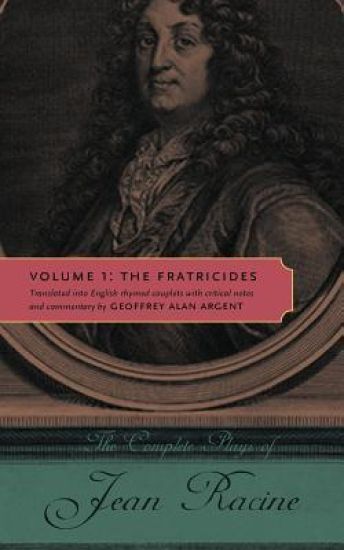
The Complete Plays of Jean Racine

The Complete Plays of Jean Racine

Jean Racine

Pennsylvania State University Press
2010
sidottu
This is the first volume of a planned translation into English of all twelve of Jean Racine’s plays—a project undertaken only three times in the three hundred years since Racine’s death. For this new translation, Geoffrey Alan Argent has taken a fresh approach: he has rendered these plays in rhymed "heroic" couplets. While Argent’s translation is faithful to Racine’s text and tone, his overriding intent has been to translate a work of French literature into a work of English literature, substituting for Racine’s rhymed alexandrines (hexameters) the English mode of rhymed iambic pentameters, a verse form particularly well suited to the highly charged urgency of Racine’s drama and the coiled strength of his verse. Complementing the translations are the illuminating Discussions and the extensive Notes and Commentaries Argent has furnished for each play. The Discussions are not offered as definitive interpretations of these plays, but are intended to stimulate readers to form their own views and to explore further the inexhaustibly rich world of Racine’s plays. Included in the Notes and Commentary section of this translation are passages that Racine deleted after the first edition and have never before appeared in English.The full title of Racine’s first tragedy is La Thébaïde ou les Frères ennemis (The Saga of Thebes, or The Enemy Brothers). But Racine was far less concerned with recounting the struggle for Thebes than in examining those indomitable passions—in this case, hatred—that were to prove his lifelong focus of interest. For Oedipus’s sons, Eteocles and Polynices (the titular brothers), vying for the throne is rather a symptom than a cause of their unquenchable hatred—so unquenchable that by the end of the play it has not only destroyed these twin brothers, but has also claimed the lives of their mother, their sister, their uncle, and their two cousins as collateral damage. Indeed, as Racine acknowledges in his preface, “There is hardly a character in it who does not die at the end.”
The Complete Plays of Jean Racine

The Complete Plays of Jean Racine

Jean Racine

Pennsylvania State University Press
2010
pokkari
This is the first volume of a planned translation into English of all twelve of Jean Racine’s plays—a project undertaken only three times in the three hundred years since Racine’s death. For this new translation, Geoffrey Alan Argent has taken a fresh approach: he has rendered these plays in rhymed "heroic" couplets. While Argent’s translation is faithful to Racine’s text and tone, his overriding intent has been to translate a work of French literature into a work of English literature, substituting for Racine’s rhymed alexandrines (hexameters) the English mode of rhymed iambic pentameters, a verse form particularly well suited to the highly charged urgency of Racine’s drama and the coiled strength of his verse. Complementing the translations are the illuminating Discussions and the extensive Notes and Commentaries Argent has furnished for each play. The Discussions are not offered as definitive interpretations of these plays, but are intended to stimulate readers to form their own views and to explore further the inexhaustibly rich world of Racine’s plays. Included in the Notes and Commentary section of this translation are passages that Racine deleted after the first edition and have never before appeared in English.The full title of Racine’s first tragedy is La Thébaïde ou les Frères ennemis (The Saga of Thebes, or The Enemy Brothers). But Racine was far less concerned with recounting the struggle for Thebes than in examining those indomitable passions—in this case, hatred—that were to prove his lifelong focus of interest. For Oedipus’s sons, Eteocles and Polynices (the titular brothers), vying for the throne is rather a symptom than a cause of their unquenchable hatred—so unquenchable that by the end of the play it has not only destroyed these twin brothers, but has also claimed the lives of their mother, their sister, their uncle, and their two cousins as collateral damage. Indeed, as Racine acknowledges in his preface, “There is hardly a character in it who does not die at the end.”