Kirjojen hintavertailu. Mukana 11 342 296 kirjaa ja 12 kauppaa.

Kirjahaku

Etsi kirjoja tekijän nimen, kirjan nimen tai ISBN:n perusteella.

1000 tulosta hakusanalla Jefferson Hack

Jefferson's Memorandum Books, Volume 1

Jefferson's Memorandum Books, Volume 1

Thomas Jefferson

Princeton University Press
2017
sidottu
Among the Second Series of The Papers of Thomas Jefferson, this volume has the most detailed coverage of his day-to-day life. These disciplined records of personal expenditures, and of various other daily observations, furnish valuable information about prices and availability of commodities of the period and provide abundant evidence of Jefferson's devotion to a systematic way of living and of his insatiable curiosity. Originally published in 1997. The Princeton Legacy Library uses the latest print-on-demand technology to again make available previously out-of-print books from the distinguished backlist of Princeton University Press. These editions preserve the original texts of these important books while presenting them in durable paperback and hardcover editions. The goal of the Princeton Legacy Library is to vastly increase access to the rich scholarly heritage found in the thousands of books published by Princeton University Press since its founding in 1905.
Jefferson's Memorandum Books, Volume 2

Jefferson's Memorandum Books, Volume 2

Princeton University Press
2017
sidottu
Among the Second Series of The Papers of Thomas Jefferson, this volume has the most detailed coverage of his day-to-day life. These disciplined records of personal expenditures, and of various other daily observations, furnish valuable information about prices and availability of commodities of the period and provide abundant evidence of Jefferson's devotion to a systematic way of living and of his insatiable curiosity. Originally published in 1997. The Princeton Legacy Library uses the latest print-on-demand technology to again make available previously out-of-print books from the distinguished backlist of Princeton University Press. These editions preserve the original texts of these important books while presenting them in durable paperback and hardcover editions. The goal of the Princeton Legacy Library is to vastly increase access to the rich scholarly heritage found in the thousands of books published by Princeton University Press since its founding in 1905.
Jefferson's Parliamentary Writings

Jefferson's Parliamentary Writings

Princeton University Press
2016
sidottu
This volume in the Second Series of The Papers of Thomas Jefferson contains the two important parliamentary documents he prepared during his lifelong study of the subject. Jefferson compiled the first document, called the Parliamentary Pocket-Book," while he was president of the Senate by virtue of his position as Vice- President of the United States. This informal guide was the basis for the Manual of Parliamentary Practice, which Jefferson completed in its earliest form by 1800 and which he had published in 1801. The Manual was the new nation's first full parliamentary rule book and is American democracy's reliable guide to its English parliamentary tradition. Still cited on the floors of Congress. Originally published in 1988. The Princeton Legacy Library uses the latest print-on-demand technology to again make available previously out-of-print books from the distinguished backlist of Princeton University Press. These editions preserve the original texts of these important books while presenting them in durable paperback and hardcover editions. The goal of the Princeton Legacy Library is to vastly increase access to the rich scholarly heritage found in the thousands of books published by Princeton University Press since its founding in 1905.
Jefferson's Literary Commonplace Book

Jefferson's Literary Commonplace Book

Princeton University Press
2016
sidottu
This work is a new edition of Thomas Jefferson's literary commonplace book, a notebook of his literary and philosophical reading. Unlike the only previous edition, published in 1928, it contains full annotation, pertinent information on the authors and works commonplaced, and a rationale for dating the entries. Thus it is now possible to show that most of the four hundred seven passages were entered when Jefferson was a young man, between the ages of fifteen and thirty. As such, they reflect the range of his literary interests from his school days to about the time of his marriage and involvement in politics. As one of the few surviving documents from Jefferson's early years, this notebook assumes special importance as a source of insight into the least known period of his life. In the introduction the editor presents reasons for thinking that the commonplace book was more to Jefferson than a literary sampler and was in some respects a deeply personal notebook with direct connections to the emotional events and preoccupations of his formative years. In addition to the text and annotation, the book contains a register of authors and an illustrated essay on Jefferson's handwriting that provides the rationale for assigning approximate dates to the entries of the commonplace book. Originally published in 1989. The Princeton Legacy Library uses the latest print-on-demand technology to again make available previously out-of-print books from the distinguished backlist of Princeton University Press. These editions preserve the original texts of these important books while presenting them in durable paperback and hardcover editions. The goal of the Princeton Legacy Library is to vastly increase access to the rich scholarly heritage found in the thousands of books published by Princeton University Press since its founding in 1905.
Jefferson's Extracts from the Gospels

Jefferson's Extracts from the Gospels

Dickinson W. Adams

Princeton University Press
2016
sidottu
This volume is an important clarification of the controversial religious beliefs of one of our most unorthodox but ethically committed presidents. Printed here are the facsimile texts of Jefferson's two compilations of Jesus' words. Originally published in 1983. The Princeton Legacy Library uses the latest print-on-demand technology to again make available previously out-of-print books from the distinguished backlist of Princeton University Press. These editions preserve the original texts of these important books while presenting them in durable paperback and hardcover editions. The goal of the Princeton Legacy Library is to vastly increase access to the rich scholarly heritage found in the thousands of books published by Princeton University Press since its founding in 1905.
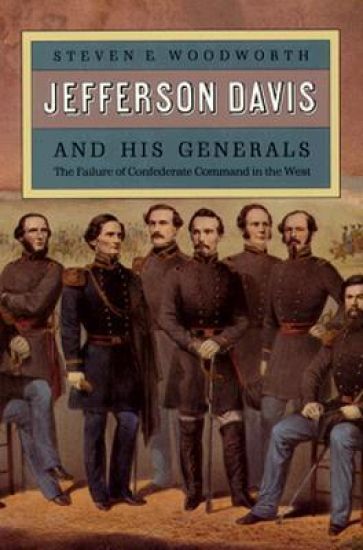
Jefferson Davis and His Generals

Jefferson Davis and His Generals

Steven E. Woodworth

University Press of Kansas
1990
nidottu
Jefferson Davis is a historical figure who provokes strong passions among scholars. Through the years historians have place him at both ends of the spectrum: some have portrayed him as a hero, others have judged him incompetent. In ""Jefferson Davis and his Generals"", Steven Woodworth aims to show that both extremes are accurate - Davis was both heroic and incompetent. Yet neither viewpoint reveals the whole truth about this complicated figure. Woodworth's portrait of Davis reveals an experienced, talented, and courageous leader who, nevertheless, undermined the Confederacy's cause in the trans-Appalachian west, where the South lost the war.
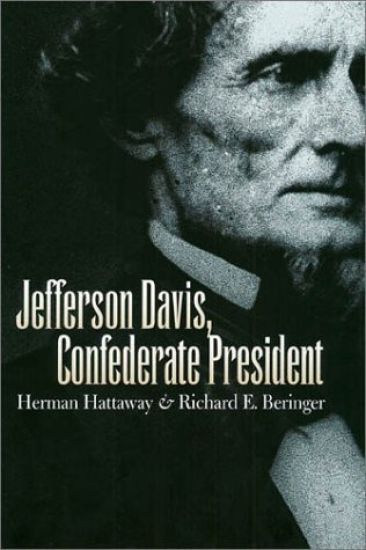
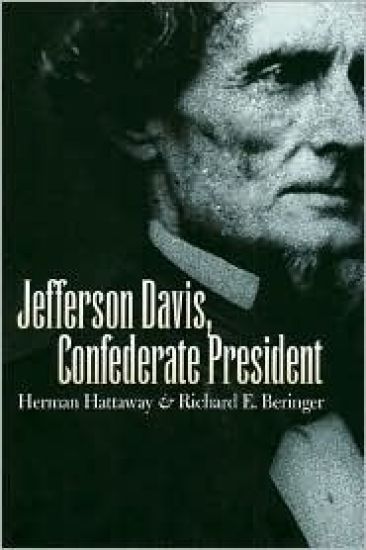
Jefferson Davis, Confederate President

Jefferson Davis, Confederate President

Herman Hattaway; Richard E. Beringer

University Press of Kansas
2002
sidottu
He was one of the most embattled heads of state in American history. Charged with building a new nation while waging a war for its very independence, he accepted his responsibilities reluctantly but carried them out with a fierce dedication to his ideals. Those efforts ultimately foundered on the shoals of Confederate defeat, leaving Davis stranded in public memory as both valiant leader and desolate loser. Now two renowned Civil War historians take a new and closer look at Davis's presidency. In the process, they provide a clearer image of his leadership and ability to handle domestic, diplomatic, and military matters under the most trying circumstances - without the considerable industrial and population resources of the North and without the formal recognition of other nations. Hattaway and Beringer show us a man so respected that northern colleagues regretted his departure from the U.S. Senate, but so bent on Southern independence he was willing to impose unthinkable burdens on his citizens - an apologist for slavery who was committed to state rights, even while growing nationalism in his new country called for a stronger central government. In assessing Davis's actual administration of the Confederate state, the authors analyze the Confederate government's constitution, institutions, infrastructure, and cabinet-level administrators. They also integrate events of Davis's presidency with the ongoing war as it encroached upon the South, offering a panoramic view of military strategy as seen from the president's office. They tell how Davis reacted to the outcomes of key battles and campaigns in order to assess his leadership abilities, his relations with civilian and military authorities, and - his own personal competency notwithstanding - his poor judgment in selecting generals. Rich in detail and exhilaratingly told with generous selections from Davis's own letters and speeches, Hattaway and Beringer provide the most insightful account available of the Confederate presidency - suggesting that perhaps it was the Confederate government, rather than Davis himself, that failed. More than that, it shows us Davis as an American leader and offers a new appreciation of his place in our country's history.
Jefferson Davis, Confederate President

Jefferson Davis, Confederate President

Herman Hattaway; Richard E. Beringer

University Press of Kansas
2002
nidottu
He was one of the most embattled heads of state in American history. Charged with building a new nation while waging a war for its very independence, he accepted his responsibilities reluctantly but carried them out with a fierce dedication to his ideals. Those efforts ultimately foundered on the shoals of Confederate defeat, leaving Davis stranded in public memory as both valiant leader and desolate loser.Now two renowned Civil War historians, Herman Hattaway and Richard Beringer, take a new and closer look at Davis's presidency. In the process, they provide a clearer image of his leadership and ability to handle domestic, diplomatic, and military matters under the most trying circumstances-without the considerable industrial and population resources of the North and without the formal recognition of other nations.Hattaway and Beringer examine Davis's strengths and weaknesses as president in light of both traditional evidence and current theories of presidential leadership. They show us a man so respected that northern colleagues regretted his departure from the U.S. Senate, but so bent on Southern independence he was willing to impose unthinkable burdens on his citizens-an apologist for slavery who was committed to state rights, even while growing nationalism in his new country called for a stronger central government.In assessing Davis's actual administration of the Confederate state, the authors analyze the Confederate government's constitution, institutions, infrastructure, and cabinet-level administrators. They also integrate events of Davis's presidency with the ongoing war as it encroached upon the South, offering a panoramic view of military strategy as seen from the president's office. They tell how Davis reacted to the outcomes of key battles and campaigns in order to assess his leadership abilities, his relations with civilian and military authorities, and—his own personal competency notwithstanding—his poor judgment in selecting generals.Rich in detail and exhilaratingly told with generous selections from Davis's own letters and speeches, Hattaway and Beringer provide the most insightful account available of the first and only Confederate presidency-suggesting that perhaps it was the Confederate government, rather than Davis himself, that failed. More than that, it shows us Jefferson Davis as an American leader and offers a new appreciation of his place in our country's history.
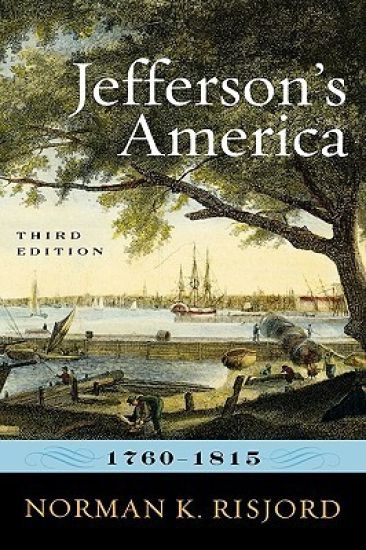
Jefferson's America, 1760–1815

Jefferson's America, 1760–1815

Norman K. Risjord

Rowman Littlefield Publishers
2009
sidottu
A captivating and lucid narrative of America's revolutionary generation, Jefferson's America takes the reader from the earliest rumblings of colonial dissent, through the crises of revolution and nation-making, to the heroic drama of the War of 1812. Risjord deftly weaves together strands of biography and social history with military and political history to depict the rich fabric of the young republic. While most writers on this period conclude with the end of the Revolution, the ratification of the Constitution, or the election of Jefferson, Risjord contends that there is a fundamental continuity in the history of the Early Republic. The basic problems involved in creating a stable, representative government were not resolved until the "second war of independence," a symbolic end for the Revolutionary generation, which produced a sense of national unity and determined the viability of the new nation. Risjord incorporates new social and economic perspectives, and he deals suggestively with the struggle over "who shall rule at home." Yet he still presents the pivotal events of the War for Independence, the framing of the Constitution, the "Revolution of 1800," and the War of 1812 in an interesting and understandable way. This is no watered-down version of the national myth, but a subtle and well-told story. The third edition reflects new research on a number of topics; including the role of women in the resistance to British measures; the impact of the Revolution on blacks, both slave and free; and the lot of the common soldier during the same period.
Jefferson's America, 1760–1815

Jefferson's America, 1760–1815

Norman K. Risjord

Rowman Littlefield Publishers
2009
nidottu
A captivating and lucid narrative of America's revolutionary generation, Jefferson's America takes the reader from the earliest rumblings of colonial dissent, through the crises of revolution and nation-making, to the heroic drama of the War of 1812. Risjord deftly weaves together strands of biography and social history with military and political history to depict the rich fabric of the young republic. While most writers on this period conclude with the end of the Revolution, the ratification of the Constitution, or the election of Jefferson, Risjord contends that there is a fundamental continuity in the history of the Early Republic. The basic problems involved in creating a stable, representative government were not resolved until the "second war of independence," a symbolic end for the Revolutionary generation, which produced a sense of national unity and determined the viability of the new nation. Risjord incorporates new social and economic perspectives, and he deals suggestively with the struggle over "who shall rule at home." Yet he still presents the pivotal events of the War for Independence, the framing of the Constitution, the "Revolution of 1800," and the War of 1812 in an interesting and understandable way. This is no watered-down version of the national myth, but a subtle and well-told story. The third edition reflects new research on a number of topics; including the role of women in the resistance to British measures; the impact of the Revolution on blacks, both slave and free; and the lot of the common soldier during the same period.
Jefferson Heart Institute Handbook Of Cardiology

Jefferson Heart Institute Handbook Of Cardiology

Paul J. Mather (Editor)

Jones and Bartlett Publishers, Inc
2010
nidottu
The Jefferson Heart Institute Handbook of Cardiology offers a comprehensive, easily navigable guide to cardiac disorders and their treatment for residents, general internists and practicing cardiologists. This important compendium covers everything from arrhythmias to hemodynamics, fully preparing physicians to assess their cardiac patients at the point of care. Several chapters are devoted to reviewing methodologies and uses of the most up-to-date imaging technology such as echocardiography and CT/MR. As the U.S. population ages, physicians of all stripes will need to become increasingly familiar with cardiac disorders in general and heart failure in particular. The Jefferson Heart Institute Handbook of Cardiology stands out as the authoritative text designed to address this need, packaged in the most concise, readily accessible format available. Key Features: Expert treatment recommendations for a range of cardiac disorders Detailed guidance on cardiac imaging, including indications and methodologies Clinical chapters on patient prevention and disease management Trusted information from the renowned Jefferson Heart Institute
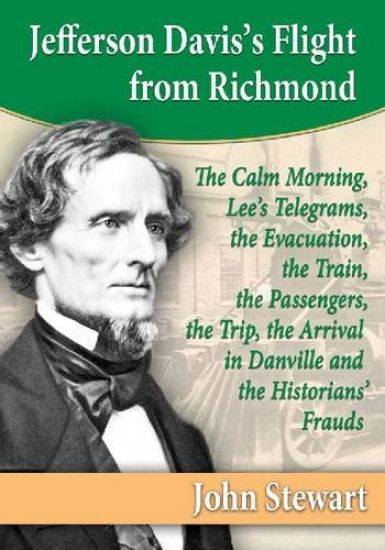
Jefferson Davis's Flight from Richmond

Jefferson Davis's Flight from Richmond

John Stewart

McFarland Co Inc
2015
pokkari
In the space of a few hours on the night of April 2, 1865, Richmond, the Confederate capital, was evacuated and burned, the government fled, slavery was finished in North America, Union forces entered the city and the outcome of the Civil War was effectively sealed. No official documents tell the story because the Confederate government was on the run. First there were newspaper accounts--mostly confused--then history books based on those accounts. But much of what we know about the fall of Richmond comes from "eyewitnesses" like Confederate Navy Secretary Stephen Mallory, whose tale became history. A great deal of what has been presented over the years by historians has been plagiarized, invented or misconstrued, and nearly all we have learned of Jefferson Davis's flight from Richmond to Danville is wrong. This book closely examines all relevant source material--much of it newly discovered by the author--as well as the writers, diarists and eyewitnesses themselves, and constructs a minutely detailed new account that comes closer to what Abraham Lincoln had in mind when he said, "History is not history unless it is the truth."
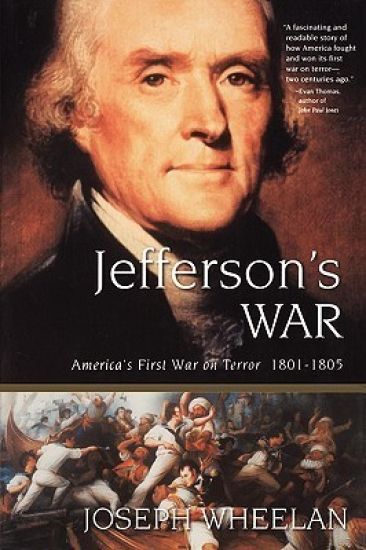
Jefferson's War

Jefferson's War

Joseph Wheelan

Carroll Graf Publishers Inc
2004
pokkari
Author Joseph Wheelan has marvellously captured the story of America's war against the Barbary pirates, our first war against terror and the nations that support it. The Barbary pirates, a Muslim enemy from Tripoli, attacked European and American merchant shipping with impunity. Jefferson ordered the U.S. Navy to Tripoli in 1801 to repel "force with force." The Barbary War was also a proving ground for such young officers as William Bainbridge, Stephen Decatur, Isaac Hull, and David Porter -key players in the impending War of 1812 against Great Britain.
Jefferson County's [Virginia] Fourth Estate, 1840-1850
This story begins in Jefferson County, Virginia, in the early 1840's. Told chiefly through the viewpoints and voices of contemporary local journalists, it attempts to present events as they saw them. Their readers' world views were shaped mainly by what they read in the press, augmented by letters and word of mouth, so the Fourth Estate exerted an enormous influence on the public's thoughts and actions.The cast of characters includes John S. and Horatio N. Gallaher of the Virginia Free Press; James W. Beller of the Spirit of Jefferson; and Henry Hardy, H. W. McAnly, and John H. Zittle of the Shepherdstown Register. J. Harrison Kelly and B. F. Washington also figure largely in this narrative, for they both wrote for local newspapers before becoming editors in their own right. While some of the participants spent their entire professional careers in Jefferson County, Virginia, others followed the news and their fortunes westward, settling in California or other newly opened territories.Adopting the motto that "The Pen is mightier than the sword," many editors believed they could use their skills to shape voters' opinions. Like many newspapers of the time, they were political organs, founded to publicize party ideas and promote candidates seeking public office. These editors represent the viewpoints of the local Whig and Democratic parties as they struggled with major issues such as the Mexican War, Westward Expansion, the California Gold Rush, the spread of slavery, and more.The current volume closes with the signing of the Compromise of 1850, but subsequent volumes will continue the narrative up through the 1870's to the end of Reconstruction, exploring how these journalists tried to change their world and in turn were changed by it. The book is arranged chronologically and grouped in five parts: The Pen and the Sword, Manifest Destiny, Seeing the Elephant, Golden Shackles, and Conflict and Compromise. The narrative is enhanced by a wealth of illustrations and an index to full-names, places and subjects.
Jefferson's Nephews

Jefferson's Nephews

Boynton Merrill Jr.

Bison Books
2004
pokkari
The brutal axe murder and dismemberment of a Negro slave, committed in 1811 by two brothers, Lilburne and Isham Lewis, whose mother was Thomas Jefferson's sister and whose father was his first cousin, form the core of this historical detective story and account of frontier life in western Kentucky in the first decades of the nineteenth century. On the night of December 15, 1811, drunk and enraged over the breaking of a pitcher, Lilburne bound his seventeen-year-old slave, George, and, in front of the assembled household's other slaves, cut off his head. The brothers were indicted for murder, released on bail, and attempted suicide.Boynton Merrill Jr. explores the tragic combination of circumstances and social forces that culminated in this ghastly event: the lawlessness of the frontier settlements, the dehumanizing effects of chattel slavery, and the Lewis family's history of mental instability and their ever-declining fortunes.
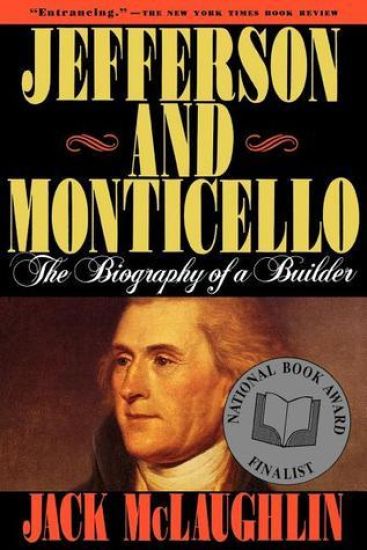
Jefferson and Monticello

Jefferson and Monticello

Jack McLaughlin

St. Martin's Press
1990
pokkari
This book, a National Book Award nominee in 1988, is the life of Thomas Jefferson as seen through the prism of his love affair with Monticello. For over half a century, it was his consuming passion, his most serious amusement. With a sure command of sources and skilled intuitive understanding of Jefferson, McLaughlin crafts and uncommon portrait of builder and building alike. En route he tells us much about life in Virginia; about Monticello's craftsmen and how they worked their materials; about slavery, class, and family; and, above all, about the multiplicity of domestic concerns that preoccupied this complex man. It is and engaging and incisive look at the eighteenth-century mind: systematic, rational, and curious, but also playful, comfort-loving, and amusing. Ultimately, it provides readers with great insight into daily life in Colonial and Federal America.