Called the "good nutrition bible" by one reviewer, The DASH Diet to End Obesity is the ultimate guide to common sense-lifestyle changes that will improve the health of the entire family. With a special emphasis on prevention, this book is written for parents, teachers, and anyone concerned about protecting themselves and their children from the health risks of obesity. This book is the most comprehensive guide to the DASH diet plan yet published. DASH - Dietary Approaches to Stop Hypertension - was first formulated to combat hypertension (high blood pressure). But numerous studies have shown that the eating plan is also useful for dealing with excess weight, abnormal blood fats, Type 2 diabetes, and other health concerns. The DASH diet has soared in popularity because not only does it allow people to take charge of their own health and that of their families, they can do it while eating delicious food. The plan emphasizes seasonings, spices, healthy oils, fruits, vegetables, nuts, and other flavorful food choices. But unlike a mere recipe book, The DASH Diet to End Obesity explains the science and psychology of how to find success with the DASH approach. Author Dr. William Manger and his three distinguished colleagues have crafted a reader-friendly book geared to motivate people to make healthy, informed changes in their daily lives. The book offers in-depth information about fats, cholesterols, vitamins and minerals, omega-3 fatty acids, fiber, and more. An entire section is devoted to the role of salt and the dangers of consuming too much salt, especially for people who are overweight. The book also contains a special chapter about eating for the management of diabetes. Not only do the authors present a lot of information in an accessible tone, they provide detailed descriptions of how to incorporate this knowledge into every meal with memory strategies, charts, and quick tips. The DASH eating plan is not just a diet, however, and the book covers the importance of sleep, physical exercise, and staying psychologically motivated. The authors also dissect the reasons other diets fail, and discuss the risks and benefits of other methods of weight loss, including surgery and weight-loss drugs. This book represents the life work of the four prestigious authors; it is not a jump-on-the-bandwagon response to the recent popularity of the DASH diet. Dr. William Manger has been such a proponent of the DASH lifestyle that he has founded an organization that teaches the eating plan to young children in schools. Medical researchers and experts today are saying many parents could outlive their children because of runaway childhood obesity. This is the scenario The DASH Diet to End Obesity is dedicated to reversing.
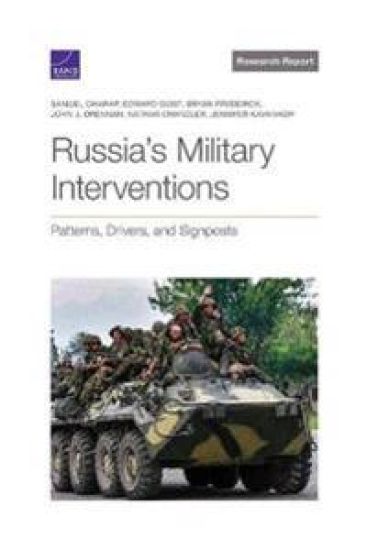
Despite Russia's relatively small global economic footprint, it has engaged in more interventions than any other U.S. competitor since the end of the Cold War. In this report, the authors assess when, where, and why Russia conducts military interventions by analyzing the 25 interventions that Russia has undertaken since 1991, including detailed case studies of the 2008 Russia-Georgia War and Moscow's involvement in the ongoing Syrian civil war.
One of the major domestic policy issues of our time is whether our nation can provide a more effective educational experience for our children. Economists have stressed that the quality of our educational system eventually defines the ability of our workforce, which in turn affects our competitive position in the world market. This issue has earned increasing attention in light of recent reports that students in many nations perform at higher levels of educational competence than children in America's schools. Inspiring Greatness in Education describes the 21st Century Schools program (21C), a whole-school reform model developed by Edward Zigler over 20 years ago and since then has been in a constant state of testing, implementation, and scaling up. The goal of 21C is to promote optimal child development, which should become manifest in sound educational performance. In practice, 21C provides preschool education as well as good-quality child care before and during the school years, in combination with a number of other family supports. This book will provide an in-depth case study examination of the experience of the Independence School District in Independence, Missouri. The Independence School District embraced School of the 21st Century concepts in 1988, becoming the first urban school district in the nation to do so. This book reveals and documents Independence School District's success as a national model for 21C programming, as well as the experiences, testimonials and opinions of parents, students, teachers, administrators and community officials. By focusing on the impetus and history of the 21C concept, its organic evolution and its applications at the Independence School District, this book is designed to inform, educate, and inspire all who read it and to serve as a model for other school districts that want to achieve similar successes.
A powerful, compassionate guide to finding solace when you've lost someone unexpectedly. The unexpected death of a loved one is a traumatic, life-altering experience. If you've experienced a sudden loss, your life becomes instantly unrecognizable. In addition to the overwhelming shock, pain, sadness, and grief, you may now feel unsafe in the world, out of control, or unable to carry out basic daily tasks. Most people do not understand what it is like to have a loved one die suddenly or unexpectedly, so it can be challenging to get the support you need. But you are not alone. This gentle workbook can help guide you toward a place of healing and solace. The Traumatic Loss Workbook offers an integrative approach drawing on cognitive behavioral therapy (CBT), emotional regulation skills, mindfulness techniques, and narrative therapy to support you through the grief process, so you can move forward after the sudden or unexpected death of a loved one. You'll also discover strategies for dealing with sudden "grief attacks," and learn how to navigate common emotional triggers such as holidays, birthdays, or anniversaries. Finally, you'll discover skills to help you cope with the deeply emotional and traumatic aspects of your grief--now and in the future. Death is a natural part of life, but we never expect someone we love to die suddenly or unexpectedly. This workbook will give you the tools you need to process, cope, and move toward healing while making space for your grief, so that you can create a meaningful life within the context of your loss.
The Agency by Design guide to implementing maker-centered teaching and learning Maker-Centered Learning provides both a theoretical framework and practical resources for the educators, curriculum developers, librarians, administrators, and parents navigating this burgeoning field. Written by the expert team from the Agency by Design initiative at Harvard's Project Zero, this book Identifies a set of educational practices and ideas that define maker-centered learning, and introduces the focal concepts of maker empowerment and sensitivity to design.Shares cutting edge research that provides evidence of the benefits of maker-centered learning for students and education as a whole.Presents a clear Project Zero-based framework for maker-centered teaching and learningIncludes valuable educator resources that can be applied in a variety of design and maker-centered learning environmentsDescribes unique thinking routines that foster the primary maker capacities of looking closely, exploring complexity, and finding opportunity. A surge of voices from government, industry, and education have argued that, in order to equip the next generation for life and work in the decades ahead, it is vital to support maker-centered learning in various educational environments. Maker-Centered Learning provides insight into what that means, and offers tools and knowledge that can be applied anywhere that learning takes place.
The Defense Finance and Accounting Service (DFAS) provides finance and accounting services to customers within the Department of Defense. The authors examine the DFAS pricing structure and its impact on customer demand, the agency's workload, and equity in pricing. The authors found that the DFAS's uniform pricing for finance outputs creates cross-customer subsidization, suggesting a need for nonlinear, customer-specific pricing. The authors also examine whether any negative effects arose from the October 1999 switch from unit billing to hourly billing for DFAS accounting work and found no significant evidence that they had.
The current edition builds on its predecessors and is meant to serve as an up-to-date text-rich atlas of tumours involving the upper aerodigestive tract and ear. Emphasis in the remains focused on light microscopy, but ancillary diagnostic techniques, including electron microscopy, immunohistochemistry, and molecular diagnostics, are presented in detail where appropriate.This volume will undoubtedly serve as an invaluable diagnostic reference for years to come.
You've probably heard of blockchain, bitcoin and cryptocurrency. But, do you know the real impact it will have on our future society? Will it become the new money? Is there more to it than just digital currency? Should your company be investing resources for research and development in it? If so, how much and on what? Who is already way out ahead of the curve and has an extensive patent portfolio on the technology? Or, could it just be a fad that will soon fade away? In Blockchain in the Boardroom, I have summarized all of the hype about blockchain in layman's terms, why it matters and what you need to know in the boardroom about how it will impact business across various industries.
The history of the Episcopal Church is intimately bound up with the history of empire. The two grew in tandem in the modern era, and as they grew they developed particular ideologies and practices around race. As slavery was carried over into the new political formations of the United States, so too were racially based exclusions carried over in the Episcopal Church. Mission, Race, and Empire presents a new history of the Episcopal Church from its origins in the early British Empire up to the present, told through the lenses of empire and race. The book demonstrates the dramatic shifts within the Episcopal Church, from initial colonial violence to reflective self-critique. Jennifer Snow centers the stories of groups and individuals that have often been sidelined, including Native Americans, Black Americans, Asian Americans, women, and LGBTQ people, as well as the institutional leaders who sought to create, or fought against, a church that desired to be a house of prayer for all people.
Voices and Books in the English Renaissance offers a new history of reading that focuses on the oral reader and the voice- or performance-aware silent reader, rather than the historical reader, who is invariably male, silent, and alone. It recovers the vocality of education for boys and girls in Renaissance England, and the importance of training in pronuntiatio (delivery) for oral-aural literary culture. It offers the first attempt to recover the voice--and tones of voice especially--from textual sources. It explores what happens when we bring voice to text, how vocal tone realizes or changes textual meaning, and how the literary writers of the past tried to represent their own and others' voices, as well as manage and exploit their readers' voices. The volume offers fresh readings of key Tudor authors who anticipated oral readers including Anne Askew, William Baldwin, and Thomas Nashe. It rethinks what a printed book can be by searching the printed page for vocal cues and exploring the neglected role of the voice in the printing process. Renaissance printed books have often been misheard and a preoccupation with their materiality has led to a focus on them as objects. However, Renaissance printed books are alive with possible voices, but we will not understand this while we focus on the silent reader.
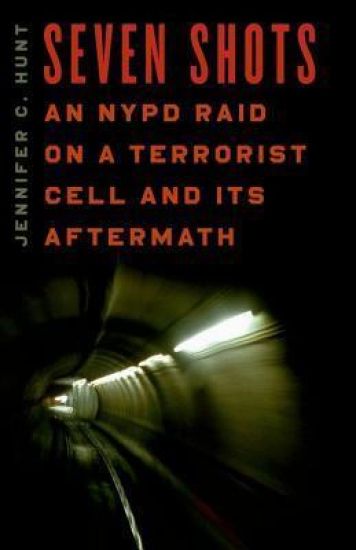
On July 31, 1997, a six-man Emergency Service team from the NYPD raided a terrorist cell in Brooklyn - and thus narrowly prevented a devastating suicide bombing of the New York subway. "Seven Shots" tells the dramatic story of that raid, the painstaking police work that went into it, and its unexpected aftermath, which drew the officers involved into a long-standing conflict with other rank-and-file police and publicity-hungry top brass. Drawing on her own experience working in the NYPD and a wide network of police contacts, Jennifer C. Hunt tracks the lives of three officers on the Emergency Service team and two bomb technicians from the day of the raid through their struggles with their superiors - which began when they balked at being used as political props and escalated to arguments over tactics, training, and promotion - on to 9/11, when they once again found themselves risking their lives on the front lines of the battle against terrorism. Throughout her fast-paced narrative, she maintains a strikingly fine-grained, street-level view, allowing us to understand the cops on their own terms - and often in their own words. The result is a compelling insider's picture of the world of elite police work, from precincts and squad cars to physical dangers and family strain. As gripping as an Ed McBain novel - and just as steeped in New York cop culture - "Seven Shots" takes readers on an unforgettable journey behind the shield and into the hearts of the city's sentinels.
American literary realism burgeoned during a period of tremendous technological innovation. Because the realists evinced not only a fascination with this new technology but also an ethos that seems to align itself with science, many have paired the two fields rather unproblematically. But this book demonstrates that many realist writers, from Mark Twain to Stephen Crane, Charles W. Chesnutt to Edith Wharton, felt a great deal of anxiety about the advent of new technologies – precisely at the crucial intersection of ethics and language. For these writers, the communication revolution was a troubling phenomenon, not only because of the ways in which the new machines had changed and increased the circulation of language but, more pointedly, because of the ways in which language itself had effectively become a machine: a vehicle perpetuating some of society’s most pernicious clichés and stereotypes – particularly stereotypes of race – in unthinking iteration. This work takes a close look at how the realists tried to forge an ethical position between the two poles of science and sentimentality, attempting to create an alternative mode of speech that, avoiding the trap of codifying iteration, could enable ethical action.
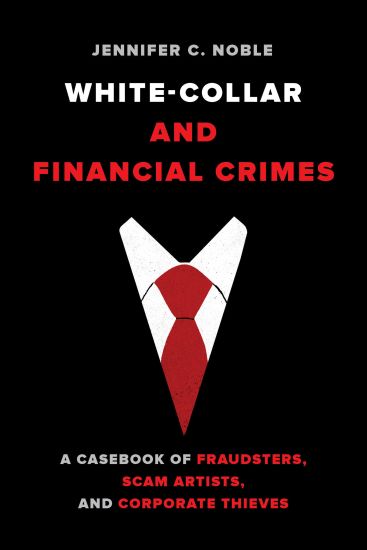
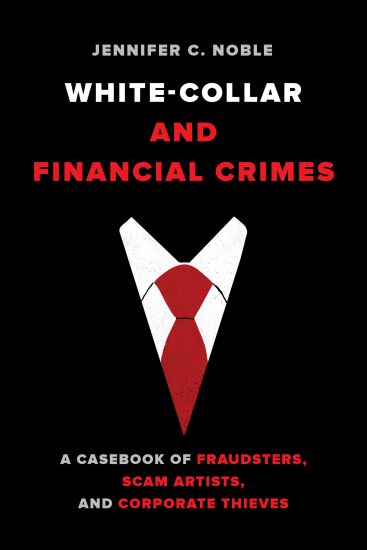
Examining a shocking array of fraud, corruption, theft, and embezzlement cases, this vivid collection reveals the practice of detecting, investigating, prosecuting, defending, and resolving white-collar crimes. Each chapter is a case study of an illustrative criminal case and draws on extensive public records around both obscure and high-profile crimes of the powerful, such as money laundering, mortgage fraud, public corruption, securities fraud, environmental crimes, and Ponzi schemes. Organized around a consistent analytic framework, each case tells a unique story and provides an engaging introduction to these complex crimes, while also introducing students to the practical aspects of investigation and prosecution of white-collar offenses. Jennifer C. Noble’s text takes students to the front lines of these vastly understudied crimes, preparing them for future practice and policy work.