Kirjojen hintavertailu. Mukana 11 342 296 kirjaa ja 12 kauppaa.

Kirjahaku

Etsi kirjoja tekijän nimen, kirjan nimen tai ISBN:n perusteella.

1000 tulosta hakusanalla Jim Carson

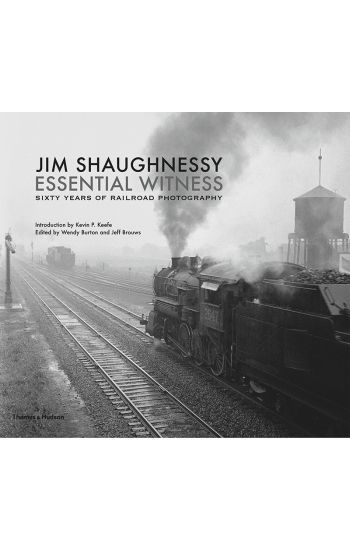
Jim Shaughnessy: Essential Witness

Jim Shaughnessy: Essential Witness

Jim Shaughnessy

Thames Hudson Ltd
2017
sidottu
Jim Shaughnessy: Essential Witness is a comprehensive overview of Shaughnessy’s sixty year as a railroad photographer. Starting in the late 1940s, he began documenting in earnest the rapidly changing railroad scene in the Northeastern United States. His interests and travels also took him to other areas of the country to document the Rio Grande narrow gauge in Colorado and the UP Big Boys in Wyoming, and various locations in Canada. His timing was perfect: he was there to record the dramatic transition between the steam and diesel eras as well as documenting and recording for posterity the workers behind the machines that operated in the depots, roundhouses and back shops of the American railroad environment. Lucius Beebe once described Shaughnessy as ‘a master in the massive effects of black and white.’ The book includes some 150 duotone photographs taken between 1948 and 1970, with the emphasis on the 1950s and 1960s. Images include landscapes, cities and towns; action shots of formidable trains barreling down the tracks; snaps of weary railroad workers; nighttime photos of shadowy enclaves within the railyard; and many more.
Jim Crow Moves North

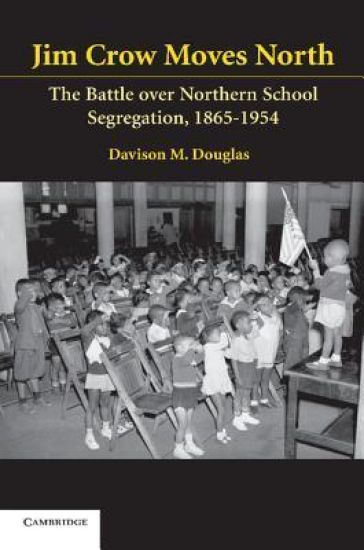
Jim Crow Moves North

Douglas Davison

Cambridge University Press
2005
pokkari
A history of various efforts to desegregate northern schools during the nineteenth century and the first half of the twentieth century, exploring two dominant themes. The first considers the role of law in accomplishing racial change. Most northern state legislatures enacted legislation after the Civil War that prohibited school segregation and most northern courts, when called upon, enforced that legislation. Notwithstanding this clear legal opposition to school segregation, racially separate schools flourished in much of the north until the late 1940s and early 1950s. The second theme is the ambivalence in the northern black community over the importance of school integration. Since the antebellum era, northern blacks have sharply divided over the question of whether black children would fare better in separate black schools or in racially integrated ones. These competing visions of black empowerment in the northern black community as reflected in the debate over school integration are addressed here.
Jim Crow Moves North

Jim Crow Moves North

Davison Douglas

Cambridge University Press
2005
sidottu
A history of various efforts to desegregate northern schools during the nineteenth century and the first half of the twentieth century, exploring two dominant themes. The first considers the role of law in accomplishing racial change. Most northern state legislatures enacted legislation after the Civil War that prohibited school segregation and most northern courts, when called upon, enforced that legislation. Notwithstanding this clear legal opposition to school segregation, racially separate schools flourished in much of the north until the late 1940s and early 1950s. The second theme is the ambivalence in the northern black community over the importance of school integration. Since the antebellum era, northern blacks have sharply divided over the question of whether black children would fare better in separate black schools or in racially integrated ones. These competing visions of black empowerment in the northern black community as reflected in the debate over school integration are addressed here.
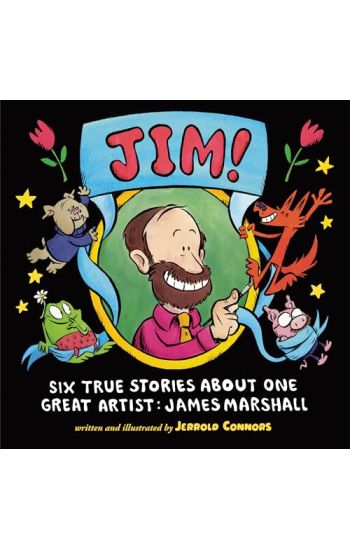
Jim!: Six True Stories about One Great Artist: James Marshall
A picture book biography of the late, great James Marshall--illustrator of Miss Nelson is Missing and the George and Martha series--and as clever, delightful, and daring as Jim himself Author and illustrator James Marshall let kids in on the joke. He knew little kids were smart, and he didn't talk down to them in his stories. He was right--kids loved his picture books. Decades after his death, the characters he illustrated--Miss Nelson, Viola Swamp, George and Martha, Goldilocks, Fox and His Friends--are still beloved. James Marshall should be at least as famous as his characters, and now he is, in his own picture book biography. Created in an irreverent style inspired by James Marshall's own art and storytelling, this delightful biography, featuring James as a fox, celebrates in both form and content what made James--"Jim" to his friends--so talented, funny, and special, and what has made his tales last. This time, Jim is the main character. "Funny and filled with insights.]" --Booklist, starred review "A better bio of Jim could hardly exist." --Kirkus, starred review "Poignantly, comically human." --Publishers Weekly
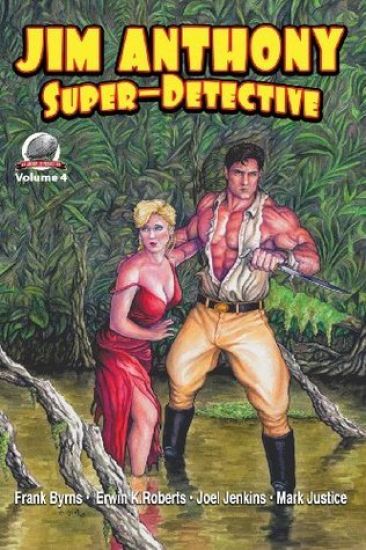
Jim Anthony-Super-Detective Volume 4

Jim Anthony-Super-Detective Volume 4

Frank Byrns; Erwin K. Roberts; Mark Justice

Airship 27
2013
nidottu
THE ACTION CONTINUESWITH THE SUPER-DETECTIVEHe's half Comanche, half Irish and ALL AMERICAN Jim Anthony the Super Detective returns in his fourth volume of brand new adventures from Airship 27 Productions. Traveling the globe, Anthony battles all manner of twisted villainy in four new tales and his challenges are herculean. Writers Erwin K. Roberts, Joel Jenkins, Frank Byrns and Mark Justice have whipped up a quartet of high adventure stories that are the hallmark of the Super Detective. From Mexico, where he encounters a Nazi spy ring, to the streets of Manhattan where he hunts down a brutal serial killer, Jim Anthony proves once again why he is one of the most exciting and fun heroes ever created in the golden age of American pulps.This volume, the fourth in an on-going series, features interior illustrations by Michael Neno and a dazzling cover by Eric Meador, with book designs by Rob Davis. Airship 27 Productions is thrilled to continue the exploits of the one and only, Jim Anthony - Super Detective.AIRSHIP 27 PRODUCTIONS - Pulp Fiction For a New Generation
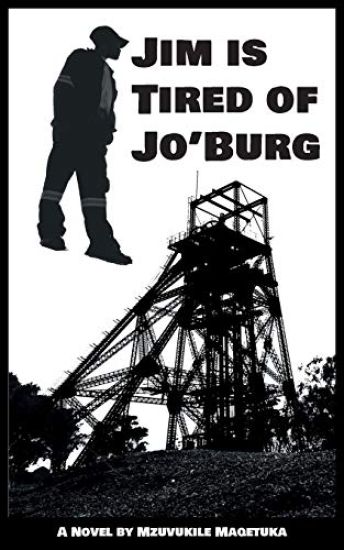
Jim Is Tired Of Jo'Burg

Jim Is Tired Of Jo'Burg

Mzuvukile J Maqetuka

Digital on Demand
2020
pokkari
Repeatedly in the recent past, we have heard of a 'Jim Comes to Jo'Burg' mythology in the South African context. The author has deconstructed this myth, reversing it into a 'Jim is Tired of Jo'Burg' scenario, telling the story through his protagonist, Jim (Kgabalatsana Monare) aka "TM", who has come to Johannesburg from his rural village of Dinokana in the Western Transvaal in search of 'gold'. But, as time goes by, he gets sucked into andultimately gets frustrated by the challenges of city life, to which a rural boy is unaccustomed. He tries to make a living as a miner and makes friends with the Indian tailors in downtown Johannesburg. He leaves his place of employment on the mine to live in the township of Alexandra - a mass urban slum of the city of 'gold' where he commingles with life in a township. He meets his 'to-be-lifetime lover' Nancy Mabheka, who falls deeply in love with him - unfortunately for her, for when Kgabalatsana realises that he will not find the 'gold' that he came to the city of Johannesburg for, he decides to goback home to his village, leaving her behind. Nancy then follows him to a life that is enigmatic to her. Reminiscent of Peter Abrahams' Mine Boy, Jim is Tired of Jo'Burg exposes the reader to the challenges of urban and rural life in the South Africa of the time. Through pathos, joviality, the author takes us down the memory lane of life in the townships of South Africa in the 60s and 70s, and the choice that its people had to take - to be an urbanite or ruralite.
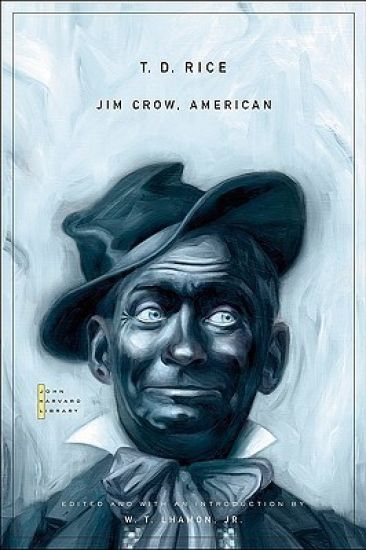
Jim Crow, American

Jim Crow, American

T. D. Rice

The Belknap Press
2009
nidottu
Jim Crow is the figure that has long represented America’s imperfect union. When the white actor Thomas D. Rice took to the stage in blackface as Jim Crow, during the 1830s, a ragged and charismatic trickster began channeling black folklore through American popular culture. This compact edition of the earliest Jim Crow plays and songs presents essential performances that assembled backtalk, banter, masquerade, and dance into the diagnostic American style. Quite contrary to Jim Crow’s reputation—which is to say, the term’s later meaning—these early acts undermine both racism and slavery. They celebrate an irresistibly attractive blackness in a young Republic that had failed to come together until Americans agreed to disagree over Jim Crow’s meaning.As they permeated American popular culture, these distinctive themes formed a template which anticipated minstrel shows, vaudeville, ragtime, jazz, early talking film, and rock ‘n’ roll. They all show whites using rogue blackness to rehearse their mutual disaffection and uneven exclusion.
Jim and Jap Crow

Jim and Jap Crow

Matthew M. Briones

Princeton University Press
2013
pokkari
Following Japan's attack on Pearl Harbor in 1941, the U.S. government rounded up more than one hundred thousand Japanese Americans and sent them to internment camps. One of those internees was Charles Kikuchi. In thousands of diary pages, he documented his experiences in the camps, his resettlement in Chicago and drafting into the Army on the eve of Hiroshima and Nagasaki, and his postwar life as a social worker in New York City. Kikuchi's diaries bear witness to a watershed era in American race relations, and expose both the promise and the hypocrisy of American democracy. Jim and Jap Crow follows Kikuchi's personal odyssey among fellow Japanese American intellectuals, immigrant activists, Chicago School social scientists, everyday people on Chicago's South Side, and psychologically scarred veterans in the hospitals of New York. The book chronicles a remarkable moment in America's history in which interracial alliances challenged the limits of the elusive democratic ideal, and in which the nation was forced to choose between civil liberty and the fearful politics of racial hysteria. It was an era of world war and the atomic bomb, desegregation in the military but Jim and Jap Crow elsewhere in America, and a hopeful progressivism that gave way to Cold War paranoia. Jim and Jap Crow looks at Kikuchi's life and diaries as a lens through which to observe the possibilities, failures, and key conversations in a dynamic multiracial America.
Jim Anthony: Super-Detective Volume Two: "The Hunters"

Jim Anthony: Super-Detective Volume Two: "The Hunters"

Micah S. Harris; Joshua Reynolds

Airship 27
2014
nidottu
Classic pulp hero, Jim Anthony; Super Detective returns in a brand new novel in two parts that pits him against all kinds of strange and legendary beasts. And in both cases he is accompanied by fanatical hunter, Russian Count Zaroff from the classic short story, The Most Dangerous Game by Richard Connell. In part one, Death In Yellow, by Joshua Reynolds, Anthony and Zaroff square off against a group of savage Tibetan Yetis loose in the steel canyons of Manhattan. Why these creatures are here and who is behind their murderous rampage is a classic mystery that challenges the one and only Super Detective. Then in part two, On The Periphery of Legend, by Micah S. Harris, Anthony reluctantly accompanies the mad Russian on an expedition to a lost island in the South Pacific where dinosaurs still roam. But that's not the most dangerous game in those time-lost jungles. Here are two amazing tales woven together into a classic pulp adventure that will test the mettle of our hero who is half-Irish, half-Comanche and All-American Airship 27 Productions is thrilled to present JIM ANTHONY - SUPER DETECTIVE Vol. Two - THE HUNTERS Features interior illustrations by Pedro Cruz and a stunning cover by Chris Sears.