Kirjojen hintavertailu. Mukana 11 244 527 kirjaa ja 12 kauppaa.

Kirjahaku

Etsi kirjoja tekijän nimen, kirjan nimen tai ISBN:n perusteella.

1000 tulosta hakusanalla Jimmy Fields

Jimmy Stewart

Jimmy Stewart

Starr Smith; Walter Cronkite

Motorbooks International
2006
nidottu
Of all the celebrities who served their country during World War II -and they were legion -Jimmy Stewart was unique. On December 7th, when the attack on Pearl Harbor woke so many others to the reality of war, Stewart was already in uniform - as a private on guard duty south of San Francisco at the Army Air Corps Moffet Field. Seeing war on the horizon, Jimmy Stewart, at the height of his fame after Mr. Smith Goes to Washington and his Oscar-winning turn in The Phadelphia Story in 1940, had enlisted several months earlier. Jimmy Stewart, Bomber Pilot chronicles his long journey to become a bomber pilot in combat. Author Starr Smith, the intelligence officer assigned to the movie star, recounts how Stewart's first battles were with the Air Corps high command, who insisted on keeping the naturally talented pilot out of harm's way as an instructor pilot for B-17 Flying Fortresses and B-24 Liberators. By 1944, however, Stewart managed to get assigned to a Liberator squadron that was deploying to England to join the mighty Eighth Air Force. Once in the thick of it, he rose to command his own squadron and flew twenty combat missions, including one to Berlin. "My father would feel honored by this book." --Kelly Stewart Harcourt, daughter of Jimmy Stewart "We would have made Jimmy a group commander equivalent to an army regiment] if the war had lasted another month." - General Jimmy Doolittle. "An excellent biography of a distinguished airman and fine human being." - Roger Freeman, author of The Mighty Eighth: A History of the U.S. 8th Air Force. "How wonderful it is that Starr Smith has finally directed a literary light on the personal history of Jimmy Stewart. . . . I welcomed Starr's book. It is needed and wanted. Bravo " - Gay Talese. "This is a very well researched and written book. . . . It fills a place in history about no mere actor but a courageous and selfless man, Brigadier General Jimmy Stewart, USAF." - General Michael E. Ryan, former Chief of Staff of the Air Force. "I have met a few movie stars, but of them all, I think that Jimmy Stewart was most like those modest heroes he portrayed. Now journalist Starr Smith has raised the curtain on Stewart's gallant service as a bomber pilot and air combat commander in World War II." --Walter Cronkite, from the Foreword
Jimmy Carter and the Horn of Africa

Jimmy Carter and the Horn of Africa

Donna R. Jackson

McFarland Co Inc
2007
pokkari
"This analysis of President Carter's foreign policy in the Horn of Africa demonstrates Carter's consistent approach to foreign affairs throughout his administration. It discusses the ways in which this policy dealt with such issues as human rights abuses, Cold War concerns including a strong Communist bloc presence, and the violation of international law"--Provided by publisher.
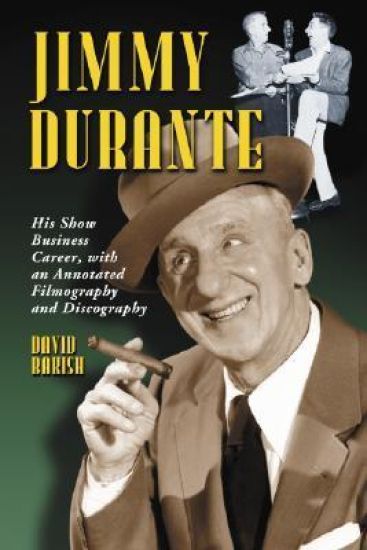
Jimmy Durante

Jimmy Durante

David Bakish

McFarland Co Inc
2007
pokkari
From his humble beginnings as a Coney Island piano player, Jimmy Durante was one of America's best-loved entertainers for nearly seven decades. Known for his distinctive "schnozzle" and raspy voice, the multitalented performer became a stage, screen and recording star. Every aspect of Jimmy Durante's career is covered here: his early vaudeville and Broadway days; the 38 movies he made; his radio appearances; the mixture of new and old material he brought to television in the late 1950s; and his work as a singer and composer.
Jimmy Collins

Jimmy Collins

Charlie Bevis

McFarland Co Inc
2012
pokkari
This first book-length biography of Jimmy Collins examines the life of an intensely private, business-oriented ballplayer who was the first third baseman to be inducted into the Baseball Hall of Fame. Collins' life is covered in depth from his early years growing up in Buffalo, through his 14-year major league baseball career 1895-1908 primarily in Boston, to his post-baseball life as a real estate investor. This book sheds new light on Collins' motivations to leverage his baseball success--which included leading Boston to victory in the first modern-day World Series in 1903--into lucrative baseball contracts to fund his real estate investments. When he led the Boston Americans to successive American League championships in 1903 and 1904, Collins was instrumental in the foundation of today's highly successful Boston Red Sox franchise and its intense rivalry with the New York Yankees.
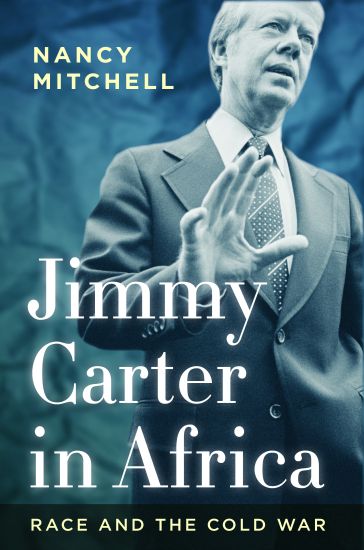
Jimmy Carter in Africa

Jimmy Carter in Africa

Nancy Mitchell

Stanford University Press
2016
sidottu
In the mid-1970s, the Cold War had frozen into a nuclear stalemate in Europe and retreated from the headlines in Asia. As Gerald Ford and Jimmy Carter fought for the presidency in late 1976, the superpower struggle overseas seemed to take a backseat to more contentious domestic issues of race relations and rising unemployment. There was one continent, however, where the Cold War was on the point of flaring hot: Africa. Jimmy Carter in Africa opens just after Henry Kissinger's failed 1975 plot in Angola, as Carter launches his presidential campaign. The Civil Rights Act was only a decade old, and issues of racial justice remained contentious. Racism at home undermined Americans' efforts to "win hearts and minds" abroad and provided potent propaganda to the Kremlin. As President Carter confronted Africa, the essence of American foreign policy—stopping Soviet expansion—slammed up against the most explosive and raw aspect of American domestic politics—racism. Drawing on candid interviews with Carter, as well as key U.S. and foreign diplomats, and on a dazzling array of international archival sources, Nancy Mitchell offers a timely reevaluation of the Carter administration and of the man himself. In the face of two major tests, in Rhodesia and the Horn of Africa, Carter grappled with questions of Cold War competition, domestic politics, personal loyalty, and decision-making style. Mitchell reveals an administration not beset by weakness and indecision, as is too commonly assumed, but rather constrained by Cold War dynamics and by the president's own temperament as he wrestled with a divided public and his own human failings. Jimmy Carter in Africa presents a stark portrait of how deeply Cold War politics and racial justice were intertwined.
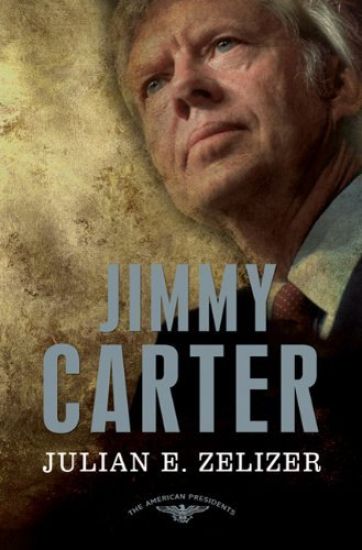
Jimmy Carter: 39th President,1977-1981

Jimmy Carter: 39th President,1977-1981

Julian E. Zelizer

Times Books
2010
nidottu
A peanut farmer from Georgia, Jimmy Carter rose to national power through mastering the strategy of the maverick politician. As the face of the 'New South', Carter's strongest support emanated from his ability to communicate directly to voters who were disaffected by corruption in politics. But running as an outsider was easier than governing as one, as Princeton historian Julian E. Zelizer shows in this examination of Carter's presidency. Once in power, Carter faced challenges sustaining a strong political coalition, as he focused on policies that often antagonized key Democrats, whose support he desperately needed. By 1980, Carter stood alone in the Oval Office as he confronted a battered economy, soaring oil prices, American hostages in Iran, and the Soviet invasion of Afghanistan. Carter's unpopularity enabled Ronald Reagan to achieve a landslide victory, ushering in a conservative revolution. But during Carter's post-presidential career, he has emerged as an important voice for international diplomacy and negotiation, remaking his image as a statesman for our time.
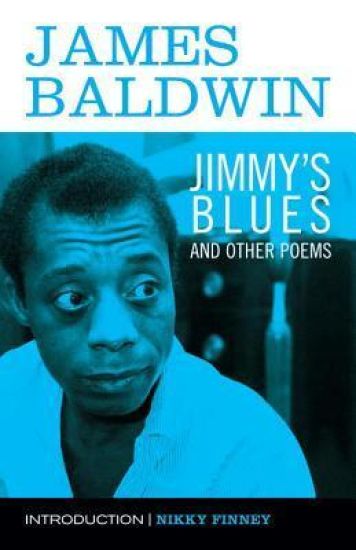
Jimmy's Blues and Other Poems

Jimmy's Blues and Other Poems

James Baldwin

Beacon Press
2014
pokkari
All of the published poetry of James Baldwin, including six significant poems previously only available in a limited edition During his lifetime (1924-1987), James Baldwin authored seven novels, as well as several plays and essay collections, which were published to wide-spread praise. These books, among them Notes of a Native Son, The Fire Next Time, Giovanni's Room, and Go Tell It on the Mountain, brought him well-deserved acclaim as a public intellectual and admiration as a writer. However, Baldwin's earliest writing was in poetic form, and Baldwin considered himself a poet throughout his lifetime. Nonetheless, his single book of poetry, Jimmy's Blues, never achieved the popularity of his novels and nonfiction, and is the one and only book to fall out of print. This new collection presents James Baldwin the poet, including all nineteen poems from Jimmy's Blues, as well as all the poems from a limited-edition volume called Gypsy, of which only 325 copies were ever printed and which was in production at the time of his death. Known for his relentless honesty and startlingly prophetic insights on issues of race, gender, class, and poverty, Baldwin is just as enlightening and bold in his poetry as in his famous novels and essays. The poems range from the extended dramatic narratives of "Staggerlee wonders" and "Gypsy" to the lyrical beauty of "Some days," which has been set to music and interpreted by such acclaimed artists as Audra McDonald. Nikky Finney's introductory essay reveals the importance, relevance, and rich rewards of these little-known works. Baldwin's many devotees will find much to celebrate in these pages.
Jimmy Carter as President

Jimmy Carter as President

Erwin C. Hargrove; James Sterling Young

Louisiana State University Press
1999
nidottu
Jimmy Carter was, according to Erwin Hargrove, the first modern Democratic president to be substantially ahead of the party coalition. Concerned with issues of the future - inflation, the need for tax reform, energy shortages - Carter anticipated many questions that are only now being addressed, nearly a decade after his troubled tenure in office. The years 1976 to 1980 were difficult years for a Democrat to be president - especially difficult for a southern moderate who viewed the world in Wilsonian terms and who was politically unaligned, essentially an outsider in his party and in Washington. But Carter's inability to read or manipulate the political scene was not the only problem to beleaguer his presidency. Events such as the Soviet invasion of Afghanistan and the capture of American hostages in Iran also worked against Carter, creating situations in which no amount of political acumen could have salvaged his presidency. Hargrove places Carter in historical perspective. Examining his frequently overlooked successes, as well as his failures, Hargrove analyses both the content and the methods of Carter's policy leadership. His style of leadership is studied in the light of his beliefs and values, and of his problem-solving skills and experience. This profile draws heavily upon interviews with members of Carter's White House staff. In a consideration for Carter's domestic, economic, and foreign policies, Hargrove shows the congruence of purpose, politics, and process as a president shapes decision making. Because Carter was skilled at solving specific problems, he achieved notable successes - the Panama Canal Treaty, the Camp David Accord, and the SALT II talks - when he could keep matters in his own hands. Yet, despite such policy successes, his inability to build strong coalitions and delegate authority, exacerbated by uncontrollable world events, doomed Carter to political defeat. Throughout Jimmy Carter as President, Hargrove emphasises that in our assessment of presidents, we should evaluate skill within the historical context and thereby better understanding the ingredients of presidential success. Hargrove's effective and extensive use of interviews proves the advantages of integrating oral history into scholarly research and writing.
Jimmy Carter and the Birth of the Marathon Media Campaign

Jimmy Carter and the Birth of the Marathon Media Campaign

Amber Roessner

Louisiana State University Press
2020
sidottu
With the rise of Jimmy Carter, a former Georgia governor and a relative newcomer to national politics, the 1976 presidential election proved a transformative moment in U.S. history, heralding a change in terms of how candidates run for public office and how the news media cover their campaigns. Amber Roessner's Jimmy Carter and the Birth of the Marathon Media Campaign chronicles a change in the negotiation of political image-craft and the role it played in Carter's meteoric rise to the presidency. She contends that Carter's underdog victory signaled a transition from an older form of party politics focused on issues and platforms to a newer brand of personality politics driven by the manufacture of a political image. Roessner offers a new perspective on the production and consumption of media images of the peanut farmer from Plains who became the thirty-ninth president of the United States. Carter's miraculous win transpired in part because of carefully cultivated publicity and advertising strategies that informed his official political persona as it evolved throughout the Democratic primary and general-election campaigns. To understand how media relations helped shape the first post-Watergate presidential election, Roessner examines the practices and working conditions of the community of political reporters, public relations agents, and advertising specialists associated with the Carter bid. She draws on materials from campaign files and strategic memoranda; radio and TV advertisements; news and entertainment broadcasts; newspaper and magazine coverage; and recent interviews with Carter, prominent members of his campaign staff, and over a dozen journalists who reported on the 1976 election and his presidency. With its focus on the inner workings of the bicentennial election, Jimmy Carter and the Birth of the Marathon Media Campaign offers an incisive view of the transition from the yearlong to the permanent campaign, from New Deal progressivism to New Right conservatism, from issues to soundbites, and from objective news analysis to partisan commentary.
Jimmy Dorsey

Jimmy Dorsey

Robert L. Stockdale

Scarecrow Press
1998
sidottu
The Dorsey brothers were prominent members of the Big Band fraternity in the late thirties, forties, and fifties. Jimmy Dorsey: A Study in Contrasts is a bio-discographical text that spans Jimmy Dorsey's career as a musician, orchestra leader, and composer. The book is a collection of chronological listings of every recording on which Dorsey is believed to have played or have been present, interspersed with brief biographical notations and contemporary historical information that show the close relationship between his talents and his life experiences as well as points out the many contrasts between Jimmy and his brother Tommy in personality, business drive, and musical ability. Each listing contains an abundance of information about the studio, city, and date of the session, the name of the recording group, its personnel and their instruments, plus the matrix number, song title, vocalist (if any) and all the world wide releases known to be in existence (including 78 rpm, 45 rpm, EP, LP, 8-track, cassette, compact disc, and electrical transcription). The listings even include any other titles under which the recording may have been released. In addition to music, motion pictures, radio, and television programs on which Dorsey worked or appeared, the listings contain information about the Broadway musical productions where he was a member of the pit band. In all, over 3000 recordings and appearances are listed, making this an unequaled and minutely detailed reference on Jimmy Dorsey, one of the most influential musicians of the big band era.
Jimmy Buffett and Philosophy

Jimmy Buffett and Philosophy

Open Court Publishing Co ,U.S.
2009
pokkari
Jimmy Buffett and his music have touched the lives of millions of people around the world, spanning generations and genres. But is Buffett's music just a good time, or is there a deeper level to it? Jimmy Buffett and Philosophy shows the philosophical side of this self-proclaimed non-philosopher's work. The articles in this book provide an accessible approach to thinking about Buffett's music philosophically and to thinking about philosophy from the perspective of Jimmy Buffett's music. Along the way, questions are raised about figures in the philosophical tradition from ancient to contemporary -- Epicurus, Diogenes, Heidegger, Josiah Royce, William James, John Dewey, and Judith Butler. In addition, questions about a wide range of traditional philosophical issues, including aesthetic theory, identity, knowledge, culture, and being, are explored.
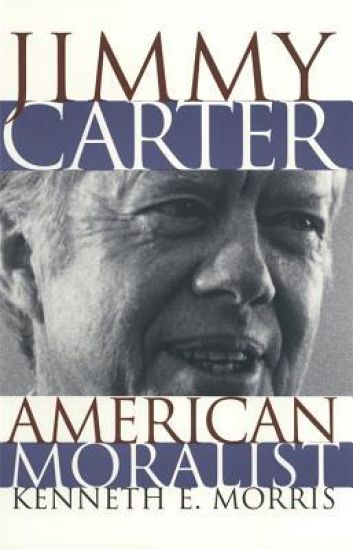
Jimmy Carter, American Moralist

Jimmy Carter, American Moralist

Kenneth E. Morris

University of Georgia Press
1997
pokkari
Jimmy Carter has baffled the public from his first bid for elective office in racially divided rural Georgia through his postpresidential career as a global peacemaker and human rights activist. Is he a moral visionary or a well-meaning but sometimes misguided moralizer? More important, what might America learn about itself by examining the life and legacy of this enigmatic leader?In Jimmy Carter, American Moralist, the first full-scale biography of Carter since 1980, Kenneth E. Morris shows us that any conclusions about Carter's leadership and its adequacy to his challenges as president cannot ignore the moral quandary that vexed the nation not only under Carter but ever since. Through film and popular music, personality profiles and campaign summaries, poll findings and landmark court decisions, Morris sheds light on the cultural forces that shaped Carter and produced the troubled society that made him president.Carter's story is the moral story of our times, and in asking not whether Carter is "good" but whether he has been good for America, we see the promises and pitfalls of our common values.
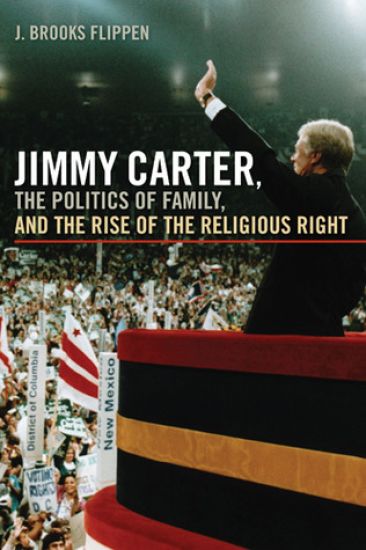
Jimmy Carter, the Politics of Family, and the Rise of the Religious Right
As Jimmy Carter ascended to the presidency the heir apparent to Democratic liberalism, he touted his background as a born-again evangelical. Once in office, his faith indeed helped form policy on a number of controversial moral issues. By acknowledging certain behaviors as sinful while insisting that they were private matters beyond government interference, J. Brooks Flippen argues, Carter unintentionally alienated both social liberals and conservative Christians, thus ensuring that the debate over these moral “family issues” acquired a new prominence in public and political life.The Carter era, according to Flippen, stood at a fault line in American culture, religion, and politics. In the wake of the 1960s, some Americans worried that the traditional family faced a grave crisis. This newly politicized constituency viewed secular humanism in education, the recognition of reproductive rights established by Roe v. Wade, feminism, and the struggle for homosexual rights as evidence of cultural decay and as a challenge to religious orthodoxy. Social liberals viewed Carter’s faith with skepticism and took issue with his seeming unwillingness to build on recent progressive victories. Ultimately, Flippen argues, conservative Christians emerged as the Religious Right and were adopted into the Republican fold.Examining Carter’s struggle to placate competing interests against the backdrop of difficult foreign and domestic issues—a struggling economy, the stalled Strategic Arms Limitation Talks, disputes in the Middle East, handover of the Panama Canal, and the Iranian hostage crisis—Flippen shows how a political dynamic was formed that continues to this day.
Jimmy Carter, the Politics of Family, and the Rise of the Religious Right
As Jimmy Carter ascended to the presidency the heir apparent to Democratic liberalism, he touted his background as a born-again evangelical. Once in office, his faith indeed helped form policy on a number of controversial moral issues. By acknowledging certain behaviors as sinful while insisting that they were private matters beyond government interference, J. Brooks Flippen argues, Carter unintentionally alienated both social liberals and conservative Christians, thus ensuring that the debate over these moral “family issues” acquired a new prominence in public and political life.The Carter era, according to Flippen, stood at a fault line in American culture, religion, and politics. In the wake of the 1960s, some Americans worried that the traditional family faced a grave crisis. This newly politicized constituency viewed secular humanism in education, the recognition of reproductive rights established by Roe v. Wade, feminism, and the struggle for homosexual rights as evidence of cultural decay and as a challenge to religious orthodoxy. Social liberals viewed Carter’s faith with skepticism and took issue with his seeming unwillingness to build on recent progressive victories. Ultimately, Flippen argues, conservative Christians emerged as the Religious Right and were adopted into the Republican fold.Examining Carter’s struggle to placate competing interests against the backdrop of difficult foreign and domestic issues—a struggling economy, the stalled Strategic Arms Limitation Talks, disputes in the Middle East, handover of the Panama Canal, and the Iranian hostage crisis—Flippen shows how a political dynamic was formed that continues to this day.
Jimmy Carter, American Moralist

Jimmy Carter, American Moralist

Kenneth E. Morris

University of Georgia Press
2017
sidottu
Jimmy Carter has baffled the public from his first bid for elective office in racially divided rural Georgia through his postpresidential career as a global peacemaker and human rights activist. Is he a moral visionary or a well-meaning but sometimes misguided moralizer? More important, what might America learn about itself by examining the life and legacy of this enigmatic leader?In Jimmy Carter, American Moralist, the first full-scale biography of Carter since 1980, Kenneth E. Morris shows us that any conclusions about Carter's leadership and its adequacy to his challenges as president cannot ignore the moral quandary that vexed the nation not only under Carter but ever since. Through film and popular music, personality profiles and campaign summaries, poll findings and landmark court decisions, Morris sheds light on the cultural forces that shaped Carter and produced the troubled society that made him president.Carter's story is the moral story of our times, and in asking not whether Carter is "good" but whether he has been good for America, we see the promises and pitfalls of our common values.
Jimmy Carter

Jimmy Carter

Kaye Lanning Minchew

University of Georgia Press
2021
sidottu
Jimmy Carter: Citizen of the South uses oral histories and more than 215 photographs to look at the life of the former president and how the South nurtured him, provided a launching pad for his political career, and supported the various activities of his post-presidency. Even people very familiar with Carter will gain a greater appreciation for the breadth of civic, religious, and charitable ventures the president has engaged in since leaving office. Georgia and the South have shaped much of his life and beliefs. Jimmy Carter and his wife, Rosalynn, grew up in Plains. Although military service led him to leave the area for eleven years, upon returning, he farmed and ran a peanut warehouse while he and Rosalynn raised their family. In 1962, he won election to the Georgia Senate and became governor eight years later. With the assistance of many Georgians, he became president of the United States in 1977.After losing his bid for reelection, Carter returned home to Plains, where southerners welcomed him and his wife back and supported their new endeavors. Carter established the Carter Presidential Library and the Carter Center in Atlanta and became a professor at Emory University. He has occasionally commented about world events and periodically meets with fellow presidents and governors. He taught Sunday school at the Maranatha Baptist Church in Plains for four decades and has engaged in humanitarian programs such as Habitat for Humanity around the country and the world, continuing to educate and inspire generations of philanthropic activists. With this informative history, Kaye Lanning Minchew illuminates Carter’s past, present, and his enduring legacy, adding to our understanding of his impact on both national and international concerns.
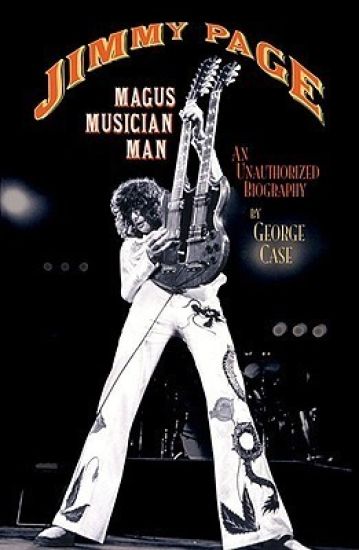
Jimmy Page

Jimmy Page

George Case

Backbeat Books
2009
pokkari
Now in paperback ÊJimmy Page: Magus Musician ManÊ is the first-ever biography of Led Zeppelin's legendary guitarist and producer. Never before has the story been told in such sharp detail leaving no stone unturned from the heady days of swinging London in the 1960s ä when Page was lighting up the scene as an incendiary session man ä through the bombast beauty and blues that is Led Zeppelin (not to mention the wanton sex and drug orgies that would come to define rock excess). Here is the story of rock's most enigmatic and influential icon.Þ This biog is a cut above. ä ÊMOJOÊ
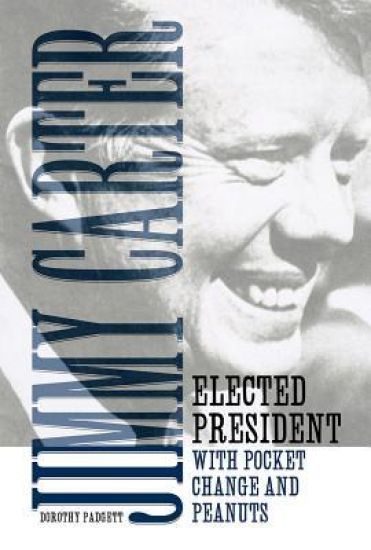
Jimmy Carter

Jimmy Carter

Dorothy Padgett

Mercer University Press
2016
sidottu
How does a peanut farmer become Governor of Georgia and President of the United States? Only in America could such a story be true.br>As a small child, Jimmy Carter set his sights on the United States Naval Academy. After graduation in 1946, he married Rosalynn Smith, and six years later, Carter followed the brilliant Captain Hyman G. Rickover into the uncharted waters of the Navy's nuclear submarine program. When Carter left the Navy, he returned with his young family to the fields of the family farm in Plains, Georgia.Not satisfied with the climate of injustice he witnessed in his daily life, Carter sought a political career and was elected state senator in 1962 and again in 1964. He successfully won the 1970 campaign for Governor of Georgia.In 1975, Carter announced he would run for President. Under the new Federal Election Laws only $21.8 million would be provided for the General Election Campaign. A trivial amount compared to future campaigns.An army of loyal supporters, friends, neighbours, and elected officials, known as the Peanut Brigade, joined the campaign. They traveled across the country, joining Jimmy and Rosalynn, knocking on doors, standing at factory gates, walking streets, asking voters to vote for Jimmy Carter for President.In 1976, Carter was elected the 39th President of the United States and served one term. Since leaving office, Carter has not stopped working on behalf of not just Americans, but for people worldwide.While the basics of his story are well known, they have never been told from the perspective of a ""soldier"" in the Peanut Brigade. Dorothy ""Dot"" Padgett, with an earthy, honest, and Southern voice, tells the story as if new to all of us. Humour and insight abound in this direct telling of how a peanut farmer from Georgia became President and leader of the United States. The secret is in his character, his morality, and in his being truly human.