Kirjojen hintavertailu. Mukana 11 244 527 kirjaa ja 12 kauppaa.

Kirjahaku

Etsi kirjoja tekijän nimen, kirjan nimen tai ISBN:n perusteella.

1000 tulosta hakusanalla Jochen W Engstfeld

Reforming European Welfare States

Reforming European Welfare States

Jochen Clasen

Oxford University Press
2005
sidottu
Welfare state reform has been a focus of domestic policy making in many European countries in recent years. Representing almost a third of the EU population and two distinctive models of European welfare states, this book compares development in British and German social policy over the past 25 years. During this time four periods of conservative governments were followed by centre-left administrations in both countries. Moreover, the respective economic and social positions of the two countries have been reversed. Adverse socio-economic developments have contributed to the waning of the erstwhile appeal of Germany as a role model of welfare capitalism. By contrast, the UK is seen by some as being on its way to gaining such a position. These trends provide an analytically intriguing background for a systematic contextualized comparison of reform processes in the two welfare states. Concentrating on three core domains of social policy, the book argues that unemployment support and public pension programmes have been subjected to retrenchment, as well as to restructuring. By contrast, family policies have been extended in both countries. However, patterns of retrenchment and restructuring differ across countries and programmes. In order to explain similarities and variations, the book emphasizes the relevance of three sets of factors: shifts in party policy preferences and power relations, three institutional variables, and contingent factors impinging on policy direction and profiles. Within pension policy, the relevance of different institutional characteristics and the respective balance between private and public forms of retirement suggest that the concept of 'path dependence' is particularly instructive. By contrast, differences in programme structures and their role within national political economies prove to be most relevant for the understanding of changes in unemployment support policy. Less institutionally embedded and expanding, the trajectories of family policies have to be seen in the context of dynamic party policy preferences.

The UN Security Council and Informal Groups of States

The UN Security Council and Informal Groups of States

Jochen Prantl

Oxford University Press
2006
sidottu
This book provides the first comparative treatment of the roles of informal ad hoc groupings of states within selected conflict settings and their effects on governance in and out of the UN Security Council. Since the 1990s, informal institutions such as groups of friends, and contact or core groups have proliferated as instruments for the management of risk and conflict due to the increasing demands on the UN Security Council to adapt to the new post-cold war security environment. The perception of both the capacity and limits of the Security Council has had a catalytic effect on the creation of these ad hoc mechanisms. The substance of conflict resolution and the process of its legitimation tend to become increasingly detached, with the former being delegated to informal groups or coalition of states, while the Security Council provides the latter. The successful merger of right process and substantive outcome may strengthen the legitimacy of the Council and make actions taken by informal institutions more acceptable. This book seeks to establish the importance of informal ad hoc groupings of states in the making of peace. The dynamics between informal institutions and the Security Council are closely examined in the context of conflict resolution in Namibia, El Salvador, and Kosovo. The study illustrates the changing role of the Council in the maintenance of international peace and security. The decentralization of tasks to informal groups allows the achievement of policy goals that would be unattainable in the centralized setting of formal international organizations. In effect, informal institutions are agents of incremental change.
Statistical Physics and Thermodynamics

Statistical Physics and Thermodynamics

Jochen Rau

Oxford University Press
2017
sidottu
Statistical physics and thermodynamics describe the behaviour of systems on the macroscopic scale. Their methods are applicable to a wide range of phenomena: from refrigerators to the interior of stars, from chemical reactions to magnetism. Indeed, of all physical laws, the laws of thermodynamics are perhaps the most universal. This text provides a concise yet thorough introduction to the key concepts which underlie statistical physics and thermodynamics. It begins with a review of classical probability theory and quantum theory, as well as a careful discussion of the notions of information and entropy, prior to embarking on the development of statistical physics proper. The crucial steps leading from the microscopic to the macroscopic domain are rendered transparent. In particular, the laws of thermodynamics are shown to emerge as natural consequences of the statistical framework. While the emphasis is on clarifying the basic concepts, the text also contains many applications and classroom-tested exercises, covering all major topics of a standard course on statistical physics and thermodynamics.
Statistical Physics and Thermodynamics

Statistical Physics and Thermodynamics

Jochen Rau

Oxford University Press
2017
nidottu
Statistical physics and thermodynamics describe the behaviour of systems on the macroscopic scale. Their methods are applicable to a wide range of phenomena: from refrigerators to the interior of stars, from chemical reactions to magnetism. Indeed, of all physical laws, the laws of thermodynamics are perhaps the most universal. This text provides a concise yet thorough introduction to the key concepts which underlie statistical physics and thermodynamics. It begins with a review of classical probability theory and quantum theory, as well as a careful discussion of the notions of information and entropy, prior to embarking on the development of statistical physics proper. The crucial steps leading from the microscopic to the macroscopic domain are rendered transparent. In particular, the laws of thermodynamics are shown to emerge as natural consequences of the statistical framework. While the emphasis is on clarifying the basic concepts, the text also contains many applications and classroom-tested exercises, covering all major topics of a standard course on statistical physics and thermodynamics.
Effective Multilateralism

Effective Multilateralism

Jochen Prantl

Palgrave Macmillan
2013
sidottu
Existing theories of cooperation assume a stable geo-political order, led by countries with a shared conception of the modalities of cooperation. These assumptions are no longer justified. Effective Multilateralism makes the case for a new approach to explaining international cooperation through the lens of East Asian.
Grand Themes

Grand Themes

Jochen Wierich

Pennsylvania State University Press
2012
sidottu
First exhibited at the Stuyvesant Hall in New York in 1851, Emanuel Leutze’s Washington Crossing the Delaware captured the imagination of many Americans searching for national symbols in a time of sectionalism and disunity. Despite Leutze’s aspirations, the exhibition became an opportunity for critics of history painting to stake their positions. As suggested by the book’s title, Leutze’s epic painting is a touchstone in the evolution of American history painting. It represents a triumphant climax of the American adoption of the Grand Manner, inherited from eighteenth-century English painting, and portends its seemingly inevitable demise. From the painting’s gargantuan size, which fitted it only for a grand, public setting, to its focus on an already deified public hero, Leutze’s painting presumed a cultural as well as a political consensus—a consensus that proved illusory at best. Emanuel Leutze was arguably the most prominent American history painter of his time, and Jochen Wierich argues that Leutze’s work became the locus of contemporary debates surrounding the nature of history painting and its future.
Grand Themes

Grand Themes

Jochen Wierich

Pennsylvania State University Press
2015
pokkari
First exhibited at the Stuyvesant Hall in New York in 1851, Emanuel Leutze’s Washington Crossing the Delaware captured the imagination of many Americans searching for national symbols in a time of sectionalism and disunity. Despite Leutze’s aspirations, the exhibition became an opportunity for critics of history painting to stake their positions. As suggested by the book’s title, Leutze’s epic painting is a touchstone in the evolution of American history painting. It represents a triumphant climax of the American adoption of the Grand Manner, inherited from eighteenth-century English painting, and portends its seemingly inevitable demise. From the painting’s gargantuan size, which fitted it only for a grand, public setting, to its focus on an already deified public hero, Leutze’s painting presumed a cultural as well as a political consensus—a consensus that proved illusory at best. Emanuel Leutze was arguably the most prominent American history painter of his time, and Jochen Wierich argues that Leutze’s work became the locus of contemporary debates surrounding the nature of history painting and its future.
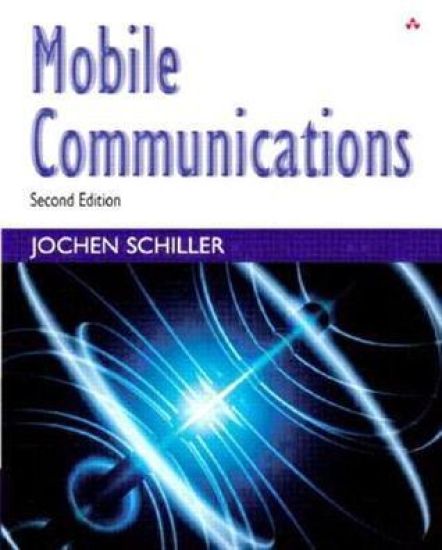
Mobile Communications

Mobile Communications

Jochen Schiller

Addison-Wesley Educational Publishers Inc
2003
nidottu
The mobile communications market remains the fastest growing segment of the global computing and communications business. The rapid progress and convergence of the field has created a need for new techniques and solutions, knowledgeable professionals to create and implement them, and courses to teach the background theory and technologies while pointing the way towards future trends. In this book Jochen Schiller draws on his extensive experience to provide a thorough grounding in mobile communications, describing the state of the art in industry and research while giving a detailed technical background to the area. The book covers all the important aspects of mobile and wireless communications from the Internet to signals, access protocols and cellular systems, emphasizing the key area of digital data transfer. It uses a wide range of examples and other teaching aids, making it suitable for self-study and university classes. The book begins with an overview of mobile and wireless applications, covering the history and market, and providing the foundations of wireless transmission and Medium Access Control. Four different groups of wireless network technologies are then covered: telecommunications systems, satellite systems, broadcast systems and wireless LAN. The following chapters about the network and transport layers address the impairments and solutions using well-known Internet protocols such as TCP/IP in a mobile and wireless environment. The book concludes with a chapter on technologies supporting applications in mobile networks, focusing on the Web and the Wireless Application Protocol (WAP). Each chapter concludes with a set of exercises for self-study (with solutions available to instructors) and references to standards, organizations and research work related to the topic. New to this edition Integration of higher data rates for GSM (HSCSD, GPRS) New material on 3rd generation (3G) systems with in-depth discussion of UMTS/W-CDMA Addition of the new WLAN standards for higher data rates: 802.11a, b, g and HiperLAN2 Extension of Bluetooth coverage to include IEEE 802.15, profiles and applications Increased coverage of ad-hoc networking and wireless profiled TCP Migration of WAP 1.x and i-mode towards WAP 2.0 Jochen Schiller is head of the Computer Systems and Telematics Working Group in the Institute of Computer Science, Freie Universitat Berlin, and a consultant to several companies in the networking and communication business. His research includes mobile and wireless communications, communication architectures and operating systems for embedded devices, and QoS aspects in communication systems.
The Ethics of Personalised Medicine

The Ethics of Personalised Medicine

Jochen Vollmann; Verena Sandow; Jan Schildmann

Routledge
2020
nidottu
In recent times, the phrase ’personalised medicine’ has become the symbol of medical progress and a label for better health care in the future. However, a controversial debate has developed around whether these promises of better, more personal and more cost-efficient medicine are realistic. This book brings together leading researchers from across Europe and North America, from both normative and empirical disciplines, who take a more critical view of the often encountered hype associated with personalised medicine. Partially drawing on a four year collaborative research project funded by the German Ministry for Education and Research, the book presents a multidisciplinary debate on the current state of research on the ethical, legal and social implications of personalised medicine. At a time when future health care is a topic of much discussion, this book provides valuable policy recommendations for the way forward. This study will be of interest to researchers from various disciplines including philosophy, bioethics, law and social sciences.
The Social Organization of Disease

The Social Organization of Disease

Jochen Kleres

Routledge
2019
nidottu
Empirically, this book is a case-study analysis of dissolution processes in German AIDS organizations. Indeed, why is it that civic organizers start out with a commitment to a cause but end up dissolving their organization? This question is exactly what Kleres seeks to tackle within The Social Organization of Disease.Focusing on the emotional bases of dissolved German AIDS organizations to develop a typology of civic action and organizing, Kleres presents a perspective on non-profit organizations that analyses organizational development through the emotional sense making of individual organizers, within the light of larger political processes and cultural contexts. To this end, this volume develops and applies a new methodology for researching emotions empirically, expanding the scope of narrative analysis. However, parallel to this, The Social Organization of Disease also explores how shifting discursive processes establish emotional climates and thus impact on state policies and the evolution of AIDS organizing. The book would appeal to sociologists and political scientists working in the field of social movements and non-profit organisations: but it would also appeal to those who are interested in the sociology of emotions. It would potentially be of interest to non-profit scholars who consider community-based organizations, volunteerism and advocacy, and secondarily, to medical sociologists interested in AIDS service organizations. Sociology, International relations, Social Work, Political Science. May be of interest for NGO-activists and/or employees and leadership.
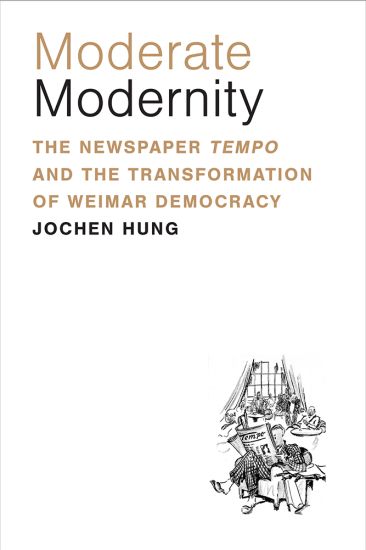
Moderate Modernity

Moderate Modernity

Jochen Hung

THE UNIVERSITY OF MICHIGAN PRESS
2023
sidottu
Focusing on the fate of a Berlin-based newspaper during the 1920s and 1930s, Moderate Modernity: The Newspaper Tempo and the Transformation of Weimar Democracy chronicles the transformation of a vibrant and liberal society into an oppressive and authoritarian dictatorship. Tempo proclaimed itself as “Germany’s most modern newspaper” and attempted to capture the spirit of Weimar Berlin, giving a voice to a forward-looking generation that had grown up under the Weimar Republic’s new democratic order. The newspaper celebrated modern technology, spectator sports, and American consumer products, constructing an optimistic vision of Germany’s future as a liberal consumer society anchored in Western values. The newspaper’s idea of a modern, democratic Germany was undermined by the political and economic crises that hit Germany at the beginning of the 1930s. The way the newspaper described German democracy changed under these pressures. Flappers, American fridges, and modern music—the things that Tempo had once marshalled as representatives of a German future—were now rejected by the newspaper as emblems of a bygone age. The changes in Tempo’s vision of Germany’s future show that descriptions of Weimar politics as a standoff between upright democrats and rabid extremists do not do justice to the historical complexity of the period. Rather, we need to accept the Nazis as a lethal product of a German democracy itself. The history of Tempo teaches us how liberal democracies can create and nurture their own worst enemies.
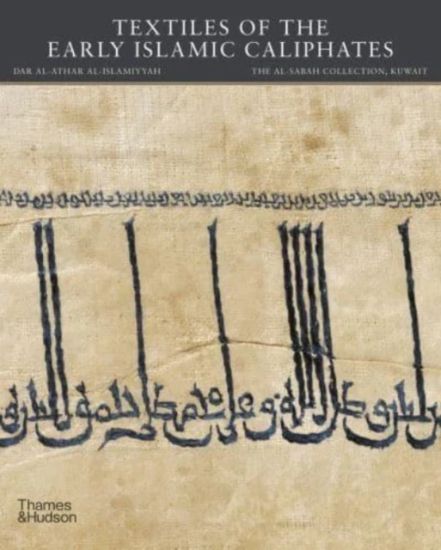
Textiles of the Early Islamic Caliphates

Textiles of the Early Islamic Caliphates

Jochen Sokoly

THAMES HUDSON LTD
2025
sidottu
A collection of precious decorated Islamic textiles produced before the thirteenth century CE, many published here for the first time. The al-Sabah Collection, Kuwait, includes a remarkable array of textiles from the Islamic world, ranging widely in form, function and place of origin. Textiles of the Early Islamic Caliphates focuses on a group of tiraz and tiraz-style textiles produced before the thirteenth century CE, mainly in the central Islamic lands. Tiraz textiles – the word tiraz can be traced back to the Persian word for ‘embroidery’ – were highly valued in the early Islamic world. Inscribed with sacred invocations and the name of the ruling caliph, together with the names of administrators, the type of workshop in which the textile was made, the workshop’s location and the year of manufacture, these textiles provide an invaluable window into the political, administrative and religious life of early Islam, as well as various traditions of textile production. Other textiles of the period, similar in style but uninscribed, were decorated with colourful medallions, depicting animals and other motifs. The large majority of the surviving fragments of tiraz textiles, which were originally given as robes of honour to courtiers and ambassadors, have been found in Egyptian tombs: most of the textiles examined in this book once belonged to burial outfits from the diverse religious communities in Egypt during the early Islamic period. Featuring more than 180 textiles from The al-Sabah Collection, some never published before, this volume provides authoritative analysis not only of the textiles themselves, but also of the historical and cultural context in which they were produced. With hundreds of illustrations, including specially commissioned macrophotography, Textiles of the Early Islamic Caliphates is a landmark publication that will appeal to scholars and general readers alike.
The Public International Law Theory of Hans Kelsen

The Public International Law Theory of Hans Kelsen

Jochen von Bernstorff

Cambridge University Press
2010
sidottu
This analysis of Hans Kelsen's international law theory takes into account the context of the German international legal discourse in the first half of the twentieth century, including the reactions of Carl Schmitt and other Weimar opponents of Kelsen. The relationship between his Pure Theory of Law and his international law writings is examined, enabling the reader to understand how Kelsen tried to square his own liberal cosmopolitan project with his methodological convictions as laid out in his Pure Theory of Law. Finally, Jochen von Bernstorff discusses the limits and continuing relevance of Kelsenian formalism for international law under the term of 'reflexive formalism', and offers a reflection on Kelsen's theory of international law against the background of current debates over constitutionalisation, institutionalisation and fragmentation of international law. The book also includes biographical sketches of Hans Kelsen and his main students Alfred Verdross and Joseph L. Kunz.
The Telegram to Stalin

The Telegram to Stalin

Jochen Erler

Erler Print
2018
pokkari
Filled with intrigue and suspicion, this political memoir takes the reader through Jochen Erler's experiences across three political systems in Germany. Troubles for Jochen begin during his youth in Hitler's Germany and lead to his forced attendance in a Nazi boarding school. As a high school student in Russian-occupied East Germany, he becomes instrumental in an incident involving a telegram to Stalin. Soon after, his contacts with the West lead to his conviction to six years in a penitentiary. After surviving these two oppressive regimes in Germany, Jochen comes again under surveillance. This time it is the secret service of the West because his best friend from childhood is unmasked as a Russian military spy. In the book's epilogue, the author describes the fallout following the reunification of Germany during which time he gains access to his files from the former East German secret service, the infamous Stasi.
World Enemy No. 1: Nazi Germany, Soviet Russia, and the Fate of the Jews
A major new history that transforms our understanding of World War II--tracing the conflict and its most infamous crime, the Holocaust, to Germany's implacable hostility toward Soviet Russia In the West, World War II is commonly understood as the Allies' struggle against Nazism. Often elided, if not simply forgotten, is the Soviet Union's crucial role in that fight. With this book, acclaimed historian Jochen Hellbeck rectifies this omission by relocating the ideological core of the conflict. It was not the Western powers but Communist Russia that Nazi Germany viewed as an existential threat--in fact, "World Enemy No. 1." Jewish revolutionaries, the Nazis believed, had seized power in 1917 and were preparing the Soviet state to destroy Germany and the world. And so, on June 22, 1941, a German army of three million attacked the Soviet Union to exterminate "Judeo-Bolshevism," Hitler's cardinal obsession. While Europe's Jews were expelled, exiled, and persecuted by the Nazis, Soviet Jews were immediately slated for elimination. The Soviet lands thus became ground zero for systematic extermination, which was only later extended to all Jews, igniting the Holocaust. Hellbeck plumbs newly declassified archives and previously undiscovered sources--testimonies, diaries, and dispatches from soldiers and civilians, Soviet and German--to offer a unique history that takes account of both sides. He reconstructs the years leading up to the war when "Europe against Bolshevism" was the Nazis' most fervid rallying cry, and documents their annihilatory ambitions on the battlegrounds in the East. Widely disseminated accounts of German atrocities mobilized millions of Soviet citizens to join a people's war against the hated invaders. Hellbeck tracks the desire for revenge that drove the Red Army on its path of reconquest, an advance that further inflamed the belief in a murderous "Bolshevik Jew," stirring the Germans to fight to the bitter end. Recounted here in vivid detail are the events at Babi Yar, the Battle of Stalingrad, the liberation of the concentration camps, and the arrival of the Red Army in the Nazi capital. Finally, Hellbeck reckons with the West's persistent disregard of the Soviet Union's incalculable contribution to winning the war--and its sacrifice of twenty-six million citizens--as anti-communism and the Cold War turned erstwhile allies into mortal enemies. Hellbeck's eye-opening work is an astonishing new reading of both the Second World War and how its history has been told.
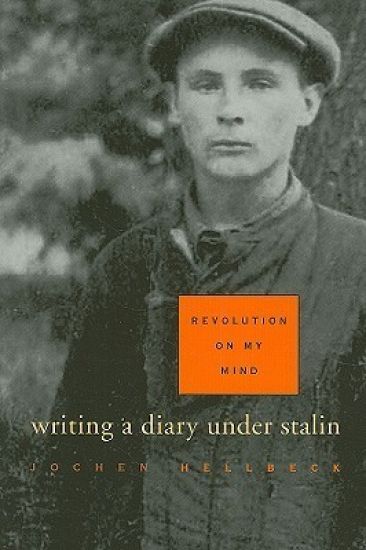
Revolution on My Mind

Revolution on My Mind

Jochen Hellbeck

Harvard University Press
2009
nidottu
Revolution on My Mind is a stunning revelation of the inner world of Stalin’s Russia. We see into the minds and hearts of Soviet citizens who recorded their lives during an extraordinary period of revolutionary fervor and state terror. Writing a diary, like other creative expression, seems nearly impossible amid the fear and distrust of totalitarian rule; but as Jochen Hellbeck shows, diary-keeping was widespread, as individuals struggled to adjust to Stalin’s regime.Rather than protect themselves against totalitarianism, many men and women bent their will to its demands, by striving to merge their individual identities with the collective and by battling vestiges of the old self within. We see how Stalin’s subjects, from artists to intellectuals and from students to housewives, absorbed directives while endeavoring to fulfill the mandate of the Soviet revolution—re-creation of the self as a builder of the socialist society. Thanks to a newly discovered trove of diaries, we are brought face to face with individual life stories—gripping and unforgettably poignant.The diarists’ efforts defy our liberal imaginations and our ideals of autonomy and private fulfillment. These Soviet citizens dreamed differently. They coveted a morally and aesthetically superior form of life, and were eager to inscribe themselves into the unfolding revolution. Revolution on My Mind is a brilliant exploration of the forging of the revolutionary self, a study without precedent that speaks to the evolution of the individual in mass movements of our own time.
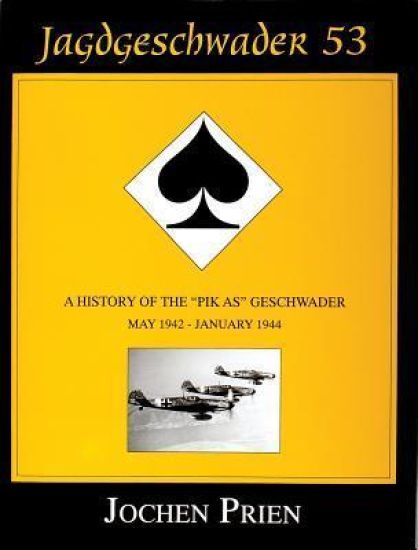
Jagdeschwader 53 Vol. I

Jagdeschwader 53 Vol. I

Jochen Prien

RED Feather
1997
sidottu
Jagdegeschwader 53 - or as it was better known, the "Pik As" (Ace of Spades) Geschwader - was one of the oldest German fighter units of World War II with its origins going back to the year 1937. This first volume, of a planned three volume set, covers the early years of the Geschwader from its founding in the spring of 1937 up to May of 1942. This book appears here for the first time in English, and contains over 200 additional photos not published in the original German language edition. The book also contains revised text and maps, and aircraft line drawings, as well as updated aerial victory and loss listings. The service record of JG53 can undoubtedly be regarded as uniquely representative for the rise and fall of the Luftwaffe, with the unit seeing action on every major war front. JG53 had a considerable share in the successes achieved by the Luftwaffe in the early stages of the war in the West, and at the outset of the war in the East until mid-1942, and through the tough battles fought over the Mediterranean fronts and suffering bitter losses in the vain attempt to stop the Allied bomber-offensive against the Reich. Equipped exclusivedly with the legendary Messerschmitt Bf 109, JG 53 "Pik-As" first saw front line action in the southwest of the German Reich, where at that time the only direct border line with France was the stage for some of the first clashes with the French Armee de'l Air as well as parts of the Royal Air Force's BEF, and became the Luftwaffe's most successful unit during the so called "Phony War." When on May 10, 1940, the Wehrmacht invaded France, Belgium, Luxembourg and the Netherlands, the "Pik-As" Geschwader was in the center of the action and during the six weeks of fighting in the West the Geschwader continued to prove its outstanding fighting qualities, and ranked highly amongst the top scoring Luftwaffe units when the cease-fire became effective on June 25, 1940. JG 53 later took part in the Luftwaff's foreseeably futile attempt to subdue Great Britain by ways of a strategic aerial campaign in the summer and autumn of 1940 which, although the pilots of JG 53 gave their utmost and took a heavy toll from the defending British Spitfires and Hurricanes, cost the Geschwader sad and irreplaceable losses. Given only a short time to recover and re-equip in the Reich at the beginning of 1941, and after another short period of action on the Channel Coast between April and early June 1941, the "Pik-As" Geschwader along with a majority of the Luftwaffe forces was moved to the East, where it took part in German invasion of the Soviet Union on June 22, 1941. After only a few months of service on the Eastern front at a time when the complete failure of the German war effort against the Soviet Union was just beginning to become apparent, JG 53 was withdrawn to the Reich for another short period of rest and re-equipping, though two of its Gruppen were posted to the Netherlands in the fall of 1941, where they saw comparatively little action. This changed completely when at the end of 1941 the entire Geschwader was transferred to the Mediterranean theatre of operations, where III. Gruppe was first sent to North Africa to take part in the dramatic struggle there, while the remainder of the Geschwader went to Sicily as part of the offensive forces of the Luftwaffe that were concentrated there for the planned air offensive against the British island fortress of Malta, later to be joined by III. Gruppe after its return from Africa. Iochen Prien is also the author, with Peter Rodeike, of Messerschmitt Bf 109 F/G/K Series: An Illustrated Study (available from Schiffer Publishing Ltd.).
Jagdeschwader 53

Jagdeschwader 53

Jochen Prien

RED Feather
1997
sidottu
This third and final part of the narrative starts with the bitter fighting over Italy, where the Geschwaderstab together with I. and III./JG 53 had to face overwhelming odds in their struggle over both the front lines at Cassino and Anzio/Nettuno bridghead, and over northern Italy. I./JG 53 was later moved to Romania in order to protect the vital oilfields and refineries around Ploesti and later saw further action in Hungary, where it was to take part in the fierce fighting on the southeastern part of the Russian Front in the fall of 1944 and early 1945, eventually retreating into Czechoslovakia and Austria before it was finally disbanded in April 1945 – its remnants amalgamated into II./JG 52. II./JG 53, withdrew from Italy in October 1943, and was the first Gruppe of the Geschwader to be employed on home defense operations, being stationed near Vienna from October 1943 to March 1944 before moving to southwestern Germany, and was the only Gruppe of JG 53 to see action against the Allied invasion forces in the summer of 1944. III./JG 53 also returned from Italy in June 1944 and after a short period of rest and refit was active in the defense of the Reich. When the Allies launched Operation Market Garden both II. and III./JG 53 were called upon to take part in defensive actions. Autumn of 1944 also saw the addition of a fourth Gruppe to the Geschwader with Stab, II., III., IV./JG 53 based along the southwestern sector of the Western Front. For the remainder of the war the Geschwader – minus I. Gruppe – stayed in the southwest where it fought on until the end, retreating deep into southern Germany where the majority of the Gruppen and Staffen were finally disbanded a few days before VE-Day. This final volume of the epic saga of JG 53 concludes with a list of the officers in command of the Geschwader, its Gruppen and Staffeln, a listing of all known victories claimed by JG 53, strength returns, and other appendices.