Kirjojen hintavertailu. Mukana 11 342 296 kirjaa ja 12 kauppaa.

Kirjahaku

Etsi kirjoja tekijän nimen, kirjan nimen tai ISBN:n perusteella.

1000 tulosta hakusanalla Joel Colón-Ríos

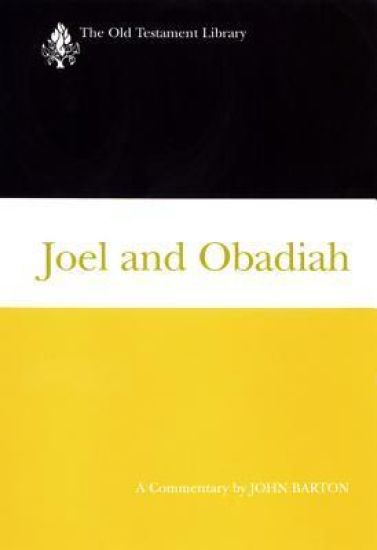
Joel and Obadiah

Joel and Obadiah

John Barton

Westminster/John Knox Press,U.S.
2001
sidottu
In Joel and Obadiah, John Barton furnishes a fresh translation of the ancient manuscripts and discusses questions of historical background and literary architecture before providing a theologically sensitive and critically informed interpretation of the text.The Old Testament Library provides fresh and authoritative treatments of important aspects of Old Testament study through commentaries and general surveys. The contributors are scholars of international standing.
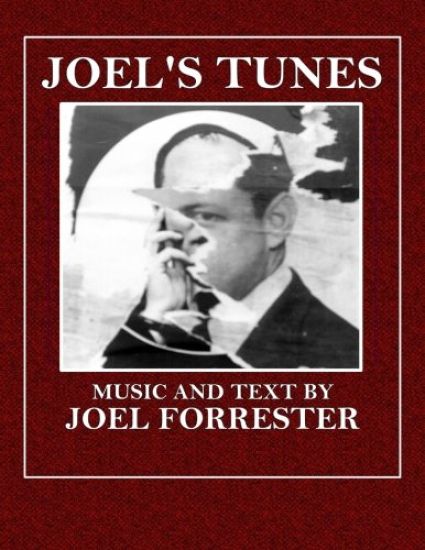
Joel's Tunes

Joel's Tunes

Joel Forrester

Evergreen
2015
nidottu
Contents of Joel's Tunes I. Blues II. Bop III. Ballads IV. Salon V. 2-Beat VI. Straight 8ths * * * * INTRODUCTION Welcome to an approximate one-fortieth of my compositional output. I'm tempted to picture you. I won't try; but I wish you every success in making these tunes your own As a melodist and a partisan of melodic composition, I tried to choose pieces which tend to announce themselves, that leave neither the player nor the listener in any doubt as to their form or their progress. (I also chose from among the least messy of the lot.) If heard chronologically, a picture might be developed of my 40 years in New York...but I doubt it: I've always maintained the practice of jotting down the first stirrings of a melody, the moment it crosses my mind, then working out its implications at the keyboard; and I've always composed, indiscriminately, out of the six categories suggested here. But it is true that music from my early years in New York will be under-represented in this selection. Those were days when---driving a truck, painting an apartment, or doing the laundry of an animal hospital---I felt myself a Charles Ives manqu and my composition rivaled my model's in austerity if in no other way. But then I started getting gigs and I found myself writing music for these gigs. And when I found my mates ("mine own wild kind" as Pound put it), I wrote music for them and me to play together. Bassist David Hofstra freed my left hand for less-cluttered ensemble music. Drummer Denis Charles gave me so much of his sensed time that my own time is never in doubt. And Phillip Johnston gave me the voice of the saxophone as my primary conveyor of melody. I can hear all three of these guys in my head, any time I compose. But the larger point is this: these 56 tunes were written in order to be played; and that's why I chose them to be published. I can imagine no happier afterlife than one in which my tunes are being played and enjoyed. Would you try your hand? Of course, I wouldn't mind, Twainishly, being allowed to observe that afterlife, myself.] In each category, I try first to give the listener an idea of what I mean by what's comprehended there. In a second paragraph, I offer the player clues to performance. Musicians of my generation came of age in a time of promise, a time when it felt natural to keep freedom in mind. It's my hope---nay, my belief---that these tunes encode something of the consciousness from which they emerged. -JOEL FORRESTER, New York, 2015 * * * * About the Author: Joel Forrester is a stride and bop pianist, living and working in New York. He records for Donald Elfman's Ride Symbol label; his most recent release is THE LATE JOEL FORRESTER QUARTET (2015), which features Vito Dieterle on tenor sax. He gigs around town as a soloist and with small ensembles, performing pre-dominantly his own tunes. With Phillip Johnston, he continues to co-lead the Microscopic Septet. He also heads a quintet based in south-central France. He accompanies silent films for the American Academy of Motion Pictures Arts & Sciences. Among his nearly 2000 compositions are the theme to NPR's FRESH AIR WITH TERRY GROSS, the off-Broadway musical FASCIST LIVING, and the 8-hour piano piece INDUSTRIAL ARTS. Earlier in his life, Forrester received the criticism and encouragement of Thelonious Monk and Pannonica deKoenigswarter. As a pretentious young squirt, he supplied music for the early films of Andy Warhol. He has recently entered his eighth decade on earth.
Joel Perlman

Joel Perlman

Philip F. Palmedo

Abbeville Press Inc.,U.S.
2006
sidottu
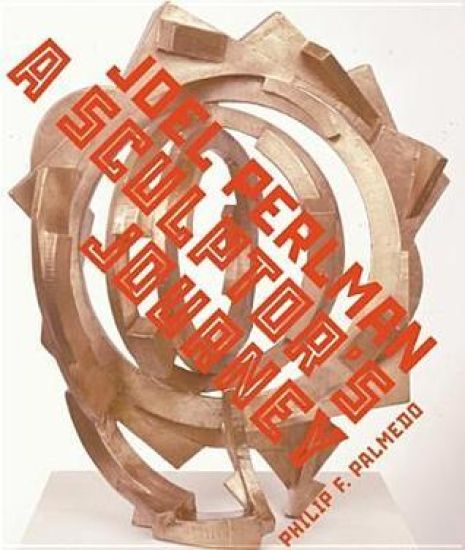
This handsomely illustrated book is the first monograph devoted to the work of Joel Perlman (b. 1943), an acclaimed sculptor in steel and bronze, whose works are represented in the permanent collections of America's top museums, including the Metropolitan Museum of Art, the Whitney Museum of American Art, and the Hirshhorn Museum and Sculpture Garden. Perlman's best works from the 1970s to the present day — from the austerely abstract Chevy Short (For Jeannie Day), shown at the 1973 Whitney Biennial, to the lyrical Sky Spirit, a monumental commission completed in 2004 — are depicted in here in stunning full-page photographs, most in full color. All readers with an interest in contemporary sculpture will appreciate not only the book's striking illustrations but also its thoughtfully written text, which relates Perlman's art to his life. Author Philip F. Palmedo, drawing on extensive interviews with his subject and his subject's colleagues, engagingly describes how each chapter of Perlman's life — from his early days of teaching alongside Kenneth Noland and Jules Olitski in the Bennington College art department to his struggle, ultimately very successful, to establish himself in SoHo's vibrant 1970s art scene — served to strengthen his commitment to his own abstract, Modernist aesthetic. This thoughtful narrative, which seamlessly synthesizes Perlman's intimate art-world anecdotes and Palmedo's own keen critical observations, is beautifully complemented by an insightful foreword by renowned art dealer André Emmerich, whose gallery represented Perlman for twenty years.
Joel Perlman

Joel Perlman

Philip F. Palmedo; Charles A. Riley

ABBEVILLE PRESS INC.,U.S.
2026
sidottu
A revised edition of the standard monograph on renowned American sculptor Joel Perlman, updated to include the latest two decades of his life and work. This abundantly illustrated volume celebrates the art of Joel Perlman (b. 1943), who has carried forward the great tradition of metal sculpture founded by Pablo Picasso and Julio González and fostered by David Smith and Anthony Caro. Author Philip F. Palmedo, a noted biographer of sculptors, traces the evolution of Perlman’s career, from his early days teaching at Bennington College alongside Kenneth Noland and Jules Olitski, to his participation in SoHo’s vibrant 1970s art scene, to his success as an established artist, showing at the André Emmerich gallery and seeing his pieces acquired by the Metropolitan Museum of Art, the Whitney, the Hirshhorn, and many others. The revised edition of A Sculptor’s Journey has been expanded to included a generous selection of Perlman’s lyrical works of the last two decades. A text by Charles A. Riley II, curator and cultural historian, explores the themes and development of Perlman’s recent sculpture, which ranges in scale from the intimate to the monumental. This volume will be an essential addition to any library of American art.
Joel Barlow

Joel Barlow

Richard Buel

Johns Hopkins University Press
2011
sidottu
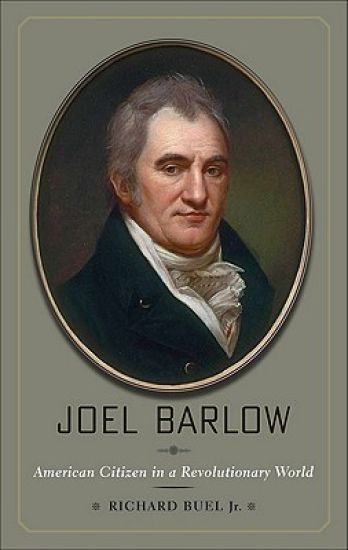
Poet, republican, diplomat, and entrepreneur, Joel Barlow filled many roles and registered impressive accomplishments. In the first biography of this fascinating figure in decades, Richard Buel Jr. recounts the life of a man more intimately connected to the Age of Revolution than perhaps any other American. Barlow was a citizen of the revolutionary world, and his adventures throughout the United States and Europe during both the American and French Revolutions are numerous and notorious. From writing his epic poem, The Vision of Columbus, to plotting a republican revolution in Britain to negotiating the release of American sailors taken captive by Barbary pirates, Joel Barlow personified the true spirit of the tumultuous times in which he lived. No one witnessed more climactic events or interacted with more significant people than Joel Barlow. It was his unique vision, his unfailing belief in republicanism, and his entrepreneurial spirit that drove Barlow to pursue the revolutionary ideal in a way more emblematic of the age than the lives of many of its prominent heroes. Buel is a knowledgeable guide, and in telling Barlow's story he explores the cultural landscape of the early American republic and engages the broader themes of the Age of Revolution. Few books explore in such a comprehensive fashion the political, economic, ideological, diplomatic, and technological dimensions of this defining moment in world history.
Joel Chandler Harris

Joel Chandler Harris

R. Bruce Bickley

University of Georgia Press
2008
pokkari
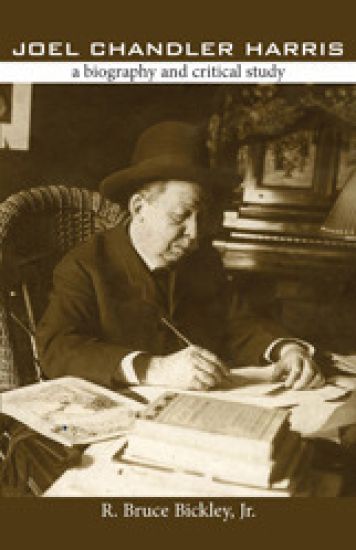
This biography and critical study reconstructs Harris's life and career from his humble origins as an illegitimate child and plantation-newspaper printer's devil through his years in Macon, Forsyth, Savannah, and Atlanta. When Harris died in 1908, his national and international popularity rivaled his friend Mark Twain's. A psychologically complex person, Harris became an accomplished Southern local colorist who left multiple legacies as an American humorist, folklorist, New South journalist, children's writer, and author. He helped make the Old South New. Harris's Uncle Remus trickster tales derive primarily from transplanted Senegambian African folklore and are rhetorically and sociologically complex representations of the often predatory world of Old South slave life—where survival depends on trickery, wit, and will pitted against the brute strength of overseers and masters. Controversial today because he was a white man retelling black folk narratives, Harris nevertheless helped preserve the trickster tale-cycle and promote black folk-tale collecting, generally; hundreds of scholars and linguists have studied his works. Harris also made Brer Rabbit, the tar baby, and the briar patch popular-culture icons, and his highly believable animal characters and dialogues influenced the techniques of Rudyard Kipling, A. A. Milne, Beatrix Potter, E. B. White, and other children's authors. Finally, Harris's poor white and African American characters and narratives have left their mark on writers from his time to our times—from Twain to Zora Neale Hurston, William Faulkner, Flannery O'Connor, Ralph Ellison, and Toni Morrison.
Joel Chandler Harris, Folklorist

Joel Chandler Harris, Folklorist

Stella Brewer Brookes

University of Georgia Press
2009
pokkari
Stella Brewer Brookes's study of the life and work of Joel Chandler Harris was published in 1950. Brookes examines how Harris drew on his extensive knowledge of African American folklore and culture to create the characters in his work. Brookes classifies the Uncle Remus books under seven major categories: trickster tales, other "creeturs," myths, supernatural tales, proverbs, dialect, and songs.
Joel and Amos

Joel and Amos

Tchavdar S. Hadjiev

IVP Academic
2020
nidottu
Joel's arresting imagery--blasting trumpet, darkened sun, and marching hosts--has shaped the church's eschatological vision of a day of wrath. Amos's ringing indictments--callous oppression, heartless worship, and self-seeking gain--have periodically awakened the conscience of God's people. Twenty-five-hundred years later, those prophetic words still speak powerfully. This Tyndale commentary by Tchavdar Hadjiev on the books of Joel and Amos examines their literary features, historical context, theology, and ethics.The Tyndale Commentaries are designed to help the reader of the Bible understand what the text says and what it means. The Introduction to each book gives a concise but thorough treatment of its authorship, date, original setting, and purpose. Following a structural Analysis, the Commentary takes the book section by section, drawing out its main themes, and also comments on individual verses and problems of interpretation. Additional Notes provide fuller discussion of particular difficulties.In the new Old Testament volumes, the commentary on each section of the text is structured under three headings: Context, Comment, and Meaning. The goal is to explain the true meaning of the Bible and make its message plain.