Kirjojen hintavertailu. Mukana 12 421 461 kirjaa ja 12 kauppaa.

Kirjahaku

Etsi kirjoja tekijän nimen, kirjan nimen tai ISBN:n perusteella.

1000 tulosta hakusanalla John Cosper

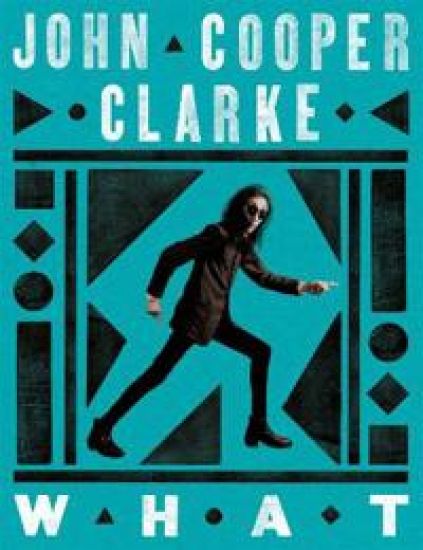
WHAT

WHAT

John Cooper Clarke

PAN MACMILLAN
2024
sidottu
The instant Sunday Times BestsellerA Rough Trade Book of the Year'Nothing short of dazzling' – Alex Turner, musician and frontman of the Arctic Monkeys'A big-hearted poet of boundless humour and unmistakable style' – Kit Fan, GuardianDr John Cooper Clarke's dazzling, scabrous voice has reverberated through pop culture for decades, his influence on generations of performance poets and musicians plain for all to see. In WHAT, the original 'People's Poet' comes storming out of the gate with an uproarious collection, reminding us why he is one of Britain's most beloved writers and performers. James Brown, John F. Kennedy, Jesus Christ: nobody is safe from the punk rocker's acerbic pen – and that's just the first poem.Hot on the heels of The Luckiest Guy Alive and his sprawling, encyclopaediac memoir I Wanna Be Yours, the good Doctor returns with his most trenchant collection of poems yet. Vivid and alive, with a sensitivity only a writer with a life as varied and extraordinary as Cooper Clarke's could summon, WHAT is an exceptional collection from one of our foremost satirists.John Cooper Clarke's book WHAT was a Sunday Times bestseller w/c 05-02-2024.
WHAT

WHAT

John Cooper Clarke

PAN MACMILLAN
2025
nidottu
A riotous poetry collection from the Poet Laureate of Punk and the Bard of Salford, Dr John Cooper Clarke.Nothing short of dazzling' – Alex Turner, musician and frontman of the Arctic Monkeys'A big-hearted poet of boundless humour and unmistakable style' – Kit Fan, GuardianDr John Cooper Clarke's dazzling, scabrous voice has reverberated through pop culture for decades, his influence on generations of performance poets and musicians plain for all to see. In WHAT, the original 'People's Poet' comes storming out of the gate with an uproarious new collection, reminding us why he is one of Britain's most beloved writers and performers. James Brown, John F. Kennedy, Jesus Christ: nobody is safe from the punk rocker's acerbic pen – and that's just the first poem.Hot on the heels of The Luckiest Guy Alive and his sprawling, encyclopaediac memoir I Wanna Be Yours, the good Doctor returns with his most trenchant collection of poems yet. Vivid and alive, with a sensitivity only a writer with a life as varied and extraordinary as Cooper Clarke's could summon, WHAT is an exceptional collection from one of our foremost satirists.John Cooper Clarke's book WHAT was a Sunday Times bestseller w/c 05-02-2024.
Have It

Have It

John Cooper Clarke

PAN MACMILLAN
2026
sidottu
John Cooper Clarke may have a doctorate and a poem on the English Literature GCSE syllabus, but don’t let that fool you: the “Poet Laureate of Punk” is still a bona fide iconoclast. In Have It, a collection of scathing new poems, the Bard of Salford puts his pen to work across a host of painfully funny critiques of modern life. Praise for John Cooper Clarke: 'A rhymer to be reckoned with . . . with a panache contemporary poets should aspire to and respect' – The Sunday Times 'John Cooper Clarke uses words like Chuck Berry uses guitar riffs melody and anger, humour and disdain in equal measure. He's the real deal, really funny and really caustic, the velvet voice of discontent' - Kate Moss 'John Cooper Clarke is one of Britain’s outstanding poets. His anarchic punk poetry has thrilled people for decades . . . long may his slender frame and spiky top produce words and deeds that keep us on our toes and alive to the wonders of the world' – Sir Paul McCartney
Children's Fiction 1900–1950

Children's Fiction 1900–1950

John Cooper

Routledge
2019
sidottu
First published in 1998, this volume explores how the genre of school stories had become firmly established by the turn of the twentieth century, having been built on the foundations laid by writers such as Thomas Hughes and F.W. Farrar. Stories for girls were also taking on a more exciting complexion, inspired by the ‘Katy’ books of Susan Coolidge.The first five decades of the twentieth century saw further developments in children’s fiction. In this comprehensive volume, John and Jonathan Cooper examine each decade in turn, with alphabetically arranged entries on popular children’s writers that published works in English during that period. 206 different authors are covered, many from the United States and Canada. Each entry provides information on the author’s pseudonyms, date of birth, nationality, titles of works, place and date of publication and the publisher’s name. The artist responsible for a book’s illustrations is also identified where possible.With over 200 illustrations of cover designs and dustwrappers, many of which are now rare and have never before been published, this book will delight collectors, dealers, scholars, librarians, parents and all those who simply enjoy reading children’s fiction.
Children's Fiction 1900–1950

Children's Fiction 1900–1950

John Cooper

Routledge
2020
nidottu
First published in 1998, this volume explores how the genre of school stories had become firmly established by the turn of the twentieth century, having been built on the foundations laid by writers such as Thomas Hughes and F.W. Farrar. Stories for girls were also taking on a more exciting complexion, inspired by the ‘Katy’ books of Susan Coolidge.The first five decades of the twentieth century saw further developments in children’s fiction. In this comprehensive volume, John and Jonathan Cooper examine each decade in turn, with alphabetically arranged entries on popular children’s writers that published works in English during that period. 206 different authors are covered, many from the United States and Canada. Each entry provides information on the author’s pseudonyms, date of birth, nationality, titles of works, place and date of publication and the publisher’s name. The artist responsible for a book’s illustrations is also identified where possible.With over 200 illustrations of cover designs and dustwrappers, many of which are now rare and have never before been published, this book will delight collectors, dealers, scholars, librarians, parents and all those who simply enjoy reading children’s fiction.
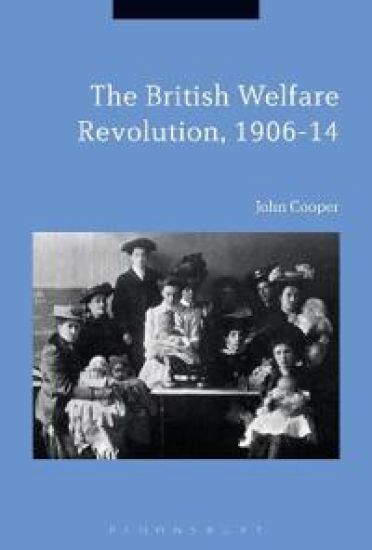
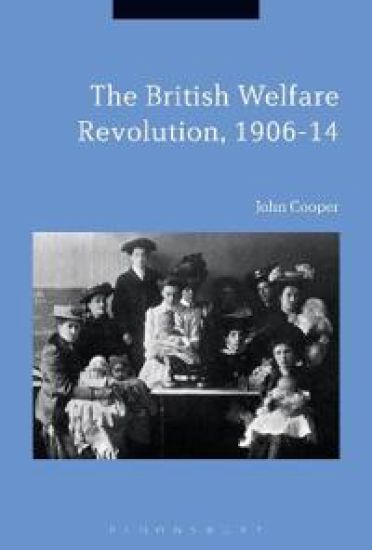
The British Welfare Revolution, 1906-14

The British Welfare Revolution, 1906-14

John Cooper

Bloomsbury Academic
2017
sidottu
The Welfare Revolution of the early 20th century did not start with Clement Attlee’s Labour governments of 1945 to 1951 but had its origins in the Liberal government of forty years earlier. The British Welfare Revolution, 1906-14 offers a fresh perspective on the social reforms introduced by these Liberal governments in the years 1906 to 1914. Reforms conceived during this time created the foundations of the Welfare State and transformed modern Britain; they touched every major area of social policy, from school meals to pensions, the minimum wage to the health service. Cooper uses an innovative approach, the concept of the Counter-Elite, to explain the emergence of the New Liberalism and examines the research that was carried out to devise ways to meet each specific social problem facing Britain in the early 20th century. For example, a group of businessmen, including Booth and Rowntree, invented the poverty survey to pinpoint those living below the poverty line and encouraged a new generation of sociologists. This comprehensive single volume survey presents a new critical angle on the origins of the British welfare state and is an original analysis of the reforms and the leading personalities of the Liberal governments from the late Edwardian period to the advent of the First World War.
The British Welfare Revolution, 1906-14

The British Welfare Revolution, 1906-14

John Cooper

Bloomsbury Academic
2019
nidottu
The Welfare Revolution of the early 20th century did not start with Clement Attlee’s Labour governments of 1945 to 1951 but had its origins in the Liberal government of forty years earlier. The British Welfare Revolution, 1906-14 offers a fresh perspective on the social reforms introduced by these Liberal governments in the years 1906 to 1914. Reforms conceived during this time created the foundations of the Welfare State and transformed modern Britain; they touched every major area of social policy, from school meals to pensions, the minimum wage to the health service. Cooper uses an innovative approach, the concept of the Counter-Elite, to explain the emergence of the New Liberalism and examines the research that was carried out to devise ways to meet each specific social problem facing Britain in the early 20th century. For example, a group of businessmen, including Booth and Rowntree, invented the poverty survey to pinpoint those living below the poverty line and encouraged a new generation of sociologists. This comprehensive single volume survey presents a new critical angle on the origins of the British welfare state and is an original analysis of the reforms and the leading personalities of the Liberal governments from the late Edwardian period to the advent of the First World War.
Lost Rickmansworth, Croxley Green and Chorleywood
Lost Rickmansworth, Croxley Green and Chorleywood portrays a vivid picture of the many losses and changes that have taken place in this lovely area over the last 100 years, as the reader embarks on a fascinating journey of discovery. Fond memories are evoked of the local cinemas, long since gone, where for a few hours one could escape to the celluloid world of make-believe in the smoky atmosphere of the auditorium. Sadly, industries such as Walker’s boatbuilding, Moussec’s sparkling wine and the John Dickinson paper mills have similarly disappeared, all irreplaceable and much missed. However, many buildings have survived such as Croxley House, The Cedars and Chorleywood House, though all now used for a different purpose to what they were originally. With a wealth of information inside, this book will surely appeal to those who can still recollect much that is lost and now relegated to memory, and those eager to discover the history of this small town and two villages in south-west Hertfordshire.